






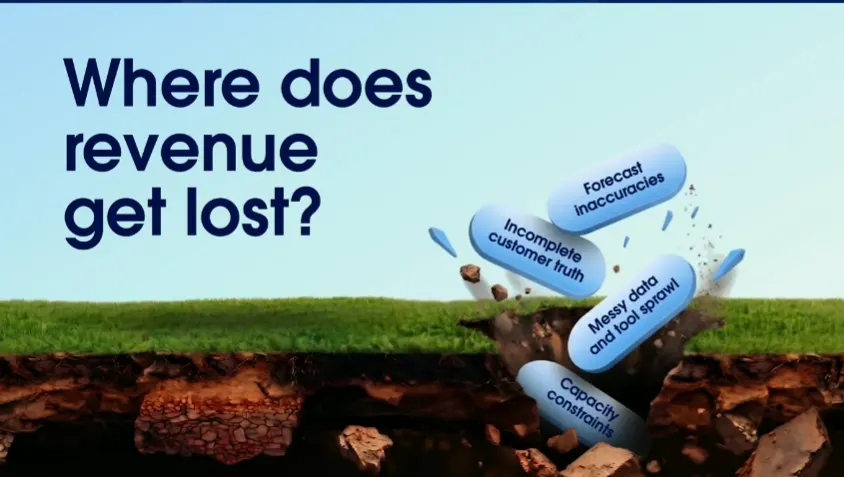
Salesforce used its Dreamforce 2026 Sales Keynote to make a fairly straightforward argument: Sales Cloud needs to know more about what is actually happening in a deal, rather than relying on sales reps to update the CRM after the fact. The keynote opened by asking where revenue gets lost during the sales process and what needs to change to help sales teams close those gaps.
The answer was a combination of more data, more AI, and less reliance on the Salesforce interface itself.
Salesforce introduced two major pieces of the Sales Cloud portfolio, Momentum and Hunter, while also putting significant emphasis on its growing integrations with Slack, Microsoft Teams, and Anthropic’s Claude. Taken together, the announcements show Salesforce trying to make Sales Cloud less of a destination that sellers have to keep returning to and more of an underlying platform that can capture information and take action wherever sellers are already working.
Key Takeaways
- Momentum turns conversations from calls, meetings, texts, and emails into structured Salesforce data, giving Agentforce more context about what is happening in a deal. It is due to become generally available in October 2026.
- Hunter is a new outbound sales agent that works alongside Piper, Salesforce’s existing inbound pipeline generation agent. Hunter is currently in pilot, with general availability planned for November 2026.
- Salesforce in Claude brings Sales Cloud data and actions into Anthropic’s Claude through MCP (Model Context Protocol), with 37 skills currently available for sellers and revenue leaders.
- Headless Salesforce is Salesforce’s term for making its data, AI, automation, and business logic available through interfaces outside Salesforce, including Slack, Teams, Claude, and other applications.
- Max Edition bundles Hunter, Momentum, Salesforce’s headless capabilities, and a range of other Sales Cloud products for $550 per user per month, the same price as the existing Agentforce 1 Edition.
Salesforce’s New Revenue Growth Formula
Salesforce framed the announcements around what it called a new revenue growth formula: truth, context, action.
The thinking behind this is fairly simple. Before an AI agent can do anything useful, it needs to understand what is actually happening. That means having an accurate picture of the customer and the deal, along with enough surrounding context to understand what the information means.
Once it has that context, the agent needs to be able to take action rather than simply report back to the sales rep. Salesforce then wants that process to keep moving without requiring manual intervention at every stage.
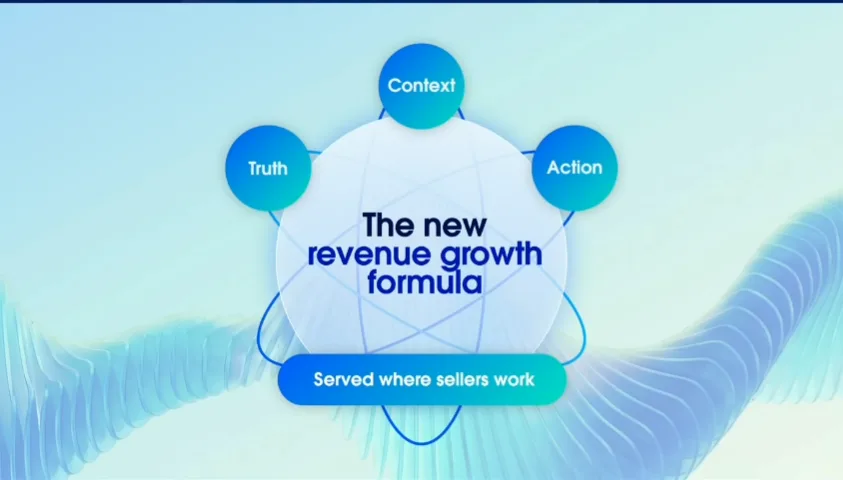
That is where the different announcements fit together. Momentum is designed to provide more of the truth and context by capturing information from customer conversations. Hunter turns that information into action by proactively identifying prospects and carrying out outreach. Salesforce’s growing collection of external interfaces, meanwhile, is intended to make those capabilities available wherever sellers are working.
It is a useful way of understanding the keynote because, while there were plenty of individual product announcements, Salesforce was really presenting a broader change to how it thinks Sales Cloud should operate.
Momentum Turns Every Conversation Into CRM Context
Salesforce acquired Momentum in February 2026, and the company is now bringing its technology directly into Sales Cloud and Agentforce.
Momentum captures conversations from voice and video applications, including customer calls and meetings, as well as texts and emails. It then turns that unstructured conversation data into structured information that Salesforce can use.
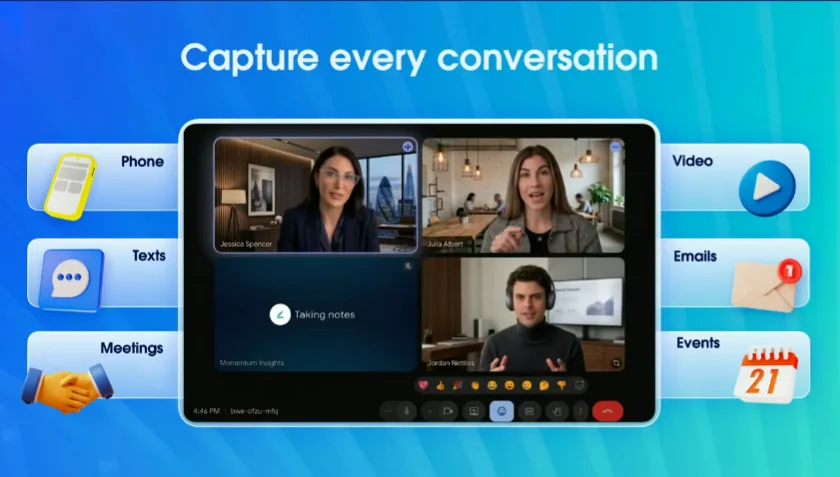
That might sound like another data ingestion story, but the important part is where the data comes from. A significant amount of useful information about a customer never makes it into Salesforce because it happens in conversations.
A prospect might explain why they are hesitating on a deal during a call, mention a new requirement in a meeting, or raise a concern in an email. Unless someone manually records that information in the CRM, it can be difficult for Salesforce, and therefore Agentforce, to know that it ever happened.
Momentum is designed to close that gap.
By bringing those conversations into Salesforce, Agentforce can use what a customer has actually said alongside the structured information already stored in the CRM. That gives an agent more context when it is answering questions, making recommendations, or carrying out more complex, multi-step tasks.
There is also a management angle here. Salesforce showed Momentum surfacing deal alerts in Slack and Microsoft Teams, alongside daily briefing summaries. The idea is that managers should not have to go digging through individual opportunities to discover that something has changed or that a deal is showing signs of risk. Instead, the relevant signals can be surfaced to them automatically.
Momentum is due to reach general availability in October 2026.
Meet Hunter: Piper’s Outbound Counterpart
Salesforce also introduced Hunter, a new outbound sales agent designed to sit alongside Piper, its existing inbound pipeline generation agent.
While Piper is focused on inbound opportunities, Hunter is designed to proactively find potential prospects and start conversations with them.
Salesforce says Hunter learns from how an organization’s top sellers win and uses those patterns to determine which prospects are worth pursuing. Rather than simply waiting for a rep to ask it to find some leads, Hunter can look at a seller’s pipeline and identify when additional opportunities may be needed.
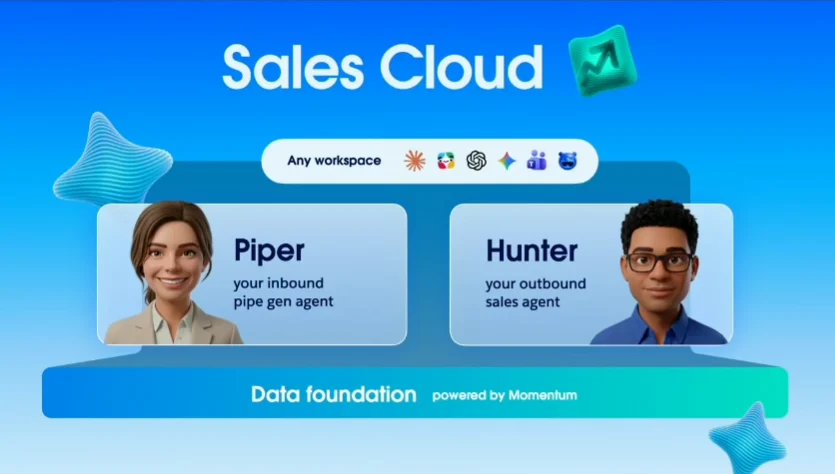
For example, if a rep’s pipeline is looking light, Hunter can surface potential prospects, explain why it selected them, and then create a multi-step outreach cadence involving calls, emails, and other touchpoints. Salesforce is positioning this as a proactive agent rather than another AI assistant that waits for a human to give it a prompt.
Hunter is currently in pilot, with general availability planned for November 2026.
You Don’t Have to Work in Salesforce to Use Salesforce
One of the bigger themes running through the keynote was Salesforce’s continued move towards headless.
The basic idea is that Salesforce’s data, business logic, automation, and AI capabilities do not necessarily need to be accessed through the Salesforce UI. Instead, they can be surfaced through the applications where employees are already working.
That matters for sales teams because reps spend much of their day moving between different tools. They might be working in Slack, joining a meeting in Microsoft Teams, communicating with customers through email, or increasingly using AI tools such as Claude. Asking them to return to Salesforce every time they need information or want to complete an action introduces another layer of friction.
Salesforce’s answer is to put the Salesforce capabilities underneath those experiences.
The company demonstrated Agentforce Coworker as an AI assistant for Salesforce users, while Slackbot can now surface Salesforce information and take action on it directly from Slack. Salesforce also showed how the same underlying capabilities can be accessed through external AI applications.
This is where MCP, or Model Context Protocol, comes into the picture. Salesforce is providing MCP connections that allow external AI tools to interact with Salesforce data and actions, with additional connections available in beta and the ability for organizations to build their own.
The bigger idea is that users should not necessarily have to care where the Salesforce platform sits. They can interact with their CRM data and processes through the interface that makes the most sense for the task.
Salesforce in Claude
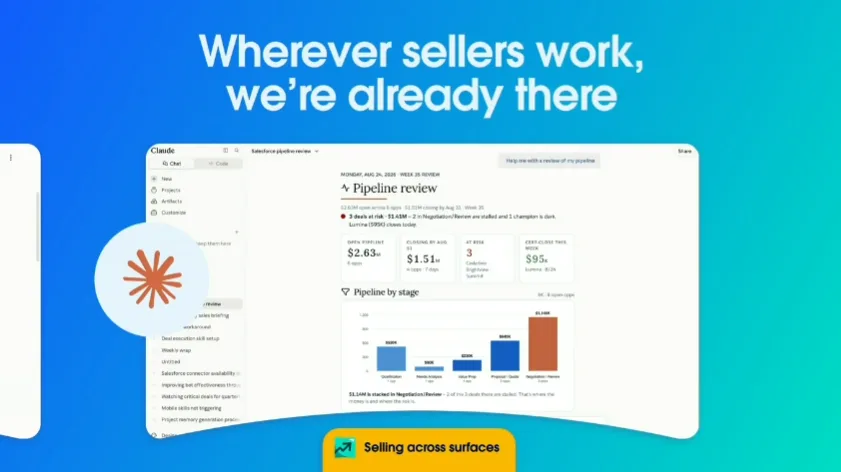
Salesforce placed particular emphasis on its partnership with Anthropic, with Salesforce in Claude now offering 37 skills aimed at sellers and revenue leaders.
The integration allows users to work with Salesforce data and take Salesforce actions directly from Claude. During the keynote, Salesforce demonstrated a revenue leader asking Claude to create a pipeline review using Salesforce data. Claude produced an artifact showing information such as open pipeline, deals closing that week, and pipeline by stage, without the user having to leave the chat interface and build the report manually in Salesforce.
Salesforce also said that a single admin connection can enable Salesforce in Claude for an entire team from day one.
This is another example of the shift Salesforce is trying to make with Headless Salesforce. Rather than competing with every interface employees use, Salesforce increasingly wants to provide the data and business logic underneath them.
For Salesforce Admins, that also raises some interesting questions. The Salesforce org is still the system of record, but the experience of interacting with that data may increasingly happen somewhere else. That makes the underlying data quality, permissions, security, and governance arguably more important rather than less.
Everything Comes Together in Max Edition
Salesforce closed the keynote by highlighting Max Edition, one of three new Sales Cloud editions announced ahead of Dreamforce.
Max Edition costs $550 per user per month, the same price as the existing Agentforce 1 Edition, and includes:
- Hunter and Sales AI
- Unmetered Agentforce Coworker use
- Slack Enterprise+ with Slackbot
- Spiff, Programs, Planning, and Maps
- Premier Success Plan
- Headless add-on
- Momentum
- Tableau Next
- Revenue Intelligence
- Enterprise Security
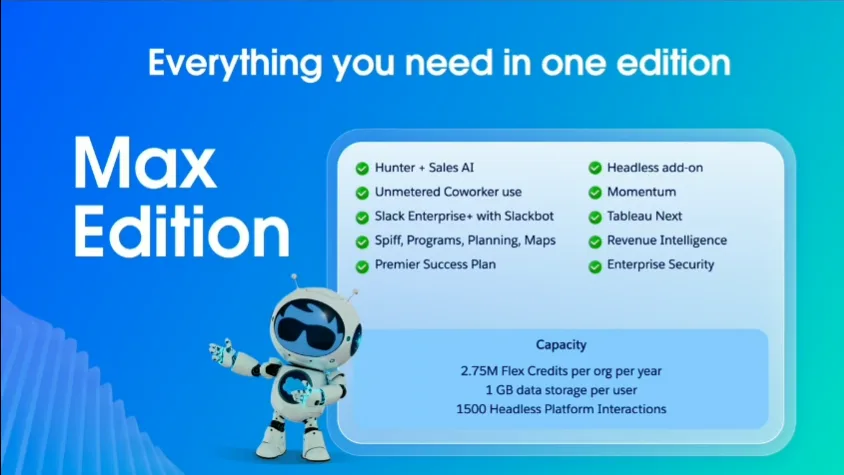
The packaging is worth paying attention to because Salesforce is increasingly bundling its AI, data, analytics, Slack, and sales products together rather than presenting Agentforce as a standalone feature that sits on top of Sales Cloud.
What’s Actually Available?
There is an important caveat to all of this: not everything Salesforce showed on stage is generally available yet.
Momentum is due to reach general availability in October 2026, while Hunter is currently in pilot with general availability planned for November. Salesforce in Claude is in open beta.
That means the keynote is as much a preview of where Salesforce is taking Sales Cloud as it is a showcase of products organizations can immediately roll out. Teams considering these capabilities will need to look at exactly which features are available to them, how conversation data is captured and handled, what permissions apply when Salesforce is accessed through external interfaces, and what is actually included in their chosen edition.
The direction, however, is fairly clear. Salesforce wants Sales Cloud to know more about what is happening outside the CRM, give AI agents enough context to do something useful with that information, and make those capabilities available without forcing sellers to spend their entire working day inside Salesforce.
Summary
The Sales Keynote at Dreamforce ‘26 was more about a broader rethinking of how Sales Cloud should be working, rather than a series of product launches. Momentum is put to work and gives Agentforce the context it’s been missing, and Hunter puts that context to use by proactively finding prospects and running outbound sales alongside Piper’s inbound pipeline generation. The headless approach ensures that all of this can be accessed through users’ preferred interfaces such as Slack, Teams, and Claude.
That said, there’s a lot of this vision that’s still to come. Momentum is due to go GA in October 2026, while Hunter is due to come in November. Salesforce in Claude is in open beta today. Salesforce customers need to pay close attention to what is available today, as well as what their current edition includes.
With all that said, Salesforce’s guidance is clear: Sales Cloud is becoming less of a destination, and more of a foundation that can be put to use wherever the user is already working.