

Connections, Salesforce’s flagship marketing conference, is back for 2026 and promises a wealth of new updates and features for marketers all across the ecosystem.
This year, it is perhaps no surprise that the updates are particularly AI agent-heavy, with the release of Agentic Segmentation and four new marketing agents. However, when these conferences have historically featured a wide range of new updates, it raises the question: how many agents are too many?
Connections 2026 Announcements
Salesforce has made it clear that its goal with Connections this year is to deliver new agentic marketing innovations to make the way marketers approach content, campaign execution, and pipeline generation more effective.
Power Agents With Shared Context
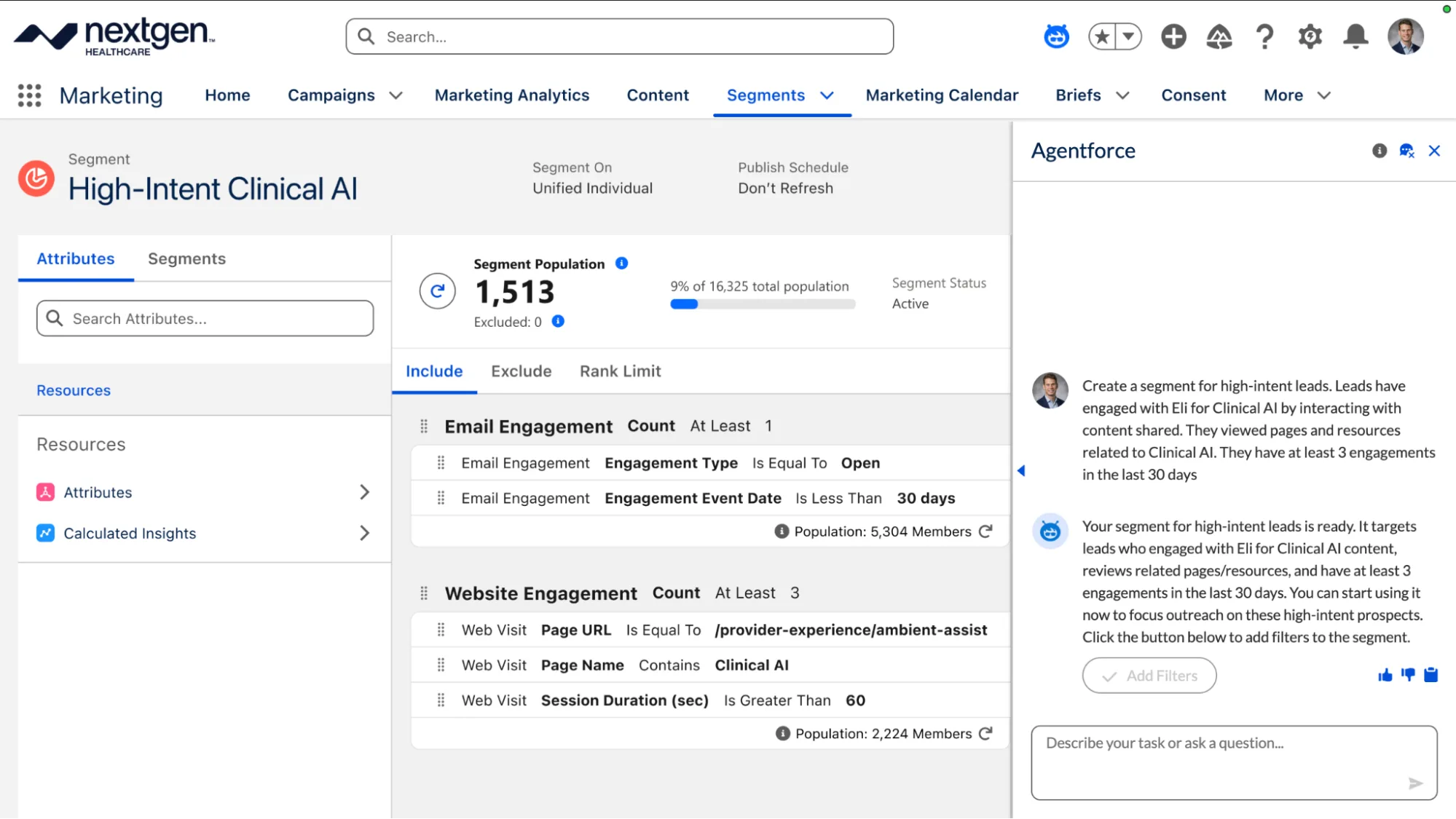
The conference’s biggest announcement is the release of Agentic Segmentation, a new feature that is powered by Data 360 and allows marketers to build campaign-ready audience segments from natural language prompts, without SQL, long wait times, or data engineering support.
Agentic Segmentation is generally available now.
Find and Qualify Pipelines
To navigate different areas of the pipeline, Salesforce has also announced the release of two new agents: Piper and Hunter.
Piper is an SDR agent from AI marketing giant Qualified, which Salesforce acquired in late 2025. It is able to identify and qualify inbound website visitors in real time, 24/7, and routes warm prospects to sales automatically.

Hunter is another agent from Qualified, but is focused on prospecting. It autonomously identifies new contacts, initiates outreach, and runs email nurture sequences.
Both agents are generally available from today.
Create Personalized Content at Scale
It is clear that Salesforce is honing in on personalized, AI-powered content creation and management, as can be seen through its latest acquisition of Contentful. This is also apparent in the content-focused announcements from Connections.
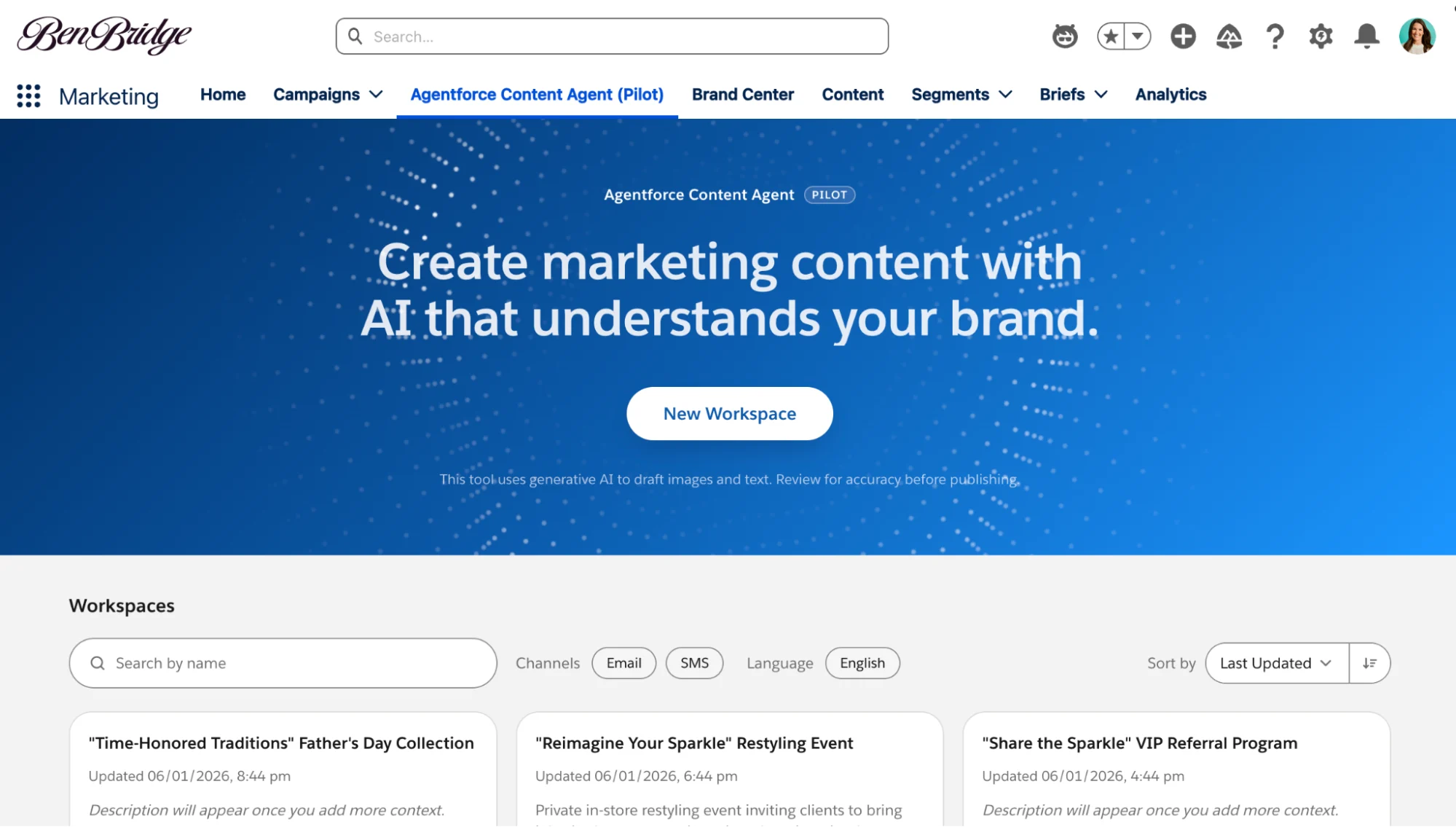
This includes the release of the Agentforce Content Agent, which is currently in pilot. With this agent, marketers should be able to simply describe a campaign, and an agent generates omnichannel content across email, SMS, RCS, and mobile. It is grounded in brand guidelines and built to deploy across channels.
Another addition is Real-Time Offer Management, which Salesforce says will be available soon. Real-Time Offer Management will aim to deliver 1:1 offer decisioning and prioritization based on live behavioral and engagement signals.
Turn Goals Into Campaigns (With Guardrails)
The fourth agent to be announced at Connections was the Marketing Expert Agent. This allows marketers to define goals, budgets, and guardrails – agents then help build, launch, and continuously optimize campaigns toward business outcomes. This agent is currently in pilot.
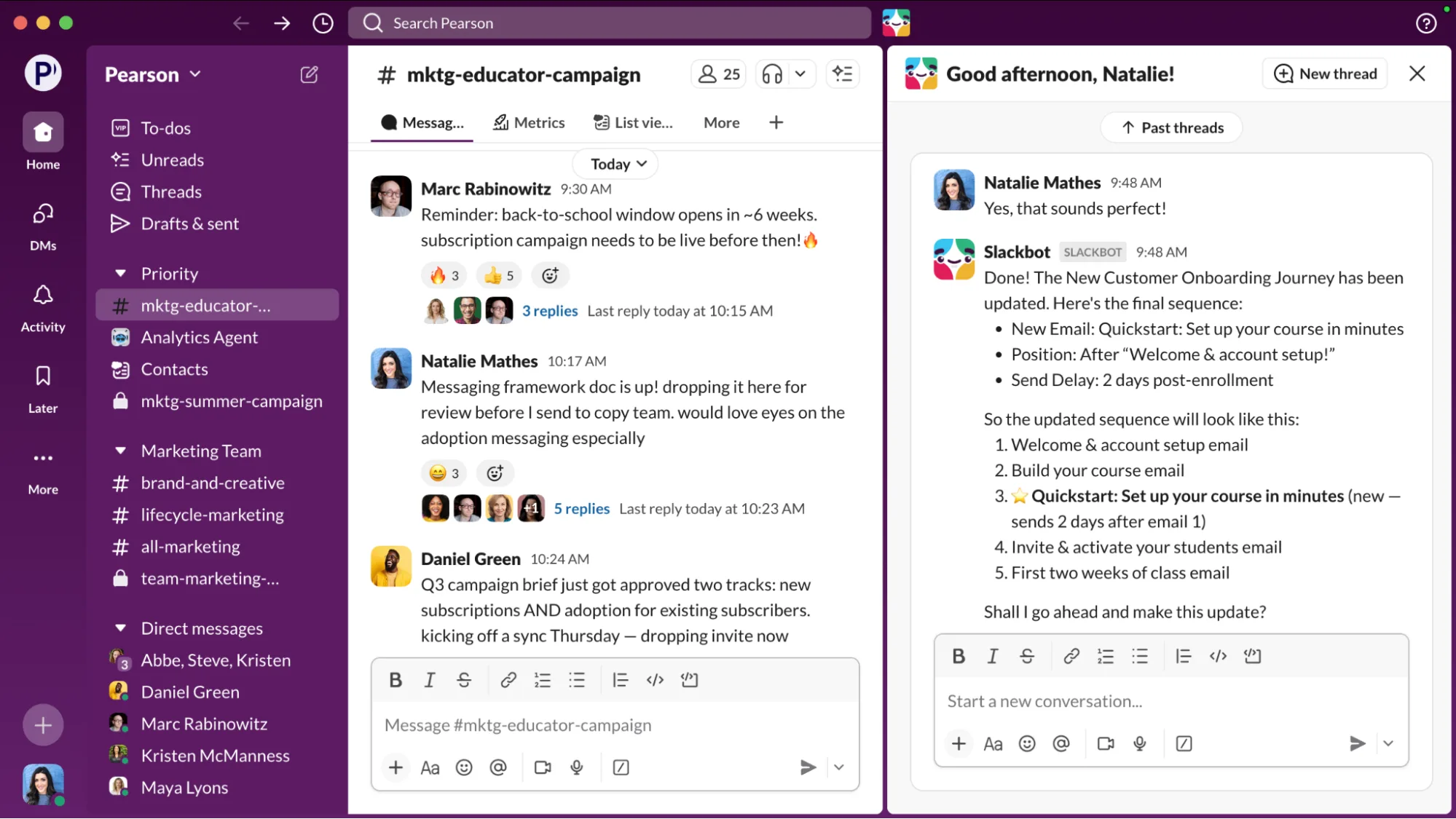
Campaign management also got another update through the announcement of Campaign Management in Slack via MCP. Although this is not available yet, when it is, it will grant marketers the opportunity to manage audience segments, campaigns, journeys, and performance insights conversationally, without leaving Slack – further tying into Salesforce’s wider plans to make Slack its new UI.
Do We Need This Many Agents?
Although Salesforce Co-Founder Parker Harris has explicitly said that if the company doesn’t go all-in on AI, it will “go obsolete”, these announcements from Connections continue to follow a pattern we have been observing ever since Agentforce was released in 2024.
Previously, new products and features accelerated or improved core functionality or specific cloud functionality, benefitting a wide range of customers and professionals. Now, it is beginning to feel like every new update focuses less on feature improvements and more on agent proliferation.
Salesforce’s agent-per-workflow approach is one the company appears to be doubling down on, potentially to the point of overengineering. Do we need an agent for every part of a pipeline, every workflow, and every action?
This question is particularly pertinent when you consider Agentforce’s adoption numbers. Although they are on the rise, there is arguably still some misalignment when it comes to how Salesforce wants its customers to use Agentforce versus how they currently use it.
Final Thoughts
Although there is no doubt that the announcements from this year’s Connections conference will benefit some customers, they do prompt more questions than they answer. If this is another push from Salesforce to get all roles on board with Agentforce, then these releases certainly make sense, but how many customers actually implement them is something that we will need to see play out.
If you’re at the conference in Chicago this week, be sure to check out our complete list of Connections parties and events for this year, here.