

The Summer ’26 release notes are here! Once again, it’s time to review the latest and greatest that Salesforce has in store – and, as always, SF Ben is here to help. We’ve compiled the updates that will have the biggest impact on your day‑to‑day work, and why they matter.
Compared to the previous release, which spread enhancements fairly evenly across the Salesforce marketing product portfolio, this time Salesforce has gone all in on its next‑generation, Agentforce‑powered products – i.e. Marketing Cloud Next. While Salesforce hasn’t completely neglected its legacy marketing products (ExactTarget, Pardot, Evergage, and Datorama), updates in those areas feel muted and underwhelming in comparison.
Overall, the Salesforce Summer ’26 release is in line with the company’s long‑term trajectory toward agentic marketing, where AI agents, two‑way messaging, and deeper CRM integration enable marketers to move faster while tying marketing efforts more directly to revenue generation.
Marketing Cloud Next (Agentforce Marketing)
The burning question in most Salesforce marketers’ minds is feature parity. For current Account Engagement (Pardot) customers, parity has largely been achieved already. However, for Marketing Cloud Engagement (ExactTarget) users, the transition to Marketing Cloud Next has been more complicated.
Consequently, the biggest updates in the Summer ‘26 release set out to address just that. Form enhancements to reduce dependency on CloudPages, the ability to send plain text emails, custom fonts, multilingual messaging – and most importantly, AMPscript support for Marketing Cloud Next. All of these updates reduce the tradeoffs you’d make by switching over from Marketing Cloud Engagement to Next.
1. AMPscript Support in Marketing Cloud Next
AMPscript finally makes its way into Marketing Cloud Next, which is a big deal for teams migrating from classic Marketing Cloud or ExactTarget. Marketers can now use familiar AMPscript alongside Handlebars to retrieve, transform, and format CRM and profile data directly in email content, without re‑engineering everything in Flow or Data 360 first. This significantly lowers the barrier to adoption for existing customers and protects years of scripting know‑how.
What’s especially useful is that scripting can now be validated directly in the message editor. This means fewer send‑time surprises and less reliance on test sends just to catch syntax issues. AMPscript support unlocks several more advanced use cases that were holding marketers back previously. The new editor also makes AMPscript more approachable and forgiving to developers without previous exposure to the language.
Current users of Marketing Cloud Next may wonder what the role of data graphs will be now that AMPscript is also an option for data preparation and personalization. I believe that it’s just that – an option. Having AMPscript as an option is great for current MCE customers, but for previous Account Engagement users and net-new customers, Data 360 and Flow will likely be the default option, rather than having to learn a completely new scripting language.
2. Signup Form Campaigns and Lists
For many Account Engagement users in transition, a major pain point has been segmentation complexity. In Account Engagement, collecting prospects via a form and messaging them was relatively straightforward: you’d set up a form or form handler, add a completion action, create a segmentation list, and voilà.
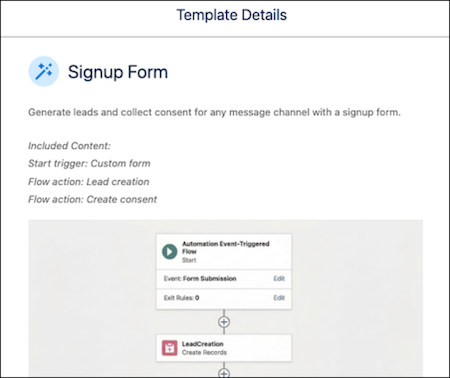
With the Summer ’26 release, you can achieve the same outcome using signup form campaigns and lists. These two enhancements allow marketers to collect leads and message them without having to apply Data 360 segmentation logic. Signup forms invoke flows that function much like completion actions, while lists allow marketers to upload CSV files or add members manually to build a marketing audience.
3. Rich Communication Services
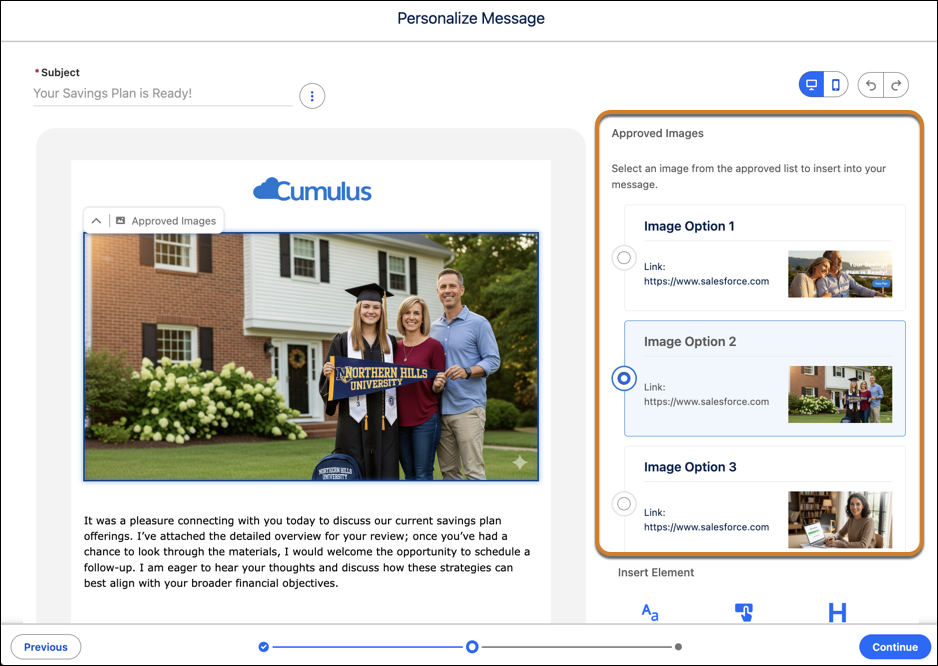
Salesforce Summer ’26 introduces Rich Communication Services (RCS) as a conversational messaging content type, marking a clear step up from traditional, text‑only SMS. While SMS remains limited to static messages and links, RCS allows marketers to deliver branded, interactive experiences directly in the native messaging app. Mobile messages can now include rich cards, images, carousels, and suggested reply buttons.
From a practical standpoint, this changes how mobile campaigns are designed and measured. Instead of relying on short links and follow‑up journeys, marketers can guide users through actions directly within the message itself, from browsing content to responding or converting. Once sender verification is complete, RCS becomes another reusable content type in Salesforce CMS, making it easier to scale mobile experiences.
4. Agentforce Account Nurturing Agent and Distributed Marketing Agent
The new release brings marketing and sales closer together with new Agentforce‑powered capabilities designed to align nurturing with active opportunities. The new Account Nurturing Agent helps identify buying groups and automatically orchestrate relevant marketing touchpoints as opportunities progress, reducing the manual handoff between teams. Rather than marketing operating in parallel, nurturing can now adapt based on what sales is actively working on.
On the sales side, enhancements to Distributed Marketing and Alerts help maintain consistency in tone, voice, and branding, while making campaigns easier for sellers to use. Sales users can rely on the new Distributed Marketing Agent to surface the right email templates and gain visibility into engagement on distributed messages. Together, these enhancements make it easier to run a unified RevOps approach, rather than having salespeople and marketers operate in silos.
5. Engagement History on Opportunities
Summer ’26 introduces a Unified Engagement History dashboard directly on Opportunity records, giving sales teams clear visibility into how contacts tied to an opportunity are interacting with marketing assets. Emails, forms, and webpage activity are surfaced in one place, allowing reps to quickly assess interest levels, spot engagement trends, and time their outreach more effectively. With the update, sales can now use concrete engagement data to inform conversations, reinforce buyer intent, and prioritize deals with stronger traction.
6. Marketing Triggers and Personalized Offers
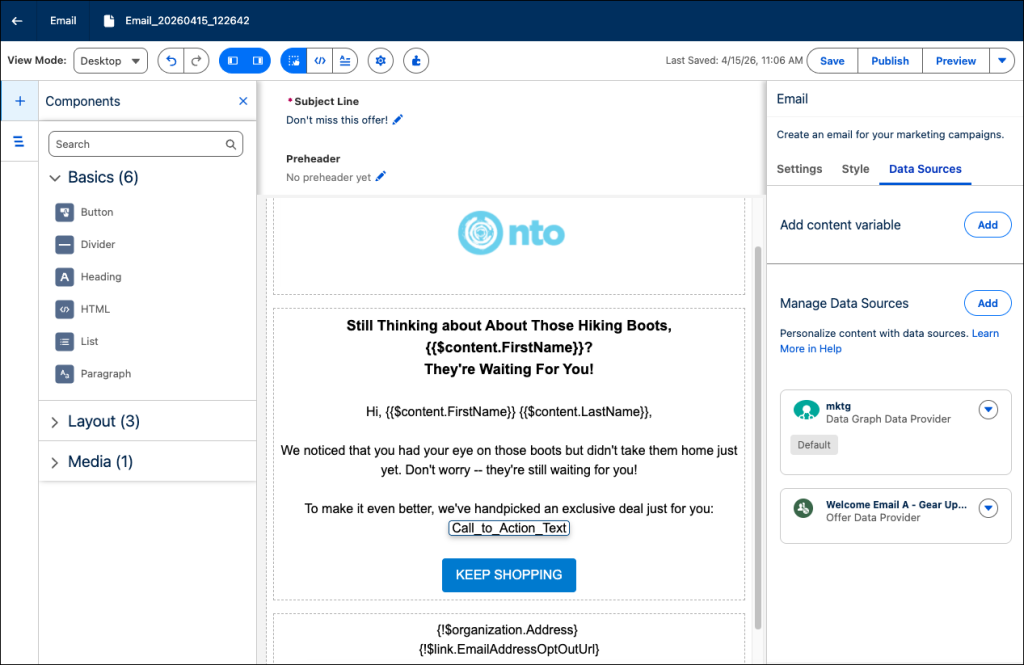
Summer ’26 adds a set of automated marketing tools aimed squarely at driving direct conversions, with custom-built triggers for common e‑commerce behaviors such as abandoned carts, price drops, back‑in‑stock events, and order lifecycle milestones. Marketers can respond to these signals in near real time with personalized messages across channels, and even embed dynamic promotional offers directly into emails using structured offer data and rules.
While powerful, these capabilities are most relevant to organizations with self‑service, transaction‑driven buying models, rather than businesses with long, sales‑led purchase cycles, for which these triggers and targeted offers are less directly applicable.
7. Faster Campaign Creation and Collaboration
Summer ’26 continues Salesforce’s push toward faster, more collaborative campaign execution with AI‑assisted automation and tighter tooling around campaigns. Marketers can now launch automations more quickly using a new library of preconfigured flow templates that are accessible directly from the campaign record. These templates handle common marketing use cases out of the box and are automatically linked to the campaign.
Collaboration becomes easier through deeper Slack integration. Creating or associating a campaign can now spin up a dedicated Slack channel that acts as a shared workspace for updates, discussions, and coordination, with AI assisting in task automation along the way.
At the same time, Salesforce is consolidating its agent strategy by moving Campaign Creation and Journey Decisioning Agents into the new Agentforce Builder. While existing agent deployments continue to work, teams will need to redeploy them in the new builder to take advantage of upcoming enhancements.
Marketing Cloud Engagement
Compared to the extensive investments in Marketing Cloud Next, the Summer ’26 updates for Marketing Cloud Engagement are relatively few and far between – and frankly, they feel lackluster by comparison. While there are some incremental improvements, they don’t meaningfully shift how marketers work day to day. The contrast makes Salesforce’s strategic focus clear: innovation and momentum are firmly behind its next‑generation platform, while Marketing Cloud Engagement continues in more of a maintenance mode.
8. Model Context Protocol (MCP) Support
This AI-focused enhancement is the one that caught my eye. Model Context Protocol is an open framework that has been widely adopted by different technology vendors, including Salesforce, Amazon, Google, Adobe, and Microsoft. It essentially makes a platform easily accessible and its data and automations actionable for external AI agents.
What does this mean for Marketing Cloud Engagement? Say, you want to orchestrate marketing campaigns, build content, and interact with subscriber data with a Claude agent, or similar. Marketing Cloud Engagement’s MCP server makes this possible. It may not be as flashy as the next-gen capabilities on the Core Platform, but it opens up doors for better AI connectivity for technical marketers.
Marketing Cloud Account Engagement
The Marketing Cloud Account Engagement section is notably sparse in the Summer ’26 release, with enhancements that are almost non‑existent. Account Engagement sees little more than minor maintenance‑level updates – most of which also apply to Marketing Cloud Next. Against this backdrop, it doesn’t take a genius to conclude that Account Engagement is nearing the end of its shelf life, having been rendered largely redundant by Marketing Cloud Next.
9. Simplify Consent Management Between Marketing Products
Consent management has been one of the biggest barriers to transitioning to Marketing Cloud Next. By improving how consent data is handled across forms and prospect records, Salesforce addresses a long‑standing compliance and data‑model mismatch that has complicated migration efforts. While the update doesn’t introduce new engagement capabilities, it does remove some friction from a critical prerequisite for customers considering the move to the next‑generation platform.
Summary
My feelings after reading this batch of release notes are mixed, to be honest. On one hand, the volume of major enhancements to Marketing Cloud Next is absolutely staggering. To top it off, most of these improvements are genuinely useful and address real customer pain points that I encounter regularly.
However, reading between the lines, the countdown clock for the older marketing products – namely Marketing Cloud Engagement and Account Engagement – appears to have jumped ahead several months. This puts increasing pressure on marketing leaders and RevOps teams to clarify their roadmap and plan their next steps.
Read More
- 10 New Salesforce Flow Features in Summer ‘26
- Top 8 Salesforce Summer ’26 Features for Developers
- Top 11 Salesforce Summer ‘26 Features for Admins
- Service Cloud: Top Salesforce Summer ’26 Features
- Sales Cloud: Top Salesforce Summer ‘26 Features