

This year’s TDX keynote was extremely well-received and jam-packed with brilliant information and innovations. Believe it or not, it also marks the tenth anniversary of TDX. The event and the community as a whole have come a long way since the first TDX, and there are no signs of slowing down!
For those who haven’t been paying attention to TDX in the past, it is a gigantic event that Salesforce puts on each year, second only to Dreamforce. Instead of the broad audience that Dreamforce caters to, TDX focuses on topics that benefit those who work directly with the technologies – this is the Salesforce Developers, Admins, and, of course, Architects.
The general theme of this year’s TDX is simple, but there’s a lot that comes with it: The rapid evolution of how we build software in the agentic era, and the tooling that will slingshot us into this future. Join me as I recap some of the most important advancements that Salesforce Architects should be aware of.
Recap of Deterministic Era to Probabilistic Era
It won’t come as a shock to learn that Salesforce talked extensively about the Agentic Enterprise dream that they’ve been sharing, except it was a little different at TDX ‘26 compared to Dreamforce ‘25. As I said, this event has a very targeted audience – those who actually build the platform. There is a lot less time selling the dream, and a lot more time explaining how to build it. This is something many love about TDX.
Joe Inzerillo, President of Enterprise and AI Technology at Salesforce, brought up a slide that showed where development had come from and was going to. He touched on the move from waterfall to agile software development and what changes it required, and then identified the next paradigm – agentic development with probabilistic digital labor.
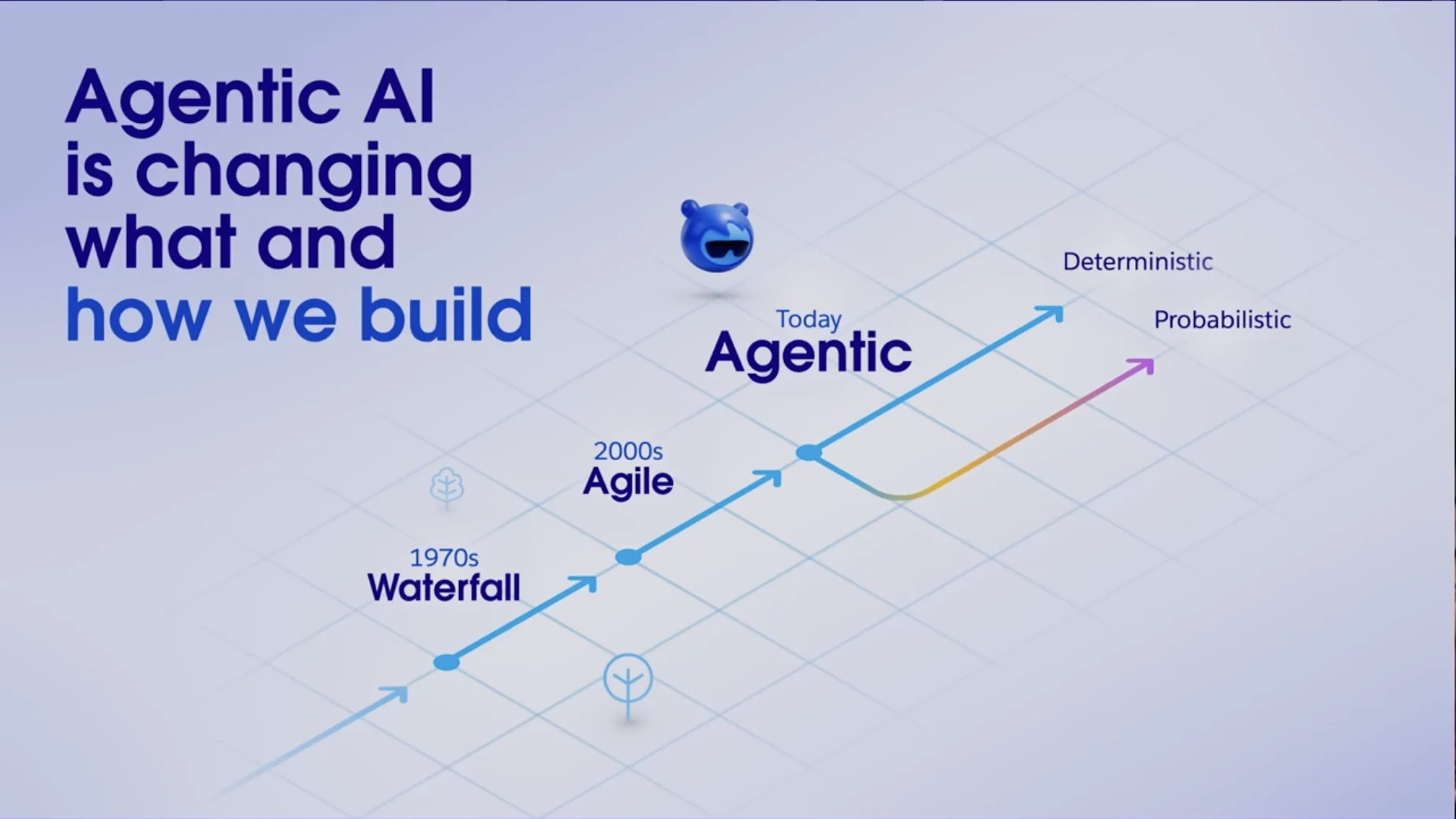
This paradigm shift, as any architect will know, introduces many new ways to rapidly build on the Salesforce platform. It also delivers some new challenges. Previously, in the deterministic realm, tools did exactly as they were instructed to do – one plus one always equaled two.
Probabilistic tooling doesn’t always perform the same way, doesn’t always necessarily come to the same conclusion, and as such can be harder to rein in and control.
Joe brought up a good point – historically, the 80/20 rule meant that 80% of development time and effort was on creating the product, and 20% was polishing it and making it great. In the agentic development era, this is turned on its head.
With tools like Agentforce Vibes, we can get a mostly working product built relatively quickly – it just takes more time to get it fully functional, and polished. 80/20 becomes 20/80, with 80% of the time now spent polishing, while the initial 20% is spent working with AI tooling to develop an MVP product.
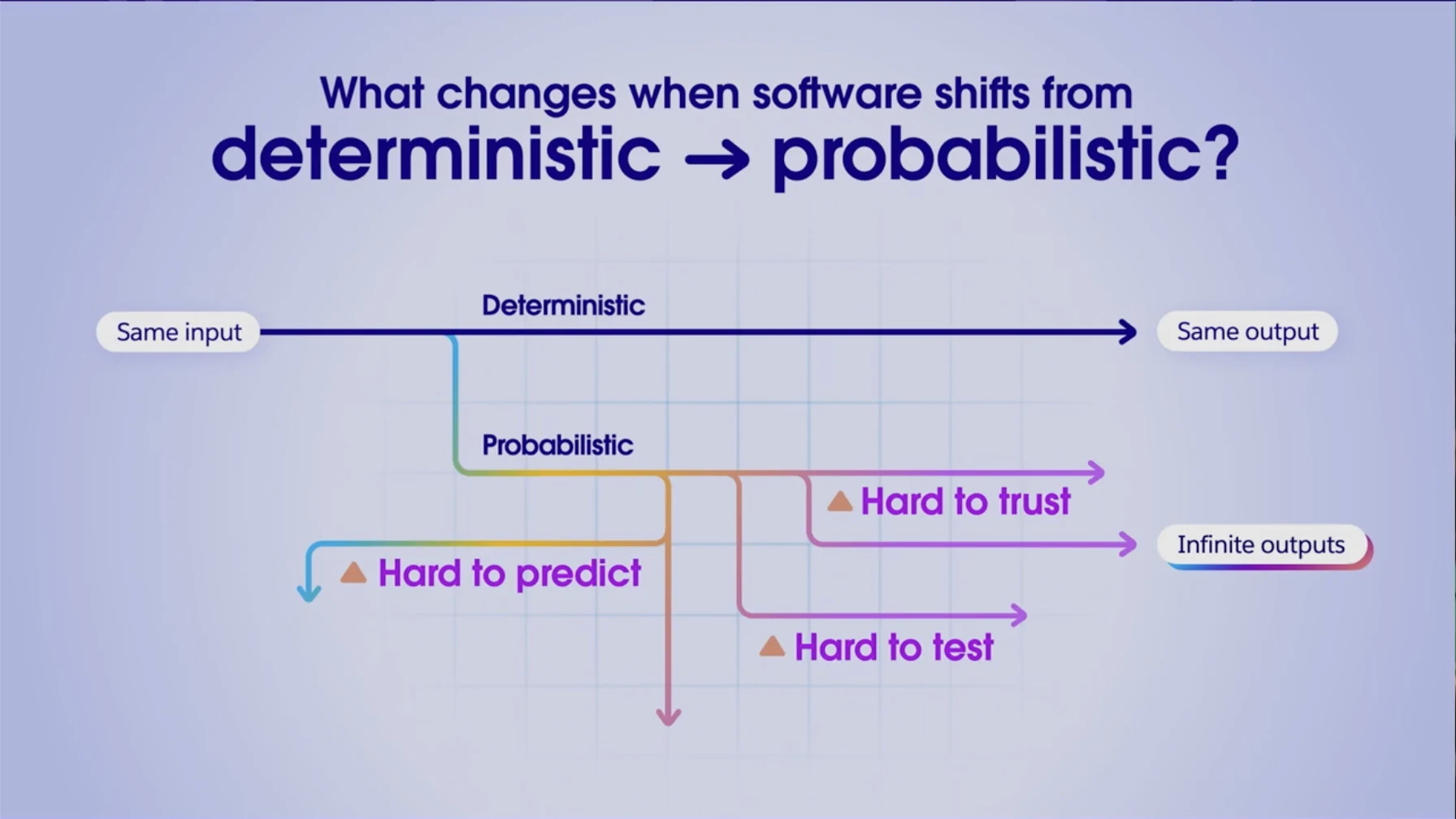
This is where challenges can come in for a Salesforce Architect. While navigating this paradigm shift, you’ll need to both grow with the times and also maintain trust, security, and scalability.
One such feature that Salesforce has introduced to assist with this in recent times is Agent Script. Agent Script empowers developers to build deterministic logic into probabilistic agents – this is what is known as hybrid logic.
Building with Lego – Composability with Salesforce Headless 360 and MCPs
The star of the show is the new Headless 360 from Salesforce. Simply put, decoupling the core capabilities of the system from Salesforce’s own UI and tooling means you can now do Salesforce things without needing to use Salesforce tools.
Given that the UIs that we’ve used over the years (Lightning, Classic, and even developer tools) are designed for humans, it makes sense to split the functionality from the interface so that agents can also use those same tools efficiently.
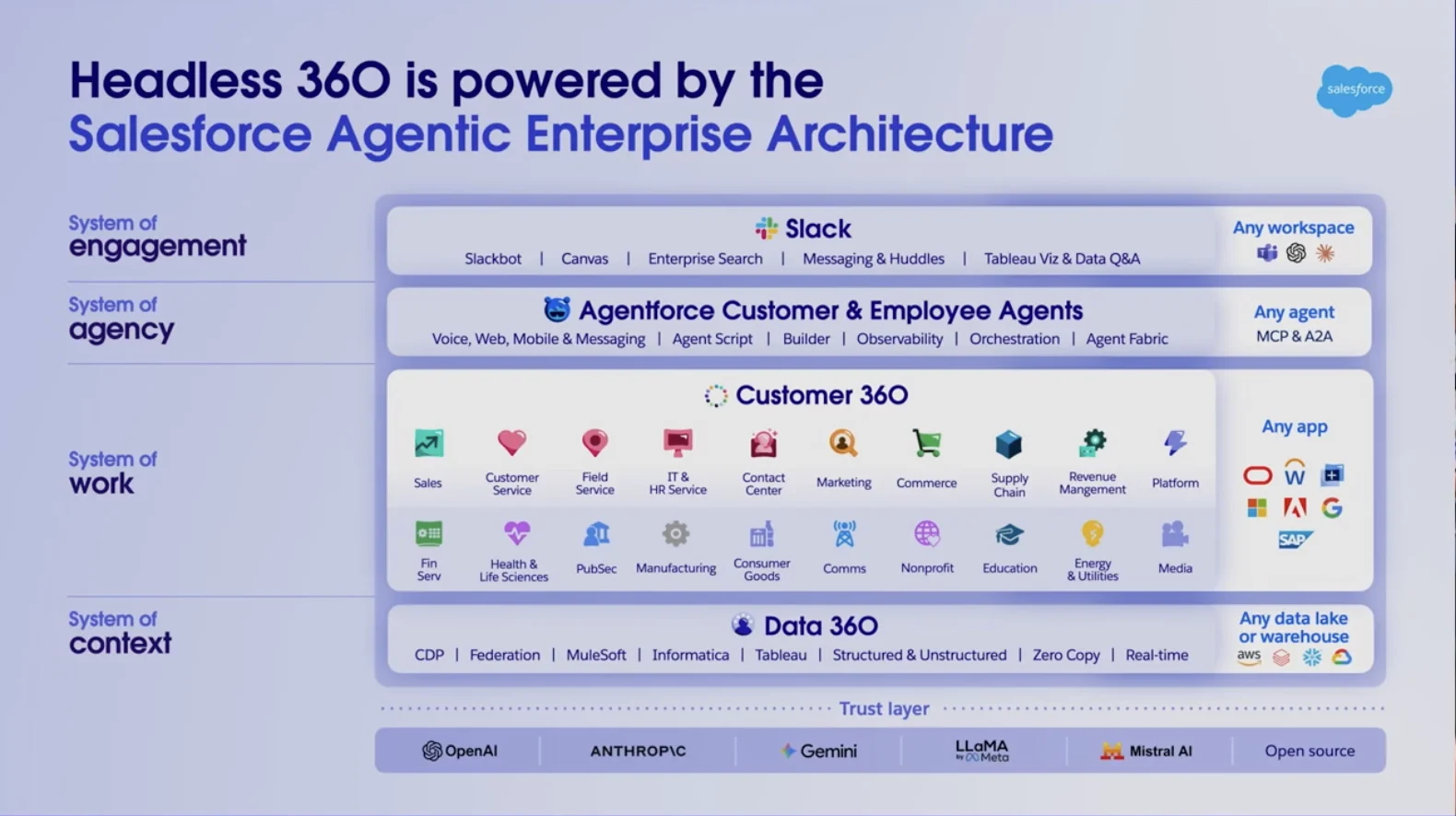
By leveraging APIs, MCP tools, and CLI commands rather than hiding them behind a UI, Salesforce is empowering AI and agentic coding tools to use Salesforce properly.
Multiple times during the keynote, MCP was referred to as “playing with Legos” – essentially pointing out that MCP is the building blocks that any tool can now work with to build in Salesforce. This includes the new Salesforce Metadata Catalog, which acts as a search index exposed via MCP.
In this way, you can empower agents by revealing your org’s metadata. No longer will your tools only have access to Salesforce and the little pieces of metadata that you’re currently working with, you can now share your entire org’s metadata through this catalog.
This is a big deal for Architects (in particular Technical and Integration Architects) who are responsible for Salesforce and how Salesforce communicates with other systems. These tools make it easier than ever and help ensure the security of the data in transit.
Headless MCPs introduce totally revolutionary integration patterns – instead of building rigid, point-to-point API connections, modular skills and MCPs can be exposed that agents can use to dynamically retrieve data. Using these tools also means agents are bound by Salesforce’s foundational security and access models.
Decoupling UI from Agentic Backend with Agentforce Experience Layer
Salesforce also introduced the Agentforce Experience Layer (AXL), which means you’re no longer bound within the Salesforce box when it comes to publishing experiences. AXL acts as a cross-platform UI abstraction layer. Developers can now define an experience, schema, layout, and relevant actions once inside of Salesforce, and the AXL will automatically render that UI across multiple surfaces.
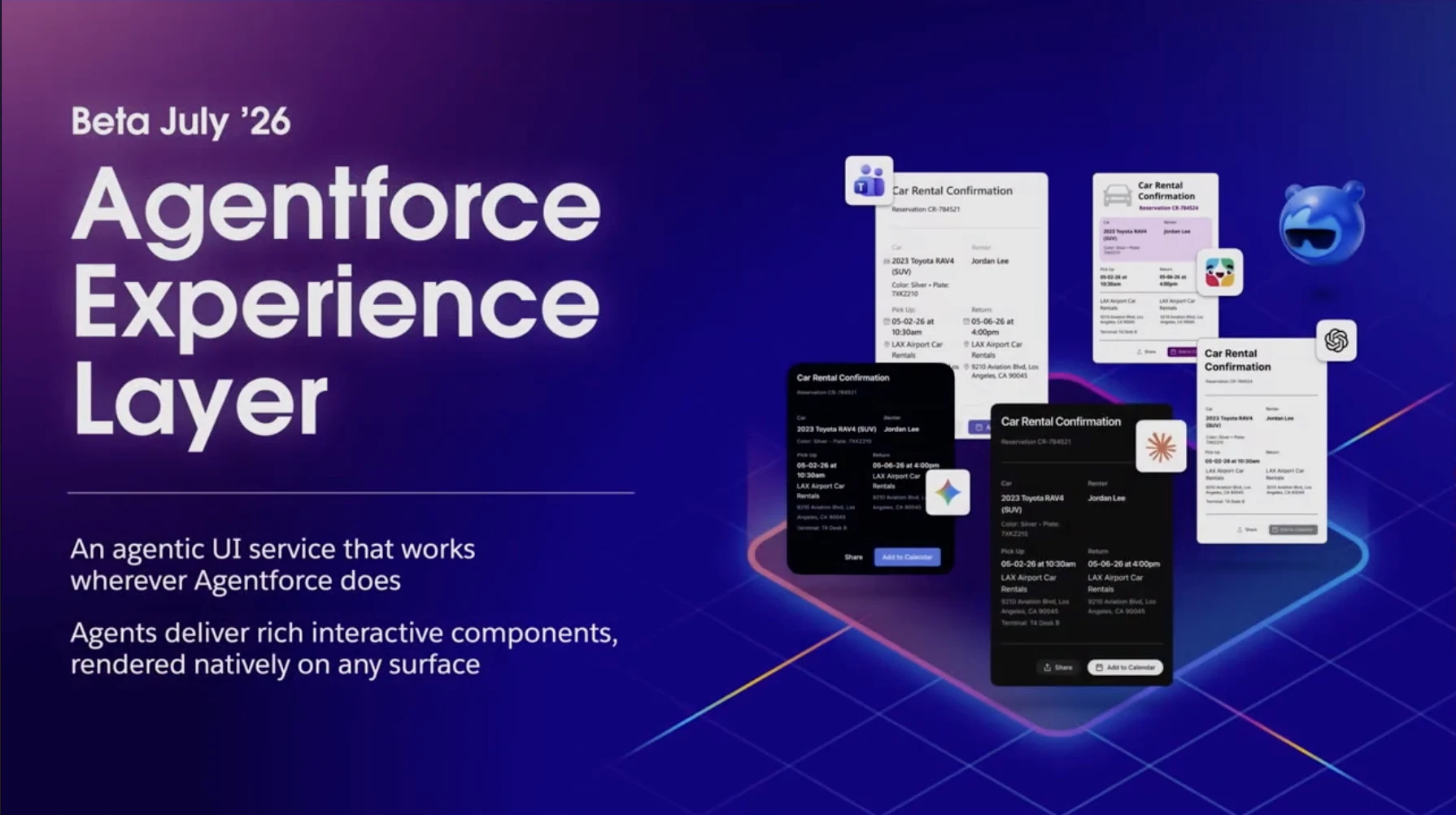
This segment, led by Janani Narayanan (VP of Unified Profile and Knowledge at Salesforce), first explained and then demonstrated how AXL works. I was impressed to see a single experience that was crafted within Salesforce exposed in Microsoft Teams and also ChatGPT as an application. Salesforce’s own 1-800 NO SOFTWARE phone number is now powered by Agentforce as a result!
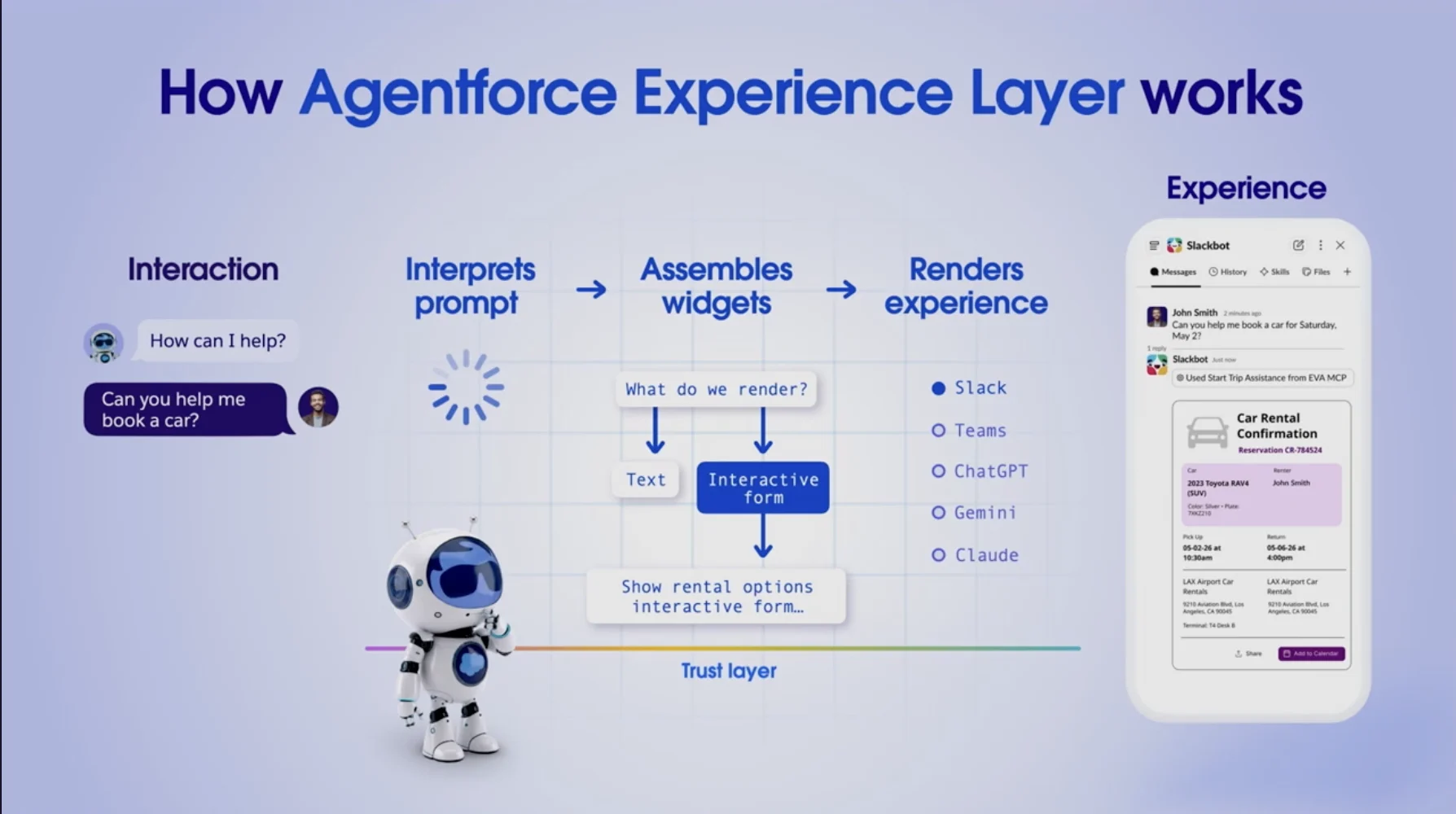
Managing state, authentication, edge cases, and version drift across multiple surfaces typically creates significant technical debt, and typically requires months of developer time. Architects are tasked with decisions of how to approach development like this – should you spend the time to build, or is it worth looking for an off-the-shelf solution instead? What is the most efficient path forward?
AXL collapses front-end and back-end orchestration into a single runtime agent, which allows those Architects to streamline their front-end architecture and deliver multi-surface experiences with dramatically reduced overhead.
Testing and Observability in the AI Era
One diagram made its way onto the screen multiple times during the keynote – it shows the development lifecycle with Agentforce, from top to tail, with governance underlying throughout. The diagram expanded at one point, visualizing that Salesforce has expanded on the concept of software development with new features designed for the agentic world.
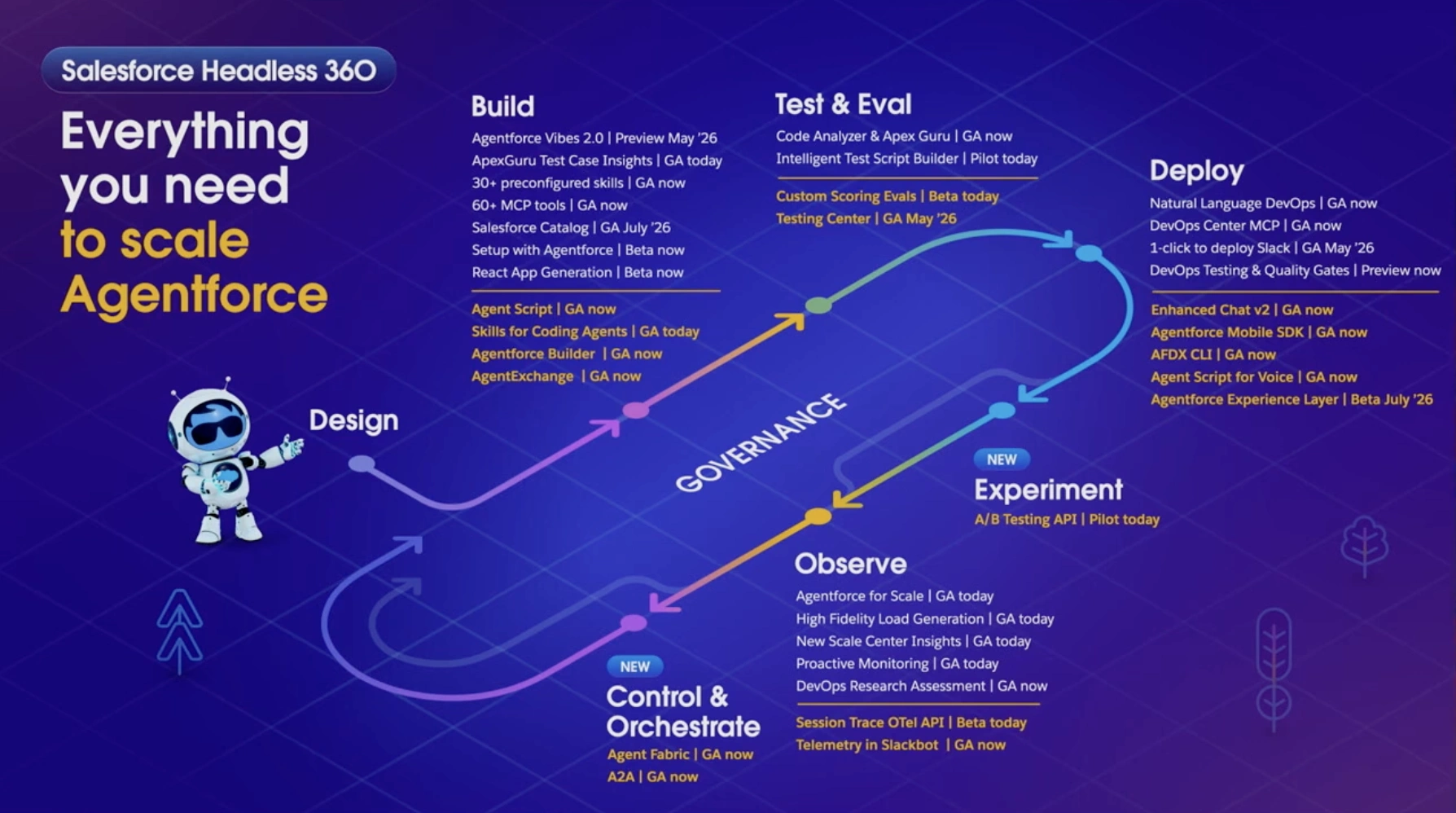
Architects are responsible for system stability, DevOps strategy, and minimizing the technical debt of an org. Due to the way probabilistic software behaves, it is important to manage rapid development with proper monitoring and observation.
Agentforce Vibes 2.0 was released at TDX ‘26, and serves as an IDE extension that includes an agent harness. This allows developers to securely use third-party agents like Claude or OpenAI Agent SDKs while still operating within the Trust Layer.
This, in combination with the MCP tooling mentioned above, drastically reduces the time it will take to build in Salesforce. To ensure reliability in this rapid development world, the new Testing Center offers custom scores, evaluators, and automated smoke tests that simulate real user interactions at scale.
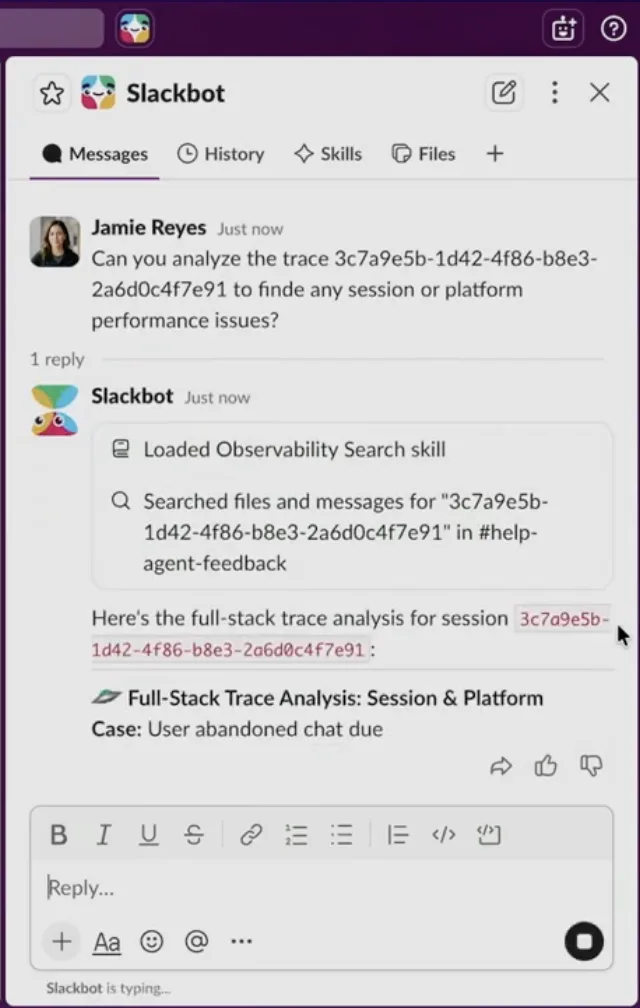
Finally, for better observation in production, the demonstration showed that it was possible to trace individual sessions to monitor, identify errors, and analyze performance directly within Slack.
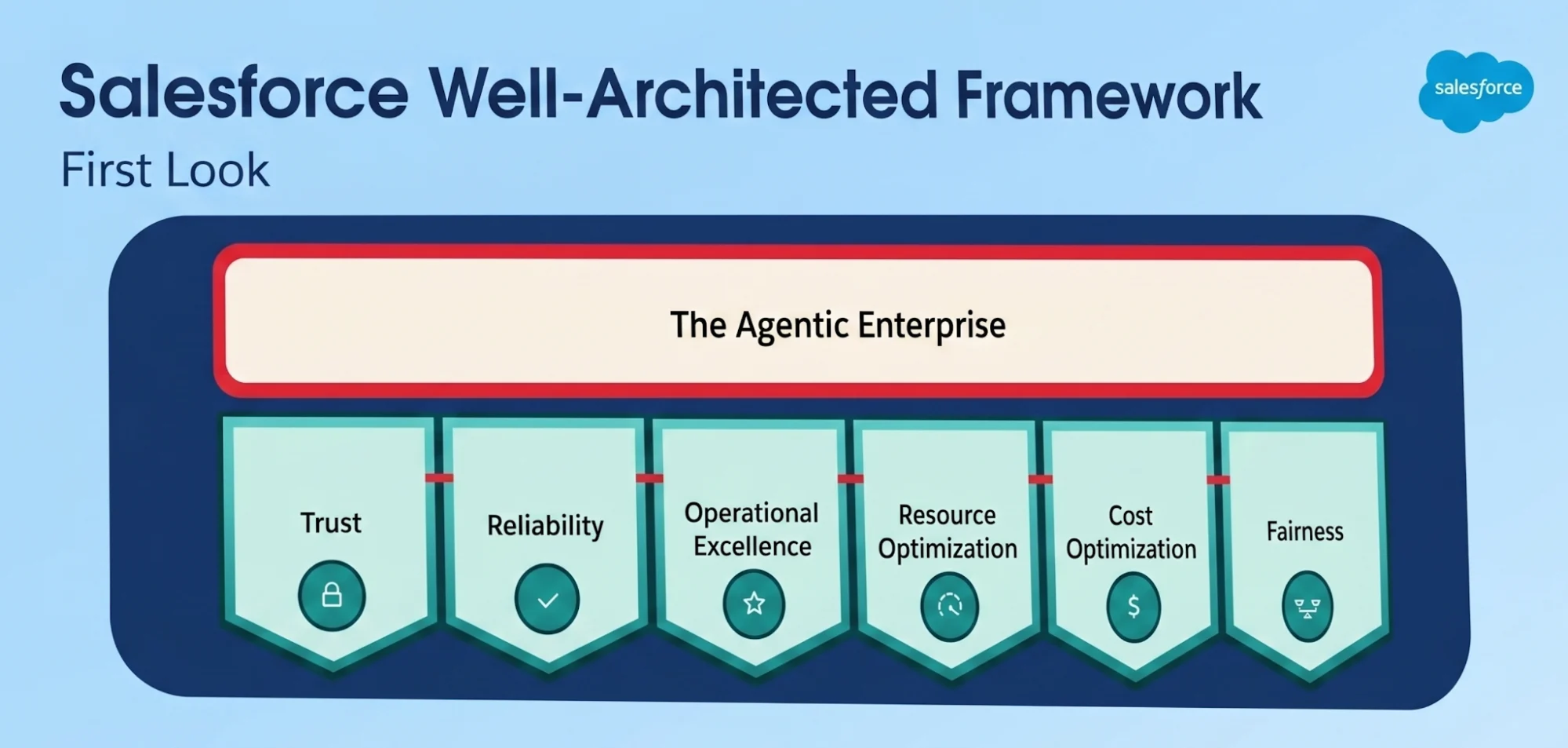
There was an in-person session that talked about some changes that Salesforce is making to the Well-Architected framework in the agentic era. They heard feedback from over 1,000 Architects and have designed a new framework for the AI era with six clear pillars, as per the diagram below.
For some additional clarity – the Fairness pillar specifically talks about removing bias and sustainable design.
Speaking of taking action on feedback from Architects, if you’ve not joined in on building out the biggest Architect report for the Salesforce ecosystem that we do each year, what are you waiting for? The Architect Survey is out NOW, and we’d love to get your insights on the role.
In a coming interview, Miriam McCabe, Senior Director of the Salesforce Architect Evangelism team, also discussed some new changes coming to the Architect Program, with some key focus being around the agentic AI era that we now live and work in.
In the interview, she also shared the program structure of the Architect Program, with three distinct organizations within Salesforce who contribute: Office of the Chief Architect, Architect Evangelism, and Marketing. The reason behind this is to make content that is technically authoritative, practical, and findable.
Summary
With the focus on the development of Salesforce in the Agentic Era, TDX ‘26 equips Salesforce Architects with new tools that help to balance the power of generative AI with the deterministic controls required to scale safely at an enterprise level. The focus is shifting from 80% time and effort spent building, to 80% time and effort spent monitoring, polishing, and scaling.
There was so much going on in that keynote that I’ve watched it twice through, and my head is still spinning. But overall, I appreciate the focus on empowering builders and architects with tools available for everyone.
What are your thoughts on what we’ve seen unveiled or demonstrated at TDX ‘26? Was there anything I haven’t mentioned that you think is worth sharing? Please share your thoughts on social media. We’d love to hear from you.