








In the era of Agentforce and consumption-based pricing, Salesforce professionals still have to account for and keep track of licenses and what functionality each user has access to – this is the reality for most of the teams, and since every user needs a license, it’s a non-negotiable step when it comes to user management.
In this guide, we’ll cover the primary types of Salesforce licenses, focusing on the exceptions rather than every single license type. Understanding which licenses and features are assigned is crucial for any Salesforce health check. So, do you know which Salesforce licenses are in use in your org?
So, What Are Salesforce Licenses?
Salesforce licenses are allocated to individual users, giving them access to various Salesforce products and features. It’s easy to confuse Salesforce editions and licenses, but they’re distinct concepts. Here’s a breakdown to differentiate the two:
- Salesforce Editions: These refer to the level of access your organization has to Salesforce products and features, with upgrades unlocking more functionality. Common editions include Professional, Enterprise, and Unlimited in a Sales or Service Cloud context.
- Salesforce Licenses: These are user-specific and seat-based and provide a baseline level of access to products and features, which can be further adjusted through profiles, permission sets, and even the role hierarchy. Everyone in your organization with access to a specific product or feature will be operating under the same edition.
Keep in mind that while you can refer to User Licenses as Salesforce Licenses, at the same time, “Salesforce” is actually a type of user license. It may seem confusing, but we’ll make sense of it!
User Licenses vs. Feature Licenses vs. Permission Set License
- Salesforce User Licenses: Determine the baseline of features a user can access. Each user can have only one user license. Examples include Salesforce, Identity, and Salesforce Platform. This is the license selected in the “User License” picklist when creating a new user.
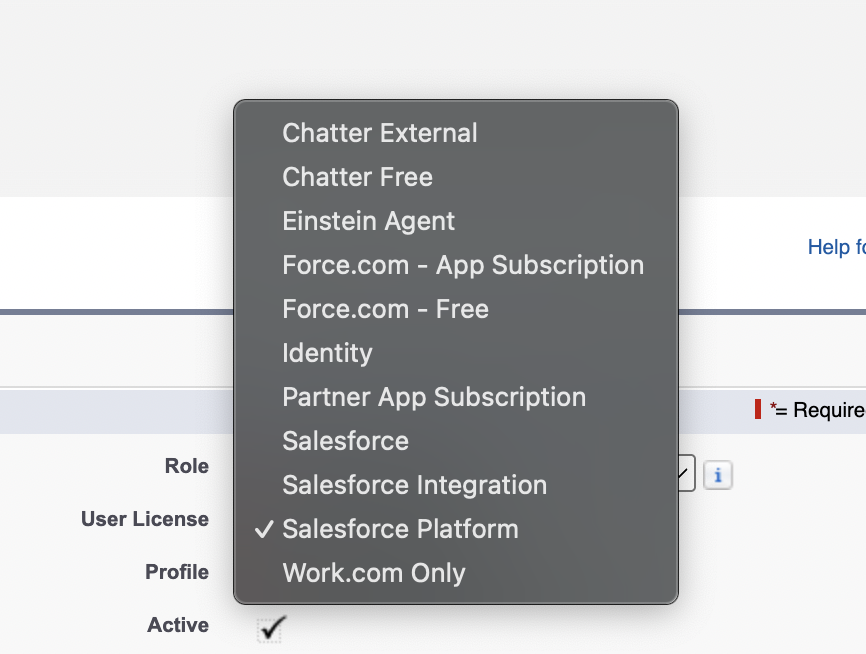
- Salesforce Feature Licenses: Entitle a user to access an additional feature that’s not included with the user license you selected. Users can be assigned multiple feature licenses. Examples include Marketing User, Flow User, Knowledge User, and Service Cloud User. The full list can be found here.
- Permission Set Licenses: Similar to feature licenses, these also extend a user’s access to different features or apps, but they may be mandatory before being able to assign certain Permission Sets for additional features. Examples where Permission Set Licenses are used include the legacy CPQ, Sales Planning, and even Pipeline Inspection just to name a few.
For example, let’s say you just created a new user for Jane Smith, a Marketing Director. The user license in this scenario is Salesforce, but you notice that she doesn’t have permissions to create Campaigns. In this case, the first thing to check is actually the “Marketing User” checkbox on her user record, rather than diving into Profiles and Permission sets first as you would with other such cases.
Overall, if you’re thinking about buying Salesforce, the steps for handling licenses are as follows:
- Choose a Salesforce product and edition
- Assign users the baseline license
- Optionally assign users any feature licenses
- Optionally assign users any permission set licenses
- Purchase more licenses as needed
Salesforce User Licenses You Should Know About
Since it is mandatory for every user to have a baseline license, let’s cover the main options you can explore and choose to use based on your requirement. Different licenses also have different pricing, so knowing the available options can help you achieve two positive outcomes: users only accessing what they need, and not breaking the bank for a Salesforce license – for example, when it’s not needed.
Salesforce License
This is probably the first licence type you encounter, and is available for all Salesforce editions. Users who have this license have access to the entire CRM functionality, as well as AppExchange Apps.
Salesforce Platform Licenses
Platform licenses are available in Enterprise and Unlimited editions. Platform licenses include accounts, contacts, and reports, as well as the automation tools that you know and love. They also include standard individual and mass emailing functionality. The difference between Salesforce and platform licenses is that the latter are designed for users who do not need access to the full CRM functionality, but rather to custom apps and objects.
There are three platform license options you can explore:
- Platform Starter: Access to 10 custom objects, and each license also grants additional storage.
- Platform Plus: Access to 110 custom objects, and each license also grants additional storage.
- Platform Login: Specifically created for occasional users, this type of license offers the flexibility to pay per login, rather than per license. Each unique login costs 50 credits, and in some cases, this may be a better choice than the Platform Starter license given that it also includes access to 10 custom objects.
Before making a decision, make sure to review what each platform license type includes, both from a custom and standard functionality aspect.
Identity Only Licenses
Salesforce identity licenses enable a user to log in via the Salesforce single sign-on (SSO) without requiring a full CRM license.
Let’s take Marketing Cloud Account Engagement (Pardot) as an example: Salesforce single sign-on (SSO) was enforced for Account Engagement accounts. In short, this means that all users must sign into Salesforce to access Account Engagement. Users without a Salesforce license can be assigned an identity license, allowing Account Engagement-only users to gain access to the Account Engagement Lightning app via Salesforce login. Back in 2021, Salesforce granted 100 Identity licenses to ease the migration for non-Salesforce users.
Salesforce Experience Cloud (Community) Licenses
Experience Cloud gives external users (customers or partners) a window into your Salesforce org. Otherwise known as a portal or community, Experience Cloud sits on top of the standard Salesforce platform but can be designed more tightly and branded more heavily to cater for your external collaboration needs.
There are five license types you can choose from:
- External App
- Customer Community
- Customer Community Plus
- Partner Community
- Channel
The guide below dives into each license type and how you can get started. Note that any of the above licenses can be either seat-based or login-based, depending which option suits your usage patterns better.
Salesforce Integration User Licenses
The Salesforce Integration license is specifically designed for system-to-system integrations, as it only provides the user with API access. Simply put, your instance’s functionality or data cannot be accessed through the user interface by users who are assigned this license type.
While these licenses may not be ideal for every single use case or third-party integration as of now, it’s worth keeping them in mind to assess if their functionality fits. Salesforce provides five free ones to begin with, making it not only a matter of security and access, but also a way to optimize the licenses cost for integrations.
Agent Licenses
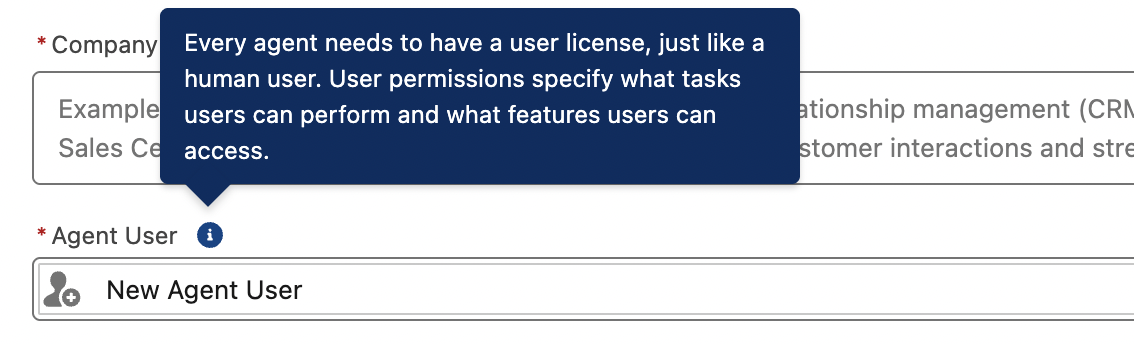
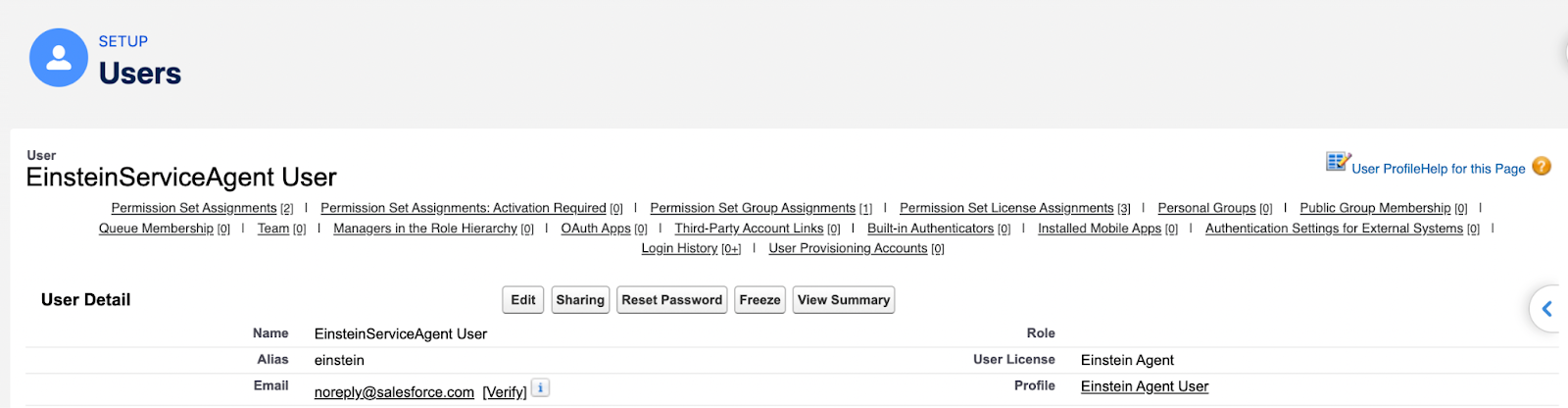
And finally in our list, the Einstein Agent licenses. If you already set up an Agentforce agent, you most likely noticed that these agents don’t consume a Salesforce license, but rather have their very own.
The easiest way to see this in action is to create a new agent through the wizard and select New Agent User as the option. When checking the automatically created user afterwards, you will notice the Einstein Agent user license as well as the Einstein Agent User profile assigned to it.
Check Licenses Consumption
Especially when working with a limited number of licenses, which is the case for most orgs, it becomes paramount to know what is in use. The quickest way to a high-level overview is the Company Information page.
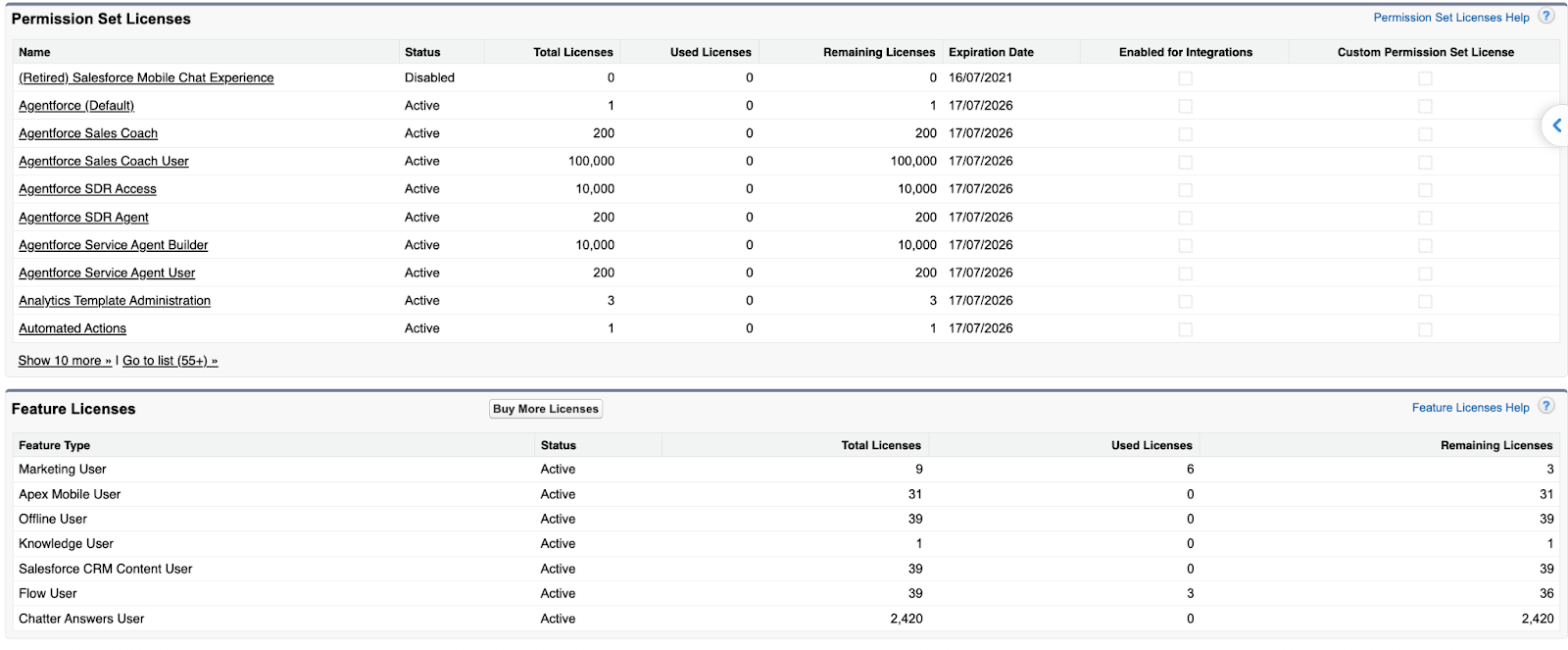
The list of User Licenses will vary based on what licenses you purchased, but nonetheless, here is where you will see how many remain and how many are in use. You can also create a custom report type to track license assignments per user and at scale.
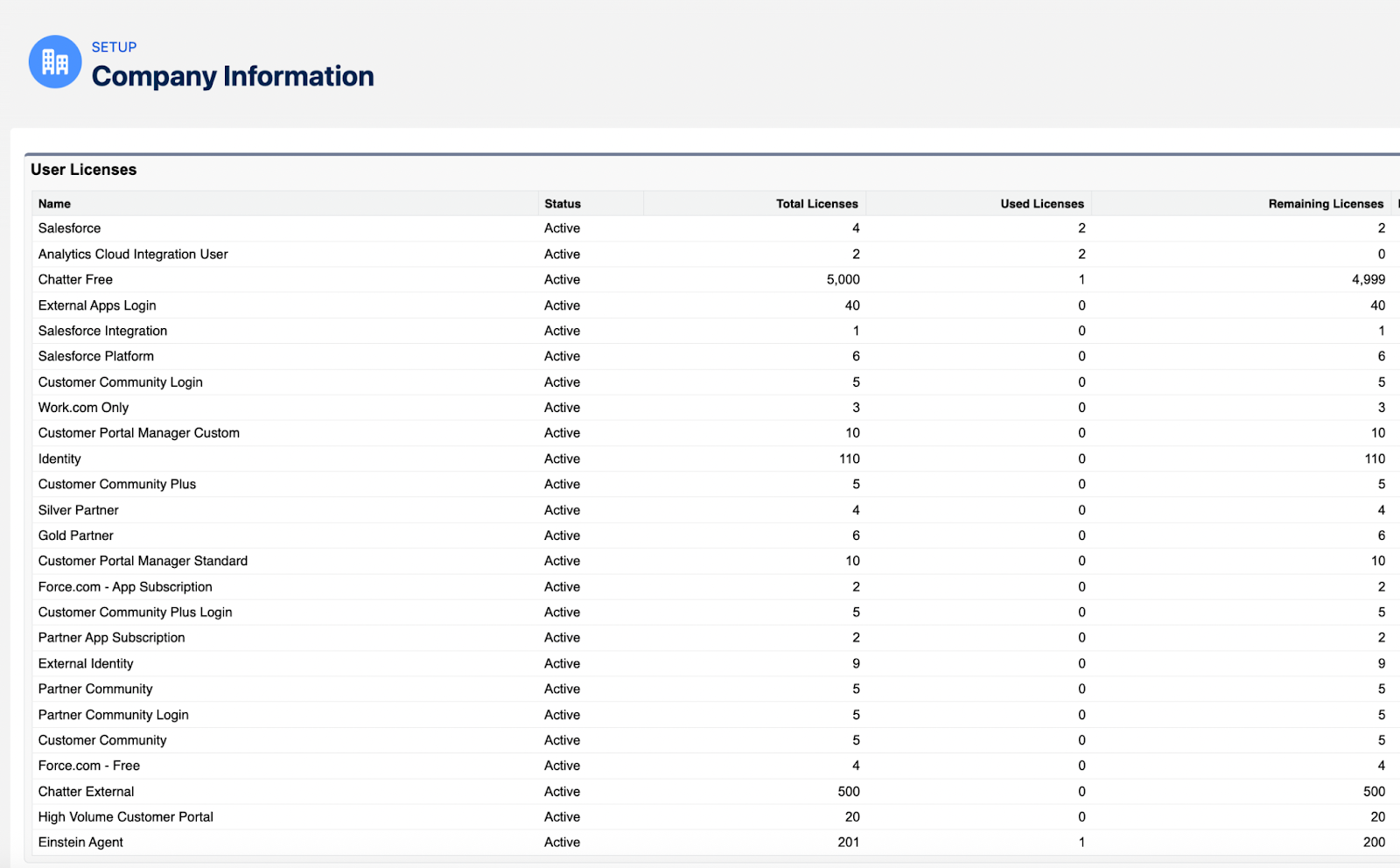
A similar list is available for both Permission Set Licenses as well as Feature licenses.
Summary
This post provides a comprehensive overview of the basic Salesforce user licenses, serving as a valuable resource for anyone looking to understand how these licenses can benefit their organization.
What license types is your organisation currently using? Let us know in the comments below!





Comments: