

The Salesforce Admin role has never stood still. But in 2026, it feels as though the pace of change has accelerated faster than ever before.
This year’s SF Ben Salesforce Admin Survey gathered responses from more than 1,100 Salesforce professionals across 72 countries, painting one of the clearest pictures yet of what it actually means to work as a Salesforce Admin today. From technical debt and AI adoption to rising complexity and shifting career ambitions, the findings reveal a community that is highly capable, deeply resilient, and increasingly under pressure.
Here are the top 10 insights that stood out most from this year’s report.
1. Salesforce Admins Are Feeling the Weight of Rising Complexity
If there’s one theme that appears consistently throughout the survey, it’s complexity.
Nearly 59% of respondents agree that Salesforce is becoming increasingly difficult to work with, and that sentiment cuts across organizations of all sizes. Smaller businesses feel the strain because they often lack dedicated support resources, while enterprises face growing governance and scalability challenges.
The modern admin role has evolved far beyond user management and simple configuration. Today’s admins are expected to understand automation, architecture, security, data governance, DevOps practices, AI tooling, stakeholder management, and business analysis – often all at once.
What makes this particularly significant is that the feeling of complexity is no longer isolated to advanced practitioners. Even experienced admins who are highly confident in their skills are reporting increasing difficulty in managing long-term maintainability and platform sprawl.
The platform has become more powerful than ever, but for many admins, it has also become harder to manage sustainably.
2. Career Satisfaction Is Still Strong, But Signs of Burnout Are Emerging
Overall career satisfaction remains relatively healthy, with nearly 69% of respondents saying they are satisfied or somewhat satisfied in their role.
But beneath those numbers are some important warning signs.
More experienced admins reported noticeably higher levels of declining satisfaction compared to entry-level professionals. Dissatisfaction also increases steadily with tenure, peaking among those who have spent more than 15 years in the ecosystem.
At the same time, 60% of respondents said they are considering moving into a non-admin role within the next two years. That figure should not be ignored.
Many admins still love the ecosystem and enjoy the work itself. However, increasing complexity, responsibility creep, and limited support structures are clearly affecting long-term sustainability for some professionals.
The survey suggests that the challenge is no longer attracting people into Salesforce careers. It is retaining experienced talent once they arrive.
3. Admin-Only Teams Are Still Extremely Common
One of the most revealing findings in the report is just how many Salesforce teams operate without developer support.
Almost 43% of respondents said they work in admin-only teams, while nearly 20% are solo admins managing their org entirely alone.
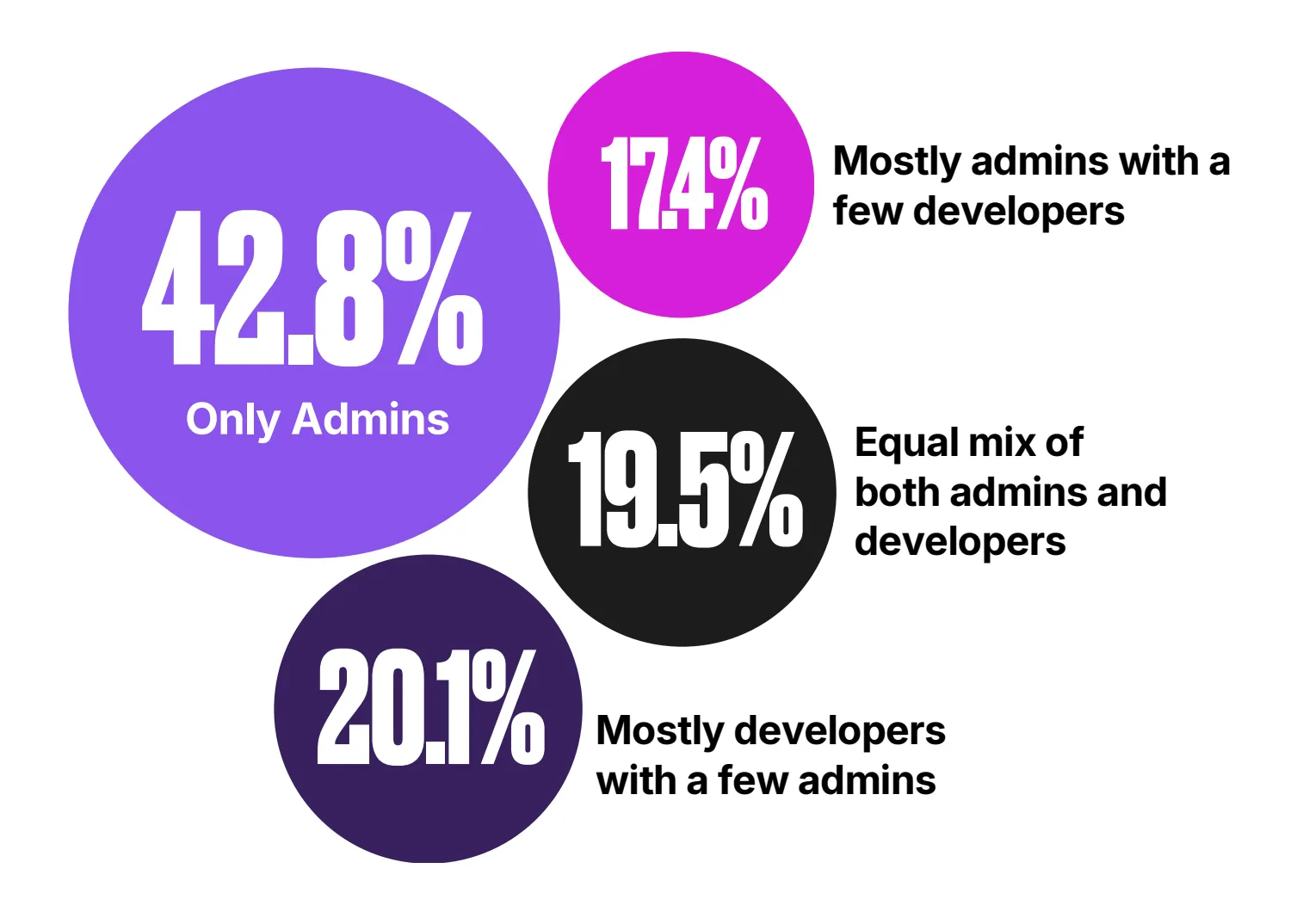
This becomes even more striking in smaller organizations. Among companies with 50 to 199 employees, 70% reported operating with admin-only teams.
At the same time, expectations continue to grow. Admins are increasingly responsible for automation strategy, integrations, data quality, reporting, business process optimization, and even elements of security governance.
The result is a widening gap between platform complexity and available resourcing.
Many admins are effectively being asked to function as analysts, architects, support teams, project managers, and platform owners simultaneously.
4. Technical Debt Is Still the Ecosystem’s Biggest Problem
For the second year running, technical debt was identified as the single biggest challenge facing Salesforce teams.
Only 2% of respondents described their org as clean and well-maintained. Meanwhile, 31% reported high or very high levels of technical debt that regularly slow down delivery and impact day-to-day work.
That statistic alone says a lot.
Most Salesforce orgs are now mature environments. More than 60% are over five years old, and a quarter are more than a decade old. Over time, rushed implementations, duplicated automation, unused fields, legacy configuration, and inconsistent governance create increasingly fragile systems.
The issue is not that admins do not understand technical debt. In fact, the survey suggests the opposite. Respondents overwhelmingly said the biggest thing they need is dedicated time for cleanup and refactoring.
The challenge is capacity.
Admins are being asked to continuously deliver new functionality while simultaneously managing years of accumulated complexity. Unsurprisingly, many teams are struggling to do both effectively.
5. Security Confidence Remains Surprisingly Low
Despite security being one of the most important responsibilities within Salesforce, confidence in this area remains alarmingly inconsistent.
Within Salesforce’s Admin Skills Kit framework, security management ranked as the lowest-confidence competency overall.
Even more concerning, this is not simply an entry-level issue. Intermediate and advanced admins also reported significant gaps in security confidence, suggesting a wider ecosystem problem rather than an isolated training issue.
The survey also revealed that awareness of core security concepts remains limited:
- Over 53% of respondents are unfamiliar with Salesforce’s Shared Responsibility Model.
- Only 20% say the Principle of Least Privilege is enforced very effectively within their organization.
- Just 16.7% report being very familiar with Zero Trust security principles.
As organizations continue expanding their Salesforce estates and AI adoption accelerates, these gaps could become increasingly significant.
6. Flow Builder Is Essential, But Many Admins Still Struggle With It
Flow Builder has become one of the defining skills of the modern Salesforce Admin.
It powers automation, orchestration, and increasingly AI-driven experiences through tools like Agentforce. Yet while most admins recognize its importance, confidence levels remain mixed.
Only 57% of respondents said they feel confident or very confident using Flow Builder, and confidence drops sharply among entry-level admins.
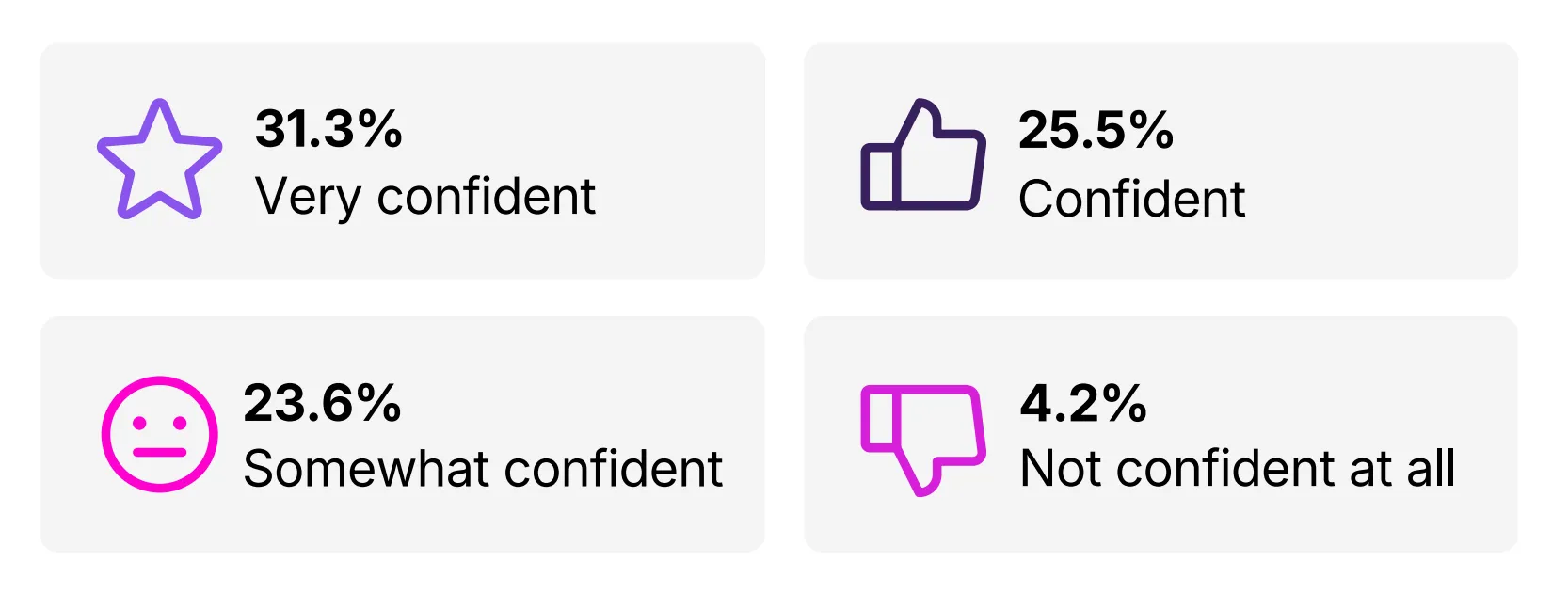
What is particularly interesting is that the biggest challenge is no longer learning how to build flows.
Instead, respondents struggle most with:
- Debugging errors
- Understanding complex logic
- Ensuring long-term maintainability
This reflects a broader shift happening across the ecosystem. Salesforce automation is becoming increasingly sophisticated, but maintainability and governance practices are not always evolving at the same pace.
Building automation is one thing. Managing it sustainably over time is another challenge entirely.
7. DevOps Adoption Is Improving, But Legacy Practices Still Dominate
Despite growing awareness around modern deployment practices, Change Sets remain the dominant deployment method across the ecosystem, used by over 41% of respondents.
Salesforce DevOps Center adoption remains surprisingly low at just 4.5%.
At the same time, many respondents expressed positive attitudes toward adopting software engineering practices. The issue is not resistance. It is enablement.
The biggest barriers to DevOps adoption were:
- Lack of formal training
- Limited access to tools
- Metadata complexity
Interestingly, newer admins were also significantly more likely to make changes directly in production, highlighting ongoing gaps in governance education and deployment maturity.
The survey paints a picture of an ecosystem that understands the importance of DevOps but has not yet fully operationalized it at scale.
8. Hands-On Experience Matters Far More Than Certifications
Certifications still matter in the Salesforce ecosystem, but respondents were very clear about what they value most.
Hands-on experience overwhelmingly ranked as the most important factor in increasing professional value, scoring an average of 9.1 out of 10. Salesforce certifications scored significantly lower at 6 out of 10.
That does not mean certifications are unimportant. The administrator certification remains the most respected and foundational credential within the ecosystem.
However, the findings reinforce a reality many hiring managers already recognize: real-world problem-solving experience carries far greater weight than exam accumulation alone.
This is especially relevant for newer professionals entering the ecosystem, where practical exposure and project experience continue to be the strongest differentiators.
9. AI Adoption Has Moved from Experimentation to Everyday Use
AI is no longer an emerging trend within the Salesforce ecosystem. It has become part of daily working life.
Almost 44% of respondents now use AI daily or regularly, compared to just under 25% last year. Only 15% said they do not use AI at all.
That is a dramatic shift in just 12 months.
The most common benefits reported were increased productivity, faster learning, brainstorming support, and assistance with formulas or technical problem-solving. ChatGPT remains the dominant tool by a significant margin, with almost 75% of respondents using it in some capacity.
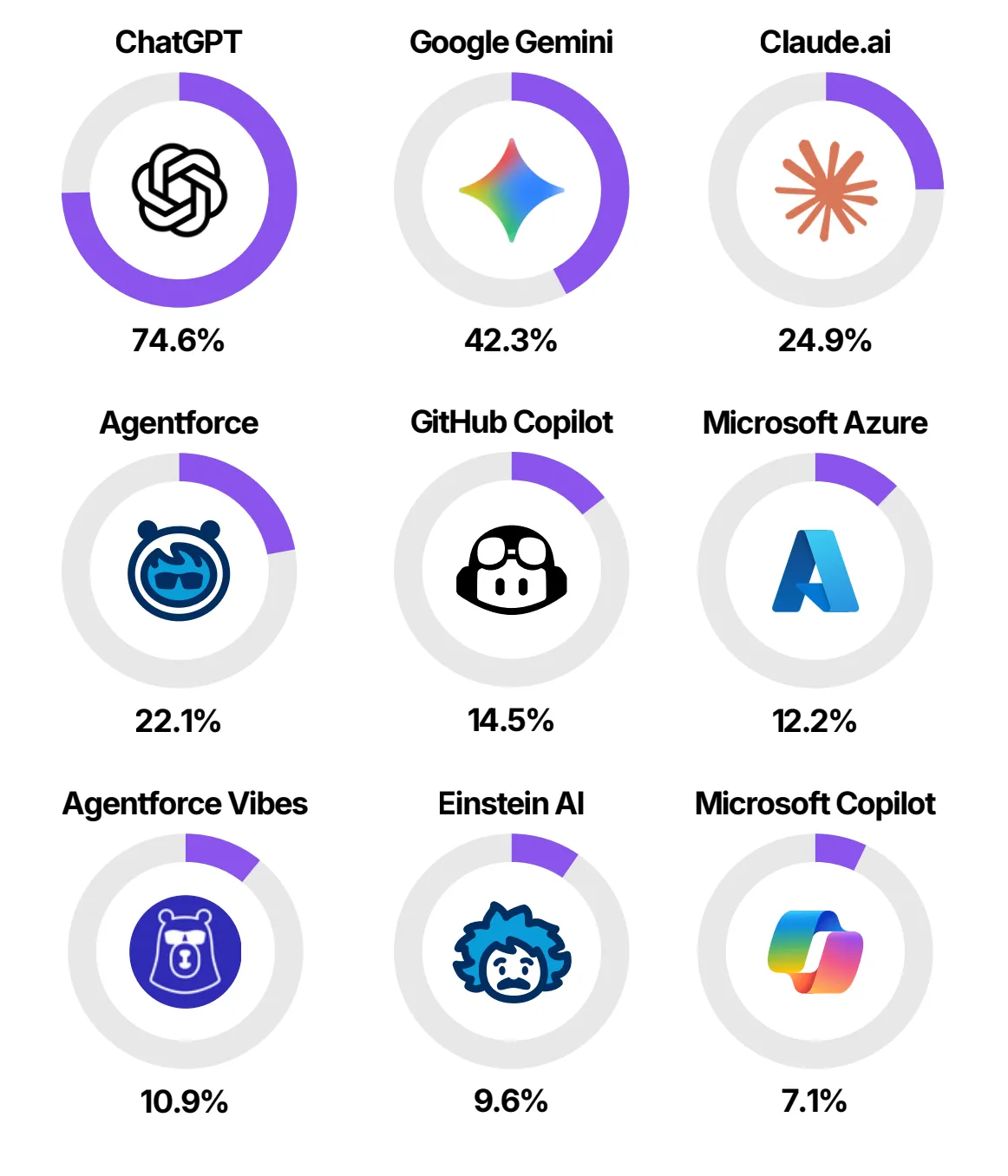
Interestingly, adoption is strongest among experienced admins. Advanced practitioners are integrating AI more deeply into their workflows, suggesting that foundational Salesforce knowledge still plays a major role in successfully leveraging AI outputs.
This is perhaps one of the clearest indications that AI is becoming an enhancement layer for skilled professionals rather than a replacement for them.
10. AI Skills Are Increasingly Seen as Career Insurance
One of the clearest shifts in this year’s survey is how Salesforce professionals view AI skills in relation to career progression.
The Agentforce Specialist certification is already seeing strong adoption, with nearly a third of respondents having completed it and many others planning to do so.
The primary motivation was not curiosity.
It was futureproofing.
More than half of respondents said they view AI skills and certifications as critical to staying relevant in the evolving Salesforce job market.
This reflects a broader mindset change happening across the ecosystem. AI is no longer being treated as a niche specialization or experimental technology. It is increasingly viewed as a core competency that will shape future career opportunities.
The question for many admins is no longer whether they should learn AI. It is how quickly they can adapt while balancing everything else already expected of them.
Final Thoughts
The 2026 Salesforce Admin Survey Results highlight a role that has become more critical, more strategic, and more demanding than ever before.
Admins are operating at the center of increasingly complex systems while balancing automation, governance, security, data management, and now AI adoption. Many are thriving, but many are also stretched thin.
What stands out most is not a lack of capability. Salesforce Admins continue to demonstrate remarkable adaptability and resilience.
The bigger issue is sustainability.
As Salesforce continues evolving, organizations will need to invest more seriously in support structures, technical governance, realistic resourcing, and long-term platform health. Otherwise, the gap between expectations and capacity will continue to widen.
And based on this year’s findings, many admins already feel that pressure today.