

True to the Core sessions are highly anticipated and consistently popular. These sessions could be described as an “ask me anything” to Salesforce executives and product managers, where the audience can ask even the thorniest questions and get a transparent response. True to the Core is designed to connect Trailblazers with the product teams, making decisions about the direction a product is going.
The Dreamforce ‘25 edition of True to the Core featured two sides to the coin of “less Agentforce vs. more Agentforce”, the DX with Scratch Orgs, security “paid-for” features, concerns around licensing and usage, and a whole lot more…
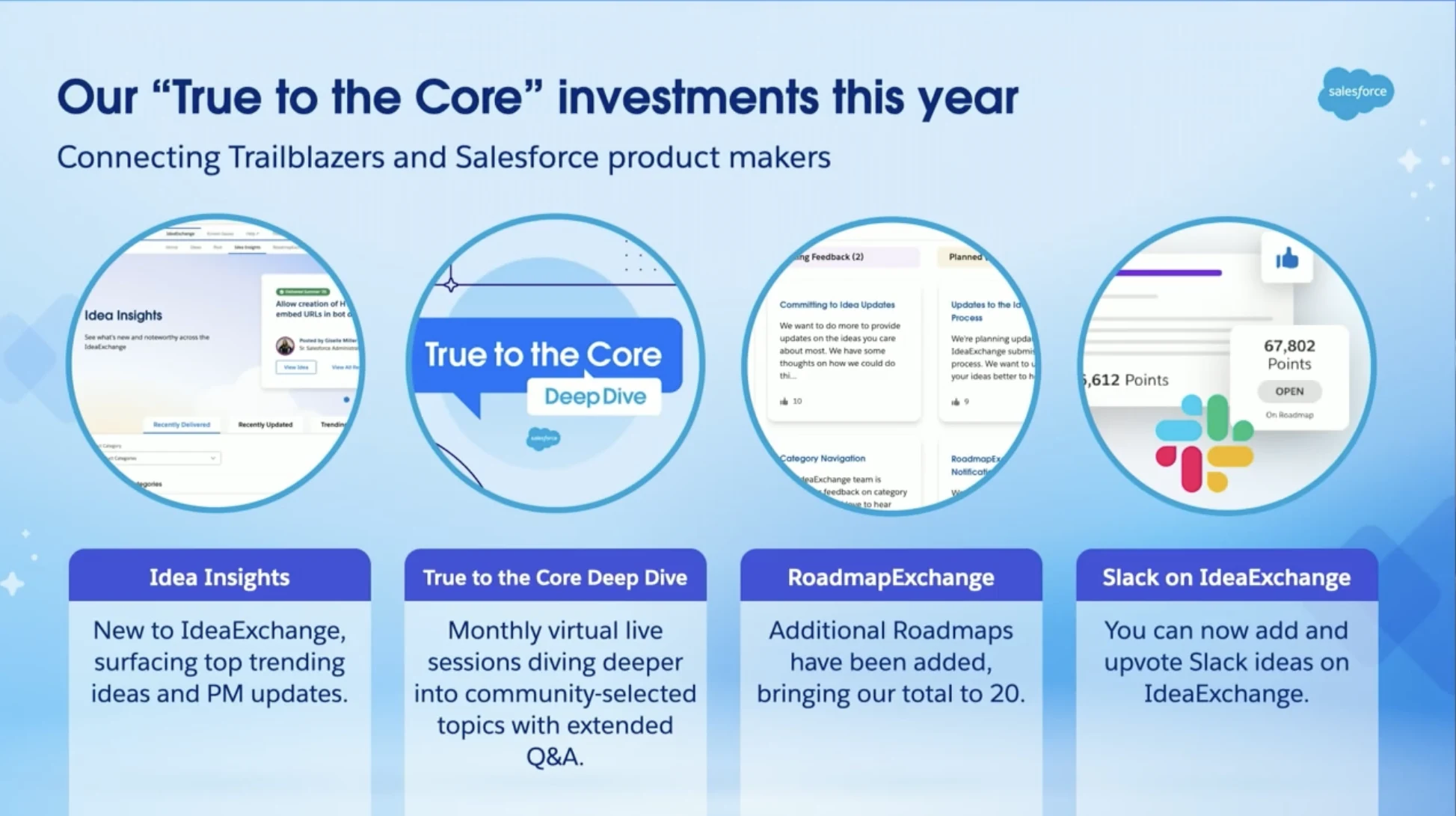
True to the Core Investments in 2025
- Idea Insights: New to the IdeaExchange, surfacing top trending ideas and Product Manager updates.
- True to the Core Deep Dive: Monthly virtual live sessions diving into community-selected topics with extended Q&A.
- RoadmapExchange: Additional Roadmaps have been added, bringing the total to 20.
- Slack on the IdeaExchange: You can now add upvotes on ideas for the Slack product.
What’s New Since TTTC at Dreamforce ‘24?
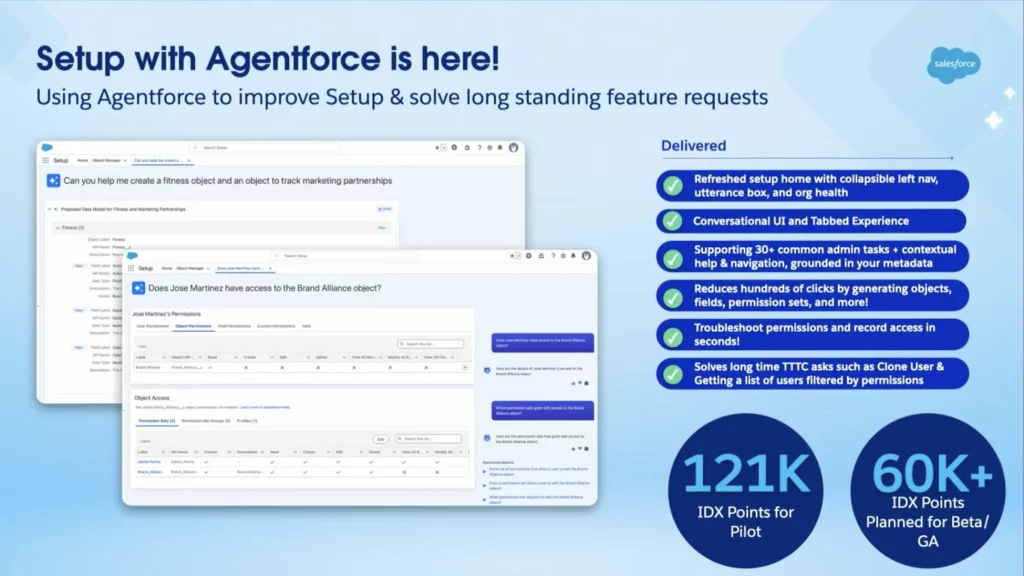
- Agentforce in Setup: While currently in pilot, this promises to solve long-standing asks from Salesforce Admins, e.g. show me all users which have a certain permission. IdeaExchange points resolved: ~121k (with the pilot); ~60k (when GA).
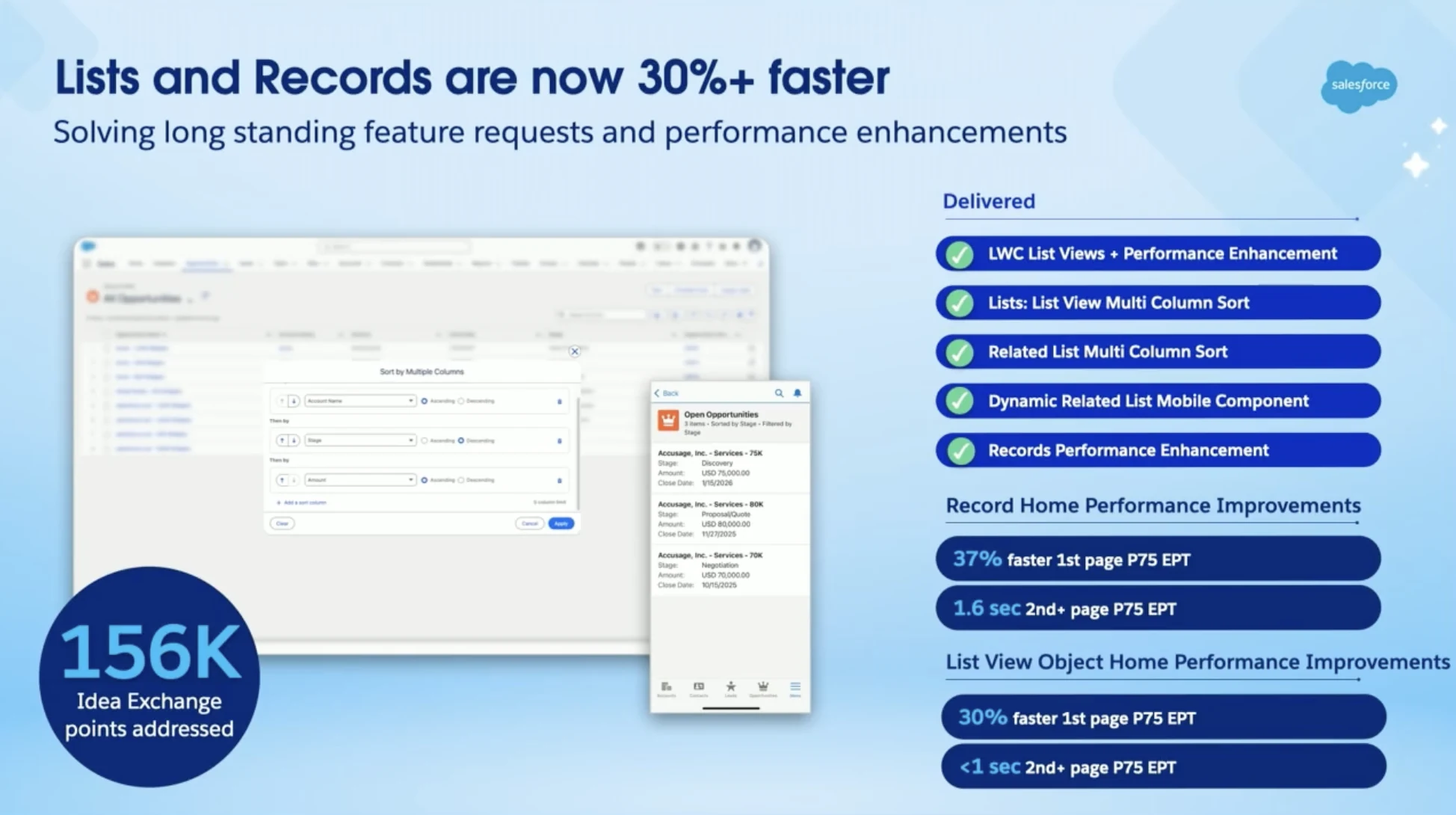
- List View and Record Performance: More than 30% faster to load, and more. IdeaExchange points resolved: ~156k.
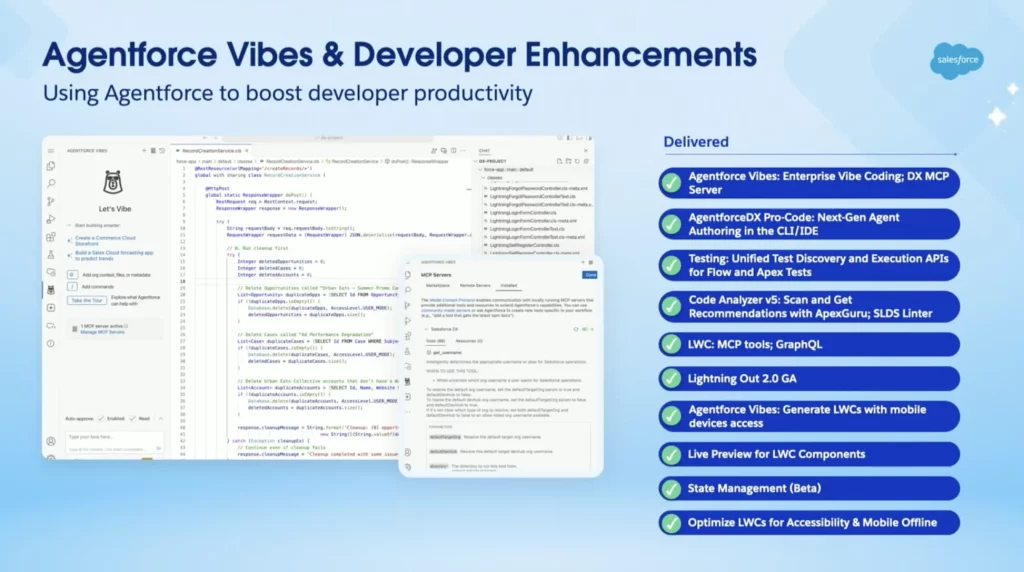
- Agentforce Vibes and Developer Enhancements: The ability to use natural language to build apps, LWCs, Apex, etc. Shout out for State Management, where we will no longer have to do prompt drilling, available out-of-the-box by the end of the year.
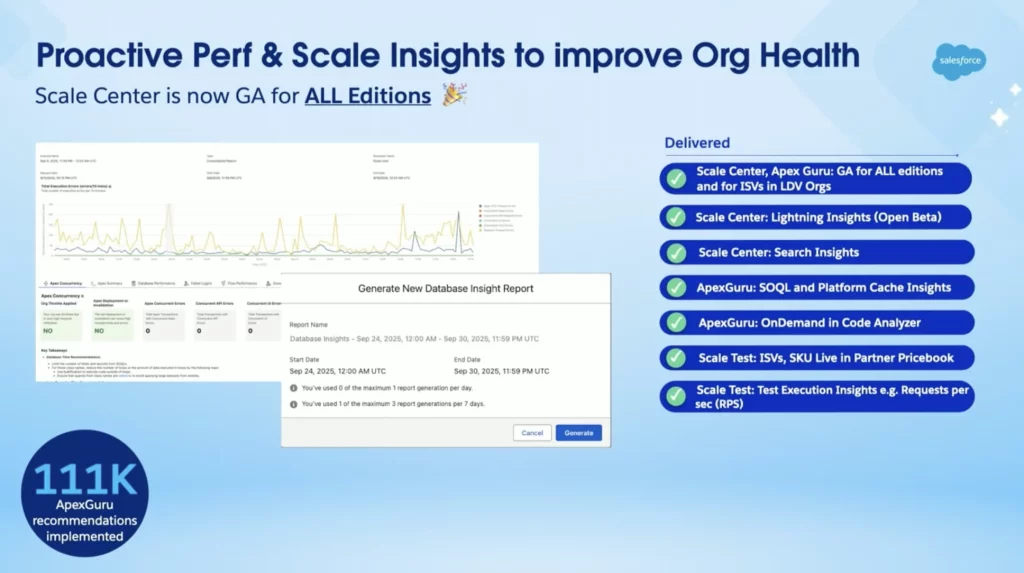
- Performance and Scale Insights: Skill Center is now generally available across all editions, bringing insights to Lightning performance, for example. ApexGuru gives further recommendations. IdeaExchange points resolved: ~111k with ApexGuru alone.
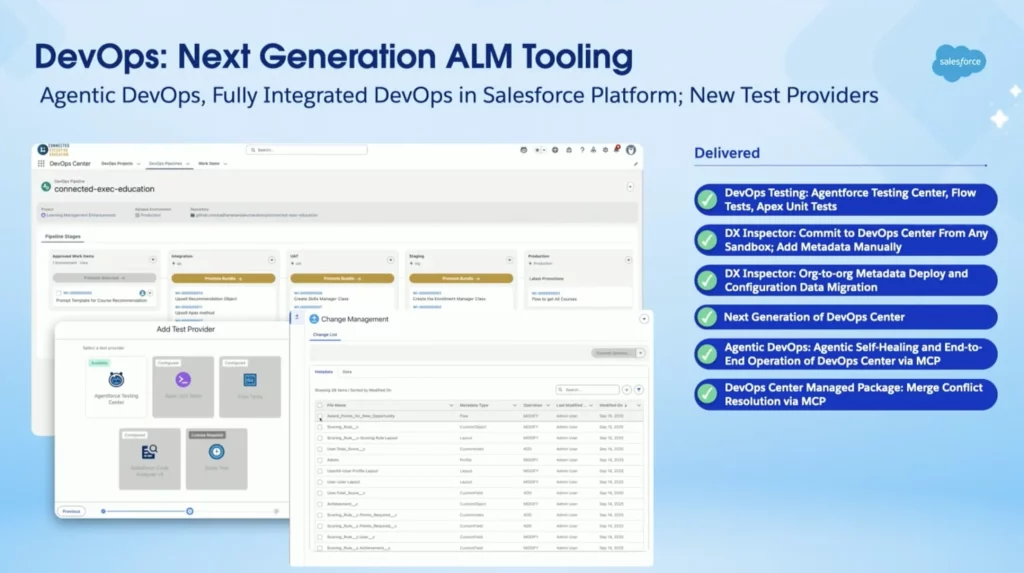
- DevOps: Next Generation ALM Tooling: Expanded testing providers, agent testing, Flow testing, Apex unit tests. Improvements to the DX Inspector – which is a bar at the top of sandbox pages to display changes made to metadata – now with the ability to push changes directly from the DX Inspector into your DevOps.
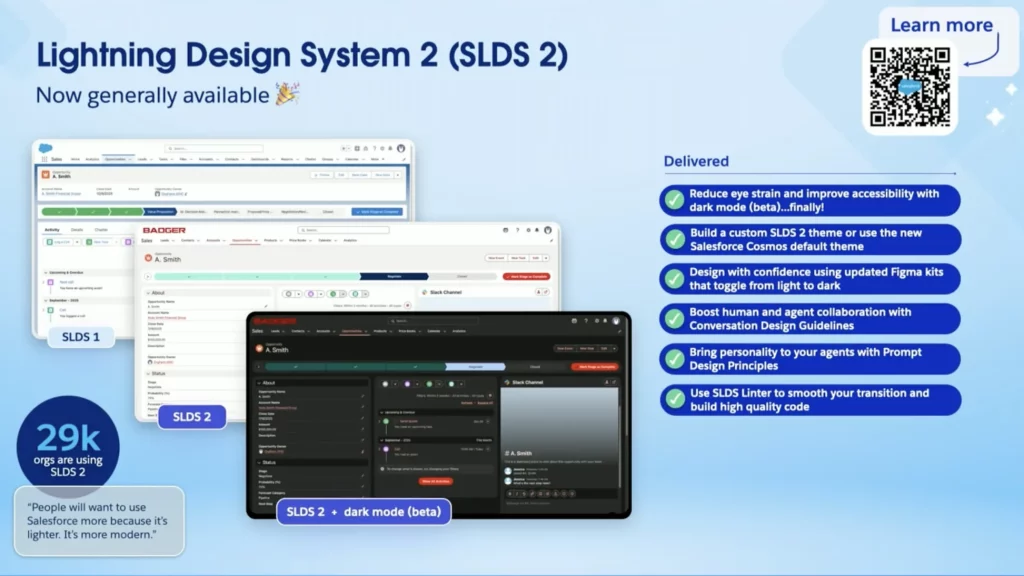
- Lightning Design System 2 (SLDS 2): This upgrade to the Salesforce design system is now generally available – not just a new theme (Salesforce Cosmos) but also more branding and theming options, UI flexibility, and accessibility preferences. Plus, dark mode (in beta) is coming soon to Sales Cloud and Service Cloud.
Hot Topics: Questions from the Community
Agentforce Isn’t Everything
“AI is incredible. We’ve all used it to some extent. We’ve seen the amazing things that it does. I used Agentforce Vibes last week, and it blew me away when I put together a prompt in 10 minutes, it did amazing things.”
They then went on to reference a couple of examples, such as when they continued tweaking, it “failed and fell on its face over and over”, and the agent involved in the Dreamforce challenge.
The point I’m trying to make is that AI is not a solution for everything, but for the last two years, Salesforce has been pushing AI and Agentforce as the solution for everything. The truth is that I, we all, can build interfaces for our customers that are smoother, quicker for them, and less expensive for us to run. One example is when people complained about taking the search bar off the Salesforce Help center (I think you’ve reversed, or at least said you’re going to reverse it).
I come to Dreamforce to learn, and for two years, I’ve heard nothing but Agentforce. I really want to keep coming back, and I hope you keep building the incredible tools that you’ve built with Agentforce, and you keep pushing the concept of AI solutions forward because you’ve done a truly amazing job.
I know you’re doing other things, and I want to know more about them, Flow Builder, for example. What we use every day, I can’t learn about these because you won’t talk about them. It seems like Agentforce is the only thing you want us to know about.”
– Alon Waisman, Salesforce Architect
“Dreamforce is where we need to talk about the future, and where we’re going – the big things. It’s good feedback. TDX is another place where we need to do more around the platform and for admins, but we’ll look at it.”
– Parker Harris, Salesforce Co-founder and Slack CTO
“38% more of our sessions are by the community, for the community, so this year we have a bigger space. You will see that reflected in Agenda Builder.”
– Meredith Brown, SVP, Trailhead and Community
Experience Cloud
“I was going through all the Agentic features, and I’m not seeing Experience Cloud on the graphs. Maybe that’s just an oversight, but it would be useful if we can hook that up and make it available for customers.
Second thing, can we please get the dynamic page layouts ported over to Experience Cloud? All the features I’ve seen come to Experience Cloud have been more pro-code, more build-it-yourself, and that’s great if that’s what you want to do. But, if you’re trying to be agile, being able to just drag-and-drop the same fields as dynamic layouts, it would be a huge time saver.
Lastly, please can we get some love for the security and sharing model in Experience Cloud because sharing sets just don’t cut it.”
– Doug Younger, Salesforce Architect
Dashboard Color Pallettes
“We have all this data, and we’ve been given incredible tools to manipulate it, to share it, to show it. But in dashboards, we’re beholden to the 14 color palettes. Why can’t we have custom colors to brand our dashboards?”
– Brent Anthony, Salesforce Administrator, Trailhead Triple Star Ranger
The Design Systems Team answered that it is on the roadmap, with the Next Generation theming and branding will be rolling out in a release (or two). For data visualization, they are actively investigating it, they don’t have a release date yet.
Scratch Orgs and the Developer Experience
“I’m speeding up the ability for developers to get environments, which allows for them to quickly solve bugs, reduce issues with product usability, and ultimately deliver faster on the platform.
We are exploring the usage of Scratch Orgs, however, we found that we cannot use Org Shape. This means that we have to enumerate every feature that we need enabled for Scratch Orgs, as well as scripts to sanitize metadata, and deploy data to Scratch Org environments to make it meaningful for developers. This is obviously cumbersome and time-consuming on the initial setup.
What is Salesforce doing in terms of making the usage of Scratch Orgs easier, but broadly speaking, to make the developer experience and release cycles more efficient?”
– Jeremiah Dohn, Technical Architect
“The whole purpose of Scratch Org Shape is to not need to explicitly specify each feature, so if it’s not working in your case, I would love to connect.
In terms of scratch orgs, last year, we shipped Scratch org Snapshots. These enable you to spin up Scratch orgs with packages and metadata much faster. We have worked to improve performance over the last couple of years, so any long-running operations, be it packaging, spinning up the Scratch org.
We have, and we continue to, invest in making the developer experience and productivity much better on our platform by looking at each operation, then seeing how we can fine-tune and improve them.”
– Dileep Burki, Product Manager for Scratch Orgs
Connected App Security
“There have been some aspects, like connected apps, that have some security concerns and areas for improvement. If you have a connected app with a third-party connection, there’s no way to lock down that app to say, e.g. you can’t access this object or these fields, even though we want the user in Salesforce to have access to those. There’s no way to say ‘that connected app can’t touch those’. As a result, you can’t have the principle of least privilege with a connected app with a third-party integration.”
– Andrew Russo, VP Business Systems
Security Add-Ons
“There are paid add-ons (e.g. Event Monitoring transaction, security policies, and others). Is Salesforce having some alignment issues between profit versus trust? I understand that there are large orgs that might not need the features (e.g. field history tracking that’s in Salesforce Shield). However, I think there are some that should be included, such as Security Center, for all customers, so we can have a trusted, safe experience.”
– Andrew Russo, VP Business Systems
“In terms of trust versus profit, we spend a lot of time, effort, and money on security. What are the table stakes for organizations? These features are there, out of the box.
We have phenomenal security and cybersecurity teams that are doing advanced monitoring and protections 24/7 – things that you’re not going to see but that you will hear about if they catch something relevant to your org.
In terms of how we decide if a functionality is paid or free, we look at whether these are what everybody needs. The paid add-ons are advanced protections that are not going to be required for every single Salesforce customer. If we do think something falls into that camp, we do make it free.
These are shipped from the same team. You mentioned Security Center, and that team also looks after Security Health Check. When we’re thinking ‘we need to have that included, and we shouldn’t make it paid’, we’re sending it to Security Health Check. That same team is heavily invested right now in multiple updates to Security Health Check – more metrics, more data, and we’re making it proactive so it runs in the background, instead of you showing up and clicking a button. You will be able to subscribe, so if your score changes, you can go figure out why – plus giving you remediations on how to correct it.
The free versions of what would be paid-for in Security Center, is getting some serious investment, and you’re going to see a lot of new things coming out in the next release.
The same goes with Event Monitoring – the Event Monitoring team also supports all of the free security events – they’re just not called Event Monitoring, they just go straight to the platform, for example, login anomalies, login events. They are just there, within the platform.
Maybe we should be tying them closer together, so you can tell the difference between the same capability, when this is the free version, and this is the version that not every customer is going to need, or want to pay for it overall in the platform – so, ‘platform by tax’. That’s how we make that determination.
Can Security Center be included? Some of those features are (or, going to be) in Security Health Check. Security Center sounds like it should be free, but really what we’re looking at is, line-by-line, should this be free, should this be paid, what’s the cost, who will it serve?”
– Marla Hay, SVP, Product Management
Permissions Set Licenses and Integration Users
This is an issue that came up true to the core last year. I was having a conversation with a client about permission set licenses and the integration user, and I had to explain to them that you have to actually use an extra license for a normal login license. You can’t assign a permissions set license to an integration user. So you’ve got critical objects in nonprofit cloud that you cannot write to with the integration user – you have to use a full license. It doesn’t make sense; it seems like it would be really easy to fix.
– Chris Pifer, Senior Architect
“We’re working with the licensing team and the Nonprofit Cloud team on this very issue. We have to open some changes required to the PSL licensing mechanism, so that team, which owns the PSLs, can then make their PSLs available to the Integration User, at no additional cost.
At the moment, you get five Integration Licenses, and at no additional cost, and the plan is for an organization to get, say five PSLs, which you then associate to an Integration User, following that same model.”
– Jeremy Westerman, Product Manager, Enterprise API team
Agentforce in Setup
“I’m actually going to ask for more agents (I may be the only one here!). Agentforce for Setup is something that I look at, and I think, ‘that’s going to change the life of everybody in this room’.
What can we do to get it faster, get broader coverage across all of Setup, because Salesforce is going to get an advocate inside every single org – saying “this will save me so much time, and we should go look at Agentforce for the rest of our organization’s work.”
– Chris Pifer, Senior Architect
“In our first rev, we focused on 40% of the traffic, which is about 50-60 use cases. For each one of the use cases, we’ve handcrafted actions for each. But the reality is that Setup has thousands of use cases. So, how do we scale that?
The long-tail use cases are where we’re focused right now, ones where we don’t have to create specific actions for each but provide enough grounding, so the agent knows what to do. That’s what you can expect to see (fingers crossed) on our path towards TDX ‘26.
– Khush Singh, SVP of Product Management, Platform
“There’s been a lot of work under the hood. What does it take so that an agent can understand the meaning of all the metadata.
We provide a lot of that metadata, and you provide descriptions of the metadata. Does everybody fill in the descriptions? Well, maybe we should make it a required field.
We are leaning in on ‘how can you provide the metadata about the metadata so that the agent can understand it?’. This is happening so fast. Before we really unleash Agentforce to the whole of Setup, let’s nail the most important use cases. Managing users and user permissions, which has been a confusing part of our platform.
Under the hood, we’ve been thinking about how we can vectorize our metadata, and use AI to understand the metadata, and all the metadata grounding infrastructure.
I’m pretty optimistic. You’re going to see a real acceleration in the reinvention of Setup.”
– Steve Fisher, President and Chief Product Officer, Salesforce
Duplicate Users (and Charges)
“This is a follow-up from a question about duplicative users. You know when user, and multiple orgs, being charged for each. I was wondering if you had an update on that?
We happen to be in contract talks right now, and I even shared a clip from last year of you saying that ‘users should be one user’, and therefore, not be charged to be in multiple orgs.
The account (sales) team looked at me like I had two heads – which is funny because we were talking about how many licenses I should have.
I wonder if you have an update on that because we have 65 users in two orgs, and that’s pricey.”
– Roy Moore, Salesforce Platform Manager
“I don’t have an update on that, but we need to solve it. We need to simplify it all. Steve Fisher has led the way with the digital wallet and what we’ve done for consumption-based models, for example, Agentforce and Data Cloud. I think we can solve it because we have new ways of calculating that we can leverage for use cases like this. I don’t have an update, sorry.”
– Parker Harris, Salesforce Co-founder and Slack CTO
Experience Cloud Login Licenses
Marla Houston came to the mic with some thoughtful maths regarding a type of license for Experience Cloud – login licenses. Here is a summary, but tune into the recording at 37:47 to hear the full calculations:
“If I think 100 people are going to log in once and never again, then I buy the login licenses. When I reach the capacity of Community licenses, then nobody new gets a license.
I was working with a small non-profit. When they hit the limit, no more people could log in. I immediately opened the case, and because they weren’t paying for the highest level of support, nobody answered for three days. So, I was manually deleting Community licenses where people hadn’t logged in for two or three years. But the bottom line is with the 20 times ratio, in less than two years, if I truly had 100 new people log in every month and they never logged in again, my licenses would be consumed.
The answer that kept coming back from Salesforce was ‘you have to buy more licenses’, and I kept saying ‘we’re not using more than the license logins per month we’re paying for.
I want to know why it can’t be easier – that it has to be a change to a contract, pay more money, or an admin, like me, has to manually deactivate licenses so that a business doesn’t come to a screeching halt.”
– Marla Houston, Founder at Op2Myze
“Historically, we focused on named licenses. Over time, we’ve been thinking more about usage. Essentially, what you’re saying is to have more of a usage-based model. Fine, there may be overages that we won’t charge for, if it’s over x amount.
I think we can rethink this in a very different way, so that you don’t even have to do any of the math that you did. We could make it a simpler model. We’re simplifying our pricing across the board. It sounds like this area is a little antiquated.”
– Parker Harris, Salesforce Co-founder and Slack CTO
Lost Focus on the Community
It has been noticed by some, especially over the past year, that Salesforce has clipped its funding towards the community. Tom Bassett, Senior Solutions Architect, took to the mic with a creative take – a poem that expressed this sentiment. Here’s a snippet:
“Where is the trust? Where is the truth? We’ve built this Ohana, we’re standing with you.
We give our time, our hearts, our drive, yet we’re treated like marketers keeping the dream alive.”
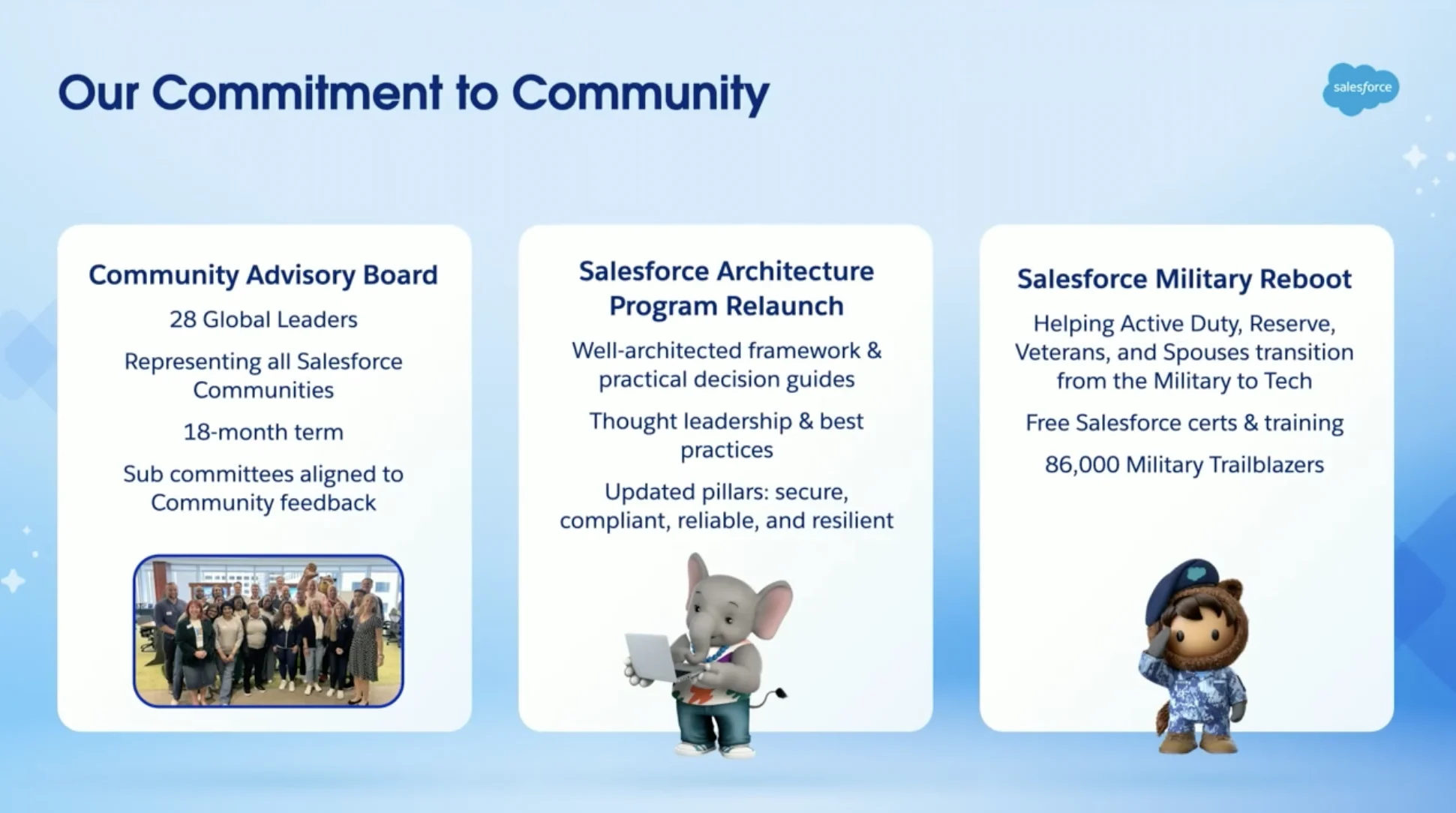
Examples Tom referenced were Certification Days, Community Group Leader swag. There are others, such as the Well-Architected and the Salesforce Military programs (which have both since been re-established).
Meredith Brown, SVP, Trailhead and Community, is the new leader for all commitments Salesforce makes to their community. The main commitments recently made are:
- Community Advisory Board: 28 leaders from around the globe are participating to represent all corners of the Salesforce community (running on an 18-month term).
- Execs ‘On the Road’: Hopes to get more Salesforce executives on the road to attend Dreamin’ events to hear community feedback first-hand.
- Community Sentiment Survey: Launching in November, will give feedback from the community a wider reach.
“I think it’s important to criticize, and I think it’s also important to praise when things are done right.
I would like to challenge you to put into your V2MOM that every employee goes to two community events a year, whether virtual or in person. If they don’t understand, how can they provide support, and evangelize what community has meant to this company and to all of us?”
– Michelle Hansen, Principal at Slalom
Leah McGowen-Hare, former leader, made very solid points:
“As a company, we did have to make budget cuts – and yes, swag was one area. I did a ruthless prioritization exercise around what is more important.
Our amazing Trailblazer Community team have been advocating really hard inside these walls, saying ‘this is what’s important for the community, we must do this’. Yet, we did reinvest in relaunching the Salesforce Military program, which is really important.
All of these take funds, and it takes headcount – so when you see headcount coming in those places, that is investment into programs that serve a wider community.
So, there have been shifts – but we haven’t lost our way, we’re finding our way, but it may not be in the way that is always what people see, but it is definitely in the way that’s going to serve a wider community.”
– Leah McGowen-Hare, SVP, Global Growth and Impact
Summary
True to the Core at Dreamforce ‘25 offered a transparent, open conversation between Salesforce executives and the Trailblazer community. From “less Agentforce vs. more Agentforce”, DX with Scratch Orgs, security “paid-for” features, concerns around licensing and usage, and more. It was clear that participants appreciate that Salesforce is still listening closely to its users.
If you had the chance to step up to the mic, what would you ask?