

It’s TDX season… the perfect time (aside from Dreamforce) to take a step back and look at where the platform is heading. A big shift I’ve noticed over the past year is that development on Salesforce is becoming far more inclusive. With the introduction of new tools like the Web Console, continued messaging around admins becoming developers themselves, and an increasing number of capabilities becoming accessible without code, the line between roles is starting to blur.
This year also marks TDX’s 10th anniversary, and the keynote reflected that evolution. As expected, there was a strong focus on AI, agents, and new ways of building on the platform. While you’d expect many of the announcements to be developer-focused in an event like this, there are clear takeaways for admins, particularly in how automation is designed, how data is used, and how users interact with Salesforce. Let’s dive in.
Headless 360
One of the biggest themes from this year’s keynote was “Headless 360”. I know – another term with 360 at the end of it. But while it may sound like another hyped architectural buzzword, it actually represents a broader shift in how Salesforce is positioned.
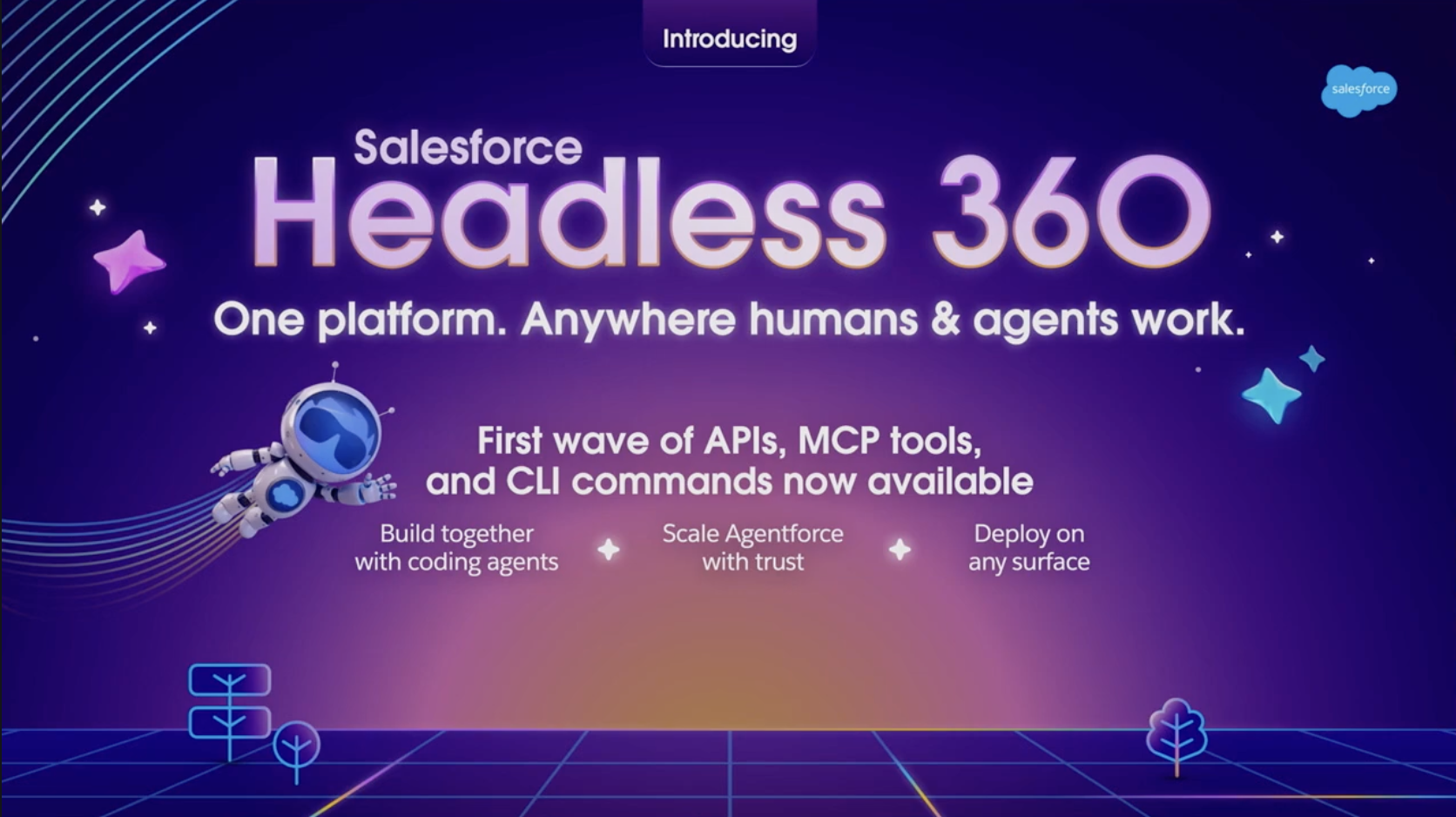
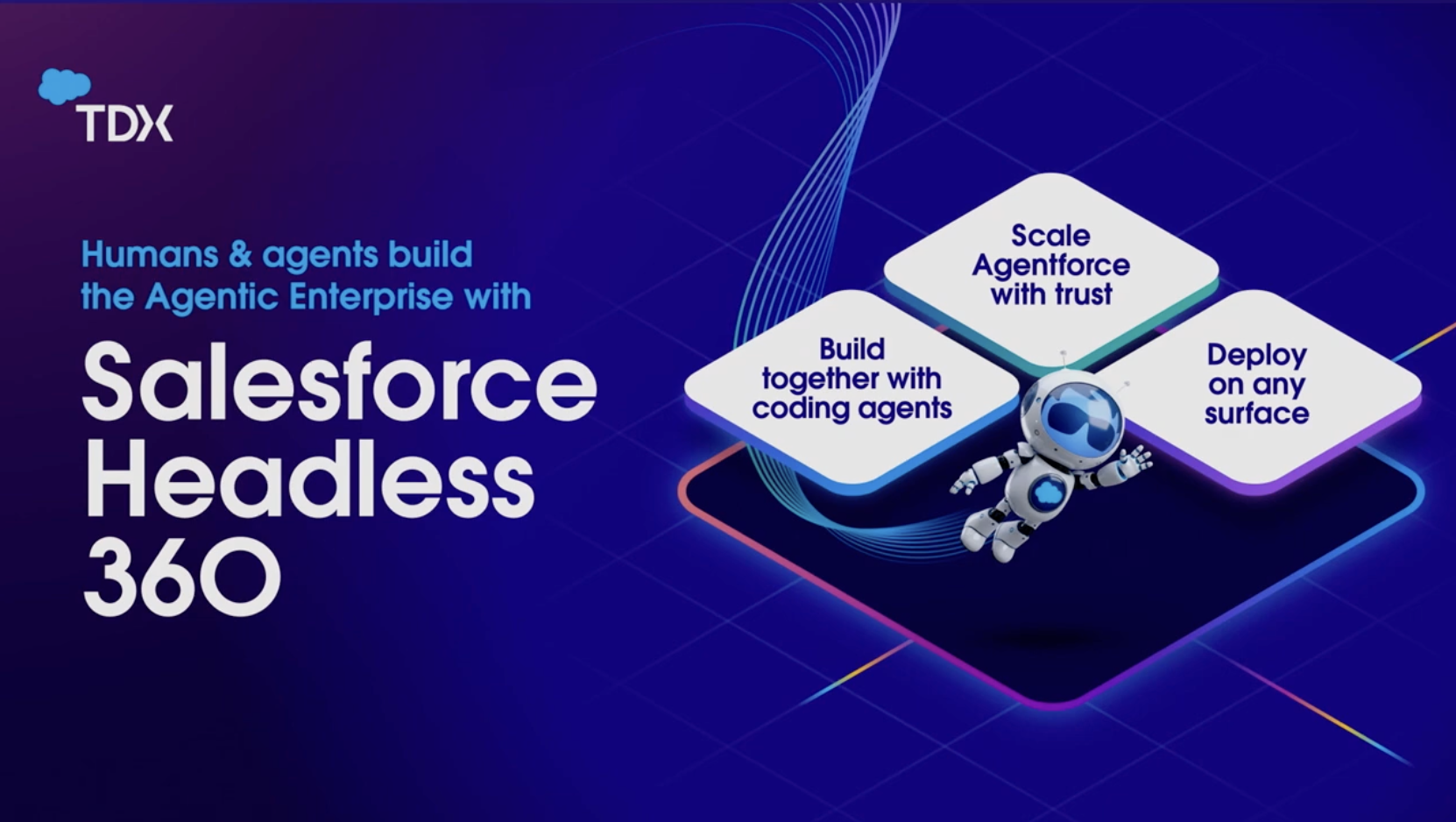
For the longest time, we’ve seen Salesforce as the primary interface where users log in and work. And with SF’s product developments and acquisitions over the years, it has grown from a simple work platform into a whole system that powers experiences across multiple surfaces.
A key part of this is the Agentforce Experience Layer (AXL), which allows teams to define or build an experience once and render it across different platforms. So instead of building separate interfaces for each channel, the same interaction can adapt depending on where the user is. As highlighted in the keynote, this enables teams to “build once and run anywhere”.
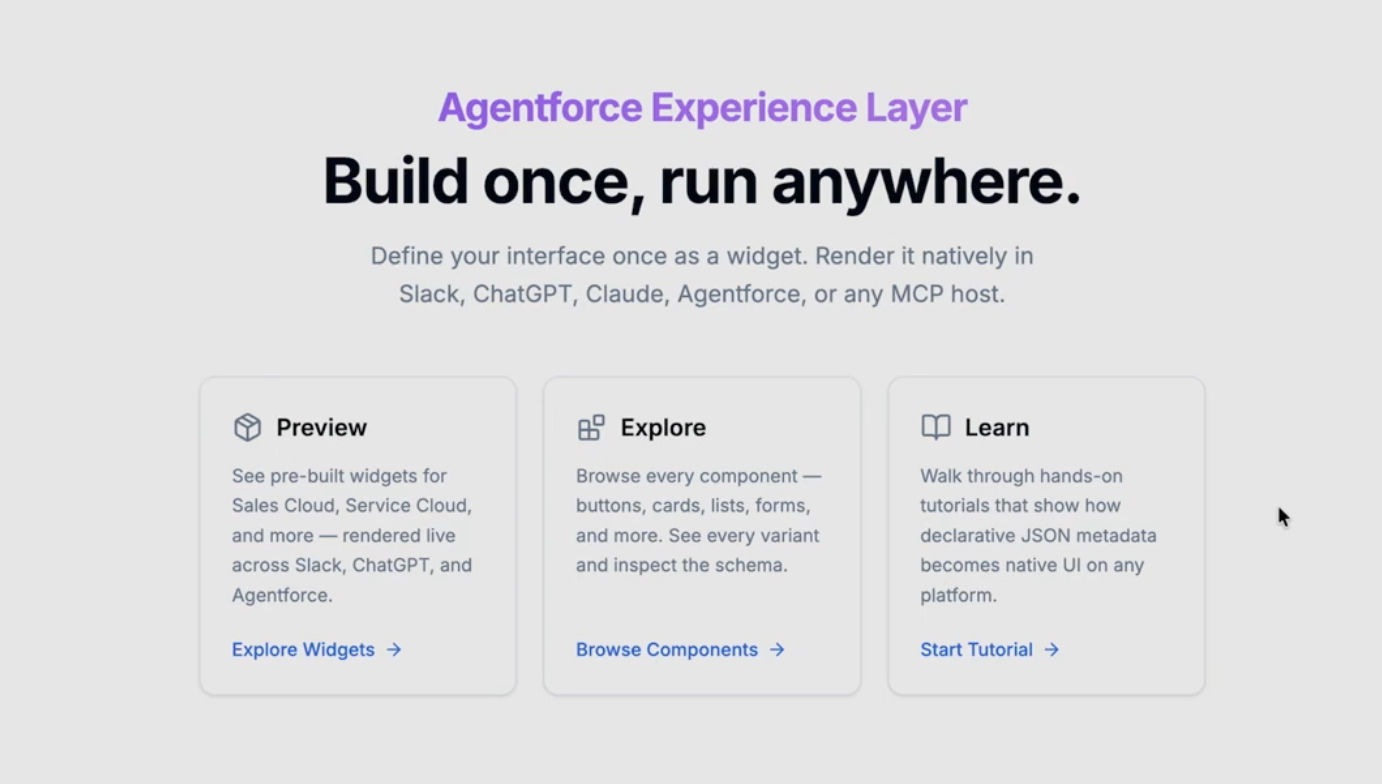
Is this the end of admins’ thinking within the walls of page layouts and Lightning pages? Maybe not entirely. But the focus seems to now be shifting toward designing data and automation that can operate consistently across multiple entry points. Headless 360’s tagline even says “no browser required”, basically signaling admins to think beyond the Salesforce UI.
Organizations can now bring Salesforce-powered experiences to where users already work. Think Slack, Teams, mobile apps, or even ChatGPT. I used to believe that users must be pulled into Salesforce, but now it’s more like pushing the Salesforce experience out to users. It’s more about meeting users where they are, rather than requiring them to switch platforms.
Agentic Enterprise Is Becoming the Default Model
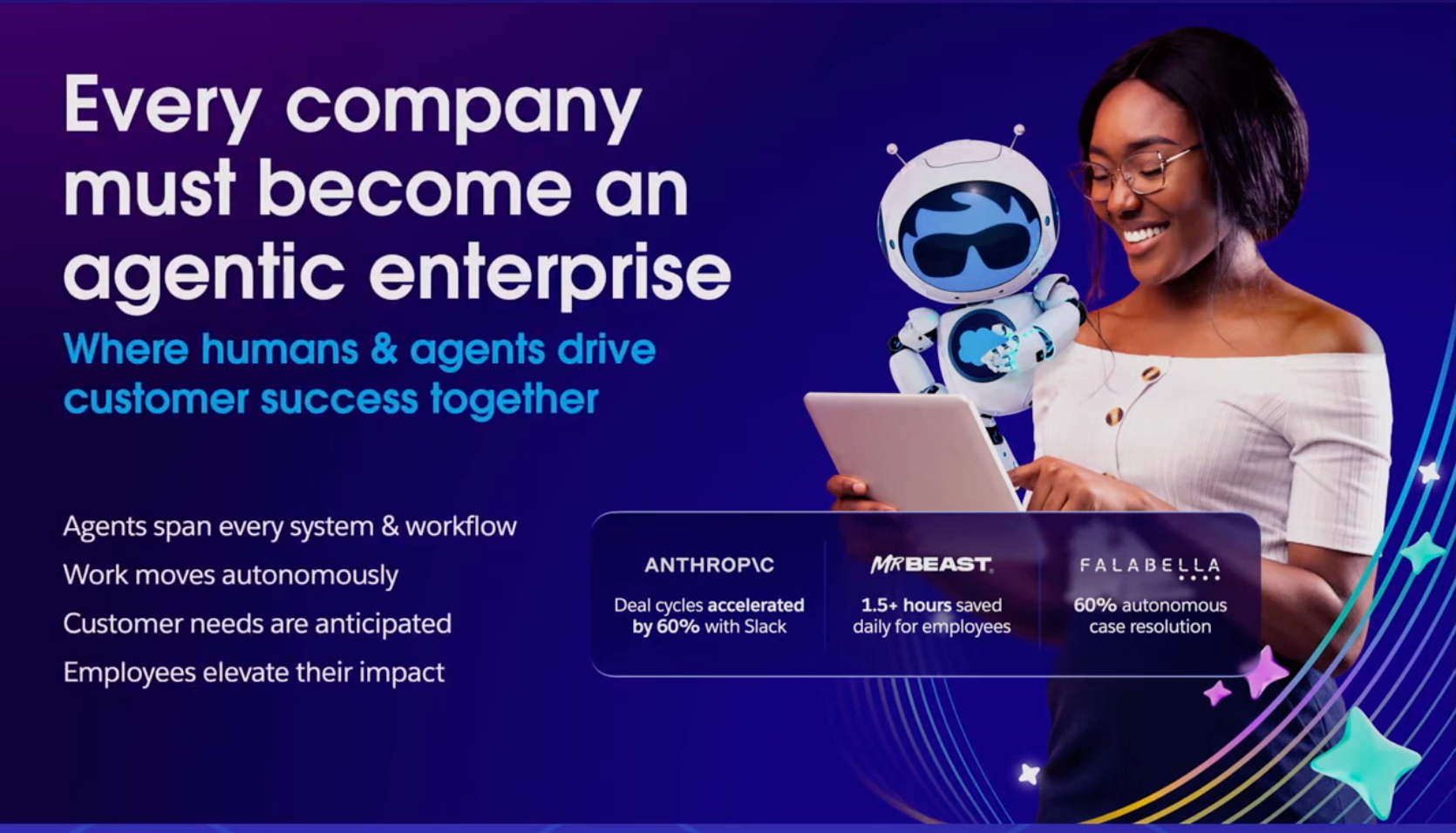
Salesforce continues to emphasize the concept of the “Agentic Enterprise”, where humans and AI agents work together across business workflows. The message was pretty clear – every company must move toward a model where humans and agents collaborate to improve processes.
Salesforce has given agents more and more capabilities, and thanks to Agent Script, we can regain control and, in some ways, reinforce the deterministic side.
With everything we can do with agents now, they are increasingly responsible for handling tasks such as responding to queries, updating records, and executing actions. Users’ roles are now shifting from directly performing tasks to overseeing and guiding automated processes.
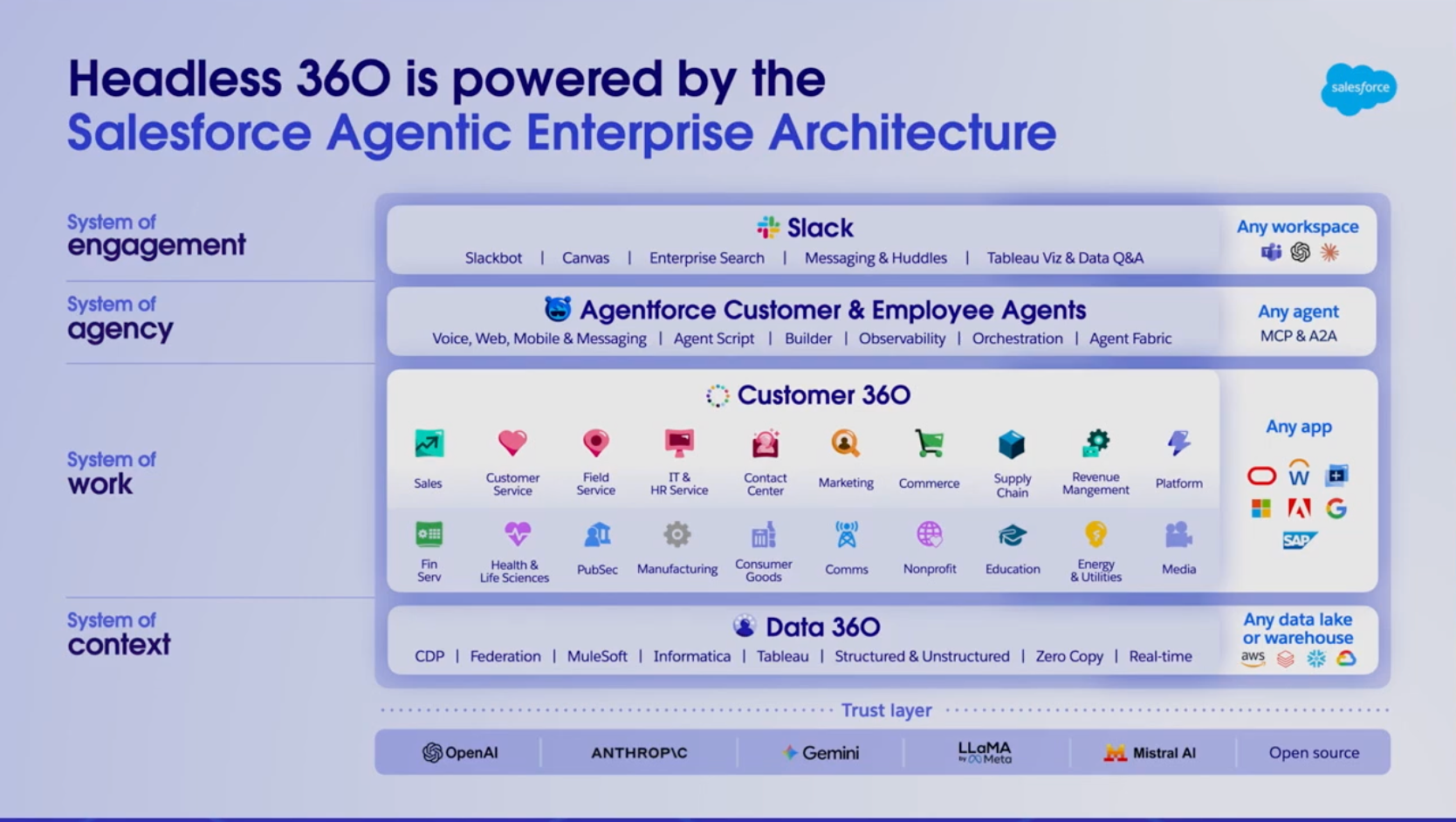
For admins, this once again emphasizes the significance of design knowledge – reinforcing the importance of clear logic, structured data, and automation that’s well-thought-out. Agents still rely on the same underlying configurations that admins are experts in, but now, the way they are triggered and executed has evolved.
The Probabilistic Side of Systems
I mentioned earlier how features like Agent Script help bring a level of determinism into agent behavior, but the reason this exists in the first place comes down to a much bigger shift. One of the most important ideas highlighted in the keynote is the move from deterministic to probabilistic systems.
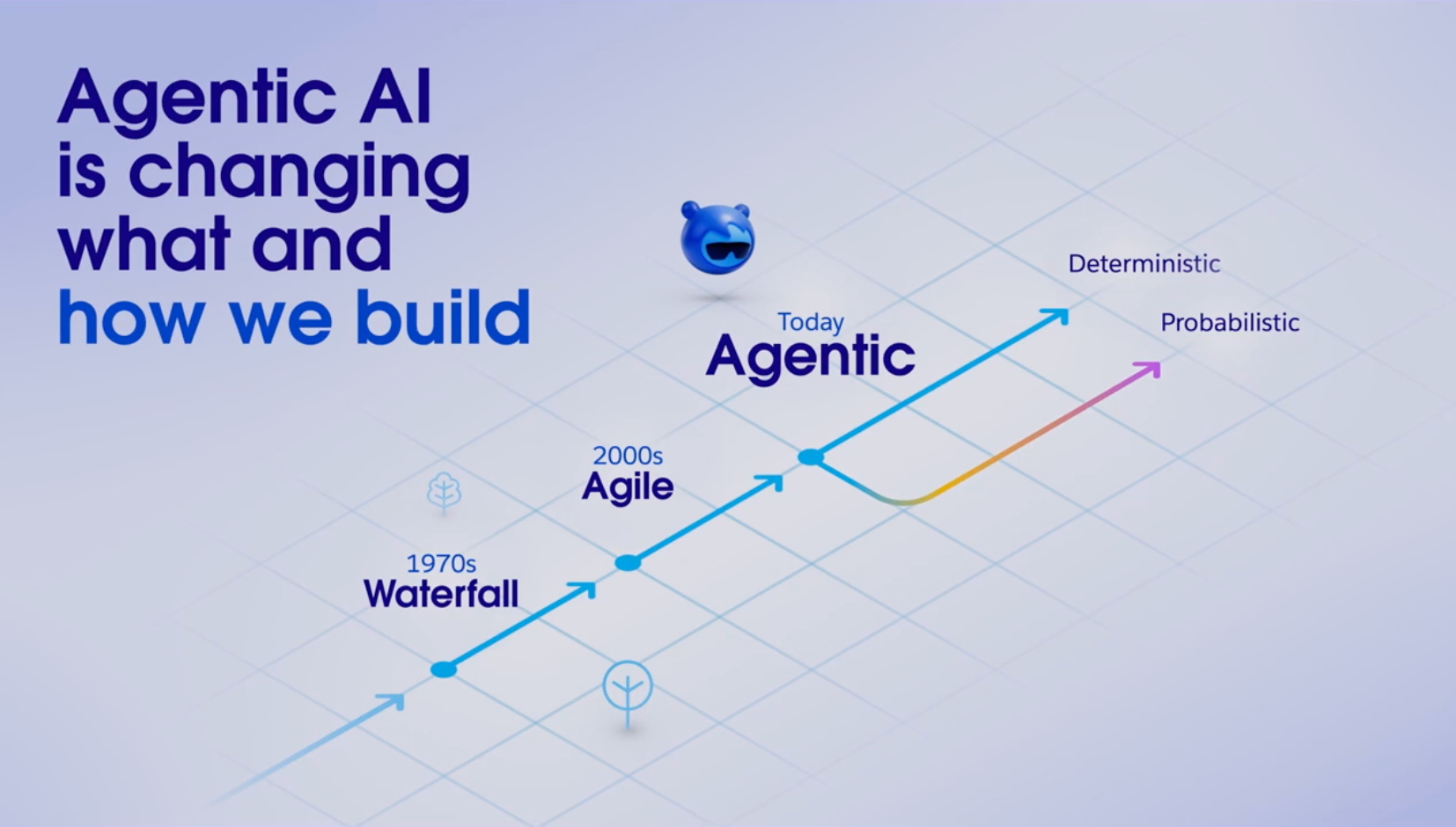
Traditional Salesforce automation (such as Flows and Apex) has always followed predictable logic – this goes even beyond Salesforce. For years, we’ve been so used to thinking that in software, the same input produces the same output. It’s almost like math. There’s a right answer, and anything that deviates from what’s expected is automatically seen as wrong.
The rise of AI agents is beginning to challenge that mindset. It introduces a different model – one that opens the door to agentic systems where outcomes are not always fixed. As highlighted during the keynote, agentic systems behave more like humans in the sense that responses may vary depending on context and interpretation. An entirely new set of possibilities has just been unlocked with this kind of flexibility.
But while this flexibility is powerful, it also introduces new challenges. Because agents do not always behave the same way, businesses now need to account for variability. And for us admins, this pushes us to take into account new considerations around things like guardrails, testing and validation, fallback logic, and monitoring behavior over time. We no longer look at whether something was computed correctly or incorrectly. Instead, we’re now aiming for consistency, reliability, and trust in less predictable systems.
The Next Challenge: Orchestrating Multiple Agents
The keynote made it clear that the future isn’t about a single agent working in isolation. Multi-agent orchestration is a valuable skill because agents can work together across workflows and systems.
At the same time, agents are not designed to operate in silos as they are built to interact with APIs, tools, and other agents across an open ecosystem. This reinforces the importance of Headless 360, as well as AgentExchange (the newest iteration of the AppExchange now for the agentic enterprise), where Salesforce is investing $50M to support partners building reusable agent capabilities and production-ready AI solutions to the market.
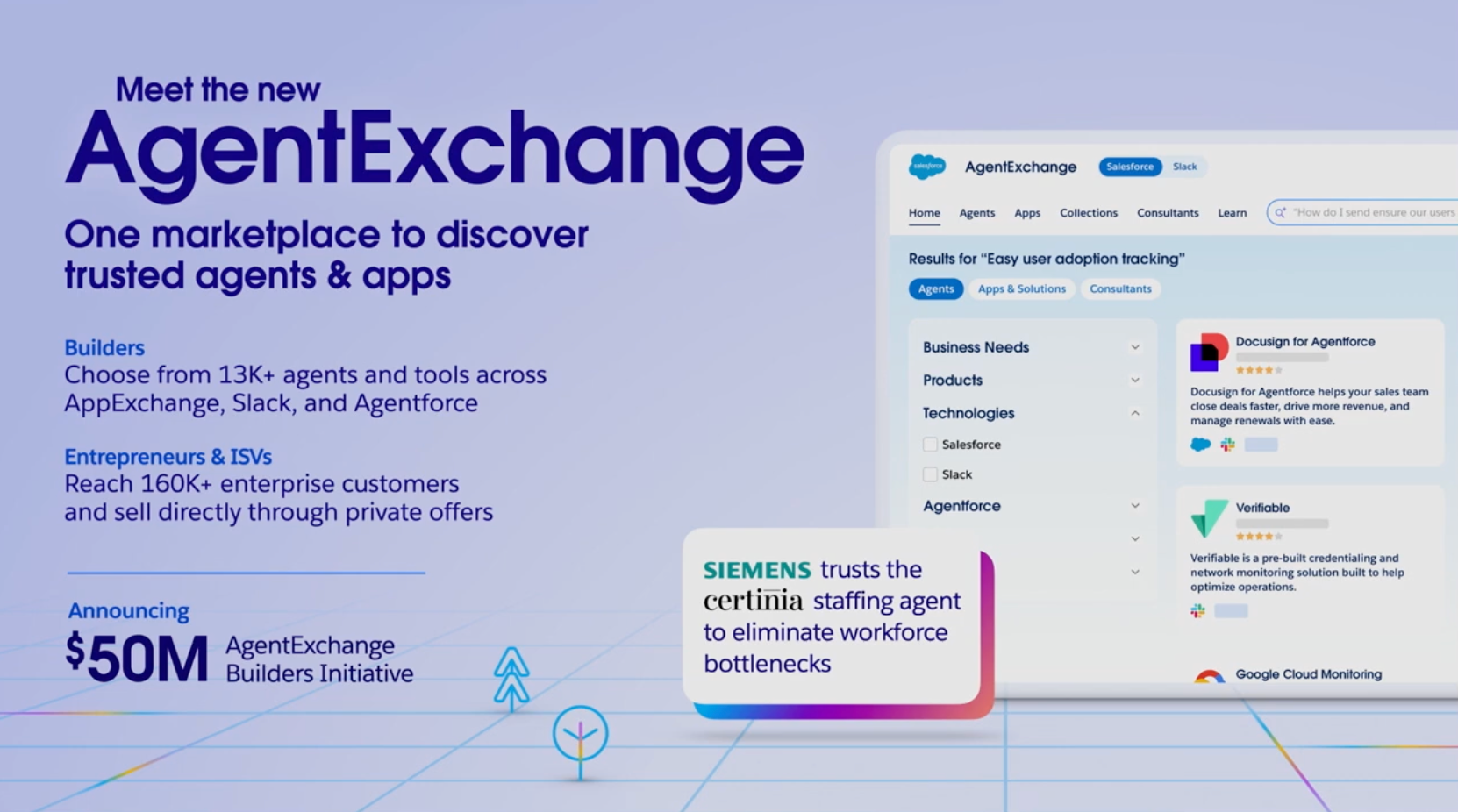
If we learn anything from this, it’s to shift our focus from building individual automations to developing a broader view and designing interconnected systems where multiple components work together effectively.
Final Thoughts: The Admin Role Continues to Expand
Contrary to the “AI is replacing us” claims, the keynote emphasized how the updates do not reduce the role of the admin. In fact, they even expand it. One of the clearest messages from the keynote is that every builder has just become more powerful, regardless of role.
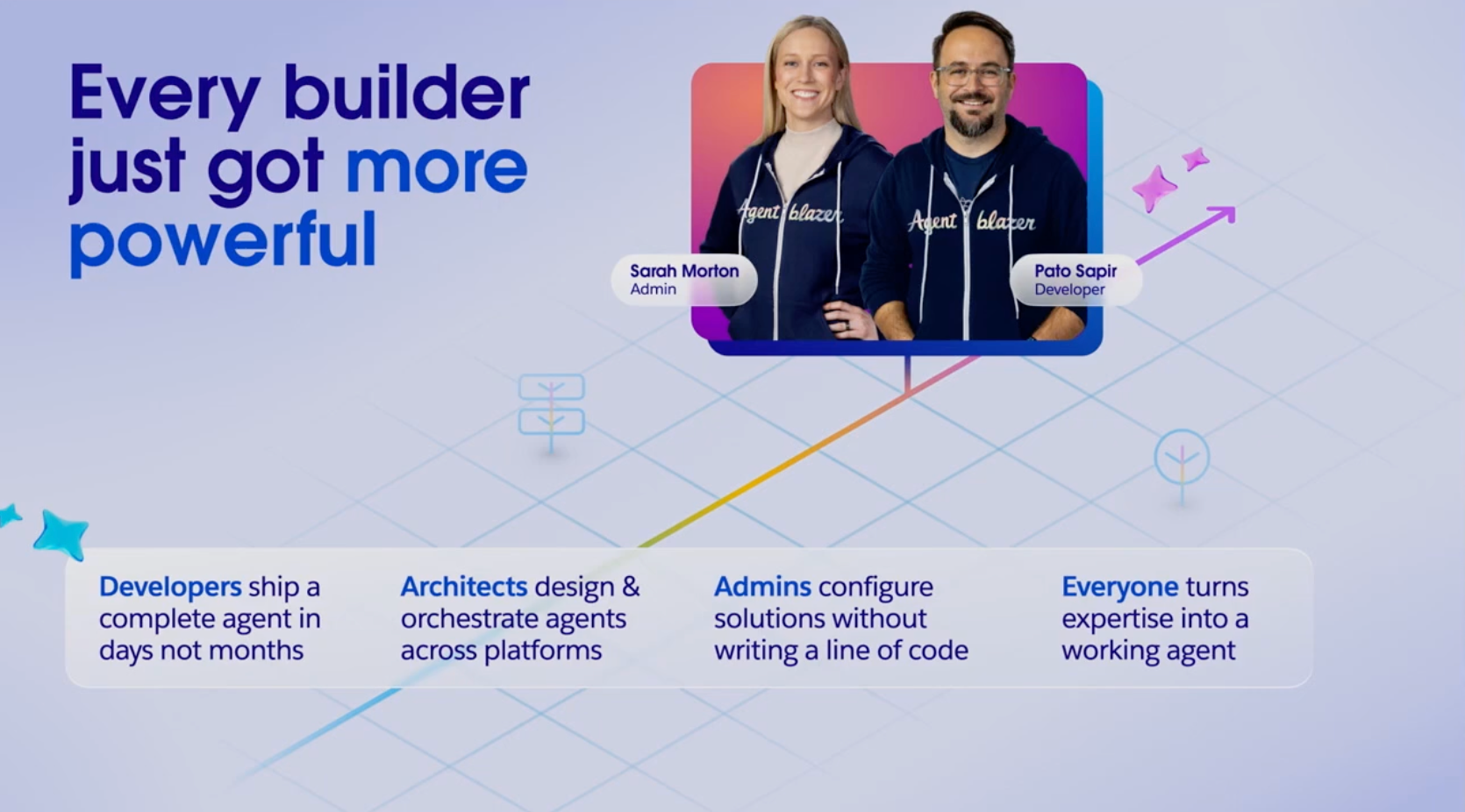
They actually opened the session by reinforcing the Trailblazer mindset – highlighting how innovation has always been about expanding access. With AI, that idea was pushed even further. This technology is beginning to level the playing field by giving more people the ability to build, experiment, and contribute in ways that weren’t as accessible before. Agents and AI have clearly transformed development.
This is a significant time in the world of technology, and organizations are struggling to keep up. They face a shortage of AI talent, making these capabilities even more critical than before. Admins – with the many hats they already wear – are in the perfect position to contribute to helping businesses adopt and scale AI-driven solutions. Are you ready to step into this new era and develop or consider agents as trusted colleagues?
*All images come from the Main Keynote livestream