

Historically, business analysts have been responsible for understanding and defining the needs and processes of complex organizations. While some suggest that AI is making traditional BA tasks obsolete, business analysis is becoming more important than ever – but the role is evolving.
As AI capabilities expand within the Salesforce ecosystem, the BA role is shifting from that of “requirements manager” to “human-AI orchestrator” focused on value-delivery. This transformation places greater emphasis on guiding intelligent systems, validating outcomes, and aligning solutions with strategic goals. To remain relevant, business analysts must adapt their skills to this new, AI-driven landscape.
In this article, we’ll explore insights from SF Ben’s 2025-26 Salary Survey to identify opportunity areas for business analysts to specialize, drive salaries up, and improve long-term satisfaction in their roles.
Note: The salary survey data for this article consists solely of the subset of responses from individuals who selected “Business Analyst” in response to the question “Which title is the closest to your current role?”.
Median Salesforce Business Analyst Salaries
The following salary figures represent the median salaries for Salesforce Business Analysts based on our recent survey of 2,316 respondents across 76 countries and more than 17 industries. If you would like full data for all roles – including junior, intermediate, senior, and director-level positions – download the full report.
North America
| Junior | Intermediate | Senior | |
| US ($) | 85,000 | 99,000 | 107,500 |
| Canada (C$) | – | 95,000 | 118,000 |
Europe
| Junior | Intermediate | Senior | |
| UK (£) | 43,500 | 47,700 | 66,500 |
| Spain (€) | – | – | 48,000 |
| France (€) | – | 46,500 | 73,500 |
Asia and Oceania
| Junior | Intermediate | Senior | |
| Australia (AU$) | – | 111,500 | 150,000 |
| India (INR₹) | – | 1,000,000 | 3,000,000 |
Business Analysis in the Salesforce Ecosystem
Business analysis has evolved alongside Salesforce’s shift from a configurable CRM to a complex, enterprise-grade cloud platform. In the early 2000s, business analysis was largely conceptualized as a task underneath the admin or consultant role.
As platform development drove demand for more specialized service-level analysis, process design, and stakeholder management, the BA role became more formalized. Salesforce introduced the Business Analyst Certification in 2022, carving out a distinctive role for business analysts in the ecosystem.
Business analysts constituted 7.8% of the respondents from the 2025-26 SF Ben Salary Survey. BAs are predominantly employed on a full-time basis (92.8%) as employees of Salesforce customer organizations (60.5%) – as opposed to 20% working in SI/consulting firms.
Salesforce Business Analysts are highly educated, with 48% holding at least a bachelor’s degree and 27% holding a master’s degree, and tenured in their roles with the majority of BAs holding intermediate or senior-level positions.
| Level of Expertise | Percentage |
| Junior | 7.2 |
| Intermediate | 42.7 |
| Senior | 46.6 |
| Director | 2.2 |
| SF Tenure | Percentage |
| Less than 1 year | 3.8 |
| Between 1 and 2 years | 8.3 |
| Between 2 and 5 years | 47.2 |
| Between 5 and 10 years | 25.5 |
| Between 10 and 15 years | 12.2 |
| More than 15 years | 2.7 |
With the current acceleration of technology, the business analyst role is evolving once again. AI can now generate user stories, process flows, and even system configurations, but it depends on clear guidance and validation. As a result, the role is evolving to become more strategic, focused on value realization and intelligent automation.
Salesforce BAs are becoming orchestrators of human-AI collaboration: shaping prompts, governing data quality, and ensuring AI-generated solutions align with business strategy and compliance requirements.
This evolution positions the business analyst as a key driver of value, focusing less on documentation and more on decision-making, experimentation, and continuous optimization.
How Does Being a Business Analyst Compare to Other Roles?
Salary
Business analysts noted a higher average salary than the admin and project manager roles, but a lower salary than more technical and specialized roles such as developer, technical consultant, and solutions architect:
| Role | Average Reported Annual Salary (USD) |
| Admin | 101,627 |
| Project Manager | 107,480 |
| Business Analyst | 121,288 |
| Developer | 127,086 |
| Technical Consultant | 138,508 |
| Solutions Architect | 162,902 |
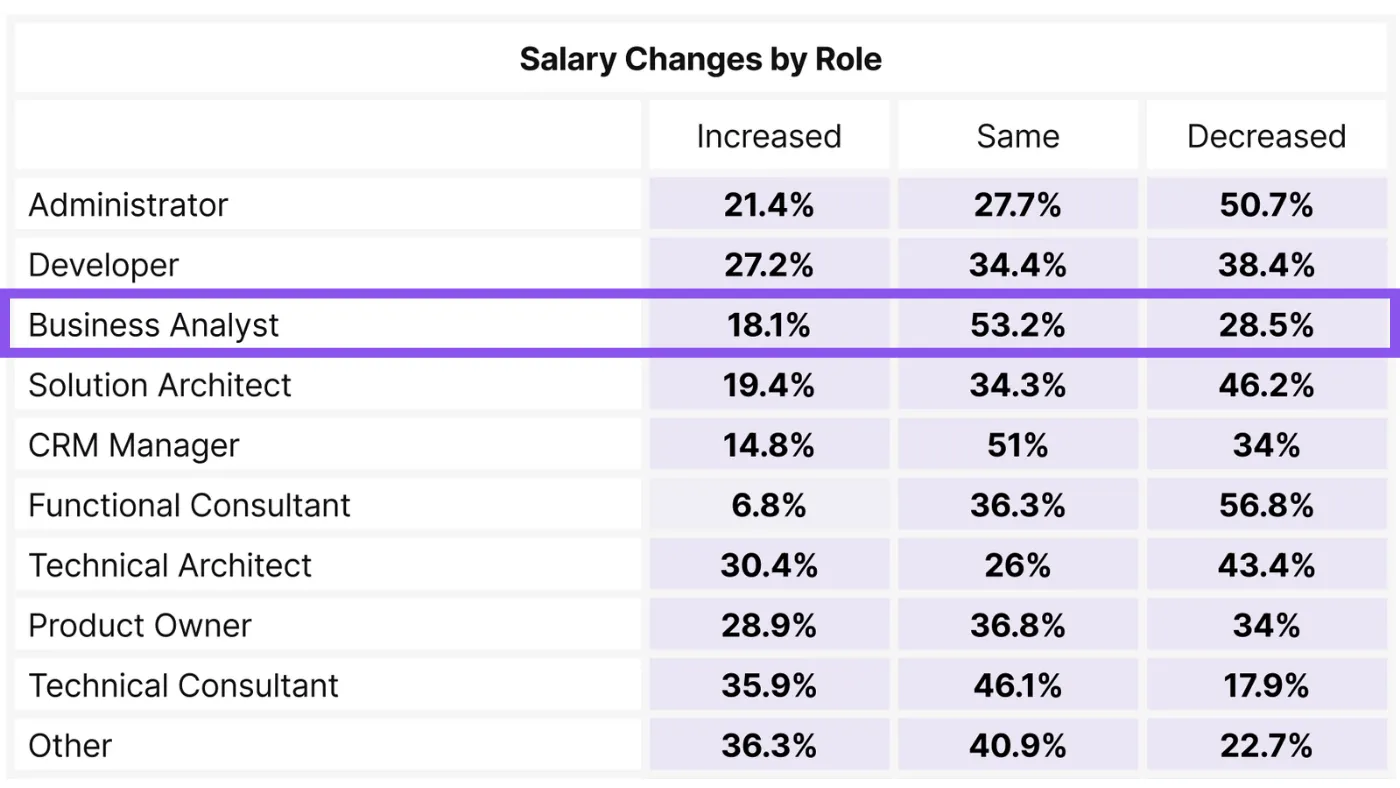
Set against a broader perception held by 41.6% of respondents that ecosystem salaries have decreased, 28.5% of BAs reported decreases in salary this year, demonstrating a continued need for the role:
Job Market Trends
Looking more broadly at changes to the job market, business analyst responses largely tracked with broader industry perceptions, with slightly fewer BAs reporting salary increases and slightly more BAs reporting that they are searching for other positions compared to other Salesforce roles:
| Question | All Roles | Business Analysts |
| Have you been searching for a role in the past 18 months? | 52.7% reported searching for other roles | 60% reported searching for other roles |
| Have salaries increased, decreased, or stayed the same? | 22.6% reported increases | 18.3% reported increases |
| Have there been more or less opportunities in your role? | 55.2% reported less | 44.7% reported less |
| Would you say the market has been more challenging than past years? | 89.4% said yes, the market has been more challenging | 89% said yes, the market has been more challenging |
| Are you considering changing jobs in the near future? | 61.6% said yes, they are considering changing jobs | 64.6% said yes, they are considering changing jobs |
Full results of Business Analyst perceptions of the current job market:
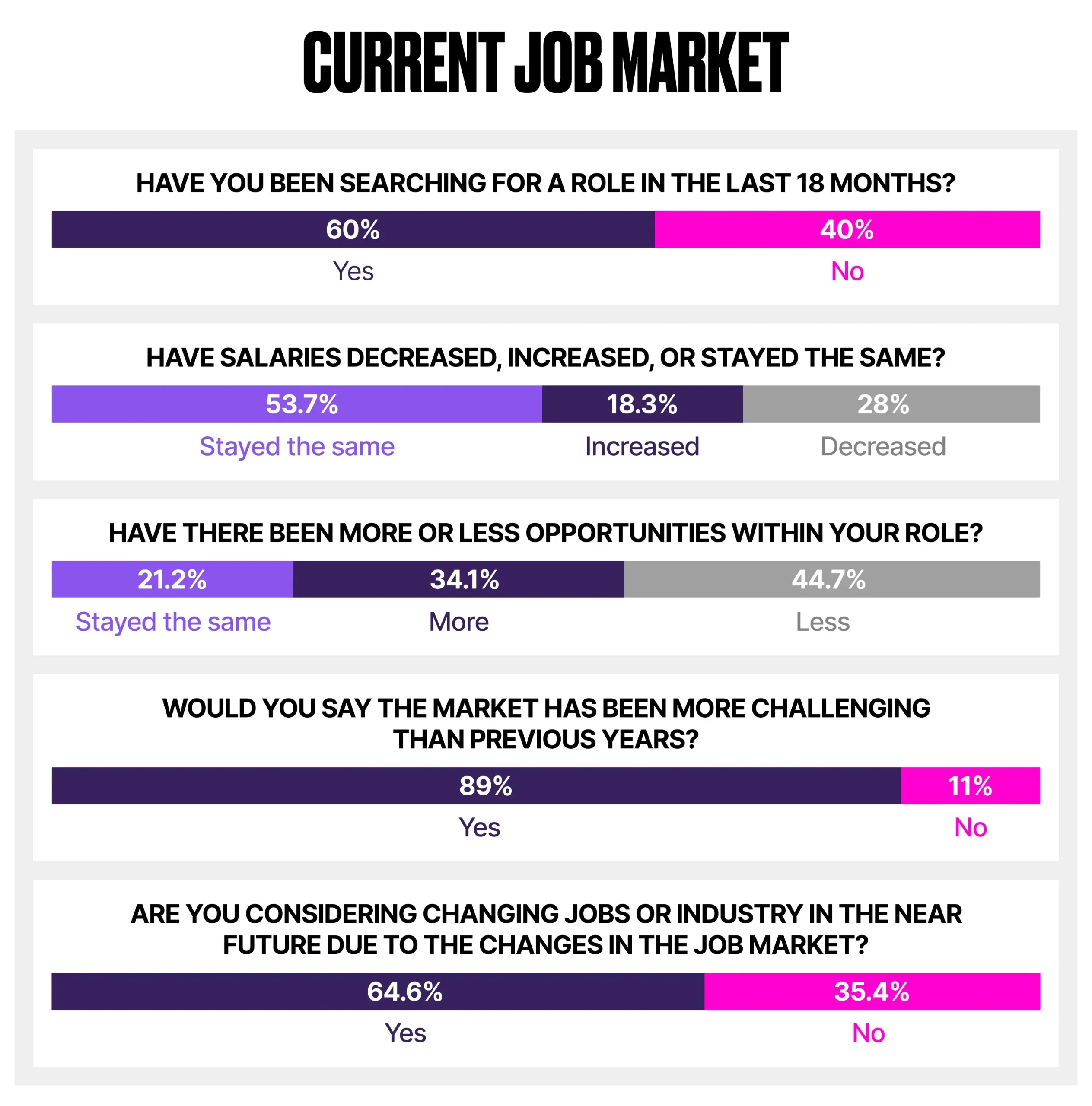
The data suggests a clear recognition that the Salesforce job market is challenging and that Salesforce professionals see a need to adapt to changing technology.
Satisfaction
According to the 2025-26 Salary Survey, 88% of business analysts said they felt respected and valued in their current role. 69% said they were satisfied with opportunities for career progression; however, just 16.7% of BA respondents were satisfied with their current skill level, and 22.8% were satisfied with their current pay – compared to 28.3% who were somewhat dissatisfied with their skills and salary.
From this data, we may glean that business analysts are hungry for knowledge acquisition and increased salary opportunities as the technology landscape changes. While the majority of analysts are comfortable in their current role, they remain somewhat dissatisfied with their skillset and salary. The data suggests an awareness of change that requires significant reskilling in the BA role. This gap between current competencies and the needs of future Business Analysts presents a unique opportunity for professionals to strengthen their career prospects.
Can Creative Destruction Carve Out a New Role for BAs?
Creative destruction refers to the process by which technological change destroys outdated roles, while simultaneously creating opportunities for new roles to surface. In the context of the rapid development of artificial intelligence, the business analyst role is changing, but is not nullified.
Strong business analysis capability is rendered more important with the advent of AI-driven development methodologies, not less. However, the role of the business analyst has now shifted from eliciting and documenting requirements to leading business value delivery. This paradigm shift presents a unique and exciting opportunity for business analysts to upskill, reposition themselves, and fulfill more in-demand positions at AI-enabled firms.
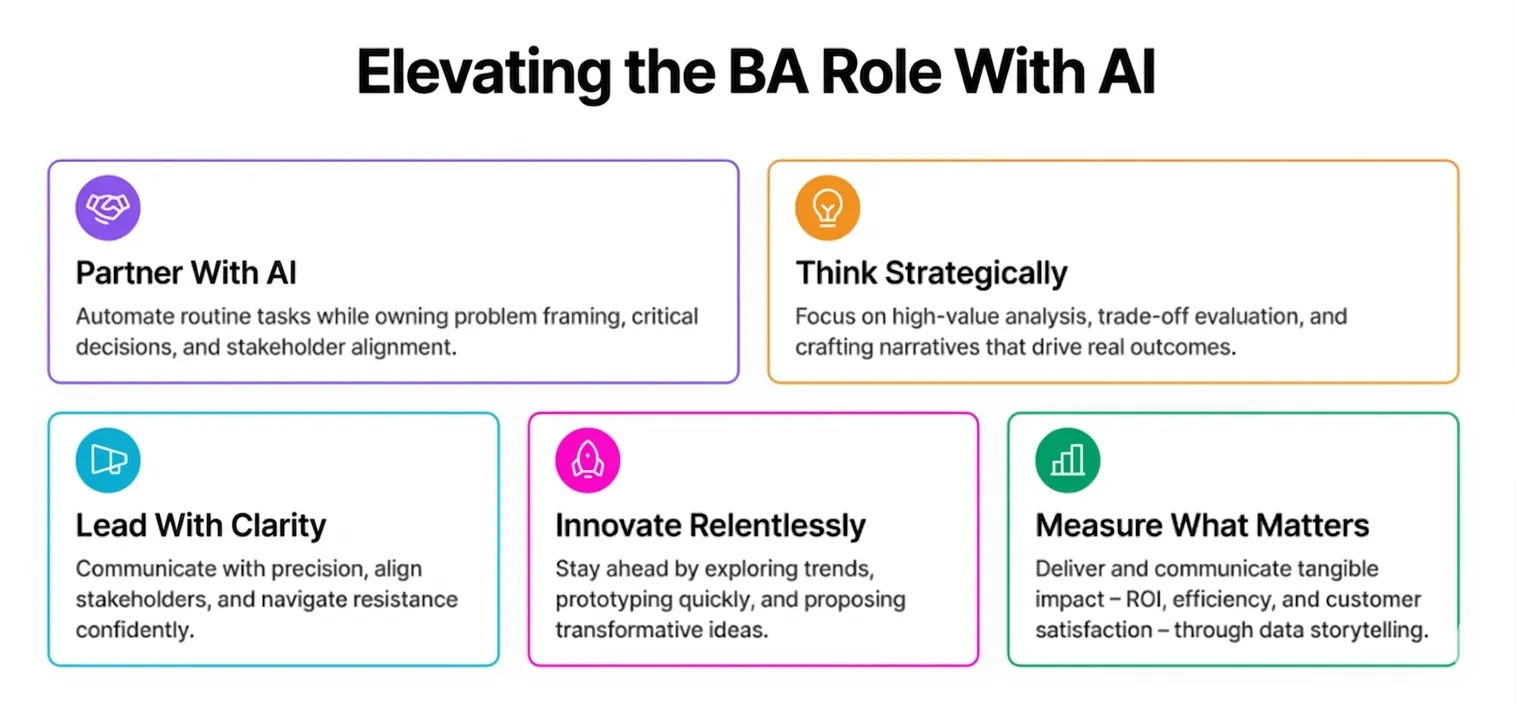
Let’s explore a traditional BA role compared to a reconceptualized and AI-enabled business analyst role focused on value delivery:
The traditional business analyst role owns requirements throughout the project or product delivery lifecycle. In an AI-enabled world, where documentation artefacts and requirements can be produced with significantly less human intervention, the Business Value Analyst shifts from owning requirements to owning value delivery.
| Traditional Business Analysts | Business Value Analysts |
| Asks “why” to define business needs | Co-creates a vision with stakeholders to scaffold and prioritize business needs |
| Elicits and documents business requirements for an architect to design against | Validates and refines AI-generated business requirements to a high degree of quality |
| Maps business processes and makes suggestions to optimize and streamline work | Proactively looks for business processes that can be automated and improved |
| Matches business requirements to OOB Salesforce features and functionality | Leverages AI-driven development skills (i.e. prompt engineering, context engineering) to build POCs and high-fidelity prototypes that expedite and enhance design and delivery processes |
| Foster opportunities for businesses to learn from their data using Salesforce reporting & dashboarding tools | Help businesses make validated decisions by deeply analyzing data |
| Supporting quality assurance and alignment of solutions to the business need | Validates that solutions meet the businesses’ future-state vision using data-driven KPIs |
| Champions user training and adoption | Leads change management by investing time in human interactions, educating team members, and fostering buy-in through clear value delivery |
This reconceptualization of the business analyst role presents job satisfaction and salary improvement opportunities for individuals who wish to innovate and specialize.
Strengthening Your Salary Prospects as a Business Analyst
Strengthening your salary prospects as a Business Analyst means staying relevant. Marketable business analysts will blend old ways of working with new, demonstrating a mastery of traditional methodologies while embracing change and innovation. Salesforce Business Analysts can explore Salesforce and non-Salesforce certifications to increase and demonstrate their knowledge, as well as invest in future-proofing their skillset and service-level expertise:
Certifications
72.5% of respondents to the 2025-26 Salary Survey suggested that certifications improved their salary prospects. The Salesforce Certified Business Analyst credential remains the critical certification for Salesforce BAs. Business analysts may consider additional Salesforce certifications and non-Salesforce certifications to bolster their professional legitimacy and drive salaries.
Supportive Salesforce certifications for business analysts may include:
- [Entry level] Salesforce Certified Platform Foundations
- [Entry level] Salesforce Certified Tableau Desktop Foundations
- [Mid-level] Salesforce Certified Platform Administrator
- [Mid-level ] Salesforce Certified Platform App Builder
- [Mid-level] Salesforce Certified Platform Strategy Designer
- [Mid-level] Salesforce Certified Tableau Data Analyst
- [Mid-level] Salesforce Certified Agentforce Specialist
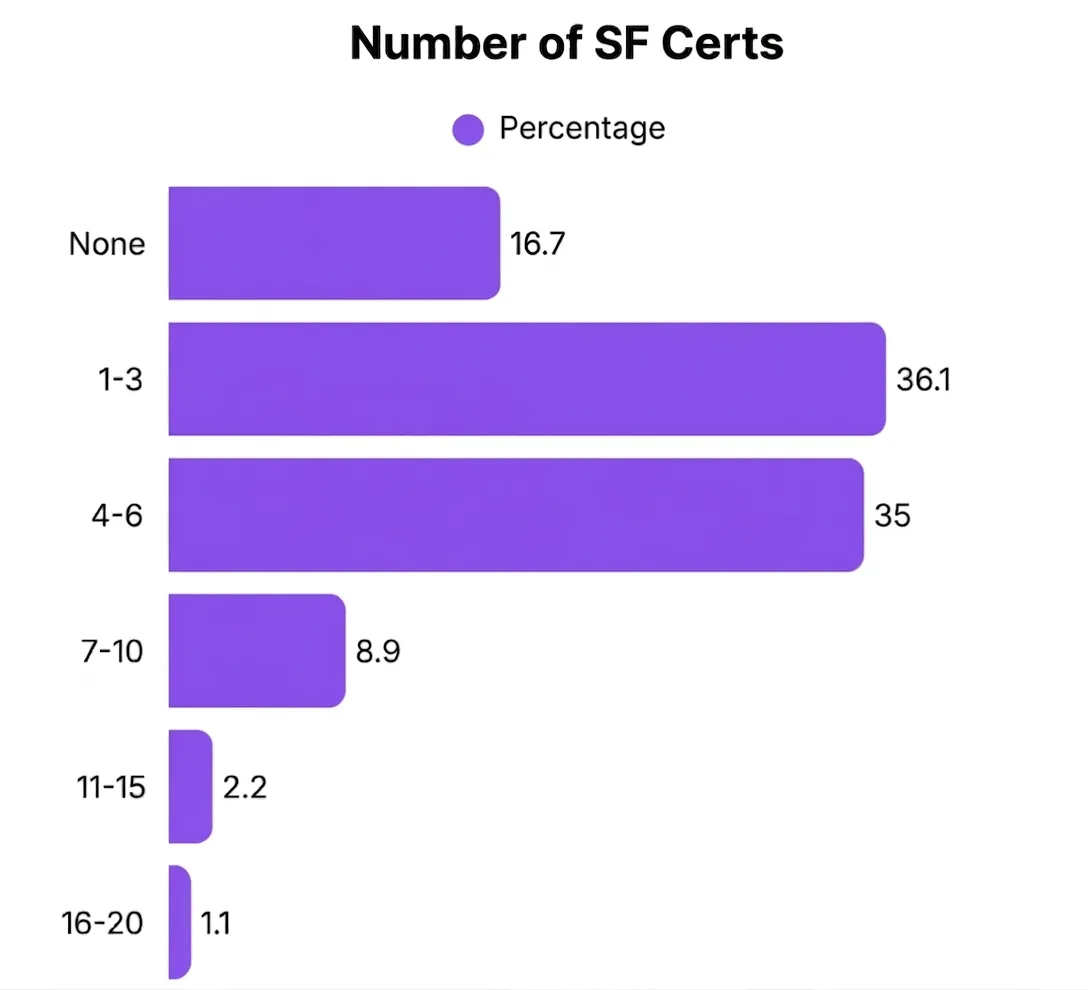
Business analysts have demonstrated a commitment to Salesforce certifications, with 71% of respondents to the 2025-26 Salary Survey obtaining 1-6 certs:
While Salesforce certs can be useful, remember to pursue certifications that add significant value to your work. As the industry becomes increasingly wary of cert collecting without practical expertise to back up theoretical knowledge, be sure to pursue certs that help you specialize in your particular role.
Additional non-Salesforce certifications for business analysts that enhance credibility and support AI-enablement may include:
- Certified Business Analysis Professional (CBAP®)
- Certification of Capability in Business Analysis (CCBA®)
- PMI Professional in Business Analysis (PMI-PBA®)
- Business Data Analytics Certification (IIBA®-CBDA)
- AI for Business Professionals (AIBIZ™)
- Certified Artificial Intelligence Practitioner (CAIP)
Only 7.22% of business analyst respondents to the 2025-26 Salary Survey indicated that they have non-Salesforce standard business analyst certifications, placing off-platform certs as an easy differentiator.
Future-Proofing Your Skills
Reconceptualizing the business analyst role necessitates that BAs lean into soft skill development, future-proof their hard skills, and differentiate through specialization.
Adjusting and Strengthening “Soft Skills”
Increasing technological capability frees business analysts up to focus on more human-oriented work. Competencies that value-driven BAs can strengthen include:
- Vision-setting and aligning expectations for a future-state system
- Negotiating competing requirements and mediating conflict
- Stakeholder management, adoption, and change management
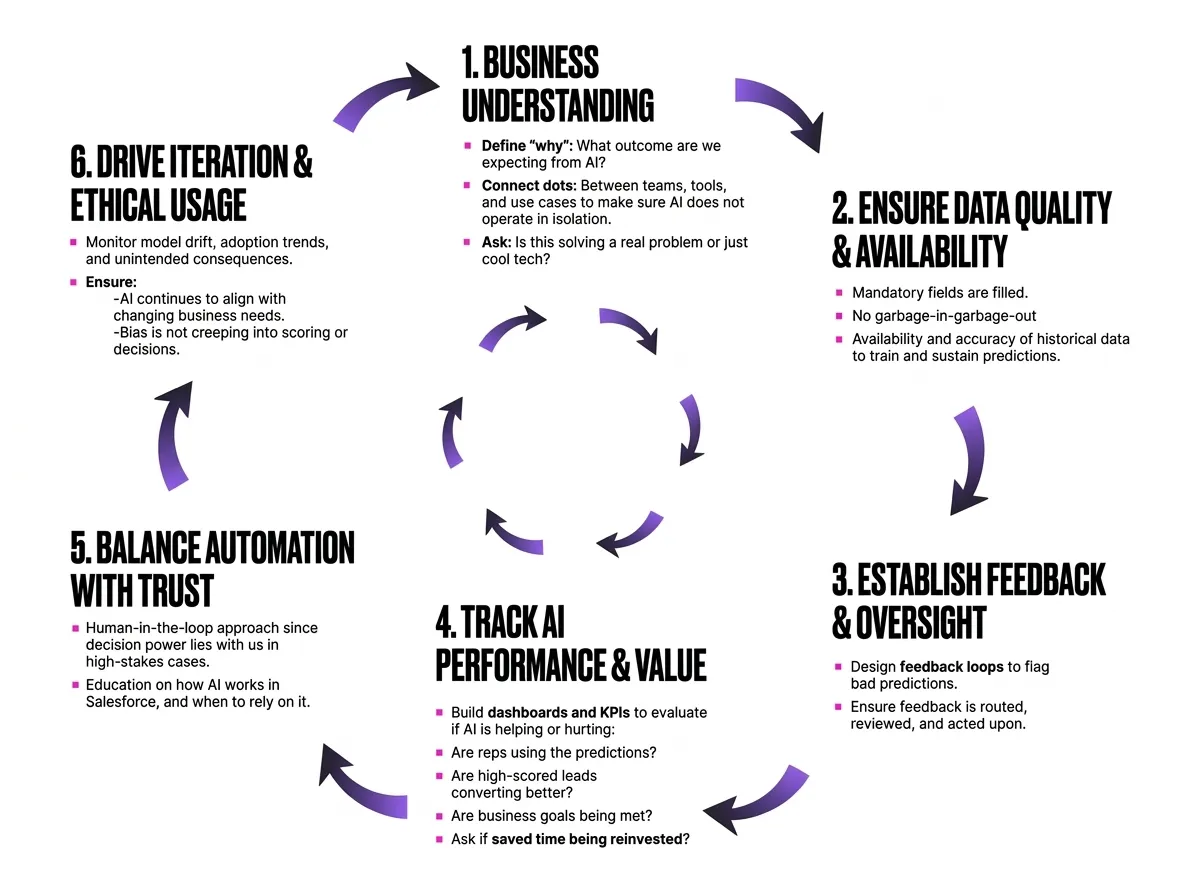
In relation to AI, analysts can build stewardship skills to govern the utilization of artificial intelligence at their firms. This includes:
- Owning an AI governance model that drives business value
- Building human checkpoints into AI-assisted and automated processes
- Recognizing and managing bias in AI outputs, and
- Ensuring the ethical usage of AI
Future-Proofing “Hard Skills”
Sharpening “hard skills” can help to ensure career longevity and increased salary prospects for business analysts, giving technical BAs a competitive edge.
BAs should be building fluency with Agentforce and agent configuration as a matter of priority to stay abreast of rapid technological change and remain marketable to AI-enabled firms. In order to more effectively use AI, prompt engineering and context engineering are now critical business analyst skills to learn.
Salesforce platform expertise adds an additional layer of utility to the business analyst role, enabling BAs to reduce architect dependency during solution design and spot business requirements that could be solved by standard Salesforce features and tools.
Finally, data analysis and business intelligence skills, including SQL/SOQL, qualitative and quantitative data analysis, and fluency with analytics platforms such as Tableau, enable business analysts to help businesses make data-driven decisions that realize value.
Service-Level Specialization
Specialization makes you valuable. By specializing in less competitive service offerings, business analysts can differentiate themselves. According to the survey results, Salesforce business analysts are currently specializing in key platform services like Sales Cloud (71.7%) and Service Cloud (57.2%).
Service areas to specialize in this year may include:
- Data analytics and business intelligence (i.e. Tableau or CRM Analytics)
- Marketing services (i.e. Agentforce Marketing)
- Data 360 (Data Cloud)
- Non-Salesforce platforms for enterprise clients (i.e. AWS)
Summary
Salesforce Business Analysts understand that their role is changing. Data from the SF Ben 2025-26 Salary Survey suggests that the current job market presents challenges for the business analyst role and a perception that AI-enabled firms will require an updated suite of skills to support career mobility and long-term satisfaction.
This gap between current skills and demand presents both a challenge and an opportunity for business analysts to upskill towards more specialized positions within the ecosystem. To begin bridging this gap, business analysts can embrace criticality, lean into people skills, prioritise technical learning, and drive business value while spending less time on rote tasks by working with AI.