






The 2026 Salesforce Ben Salary Survey unearthed a number of trends and insights about the evolution of the Business Analyst role. Our analysis of responses suggested that while Business Analysts are typically content in their current position, they are aware that their role is changing… and fast.
As firms become increasingly AI-enabled, we suggest that the BA role is not becoming obsolete, but rather evolving to center value delivery as its raison d’être. In this article, I propose a reimagined Business Value Analyst role that captures this change and tethers a reconceptualized job description to the current and changing needs of the ecosystem.
Shifting From Requirements-Thinking to Value Ownership
Delivery team effort across the project/product lifecycle is being hollowed out in the middle by AI. Given the appropriate prompts and context, AI can now document requirements and develop features, shifting how the delivery team’s effort is spent.
Critical systems thinkers remain necessary in the beginning and end stages of the project/product lifecycle, working to identify areas of value delivery and intended business outcomes, effectively prompt AI agents, validate AI outputs, test and debug AI-developed solutions, and facilitate effective change management.
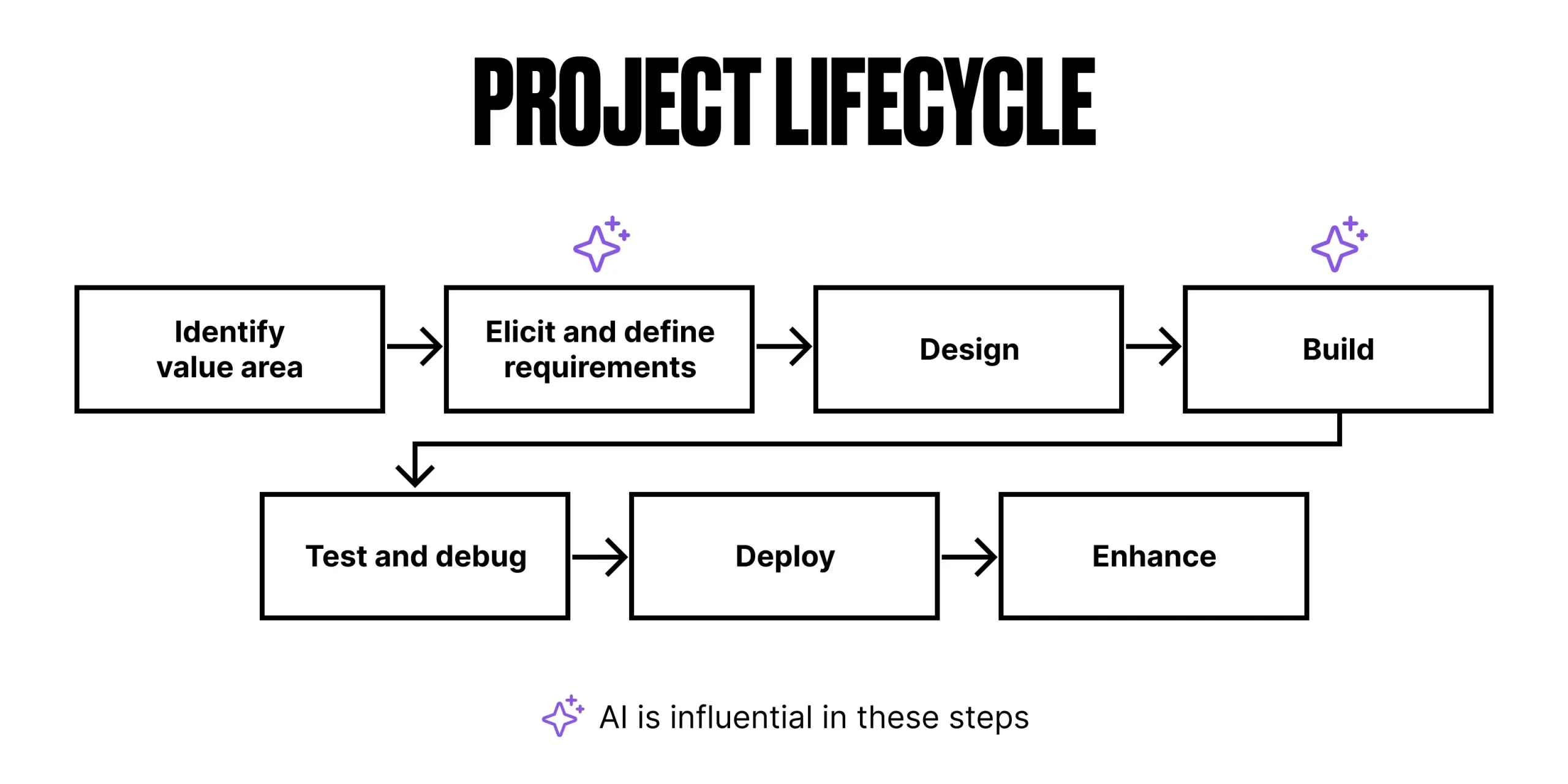
As functional experts in how technology should support the business’s goals and expected outcomes, BAs are well-positioned to move into a more strategic role that explores how rapidly changing technologies can enhance value actualization.
Humanizing the BA Role (Doing What AI Can’t)
Ecosystem changes are forcing role evolution for business analysts. Notable changes driving this shift include:
- Salesforce is changing from a CRM tool to a complex Enterprise platform.
- Investment in AI, agents, and automation reduces time spent on documentation, but opens space for deeper critical thinking and value prioritization.
- Increasing architectural complexity and the rate of technological change add uncertainty for service providers.
These shifts call for stronger consulting competencies in addition to an increased aptitude for staying abreast of rapid technological change. Less- and quasi-technical roles like Business Analysis need to lean into the critical human skills and deep user experience empathy with an incisive focus on value delivery that AI can’t replicate, but can support. BAs will increasingly support change management, expectation management, and flexibly recalibrate product/project priorities to shifting requirements and solutions.
Business analysts should focus on what delivers measurable impact, as well as actually measuring that impact to demonstrate value to customers. Value may take many forms, such as revenue growth, cost reduction, user or customer experience improvement, or enhancements to operational efficiency.
If you’re wondering how to define “value” for your client or company, a vision for your desired future state should articulate what really matters while remaining solution agnostic.
Do Requirements Still Matter?
The traditional business analyst role centered around expertly asking “why” to capture business needs, and then managing those elicited requirements. Business analysts identified pain points and mapped processes to understand the needs of users – they stitched together business and technical conversations to unify solutions and requirements.
Good quality business requirements are still crucial, and AI-generated requirements will need to be evaluated for correctness, completeness, and relevance. The “why” behind requirements still needs to be deeply understood, and requirements still need to be triaged into coherent work packages that deliver right-sized features at the right time.
The elicitation and generation of requirements may be expedited with artificial intelligence, but this does not mean that business analysis or strong business requirements are nullified – instead, it means that how business analysts spend time can shift towards more value-oriented work.
AI Requires the Context That Analysts Own
In the context of AI-driven development and spec-driven development, precise requirements become even more important as human beings with tacit understandings of business systems can no longer “fill in the gaps” of unclear or incomplete requirements.
In this light, the spec becomes the source of truth, and effective context engineering and prompting become paramount in developing quality solutions. Business analysis expert Ian Gotts suggests:
“Context engineering is not a feature. It is a discipline. It means providing the agent with exactly what it needs to be as good as your most experienced team member — the one who knows the history, the exceptions, the things that aren’t written down anywhere — but curated, precise, and structured.”
The human business analyst brings value in their robust understanding of the business, its needs, its processes, its structures, and their ability to share this context with AI agents incisively, producing valuable outputs.
Business analysts will now spend time conceptually re-engineering business processes, identifying how AI can improve operations, prompting AI to develop documentation artifacts, engineering context for AI-developed solutions, validating AI outputs, and measuring demonstrable progress against the business’s needs.
Prioritizing Value Delivery
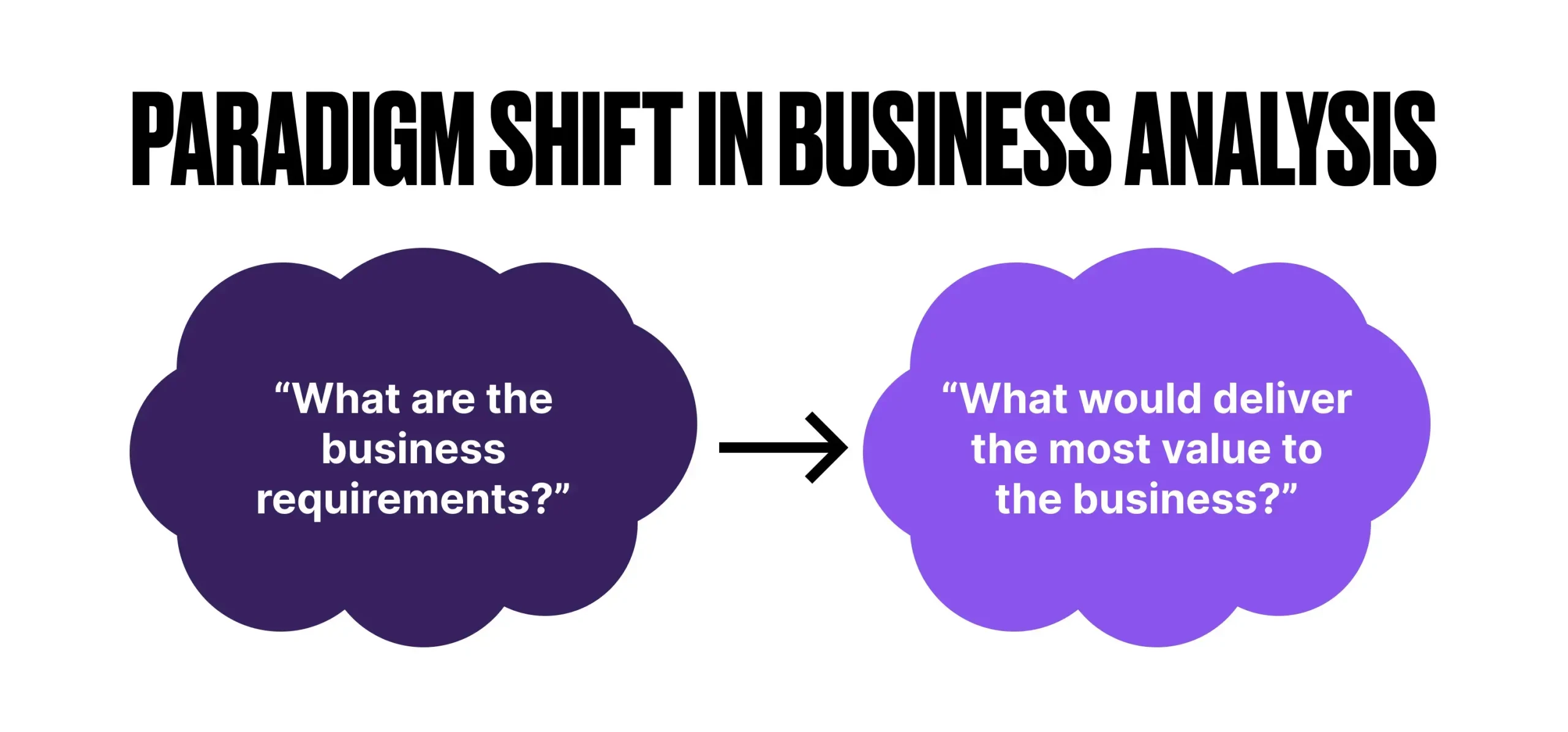
Business analysts are now the stewards (instead of the creators) of requirements, shifting from a documentation-oriented role towards a more strategic role focused on quality, context, precision, and business outcomes. This paradigm shift positions business analysts as orchestrators of value delivery.
Introducing the Business Value Analyst
The traditional business analyst role owns requirements throughout the project or product delivery lifecycle. In an AI-enabled world, where documentation artefacts and requirements can be produced with significantly less human intervention, the Business Value Analyst shifts from owning requirements to owning value delivery.
| Traditional Business Analysts | Business Value Analysts |
|---|---|
| Asks “why” to define business needs. | Co-creates a vision with stakeholders to scaffold and prioritize business needs. |
| Elicits and documents business requirements for an architect to design against. | Validates and refines AI-generated business requirements to a high degree of quality. |
| Maps business processes and makes suggestions to optimize and streamline work. | Proactively looks for business processes that can be automated and improved. |
| Communicates “institutional knowledge” when necessary. | Precisely captures the business context, feeding agents with the right-sized information to produce valuable solutions. |
| Matches business requirements to OOB Salesforce features and functionality. | Leverages AI-driven development skills (i.e. prompt engineering, context engineering) to build POCs and high-fidelity prototypes that expedite and enhance design and delivery processes. |
| Foster opportunities for businesses to learn from their data using Salesforce reporting and dashboarding tools. | Help businesses make validated decisions by deeply analyzing data. |
| Supporting quality assurance and alignment of solutions to the business needs. | Validates that solutions meet the business’s future-state vision using data-driven KPIs. |
| Champions user training and adoption. | Leads change management by investing time in human interactions, educating team members, and fostering buy-in through clear value delivery. |
Evolving Skills and Competencies
The transition from traditional BA to Business Value Analyst will require an updated roster of skills and competencies. To stay relevant amidst technological change, BAs can start to evolve:
| From… | To… |
|---|---|
| Documentation | Decision-making |
| Process mapping | Value mapping |
| Stakeholder communication | Strategic consulting |
| Functional knowledge | Systems thinking |
These shifts imply that Business Value Analysts:
- Understand the functional landscape in which they operate, including:
- The business structure, needs, and processes.
- The industry and its associated norms, operating procedures, and areas of change.
- Understand the technical landscape in which they operate, including:
- How to leverage and prompt AI.
- Sufficient platform expertise to make informed decisions and recommendations.
- How relevant technologies may change in the future.
- Can think in systems instead of siloes, understanding dependencies, trade-offs, and operating with transparent decision-making models.
- Can grapple with complexity and uncertainty by bringing a critical and open approach to their work.
- Build partnerships of trust with clients that focus on alignment, effective bridging of technical and functional domains, thoughtful justification of resource investment, and demonstrable value delivery.
Focus Areas for Business Value Analysts
Business Value Analysts deliver value by orchestrating and coordinating between the business, the technology, and people.
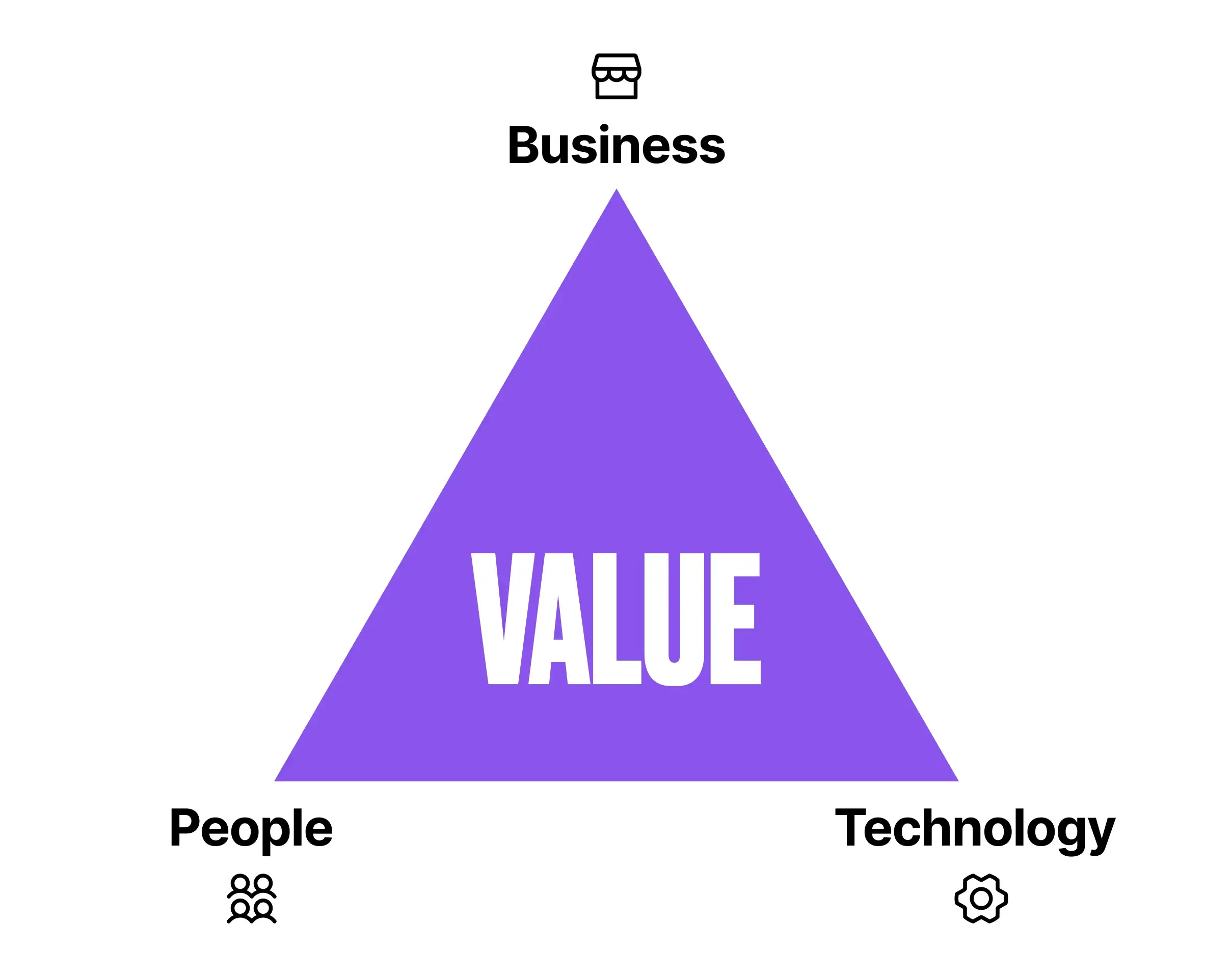
Chiefly, this role would:
- Identify a vision and key areas of value delivery for the business.
- Leverage AI to increase the velocity and quality of outputs.
- Support change management with a keen eye on user experience, stakeholder alignment, trust building, and training/adoption.
The BA Role Is Not Dying, It’s Elevating
The Salesforce world is changing rapidly, and with it, jobs are evolving. In this article, I suggest a possible pathway forward for the Business Analyst role. Counter to the dominant narrative that creative destruction will render BAs redundant, I propose a reinvented role that humanizes business analysis and shifts the focus of the role from owning documentation to owning business outcomes.
What I’m calling the Business Value Analyst is an AI-enabled role that orchestrates value delivery by holding functional expertise, (enough) technical expertise, and strong consulting skills. This footprint is not new – it’s elevated.





Comments: