

Salesforce teams are under pressure to juggle competing priorities. They have to keep pace with business requirements and demand from end users. At the same time, they need to make sure their increasingly complex orgs stay secure, compliant, and high-quality. These priorities might seem in tension, but DevOps is about improving velocity and stability together.
In this post, we’ll look at what it means to shift left and look right in the context of the DevOps lifecycle. We’ll also look at how Gearset helps teams adopt a single-platform approach to DevOps, to reap the rewards of a complete lifecycle.
The Full View of DevOps
For many Salesforce teams, DevOps means improving their release process. But the DevOps lifecycle provides the full picture, showing teams their process end-to-end and encouraging them to think about performance holistically.
If your team is going to accelerate delivery while improving security and quality, it’s vital to shift left and look right – concepts we’ll unpack in this article.

Shift Left to Prevent and Predict
Having releases fail is frustrating. Shipping changes that cause regressions or introduce security vulnerabilities is even worse.
Bugs, errors, and conflicts that cause deployment failure or issues in production should be caught much earlier than release day. “Shifting left” means introducing automated tests, code reviews, and validations earlier in the delivery process. For example, seeding anonymized production data into early sandboxes and automated dependency checks during validation.
By shifting left, teams can prevent and predict issues at the earliest stage possible, helping them to:
- Lower the cost of mistakes: Bugs and vulnerabilities caught and resolved during development aren’t too disruptive. Discovered during a UAT deployment, they create hours of rework and missed deadlines.
- Maintain velocity: Testing everything right before a release takes time and slows delivery. Any issues discovered late in the day inevitably create delays.
- Build confidence for releases: When every change has already passed through quality gates, and all changes have been integrated and validated, teams don’t need to fear releases.
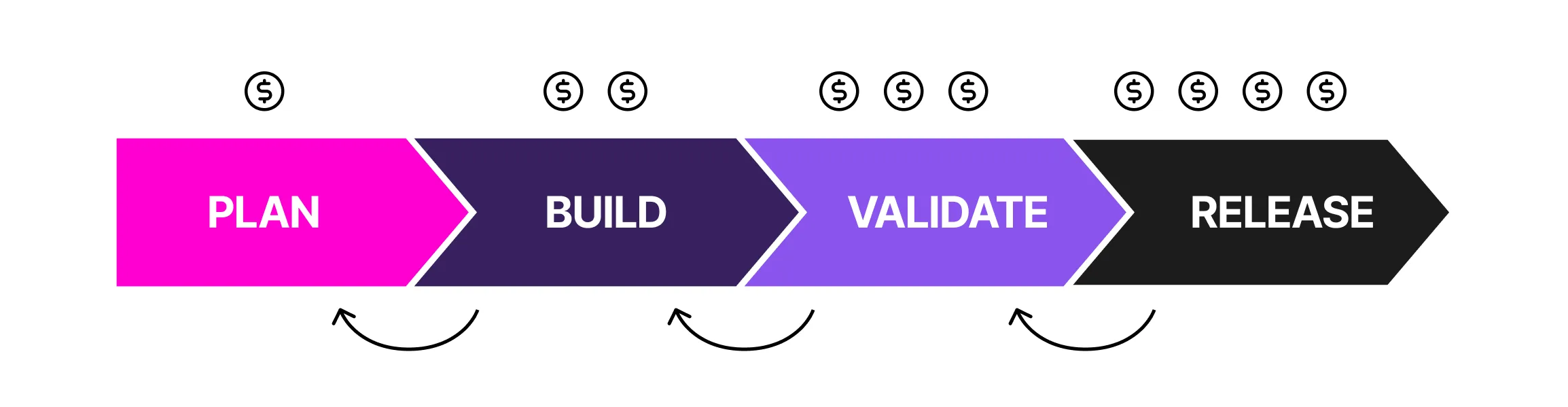
Shifting left is a practice – and it’s a practice that benefits the whole team, not just developers. For some teams, it’ll be a new way of thinking about testing and code reviews, and that cultural change is vital. It also requires tooling. Manual reviews are time-consuming and error-prone, so teams need the tools tightly integrated into their DevOps process that will automate tests, analysis, reviews, and validations.
Look Right To React and Improve
It can be tempting to think of releases as the end of your DevOps process. But DevOps brings together development and operations, so Salesforce teams also need to “look right” to the operate and observe stages of the DevOps lifecycle.
Stopping 95% of bugs, vulnerabilities, or quality issues before they’re released is great. But too many teams have no tools or process to identify and address the 5% that slip through, like a Flow that goes awry in production. They rely on reports from end users instead.
Keeping Salesforce production environments operational requires a comprehensive backup solution, integrated within the DevOps process. Data archiving also keeps orgs from getting bloated with obsolete records that increase storage costs and compromise agent performance.
Observability tools allow teams to track, triage, and proactively resolve issues in production, rather than depending on end users to report problems. They also shed light on org health and performance, helping teams plan for tackling technical debt.
By looking right to react and improve, teams will:
- Accelerate incident response: With the right tools, teams can get alerted to incidents, quickly identify root causes, roll back releases, and/or restore data and metadata as needed, then ship fixes in record time.
- Improve org performance: Keeping orgs free of obsolete data and proactively tackling problems in production means teams can demonstrate better performance over time – not just a list of new features shipped.
- Build trust with the business: Monitoring for data loss incidents, Flow and Apex errors, and more will mean that teams can get ahead of issues and gain credibility with the business.
Improve Salesforce Performance by Closing the Gaps in Your DevOps Lifecycle
Many Salesforce teams have adopted version control and automation for continuous delivery, significantly improving the speed and stability of their release process. But as teams scale and pressure increases, the gaps in the rest of the DevOps lifecycle become more apparent.
This is where full-lifecycle platforms can help. Instead of stitching together separate backup platforms, monitoring tools, and code review solutions, teams can simplify their process by using an integrated DevOps platform.
Gearset is built to support the entire DevOps lifecycle, combining the solutions teams need on one platform. From AI-powered org intelligence at the plan stage through automated code reviews to help you shift left and all the way to observability, there’s more to DevOps than releases.