

We are now well beyond artificial intelligence being a future talking point in the Salesforce ecosystem, with it already influencing the job market. But while the hype around AI often suggests a dramatic salary boom or collapse, the reality looks much more uneven. SF Ben’s 2025-26 Salesforce Salary Survey shows a market that is becoming more selective, with professionals increasingly focusing on AI, Agentforce, and Data Cloud skills – even as many report fewer opportunities and growing pressure on pay.
The tension is what makes it so intriguing. Our survey suggests that AI is not lifting every salary equally, but it is changing which capabilities are becoming more vulnerable. Strategic and cross-functional skills appear to be gaining ground, while more traditional roles face a tougher and more competitive market.
In this article, we’ll use our Salary Survey as the main lens to explore how AI is shaping salaries in the Salesforce ecosystem, where the biggest shifts are happening, and what that means for everyone – admins, developers, consultants, and architects – trying to stay ahead.
AI Skills Are Rising Fast, But the Salary Story is Selective
If there’s one clear takeaway from our survey, it’s that AI has rapidly become a priority for professionals across the ecosystem.
When respondents were asked which skills they were focusing on for the near future, Generative AI topped the list at 48.3%, followed by Agentforce at 27.3%, and Data 360 (formerly Data Cloud) at 12.4%. These results highlight how AI capabilities have shifted from a theoretical talking point to a career focus for Salesforce professionals.
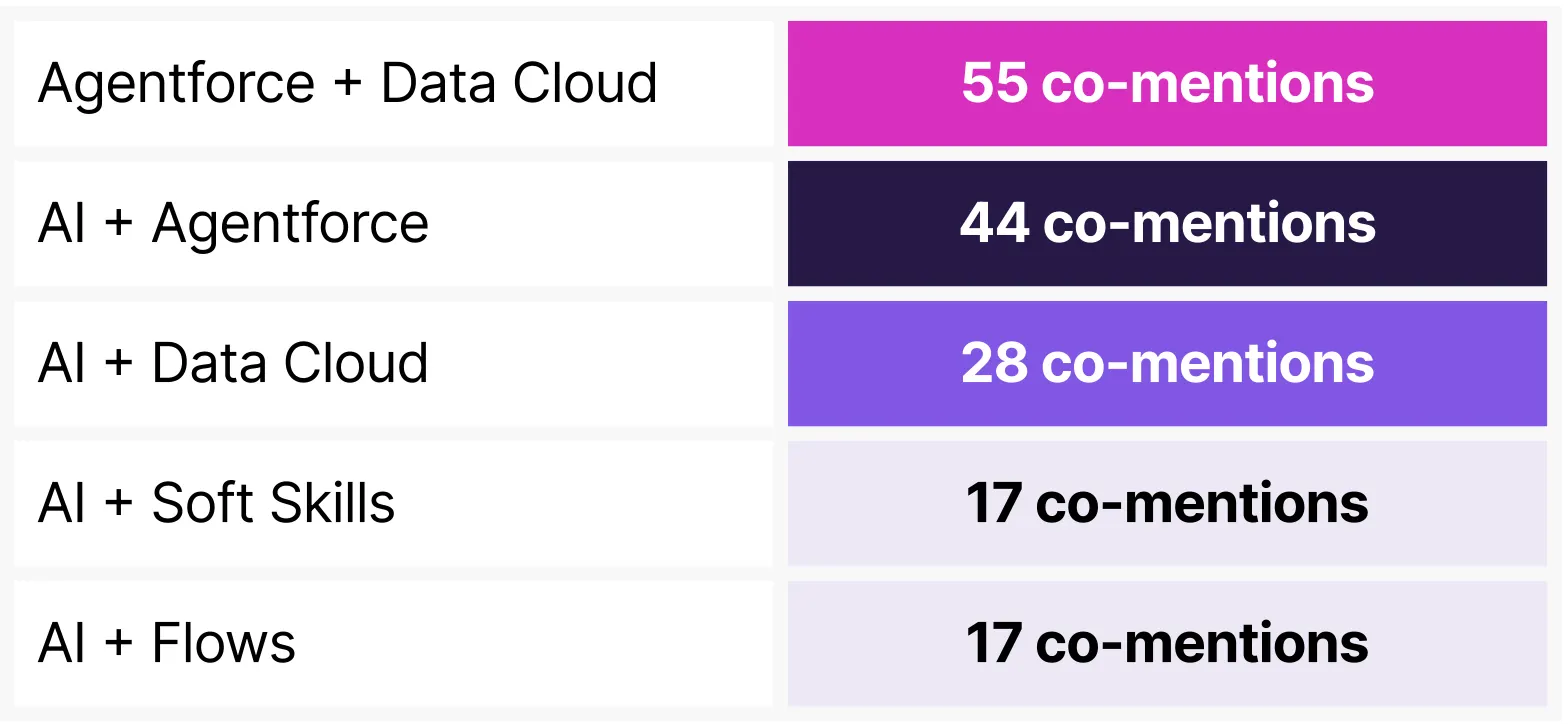
Keyword analysis tells a similar story, with Agentforce emerging as the most-cited keyword, followed by Data Cloud and Flow. AI-powered automation is growing more important, as is data infrastructure, and platform-level orchestration in modern Salesforce projects.
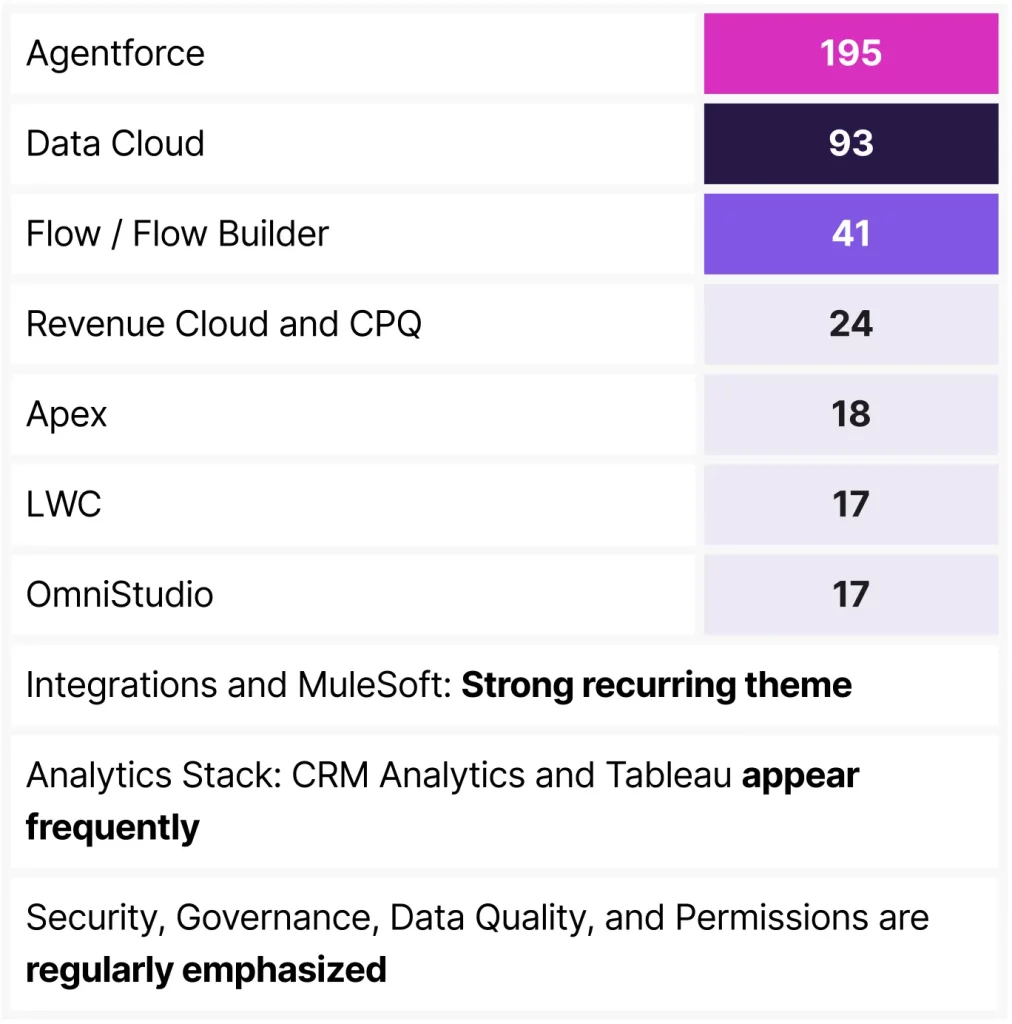
However, while interest in AI skills is clearly surging, the survey data suggests that this has not yet translated into a universal salary boom across the ecosystem. Instead, the data points toward a more selective shift in where value sits.
Professionals with broader technical or strategic skill sets – particularly those with certs outside Salesforce – reported noticeably higher median salaries.
Respondents holding non-Salesforce certifications – including AI-related qualifications and cloud certifications – were associated with some of the highest reported salary brackets in our survey.
In essence, AI knowledge appears to be most valuable when it’s combined with wider architectural, cloud, or data expertise rather than treated as a standalone skill.
Sarah Kelleher, CEO of Nebula Consulting, told SF Ben that this likely reflects the stage many businesses are currently at in their AI journeys.
She said: “Yes, the AI skills are translating into higher salaries at the moment, but I think this is more due to the nature of what’s required on projects with AI and adjacent products.
“Most organizations are still fairly early in their AI journey so they are needing to establish architecture, ways of working, operating models, and business strategy, not just the hands-on doing. Naturally, a strategic or architectural role commands a higher salary.”
It seems as though the salary premium around AI today is often less about knowing how to use a specific tool and more about understanding how AI fits into an org’s wider Salesforce and operating model strategy.
This type of work usually falls to architects, senior consultants, and experienced technical leaders, which are roles that historically demand higher salaries and are now becoming even more central as companies look to embed AI into their tech landscape.
AI Is Increasing the Value of Architects, Data Thinkers, and Integration Talent
While AI is clearly influencing the skills Salesforce professionals prioritize, our Salary Survey also reveals a more difficult reality across the job market as a whole.
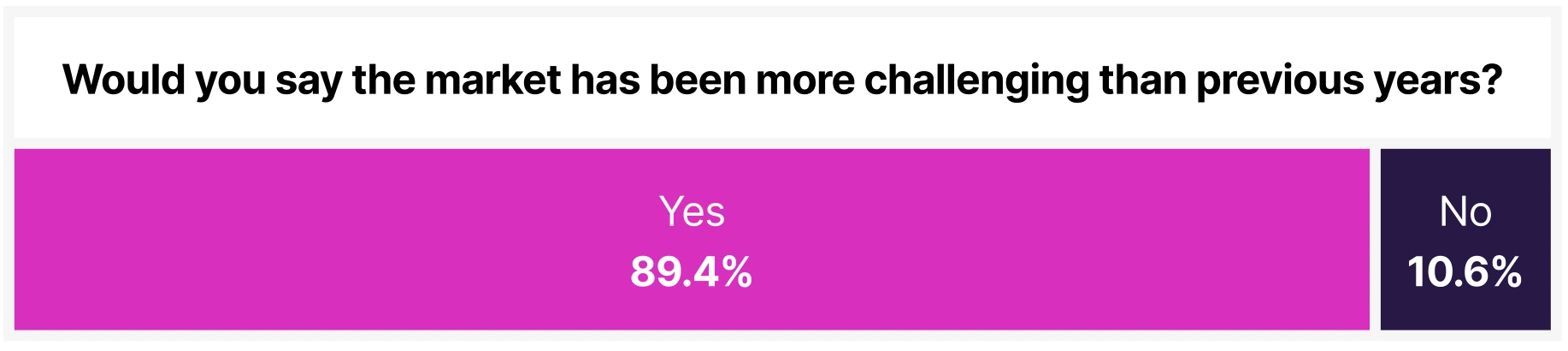
A significant 89.4% of respondents said the market was more challenging than in previous years, while 55.2% reported seeing fewer opportunities within their role.
Among those who had changed jobs, 41.6% said their salary had decreased, compared to 22.6% who reported an increase.
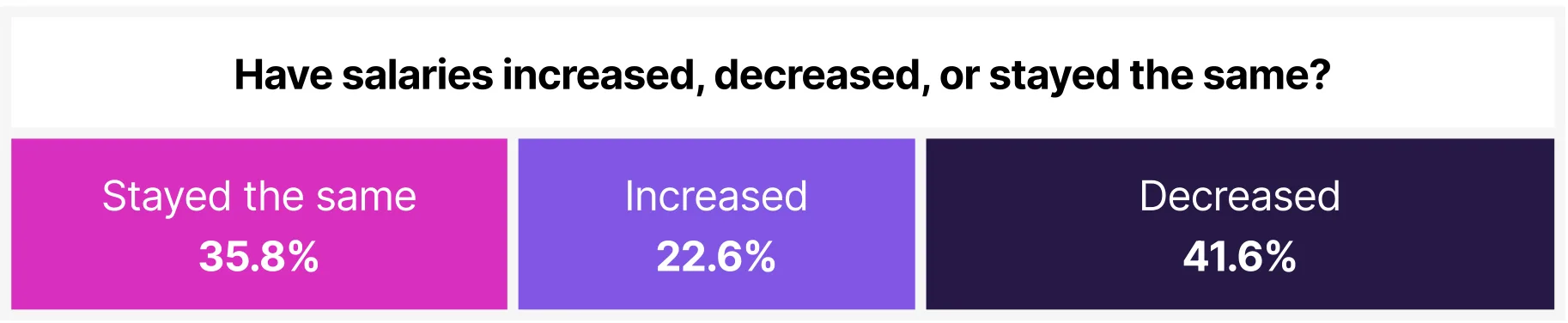
At first glance, this seems somewhat contradictory. If AI is such a major priority for businesses, why are so many professionals reporting fewer opportunities and downward pressure on salaries?
The answer likely comes down to the all-important conversation about how AI is being adopted within Salesforce environments. Rather than creating opportunities overnight, AI is reshaping what type of expertise is needed most – with more senior roles now in demand.
According to the 10k’s 2025 Salesforce Ecosystem Report, demand for technical architects rose 27% globally, while solution architect demand increased by 21%. Meanwhile, demand for Salesforce Developers declined by around 12% – indicating that there’s a shift in the types of technical expertise that companies are looking for.
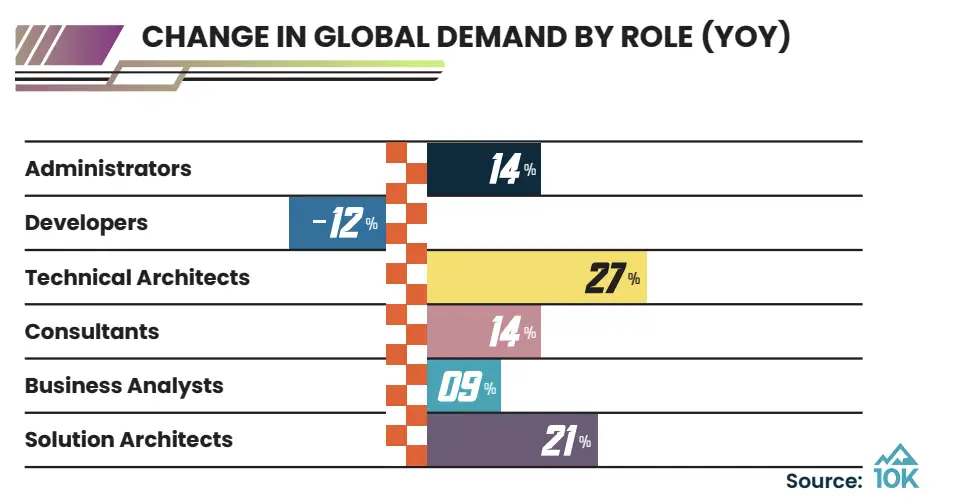
However, this shouldn’t be interpreted as the developer role becoming less important. It’s evolving quickly at the moment, and as Salesforce continues to expand into areas like Data Cloud, integration-heavy architectures, and AI-powered automation, many projects now require more cross-system connectivity than before.
Sarah believes this is already changing the shape of many Salesforce delivery teams, saying: “Given the current AI adoption landscape, demand for highly skilled and experienced roles is much greater. Architects – both technical and solution – are in high demand as companies try to work out what their technology landscape looks like with AI, data platforms, and consumption models in the mix.”
She also notes that developers who evolve alongside these changes remain in strong demand, particularly those working in integration-heavy environments.
“There is also an increased demand for developers, particularly integration specialists, at the moment,” Sarah detailed. “With so much Salesforce functionality now dependent on Data 360, many projects are requiring integrations and data management in a way they might not have done previously. The role of the Salesforce developer is absolutely evolving, and the demand is still high for those who evolve with it.”
All together, it looks as though the most valuable Salesforce pros are those who can think beyond the platform itself, and can connect AI capabilities, enterprise data platforms, and business processes into a cohesive system.
In that sense, AI may not be creating an immediate salary surge across the ecosystem, but quickly changing where the highest value sits.
Final Thoughts
If our Salary Survey shows anything clearly, it’s that the story around AI and Salesforce salaries is far from straightforward.
On one hand, artificial intelligence is rapidly becoming one of the most important skill areas in the ecosystem. Professionals are actively investing in AI, Agentforce, and Data Cloud knowledge, and organizations are increasingly exploring how these technologies fit into their Salesforce strategies.
On the other hand, the wider market is feeling tougher. Many professionals report fewer opportunities and growing salary pressure, suggesting that AI is not simply lifting pay across the board. Instead, it appears to be changing what employers value most.
As Sarah pointed out: “A real gap currently exists in bigger-picture thinking, particularly regarding an organization’s data landscape. For anyone looking to advance their career, learning how to take requirements and understand how the pieces of the puzzle fit together across multiple technologies will set them miles apart.
“Knowing how to build and deploy an agent is one thing, but even a ‘straightforward’ implementation now requires decision-making about how, when, and where to bring data into Salesforce. There’s a very limited pool of people who can really deliver at that level.”
In that sense, AI may not be rewriting the salary landscape overnight, but it is accelerating a trend that has been building for years: the Salesforce ecosystem increasingly rewards those who understand the bigger picture.