
Young talent has always been an essential puzzle piece within the market of any sector, and the tech industry is no exception. Well-positioned to take on a variety of tasks, bring fresh, new ideas to the table, and fill in the gaps for more senior staff, the younger generation has always had a place in the workplace hierarchy.
So, what happens when the supply of that talent begins to diminish? Well, the Salesforce ecosystem is about to find out, and find out fast.
State of the Market
Let’s make one thing clear: the Salesforce job market is undoubtedly saturated. Although 2025 signalled that demand was on the rise for the first time in nearly half a decade, an air of “cautious optimism” followed every new development.
According to 10K’s latest Salesforce Ecosystem Report, global Salesforce job listings have finally been on the rise, with an 8% YoY increase in demand – a notable change from 2024’s 37% decrease in demand. However, global supply for all roles grew by 27% YoY, still largely outweighing demand, meaning that the market continues to face a saturation rate of over 330%.
Not only that, but ‘traditional’ Salesforce roles have also been evolving, with global employers benefiting from a larger talent pool and, subsequently, the luxury of being more picky when it comes to employees.
In 2024, data from our annual salary survey revealed that the predominant age group within the Salesforce ecosystem was millennials, making up 39.1% of respondents. This was closely followed by Gen X at 34.3%, with the two least predominant groups being retirees at 0.7% and Gen Z at 3.9%.
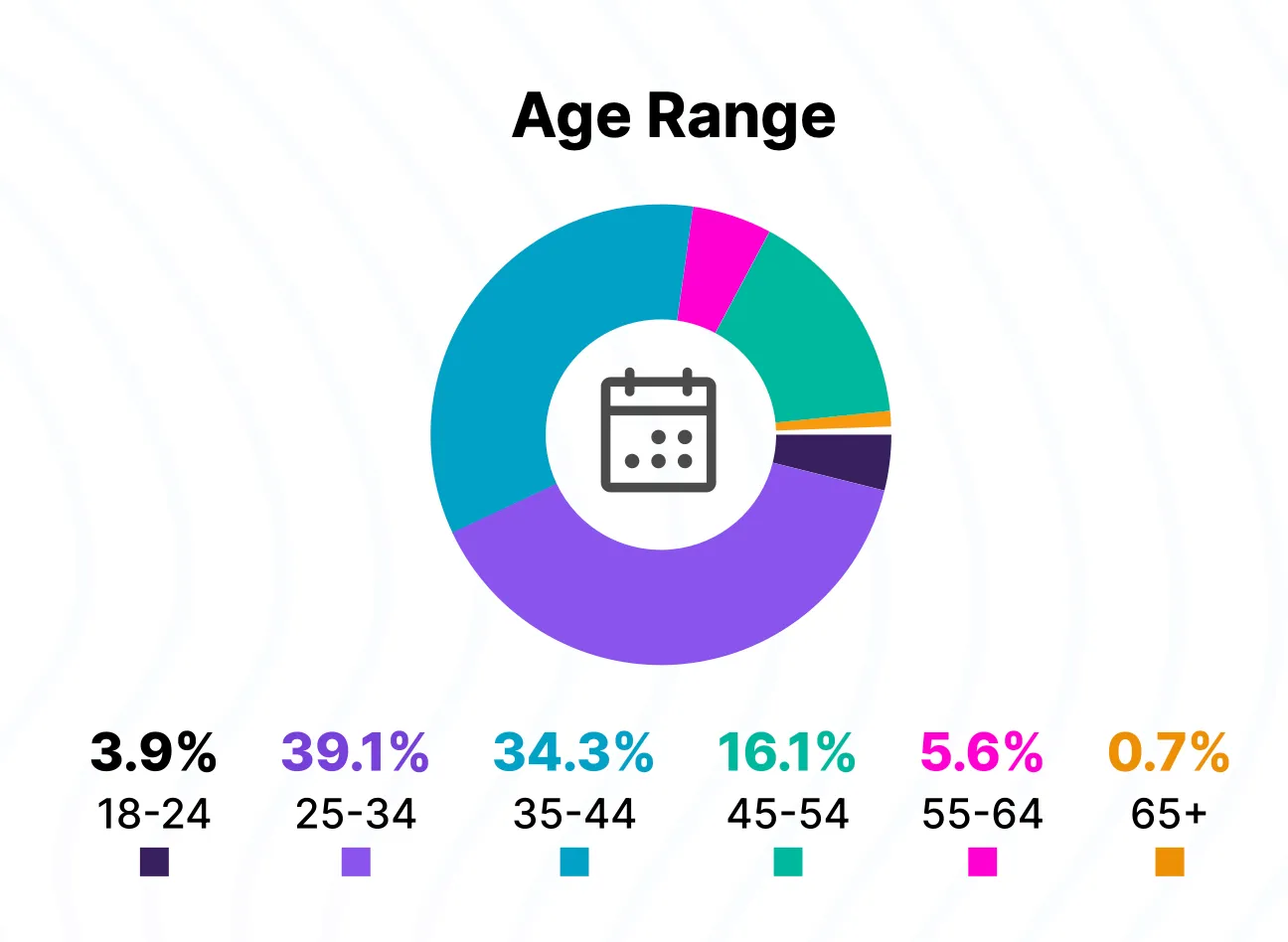
At first glance, the Gen Z statistic might not necessarily stand out. The busiest sector of the Salesforce job market is always, undoubtedly, going to be made up of experienced professionals who have taken years to perfect their craft.
But what happens when that talent becomes more senior, and the jobs, tasks, and projects that are more junior need to be completed?
Is a 3.9%-sized demographic enough to keep the hierarchy going?
Young Salesforce Talent Is on the Decline
Fast forward to 2025/2026, and this question becomes more pertinent than it has ever been before. Supply is up once again, indicating that the market is indeed experiencing an influx of talent. But how much of it is new talent, and what do the demographics look like?
The number of respondents in the ecosystem that fell into the 18-24 bracket in 2024 totalled to 3.9%. In 2025, that percentage fell to 3.5%.
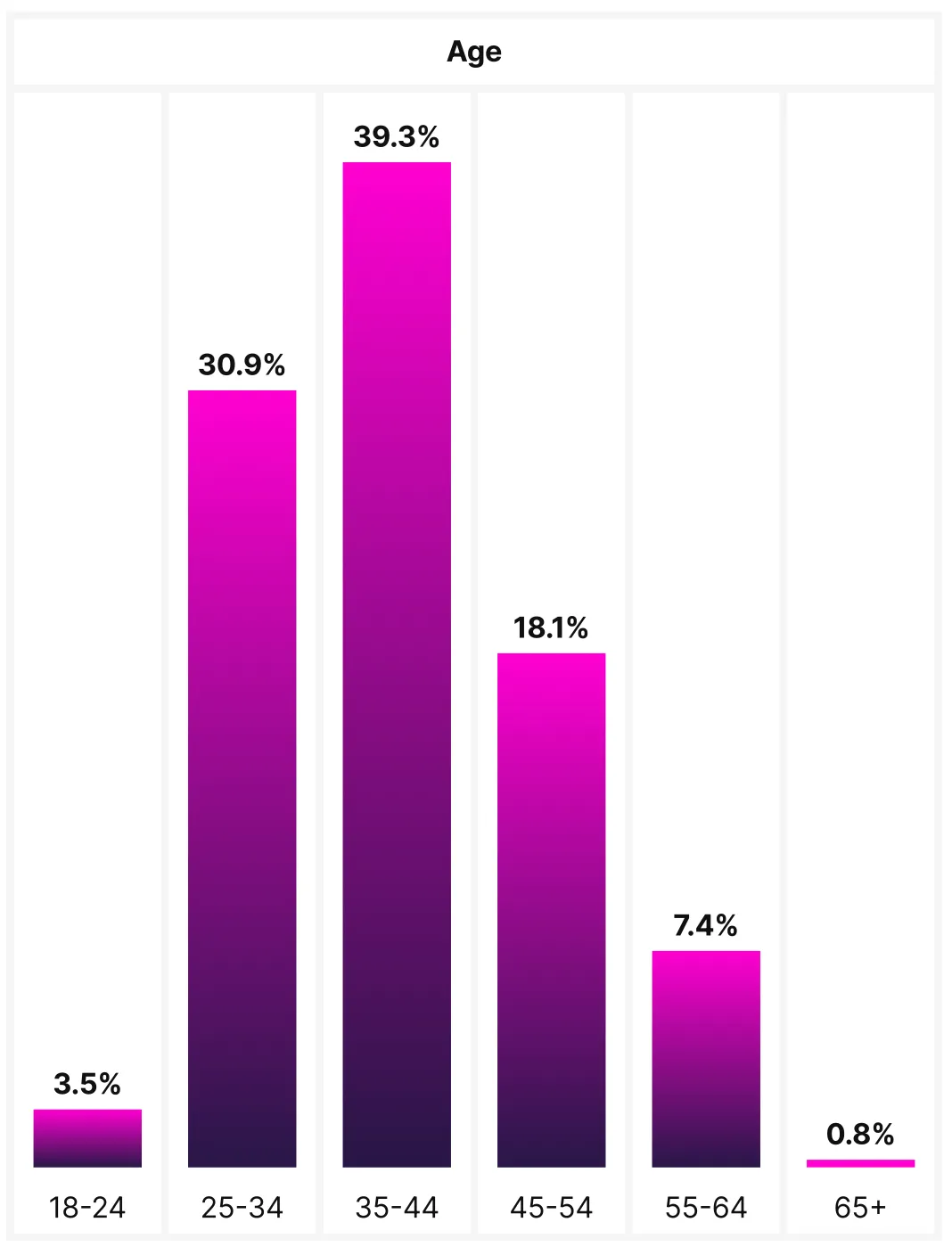
Although this is only a decrease of 0.4%, it illustrates that entry-level, graduate talent is certainly not on the rise. In fact, it likely indicates that this talent is actually on the decline, with a 5% increase in talent within the 35-44 age range in comparison.
Last year, data from Ravio showed that there had been a 73% decline in entry-level hiring across European tech in the past year. Venture capital firm SignalFire also found that between 2019 and 2024, there was a 50% decline in new tech role starts by people with less than one year of post-graduate work experience.
Our latest survey shows that 90% of respondents were between the ages of 25-54, which undeniably raises concerns about whether there is enough young talent entering the ecosystem. Traditionally, graduates will leave university or college around the age of 21, so where do they go once they graduate?
“Unfortunately, the late 2010s story of thousands of everyday people changing their lives with a Salesforce tech career seems to be over,” Vernon Keenan, a Senior Industry Analyst and the Founder of Keenan Vision, told me. “Some folks didn’t get the message until recently.”
“In 2025, there was a mismatch in labor supply and demand due to too many boot camps and other entry-level certificate programs. With the over-supply of trained admins, Trailhead badges and basic certifications probably matter less than ever before for entry-level workers.”
How Is Entry-Level Talent Finding the Market?
Entering the Salesforce ecosystem in 2026 can be extremely difficult, and that is not something you will find many people arguing about. Our latest salary survey data concluded that nearly 90% of respondents admitted that the market is now more challenging than it has been in previous years.
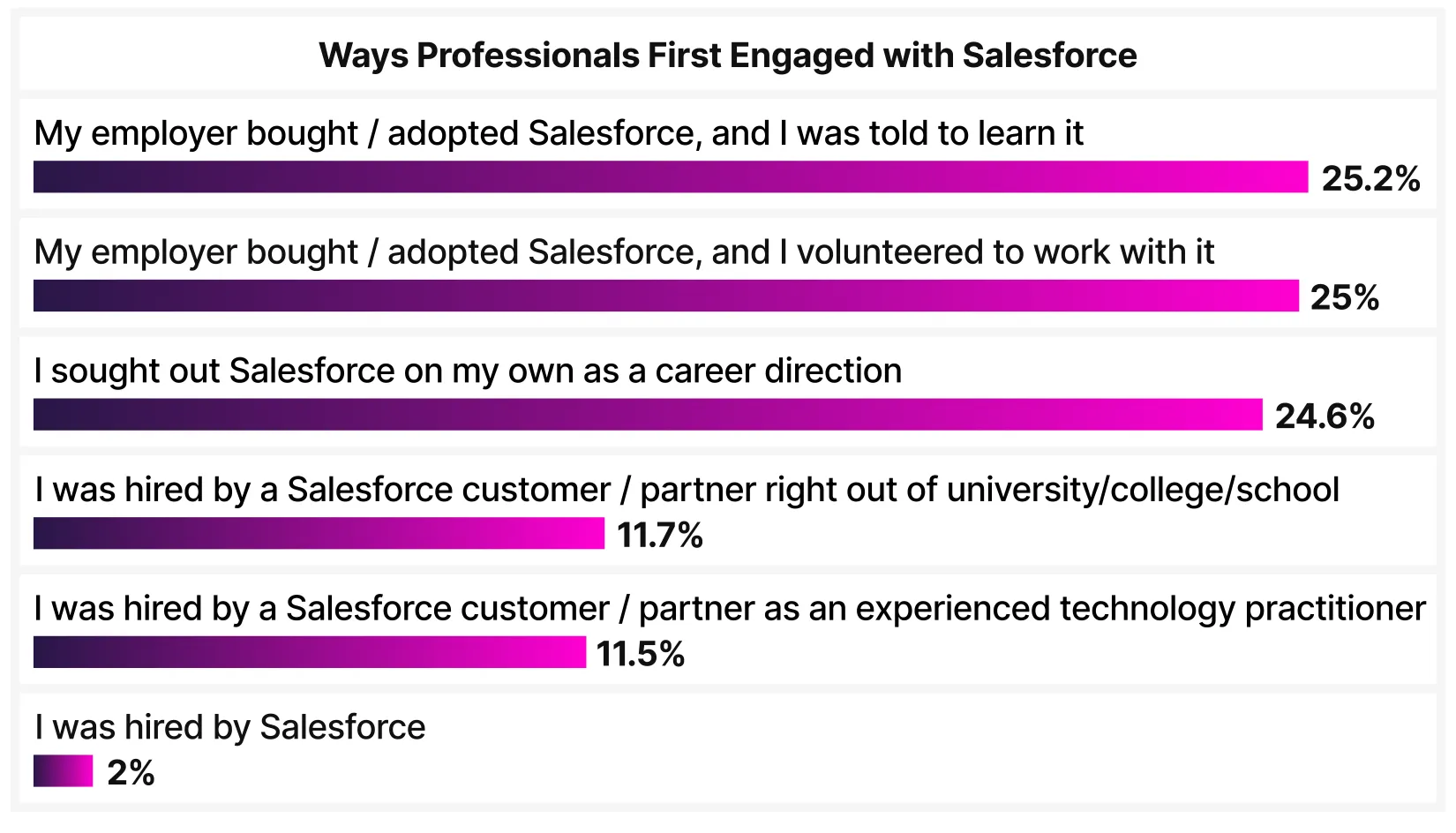
However, for those who have managed it, the key that has unlocked the door has not been unanimous. 25.2% of respondents said they first engaged with Salesforce because their employer bought or adopted Salesforce, and they had to learn it; 25% said that it was adopted by their employer and they volunteered to learn it; and only 11.7% said they were hired by a Salesforce customer or partner right out of university, college, or school.
For Dan Bennett, a junior Salesforce Administrator, his journey actually started out in one of the less traditional ways: he was approached by a company to upskill in Salesforce.
“I originally was applying for engineering jobs out of university, but having graduated during the COVID lockdown, it was very competitive,” he told me. “I never thought about it or even knew what Salesforce was until I was approached by a company.”
When asked about his experience with upskilling and getting familiar with the technology, Dan said it was largely positive. The company he was recruited by put him on a course and helped him obtain the necessary entry-level qualifications.
“[The company] was really good and supportive throughout, and the course was good, which led to getting my first two certifications,” he said. “We were supposed to move into real job roles, but mine fell through, so they said I was able to leave without any repayments, as it was taking a long time to find other places to send me.”
Although Dan was not able to immediately find a job after his course, he is now working for the Association of International Certified Professional Accountants.
“I think for job opportunities, I’ve been quite lucky, but maybe I just have the correct certifications to help,” he said.
For others, the hiring landscape is very different. It doesn’t take long to scroll through r/salesforce on Reddit before finding someone who is struggling with entering the market.
“It’s going to be extremely difficult,” someone wrote on one thread that inquired about entering as an admin. “You’re going to be competing with people with over five years of experience, laid off from other roles.”
Another thread detailed how difficult it is to break into the industry in any capacity, including an internship, job, or contract.
“There’s basically no entry-level market for Salesforce professionals right now unless you’re already working for a company that uses Salesforce and you fall into the role somehow,” one commenter wrote.
What Does This Mean for the Future?
A significant problem looms ahead if this particular job trend continues. Young, entry-level talent has been necessary to keep the employment hierarchy going, and without them, we risk the Salesforce ecosystem stagnating and potentially even falling short of replacement levels.
As older, more experienced Salesforce professionals go on to specialize, leave the ecosystem, or retire, a backlog of young talent is needed to fill in the gaps. Even if the hierarchy kept churning with career transitioners or people kept working for longer, the ecosystem would miss out on the fresh, new ideas that young talent is able to bring to the table.
“Except for hiring elite ‘cracked’ engineers and AI freaks, I haven’t seen companies setting up many apprenticeship programs and other training programs to keep their ranks fresh as their workforces age,” Vernon said.
It’s important to remember that entry-level talent is not just battling a lack of paths in or a lack of jobs. Now, they are also battling AI.
It was Vernon who brought the idea of “quiet erosion” to the forefront of the Salesforce ecosystem – the notion that AI is reshaping employment by quietly replacing the need for entry roles.
Last year, I explored how some of the first pieces of evidence had transpired, proving that AI was in fact automating and not augmenting roles in tech. The Stanford Digital Economy Lab had produced a report that detailed how entry-level tech jobs were down by a significant 67%, and AI had a leading role in the outcome.
Eric Sullano, the Co-Founder of recruitment engine JumpSearch, highlighted that the issue can be split into two parts.
“The real disruption isn’t just in automation, it’s in how fast hiring behavior shifts ahead of capability,” he wrote. “That’s where strategy needs to catch up.”
Something Needs to Change
For businesses and employers, the urge to jump on AI as a means of scaling teams and filling roles can seem incredibly appealing, especially if it’s the lower-cost alternative. Filling in junior roles with more established talent can also seem attractive, especially if they are interested in making that person in that role wear many hats.
However, the risks associated with these choices are perhaps not short-term ones, but they are certainly long-term ones.
“At some point, that whole thing explodes on itself,” was what Amazon Web Services (AWS) CEO Matt Garman had to say about AI replacing entry-level tech roles. “If you have no talent pipeline that you’re building and no junior people that you’re mentoring and bringing up through the company, we often find that that’s where we get some of the best ideas.”
“You’ve gotta think longer term about the health of a company,” he added. “And just saying ‘OK great, we’re never going to hire junior people anymore,’ that’s just a nonstarter for anyone who’s trying to build a long-term company.”
On the non-AI side, I believe the thinking should be the same. Young talent – both within the Salesforce ecosystem and wider tech sector – has and always will be an incredible resource. I, myself as a writer for SF Ben, would not have gotten this opportunity without an established team of talent taking me on, and my story is definitely not unique.
The future generations of admins, developers, architects, engineers, and more deserve a place in this landscape too.
Final Thoughts
The Salesforce ecosystem may be experiencing a lack of entry-level talent now, but that does not mean it has to remain a trend.
Employers, businesses, and graduate schemes are looking at a market of untapped talent and no current way to propel them into their careers. There is no better time than now to start.
For job seekers, although the market is turbulent, do not let it put you off if entering this ecosystem is what you really want. My colleague Henry Martin wrote an informative guide to finding a job in Salesforce, which you should check out here. Happy hunting.