






Salesforce Administrators and Flow builders have long shared a quiet concern: even a small tweak to a Flow can echo unpredictably across an org. A renamed variable, a modified subflow, a removed decision branch. Any of these can trigger unexpected failures in places no one remembered were connected.
With the Spring ’26 release, Salesforce takes a meaningful step toward easing that anxiety, with a new way to spot flow dependencies and avoid a crisis.
How Do I Find Flow Dependencies?
In the Automation Lightning App, the new Usage tab brings visibility to Flow dependencies in a way that feels both practical and overdue. Rather than relying on external metadata tools or carefully maintained documentation (which not many of us have!), you can now inspect relationships in the flow of work, right from the Automation App.
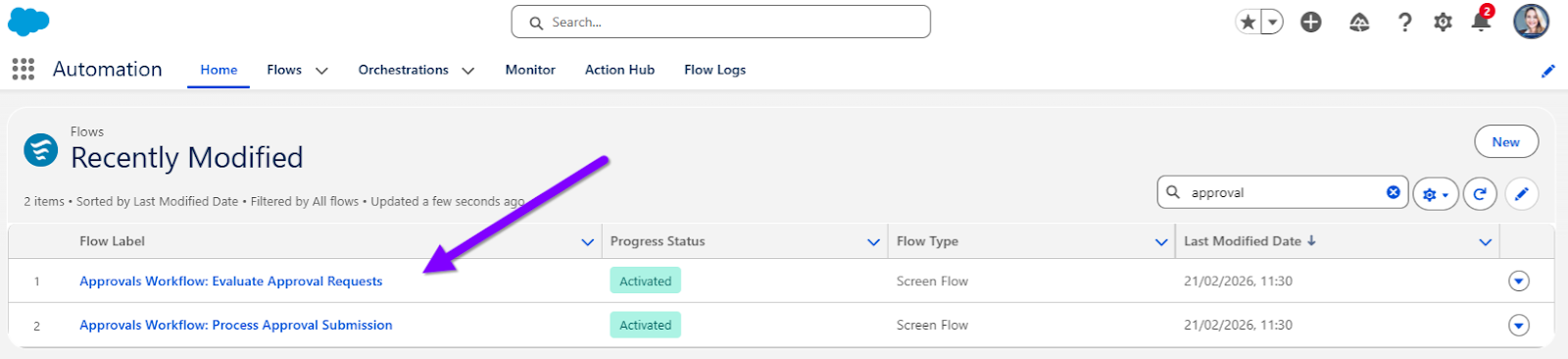
All you need to do is select a Flow, open the Usage view, and immediately see what the Flow relies on as well as what relies on it.
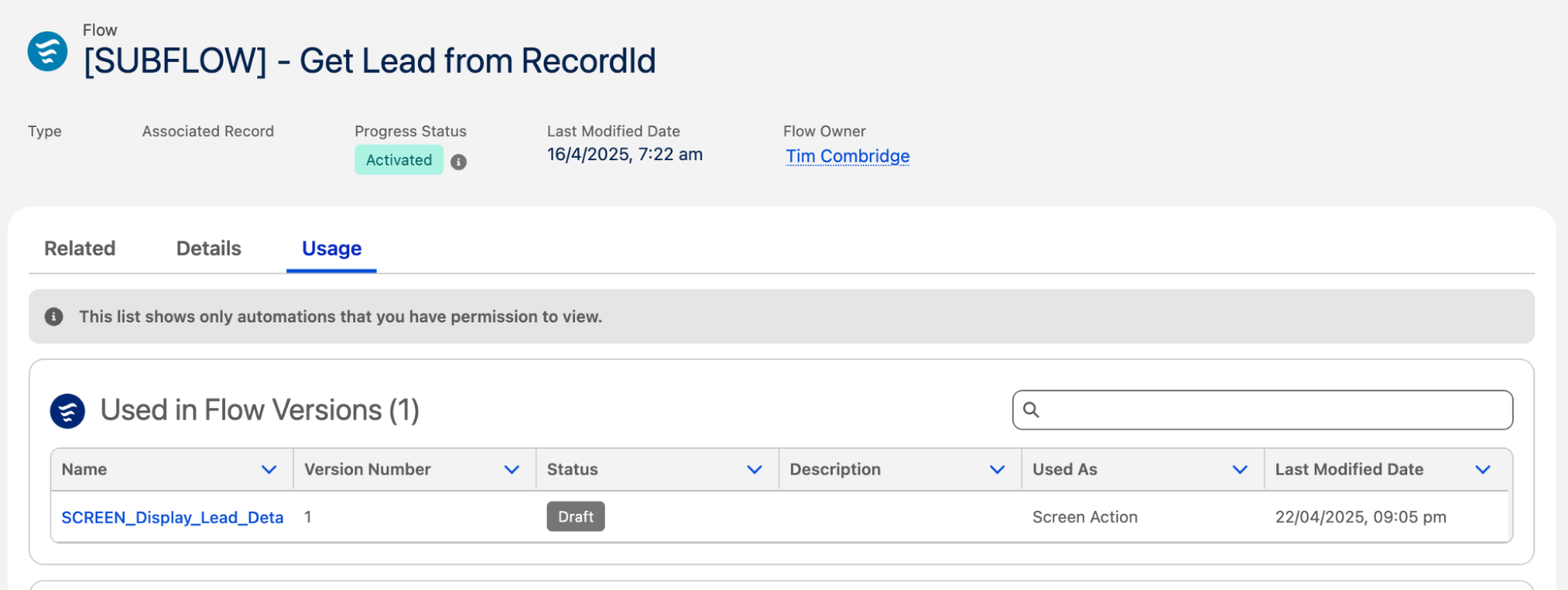
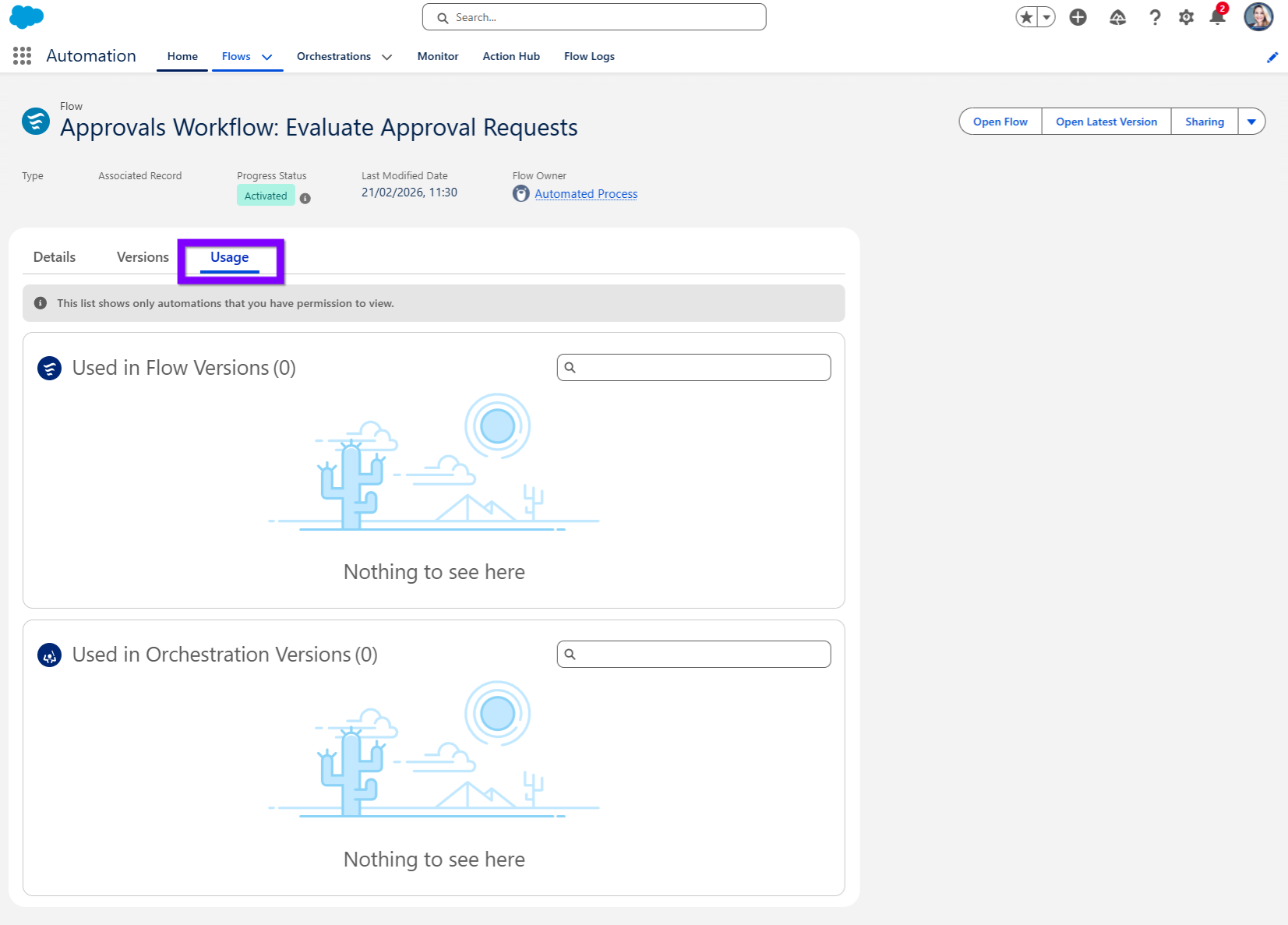
This bidirectional perspective is what makes the feature genuinely useful. You’re not only warned about downstream effects but also reminded of any upstream constraints. Before adjusting a Flow, you’ll be able to quickly evaluate potential impact, reducing the risk of breaking interconnected automations. This results in less guesswork and more confidence when iterating on complex logic.
Considerations
Like any diagnostic tool, the Usage tab is informative but not exhaustive. Certain dependencies, particularly those embedded in custom components or niche configuration paths, may still require deeper investigation. Even so, the clarity it provides for Flow-to-Flow and orchestration relationships represents a substantial improvement!
Access to these insights is governed by the Manage Flow permission, ensuring that visibility aligns with administrative responsibility.
The feature is available across major Lightning Experience editions, reinforcing its role as a core platform capability rather than a niche enhancement.
Summary
Another lovely thing about this enhancement is that it reflects direct community influence through the IdeaExchange. This underscores a familiar pattern in the Salesforce ecosystem: builders articulate friction, and the platform evolves in response. In this case, the evolution centers on something deceptively simple yet critically important.
Understanding how automations connect is no longer a detective exercise. It is becoming part of the natural building experience.
For anyone responsible for maintaining a growing web of Flows, that shift is more than a convenience. It is a safeguard against the invisible complexity that accumulates in every successful org.





Comments: