

If you have ever walked out of a Salesforce demo thinking, “That didn’t land”, this one is for you.
Ten years ago, I walked into my first Salesforce demo, suited up, Classic UI loaded, fingers crossed that the sandbox would not crash. Fast forward to today, and pre-sales meetings have become one of the most strategic and high-stakes moments in the customer journey. This is where deals are won or lost, not by showing features, but by telling a story that resonates.
This is a hands-on guide for Salesforce Consultants, Architects, and Solution Engineers who want to strengthen their pre-sales muscle. I will share what I have learned across more than 70 projects, blending real-life lessons with a touch of neuroscience, storytelling, and common sense.
“Great demos aren’t built in sandboxes. They’re built in discovery.”
1. Pre-Game: Nailing Discovery
Before you open any demo org, do the work that actually matters. Understand why they bought Salesforce or why they are considering it in the first place.
Research the company’s vision, leadership tone, and how they describe themselves publicly: websites, job boards, press releases, and even CEO interviews. That is where you find what truly drives them.
Then, zoom in on the people. What frustrates their Sales Managers? What blocks their Service team? What keeps IT awake at night? Go into every call armed with a few pointed questions that reveal ambition, not just process.
I like to ask questions that reveal how the business feels success, not just measures it. A classic one is “What are your biggest pain points?” or “Where does your team still rely on Excel?” You can also go deeper with “What slows your team down the most right now?” or “If Salesforce could fix one thing for you tomorrow, what would it be?”
I once had a Head of Sales tell me, “I need my reps to understand that the information belongs to the company, not to their notebooks and spreadsheets.” That single line said everything. Our story instantly shifted toward visibility, shared ownership, and trust in Salesforce as the single source of truth – not another dashboard project, but a culture change.Always tie discovery findings to measurable value levers: revenue growth, cost reduction, operational efficiency, or risk mitigation. Because what you are really gathering is not process, it is ambition.
2. Game Day: Run the Meeting Like a Pro
When the big day arrives, remember: this is not a product tour; it is a story.
The 3 Brains (Yes, Literally)
Neuroscience gives us a cheat sheet to communication:
- The reptilian brain filters for fear. Avoid triggering it.
- The limbic brain drives emotion. That is where stories hit.
- The neocortex handles logic. Keep it simple.
“People decide emotionally and justify logically. Your demo needs to speak to both.”
Tell–Show–Tell
This is my go-to rhythm:
- Tell: Set the context and remind them of the problem.
- Show: Demo the solution linked to their story.
- Tell: Recap the impact: “With this, your team reduces X by Y %.”
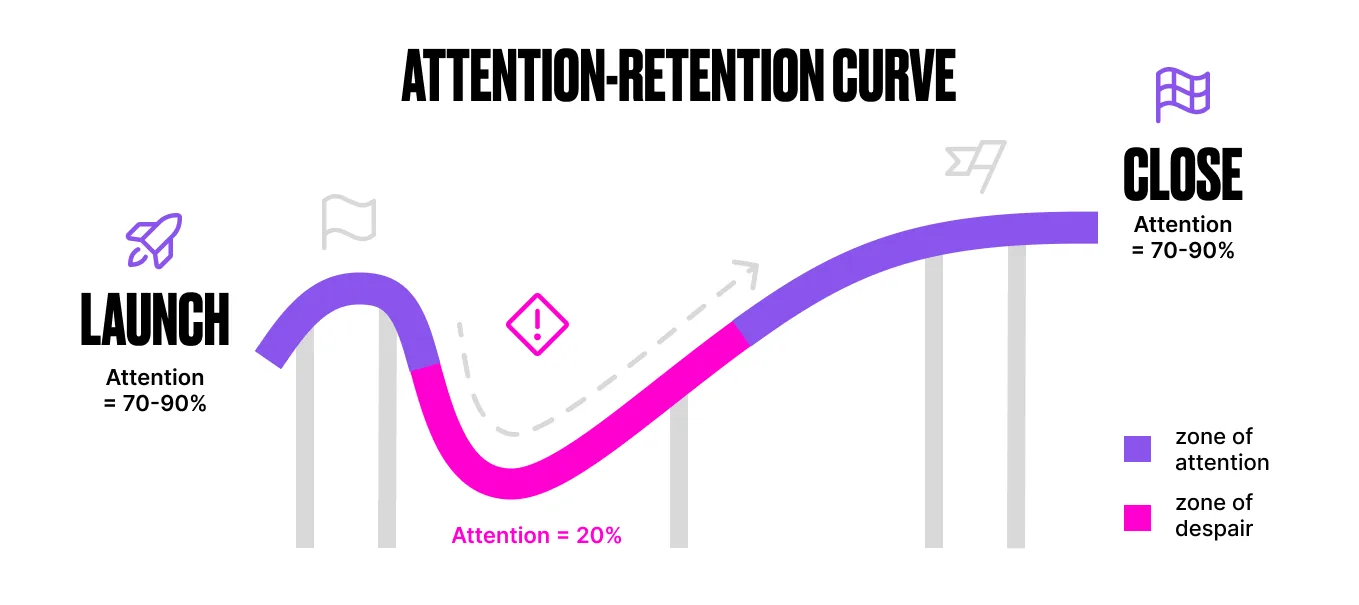
It is not a gimmick – it is the flow of attention. People start focused, dip halfway through (the dreaded zone of despair), and then re-engage near the end. This rhythm helps you guide them through that curve without losing their focus or energy.
Use Storytelling
In every great story, the customer is the hero, and your product is the helper.
I once demoed for a logistics company whose reps were juggling 12 different systems. They were exhausted before 10 AM. We built the narrative around a single rep named Sofia. The story followed her daily struggle, her breakthrough moment, and the victory that came next: time saved, happier customers, and 30% faster response times.
That is the point. You are not demoing Salesforce. You are demonstrating belief.
3. Handling Objections Like a Human
Every seasoned consultant knows the real action starts when someone says, “I am not sure about this.” Objections are buying signals in disguise.
My rhythm is simple: Defuse – Discover – Deliver.
- First, defuse the emotion: “I hear you. That is a fair concern.”
- Then, discover the reason: “Tell me more about that?”
- Finally, deliver your response with empathy or proof: “Others felt the same until they saw how we integrated seamlessly.”
Here are some common objection themes:
- “Salesforce is too expensive.”
- “We have already invested in another tool.”
- “My business is too specific.”
When someone once told me, “We have already invested in another CRM”, I smiled and said, “Perfect. Then you know exactly what not to repeat.” They laughed, relaxed, and opened up about their real frustrations.
Stay calm, stay curious, and remember: objections are not resistance, they are engagement.
4. The Demo: Less Is More
Here is the truth: clarity beats complexity every single time.
A demo is not about how much you can show. It is about how much they can remember.
Use a clean, simple org with no clutter or unnecessary clicks. Each action should have a purpose. Rehearse transitions, anticipate questions, and speak their language, not Salesforce jargon.
I like using demo vignettes, short persona-driven journeys that are tight, relatable, and emotional. And always make it visual. Whether sketching in Miro or drawing on a slide, visuals build memory.
“People do not remember what you showed. They remember how you made them feel.”
5. Post-Game: Follow-Up Like a Consultant
The demo might end, but the story does not.
Send your follow-up quickly, ideally within 24 hours. Be clear, warm, and useful. Thank them for the discussion, recap what you covered, list open questions or decisions, and outline next steps. It is simple, but speed and clarity say everything about your professionalism.
Then debrief internally while it is still fresh. Clean your notes, tag what matters (signals, risks, champions, blockers), and share with your team. This is how you shift from a good pitch to a trusted partnership.
Field-Tested Tips
There is no perfect pre-sales script, but some truths always hold:
- Discovery wins deals. It is 45% of the success. Shortcut it, and the demo falls flat.
- The demo amplifies the story. It does not tell it.
- Use personas and quotes. They bring emotion and context.
- Plan for the “zone of despair.” Ask a question mid-demo to re-engage attention.
- Energy sells. Your tone sets the room’s temperature.
- Have fallback flows. When tech fails (and it will), your composure becomes your differentiator.
“You do not need perfect delivery. You need purposeful delivery.”
Using Tech Wisely
Your toolkit can quietly elevate your game when used with purpose:
- Google Chrome Profiles: Switch between demo personas without breaking flow.
- Holodeck Templates or SDO–IDO Environments: Keep reusable, persona-based setups for consistent storytelling.
- Simulated or industry data: Make the story real and credible.
- Miro or Lucid: Perfect for mapping processes or showing value in real time.
Because when your setup feels effortless, your confidence does too.
Conclusion: The Customer Is the Hero
In every pre-sales room, there is only one hero, the customer. You are not the star, you are the guide.
Mastering pre-sales is part art, part science, and part psychology. But if you prepare well, tell the right story, and stay human, you will win more than deals. You will win trust.
Let’s Connect!
Want to chat more about pre-sales or share your own battle stories? Hit me up on LinkedIn – I would love to trade experiences with fellow Salesforce pros.
“Tell me a fact, and I will learn. Tell me a truth, and I will believe. But tell me a story, and it will live in my heart forever.” Indian Proverb