

Dreamforce 2026 has already delivered some major Salesforce AI announcements. The main keynote revealed AIforce, shared that Claudeforce has moved into open beta, and brought Agentforce Coworker into the wider picture. Salesforce has spent much of the week detailing how its AI products will sit across different interfaces, which meant expectations were reasonably high for the dedicated Agentforce keynote.
But anyone waiting for another major product reveal may have left slightly disappointed. Instead, Salesforce spent most of this keynote showing some of their key customers using Agentforce, demonstrating existing and recently announced capabilities, and highlighting how businesses can get measurable value from AI agents.
Now this wasn’t necessarily a bad thing – in fact, we argued in the lead-up to Dreamforce that the real challenge for Salesforce this year was proving Agentforce works and delivers ROI. This keynote was built almost entirely around answering that question.
ROI Was the Big Theme
The Agentforce keynote opened with the clear message that Salesforce wants to prove that its AI agents can deliver measurable business value.
Mark Wakelin, GM of Agentforce, framed the session around how customers can get real value from agents, with Salesforce introducing an “Agentic ROI Playbook” focused on getting agents into production, monitoring how they perform, and continuously improving them.
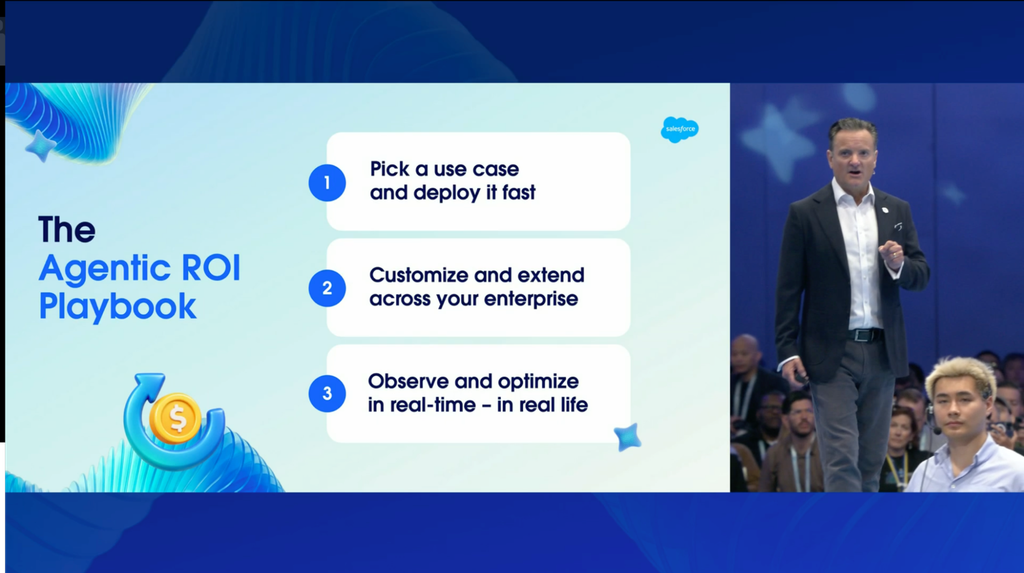
We know that Agentforce has been around long enough that showing what an agent can’t do isn’t really enough. Customers want to know whether these projects can reduce costs, improve productivity, and ultimately, justify the investment.
Salesforce said 30,000 customers are now live on the Agentforce platform, and repeatedly returned to metrics around operational savings and productivity throughout the keynote.
Customer Examples Made Agentforce Easier to Understand
The strongest parts of the keynote were the customer examples, particularly because they showed Agentforce handling specific business processes rather than another generic “AI assistant” demo.
Fulton Bank
Fulton Bank showed how it is using Agentforce across a growing number of internal use cases, including Hunter, an agent that integrates with Gmail and can carry out background tasks using customized communication styles and continuous feedback.
Salesforce said Fulton Bank has saved 80,000 hours through its use of Agentforce, while also attributing $389M in loans and deposits to the technology. The bank has also reduced complaint resolution times by four days.
Southwest Airlines
Southwest Airlines demonstrated a more structured approach built around an Agent Router and multiple subagents.
One example focused on customer name changes, with different parts of the process handled by dedicated subagents for intake, document validation, reimbursements, ticket refunds, and other requests.
Vivint
Vivint then showed how Agentforce Observability can be used against live voice interactions, including session logs, response quality, action traces, and latency data.
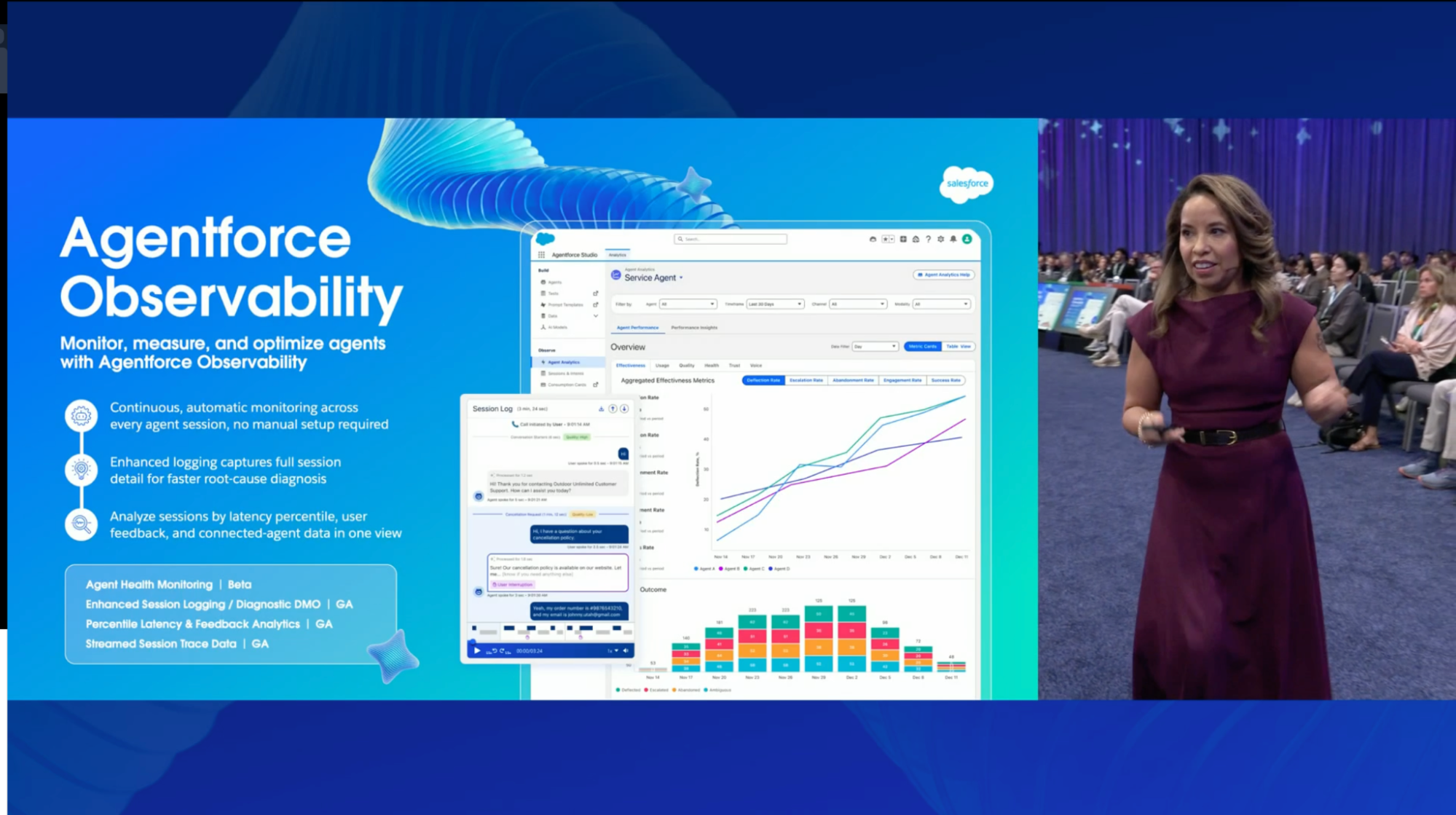
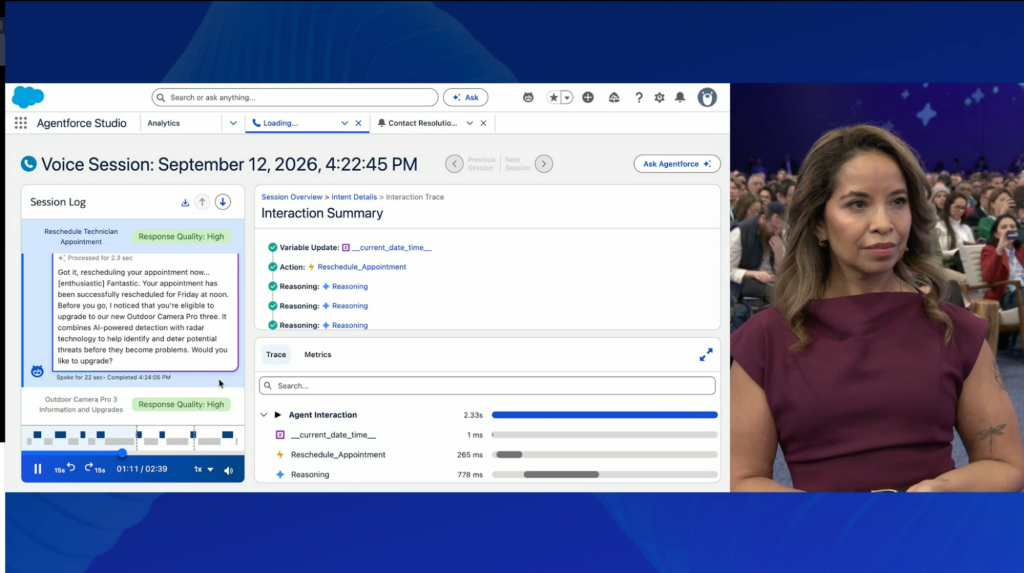
These were very polished keynote demos, so they should be treated as examples of what is possible rather than a typical implementation experience. But they did make the product much easier to understand in practical terms.
Humans Still Sit Inside the Loop
One of the more interesting parts of the keynote was Salesforce’s approach to long-running agents. A slide showing the new long-horizon runtime laid out a cycle of goal, plan, human in the loop, signal, and continuous refinement, with memory, durable execution, and dynamic steering underneath.
It seems the message is that while agents may be able to work toward bigger goals over longer periods, Salesforce is still prioritizing human intervention (human in the loop) within the process rather than presenting these systems as completely hands-off.
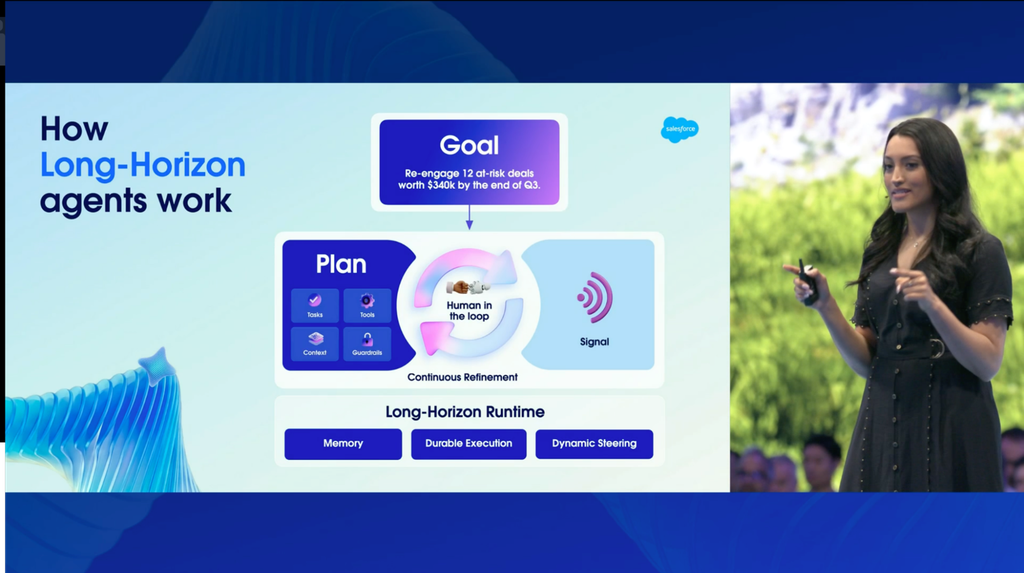
This is a message Salesforce has been consistent with since the launch of Agentforce, but it feels even more relevant given the full focus on AI autonomy in the tech space. What Salesforce showed was a more controlled model, where agents can keep working over time, but people still have opportunities to step in, redirect, or approve what happens next.
Agent Optimizer Gave the Clearest Look at What Comes After Launch
Agent Optimizer was one of the more useful demos, focusing on what happens after an agent is already live.
In the example shown, Salesforce identified a production issue where refund requests over $200 were escalating at a much higher rate. Agent Optimizer then traced that back to a gap in the current setup, suggested changes to the relevant subagent and Agent Router, and generated smoke and regression tests for the proposed fix.
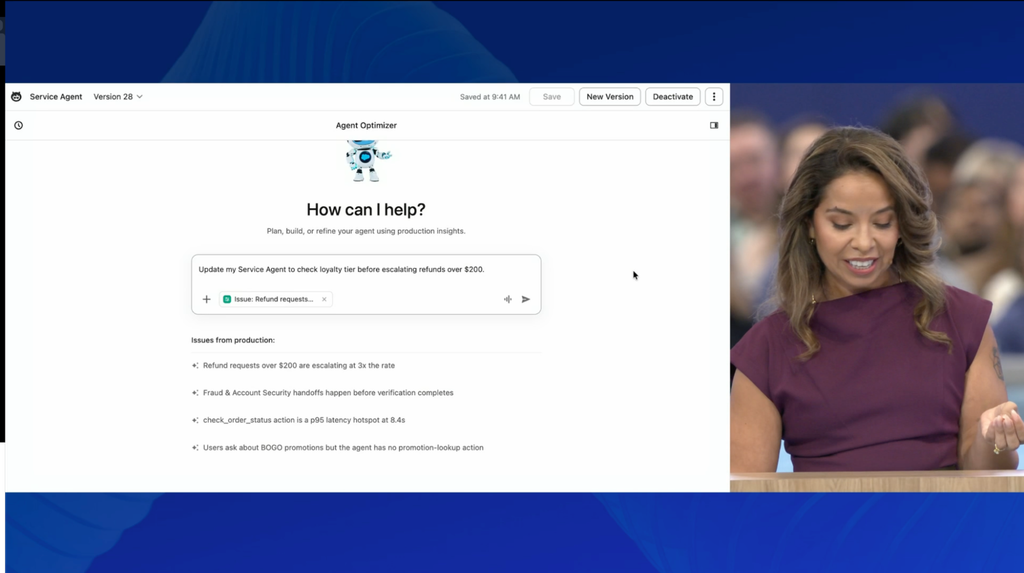
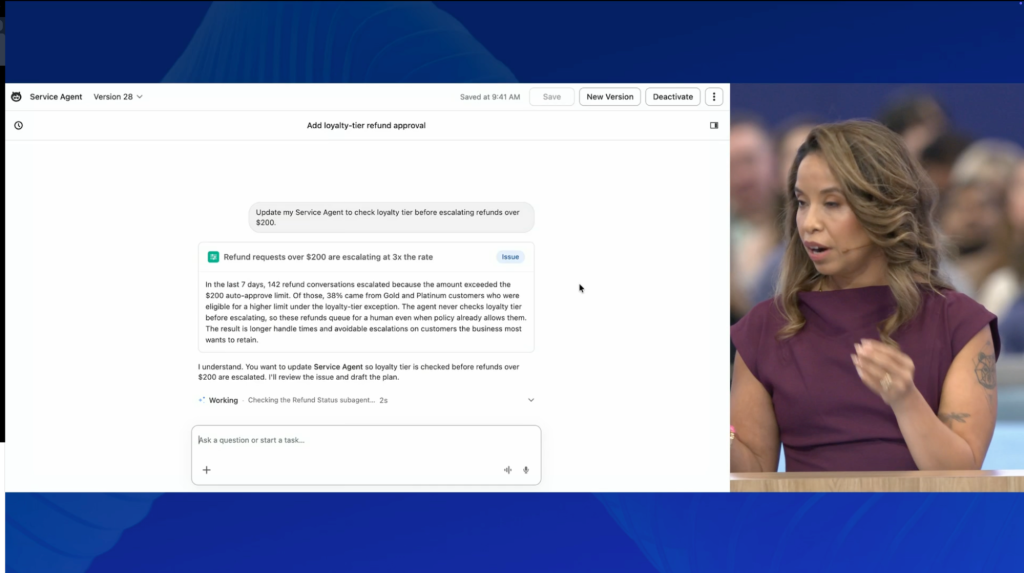
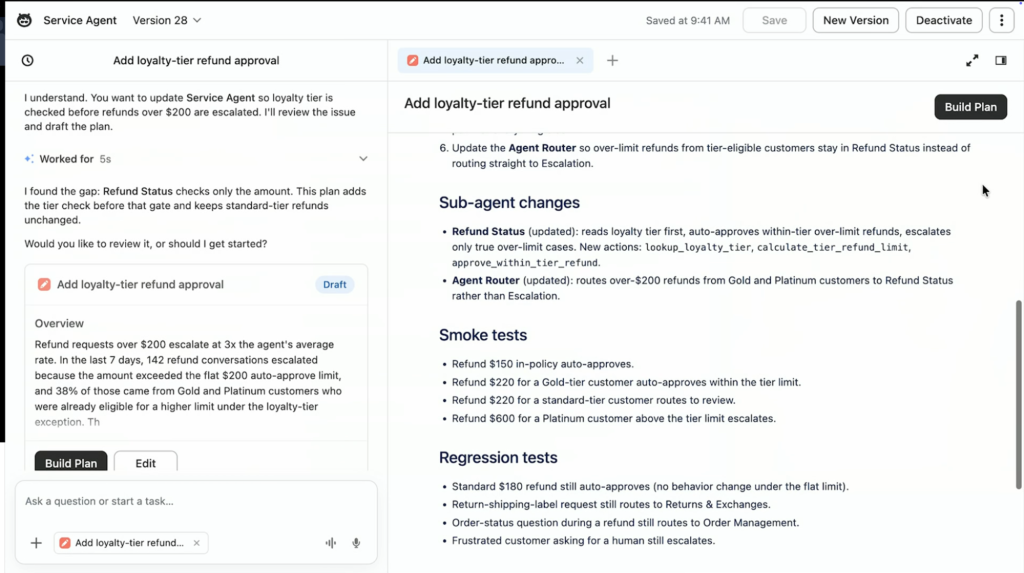
This demo in particular felt more practical than some of the broader “agent lifecycle” messaging around it. Instead of showing analytics, Salesforce demonstrated a system that can spot a problem, suggest how to change the agent, and help test that change before it goes live.
This product had already been announced before Dreamforce, but this was one of the better examples of how it is actually supposed to work in practice.
Final Thoughts
This was a very demo-led keynote, with no major surprises. But it was useful to see Agentforce working inside the Salesforce interface.
Whether that is enough to move the needle for customers is a different question. Dreamforce 2026 has already delivered a huge amount of AI messaging, from AIforce and Claudeforce to long-horizon agents and new governance tooling. At some point, you’d hope those announcements translate into genuine excitement and measurable outcomes for customers.
This keynote was Salesforce’s attempt to show that process happening. It was polished, tightly controlled, and light on major new announcements, but it did offer a more practical look at what Agentforce is becoming.