




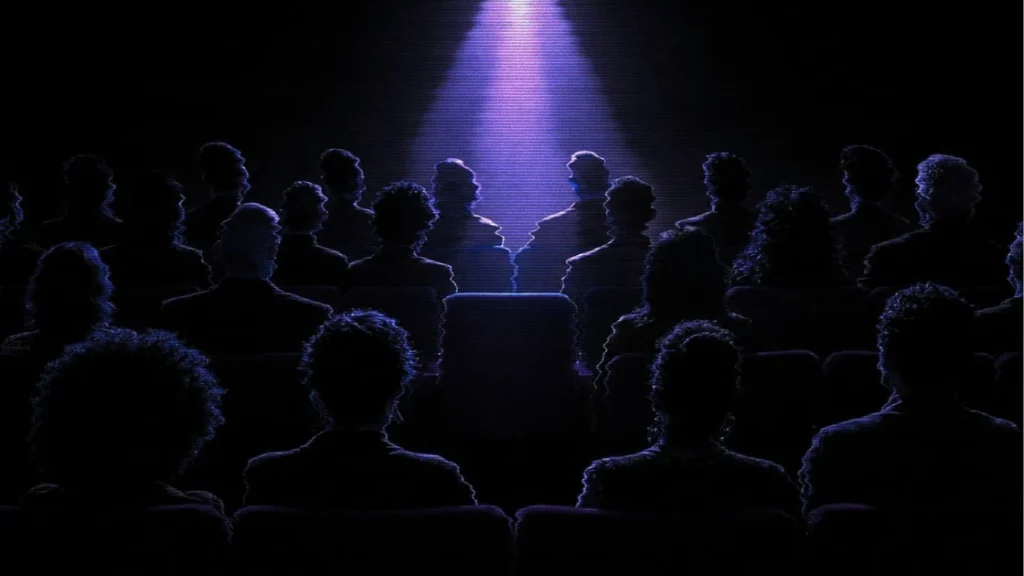

If you’ve attended any Salesforce events over the last few years, you might have experienced a shift. Historically, the company’s flagship events – including Dreamforce and TrailblazerDX – have drawn in giant crowds of Trailblazers, with its smaller events, such as its World Tours, not far behind. The atmosphere was almost always regarded as positive, lively, and excited for the future.
Now, has this changed? With Salesforce’s 180-degree pivot into all things AI and Agentforce, it has unfortunately come with mixed reactions. Some professionals argue that this has been reflected in both event attendance and morale, but what’s actually happening on the ground?
The Post-COVID Shift
Before the COVID-19 pandemic, Salesforce events were on a different playing field altogether. Dreamforce 2019 recorded over 171,000 registered attendees, with an impressive 13 million people tuning in online on Salesforce+. At the time, it was reported that the in-person attendees “swarmed San Francisco and took over almost every open meeting space in the city.”
In 2025, Wired described the conference as “the massive carnival of geekery that eats San Francisco”.
After the pandemic, attendance levels for Dreamforce never really recovered. In 2023, it was reported that over 40,000 people attended, with 45,000 in 2024, and over 50,000 in 2025. Although it has been growing year over year, it remains a far cry from the conference’s former glory days, likely influenced by a mixture of factors including lingering hesitancy around attending events in person and the company’s wobbly reputation.
Its smaller annual conference, TrailblazerDX, is harder to track in terms of attendance numbers. It is estimated that the event brings in between 5,000 and 10,000 attendees every year, heralded as the smaller, more hands-on conference with less “fluff” and selling.
What’s Happening at Salesforce Events?
If you were to ask a Salesforce professional whether they believe a Salesforce event like Dreamforce is worth it, you may be surprised at the answer. According to one Reddit thread, community members would generally argue it is, but only if you get a complimentary ticket. Salesforce coach Vuk Stajić wrote that he is lucky to stay with relatives when he attends Dreamforce – otherwise, he “wouldn’t invest.”
Speaking of complimentary tickets – it has been speculated that Salesforce has been discounting tickets even after “early bird” pricing has expired due to low ticket sales. Most recently, the company extended Launch Special pricing after the community allegedly “asked for more time,” according to an email seen by SF Ben.
A Salesforce spokesperson told SF Ben that events continue to see high attendance and that they could not comment on this.
This year, Salesforce also only had a London World Tour event rather than both a London World Tour and TrailblazerDX London event like the year before. The reasons behind this are unclear.
“TDX has not returned this year, meaning there has been one major June event rather than two,” Tom Bassett, Salesforce MVP, told SF Ben. “Whether that represents a broader scaling back is harder to judge from a single market, but it is a noticeable difference compared to last year.”
Then there’s what can best be explained as a shift in atmosphere. As Salesforce MVP Emma Keeling put it, the change since the pandemic has been extremely noticeable. “I think that post-pandemic we were all pretty excited to be going to any Salesforce events, community or otherwise,” she told SF Ben.
She explained that she attended TrailblazerDX in 2024, and it was an overall positive experience, filled with relevant learning and networking opportunities. This was unfortunately not the case the next year.
“I attended again in 2025, and honestly, if it wasn’t for me getting to hang out with so many amazing humans, it was a total fail for Salesforce,” she said. “The focus was just ‘Agentforce’, a total lack of community speakers and a lack of community focus. I’m pretty sure this was also the event with no golden hoodie… Needless to say, I didn’t attend in 2026 and don’t plan to for 2027.”
Why Has This Been Happening?
Salesforce’s persistent AI/Agentforce strategy is definitely one factor that has been impacting Salesforce events, and although it’s prominent, it’s not the only thing muddying the waters.
Reputation Struggles
Morale surrounding Salesforce as a company, and by and large, its events, has been turbulent over the last two to three years, influenced by the company’s aforementioned push towards all things Agentforce and CEO Marc Benioff’s political statements.
Frustrations over the company’s AI drive reached their peak last Dreamforce, when attendees brought the fixation up during the True to the Core session, stating that “Agentforce isn’t everything.”
Not only that, but company sentiment also took a hit after Marc Benioff showed support for US President Donald Trump’s idea to send National Guard troops into San Francisco, and a ‘joke’ about ICE, which many community members found distasteful.
As Adele Gambardella, the CEO of communications agency Convincing Company, explained on LinkedIn: “The backlash was immediate. Board members resigned. Scheduled comedians withdrew. Employees – many of whom had joined Salesforce because of its progressive values – suddenly questioned what company they worked for.”
Salesforce MVP Geoffrey Bessereau took to LinkedIn at the time of the ICE joke to echo what many Trailblazers resonated with: “Salesforce has spent years telling us about Trust. Equality. Ohana. Some of us took that seriously.”
“Some of us built careers and communities around it. Some of us stood in front of rooms and repeated those words because we thought they meant something. They should mean something.”
Activist Investor Push
It’s important to remember that Salesforce is also no longer a “growth stock”. Back in the company’s early days, its cloud software capabilities gave it the first-mover advantage, which allowed it to secure IPO status in 2004 and observe double-digit growth year over year. Investors came to view it as a classic growth stock – a company that is considered to have the potential to outperform the overall market over time because of its future potential.
During 2021-2022, activist investors Third Point, ValueAct, Inclusive Capital, Elliot Management, and Starboard Value came on board after the company began experiencing a natural slowdown after reporting net losses from 2012-2017. They began pushing for improved margins and operational efficiency, forcing the cloud giant to rethink many of its growth strategies.
This has affected many facets of the company, including its future product roadmap, so it is certainly not far-fetched to assume it has affected the way Salesforce delivers events too. It likely needs to heavily consider what will deliver on ROI every time, even if it impacts its community’s morale.
For Emma, she believes that the focus needs to be put back into the community regardless.
“Focus on community, please,” she said when I asked her what she would say to Salesforce. “You dropped the ball back in 2025, and it’s done such damage. Bringing Joy (Shutters-Helbing) to TTTC and aiming for more of a community focus at future events is helping, but in all honesty, you need to listen to the community and put your focus back into your community.”
“You need to re-earn the community’s trust, not take us for granted.”
Final Thoughts
So, are Salesforce events really dying off? The short answer is no. Attendance numbers appear to be rising, and by the time the SF Ben team is at Dreamforce, we will likely experience a bustling, exciting event.
However, there is no denying that community sentiments have changed. The events do not necessarily feel as community-driven anymore, likely spurred on by activist investors, trust issues surrounding Salesforce, and a general dislike of the Agentforce push.
I’ve said before that Salesforce is currently facing a tricky situation where it has to keep both its investors and customers happy. But as Emma said, investor satisfaction is one thing, but community trust is another.



Comments: