

In a fast-moving ecosystem like Salesforce, staying still is rarely an option. As the role of the Salesforce Architect continues to grow in scope and visibility, so too do the risks that can impact long-term career success. With the introduction of AI, evolving customer expectations, and a surge in new professionals entering the field, today’s architects are balancing more variables than ever before.
The 2025 SF Ben Architect Survey asked architects across the globe to identify the biggest threats to their career progression. In this article, we explore the top five risks, how they vary across experience levels, and what architects can do to stay ahead. If you are thinking about your next move or planning how to future-proof your role, this data-driven insight will help you focus your energy in the right places.
1. Keeping Up with Rapidly Changing Technology
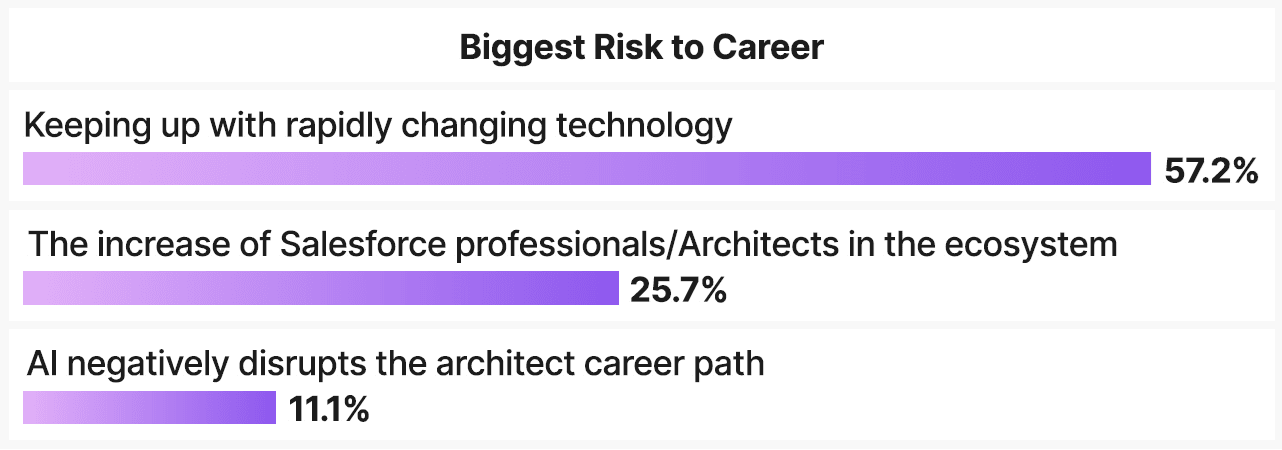
57.2% of architects say this is the number one threat.
Technology never stands still, and Salesforce is no exception. Over half of the respondents to our survey see the pace of change itself as the biggest risk to their careers. This includes staying current with product updates, understanding how to leverage new tools, and adapting quickly to shifts in architecture best practices.
For those early in their careers, this concern is even more pressing. Many newer architects reported anxiety about how fast the platform is changing and how quickly they need to learn.
The rise of AI, new integration patterns, and evolving industry standards all contribute to this pressure. Staying relevant now requires ongoing learning, not just occasional certification.
2. Increased Competition Within the Ecosystem
25.7% are concerned about the growing number of professionals.
As Salesforce continues to expand globally, more professionals are entering the ecosystem than ever before. While this is a sign of a healthy and growing platform, it also means increased competition for senior roles, freelance opportunities, and specialist projects.
This concern was more common among experienced architects. Many reported feeling pressure from the volume of new talent entering the space, particularly in saturated markets. With more architects vying for visibility and roles, it becomes increasingly important to differentiate yourself through practical experience, reputation, and specialization.
3. The Impact of AI on Architect Roles
11.1% are worried about AI disrupting their career.
Artificial Intelligence is transforming how Salesforce solutions are designed and delivered. While most architects see AI as a tool that can enhance their work, some worry it could reduce the demand for traditional architectural skills. Automation of processes, decision-making support, and AI-powered development could shift the skill sets that are in the highest demand.
This concern was more frequently mentioned by early-career professionals. Those newer to architecture are questioning whether the skills they are developing today will still be relevant tomorrow. The key here is to stay adaptable and view AI as a complement, not a replacement.
4. Perception, Management, and Internal Business Challenges
Smaller percentages, but still worth watching.
While less common, several other risks were flagged in the survey. These include internal business issues like poor management or high workloads (1%), the perception that architects are becoming less valuable (1.7%), and economic disruptions (1%). Although these concerns were cited by fewer respondents, they still reflect real pressures architects may face in certain organizations or markets.
A further emerging risk mentioned was offshoring, although only 0.7% of respondents identified this as a top concern. Interestingly, no one cited the Salesforce platform losing market share as a current threat, showing strong confidence in its long-term dominance.
5. Lack of Hands-On Experience
Not just a risk, but also a missed opportunity.
While not directly listed as a risk, the absence of hands-on experience can be a major blocker to career growth. In fact, 37% of architects identified gaining hands-on experience as the single most effective way to advance. This shows that staying involved in building real-world solutions is not just valuable, it is essential.
Architects who step too far away from delivery risk falling behind. Understanding the platform in practice, not just in theory, remains the strongest way to build credibility and adaptability. Whether it’s building flows, reviewing code, or designing data models, staying close to the work keeps your skills sharp and your career moving forward.
Summary
Salesforce Architects are navigating a complex landscape, with fast-changing technology, growing competition, and emerging tools like AI reshaping how solutions are delivered. The good news is that many of these risks can be managed through active learning, hands-on engagement, and staying connected to industry trends. By focusing on practical experience and continuous development, architects can not only protect their careers, but they can also thrive in the evolving Salesforce ecosystem.