





Rahul Auradkar, President and GM, Data 360 at Salesforce, took to the stage to address an audience that was eager to learn more about the latest updates to Data 360, and he did not disappoint.
One message was clear from the beginning: If you don’t have good data, a better model won’t save you. You must get your data right first.
Thank You
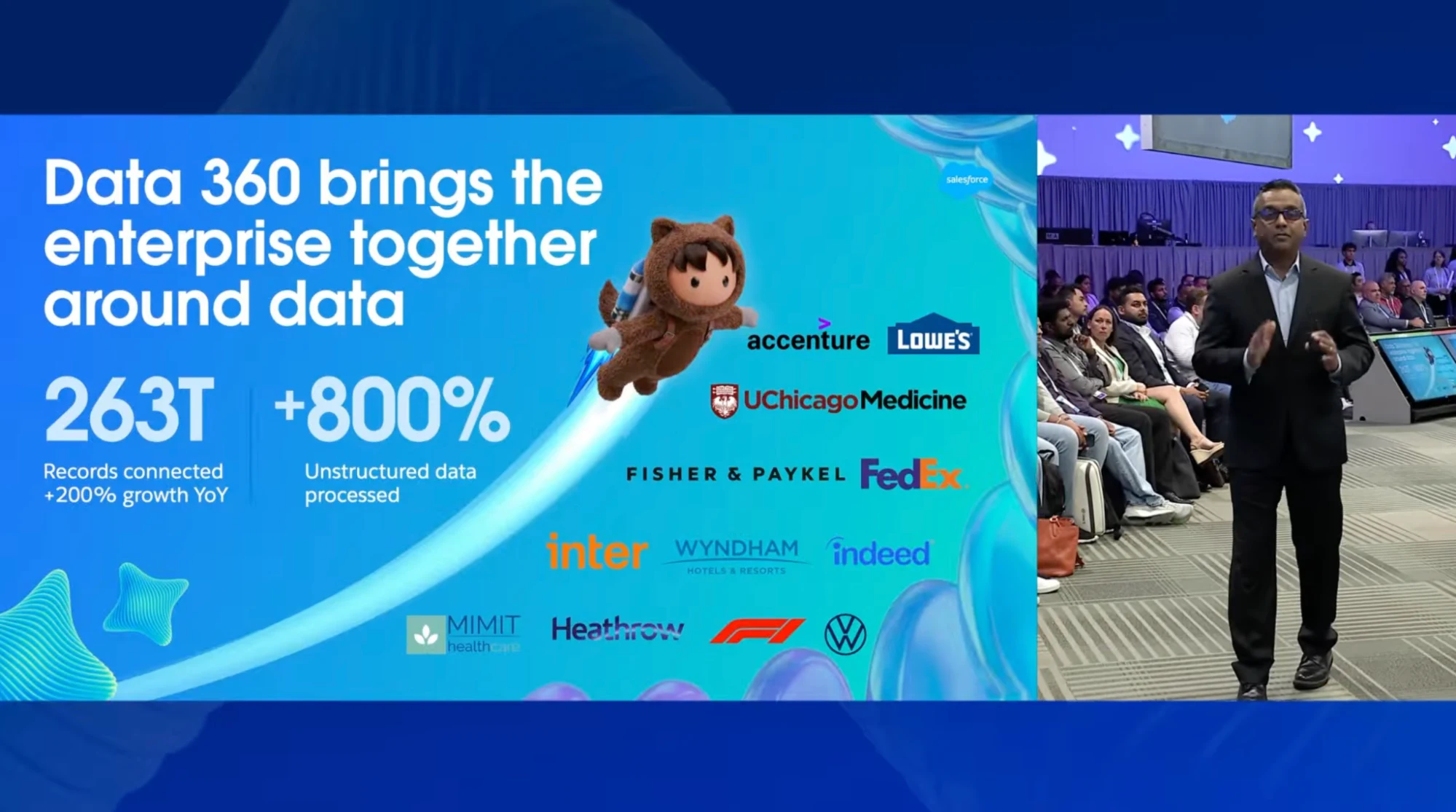
Rahul began his presentation by thanking the Salesforce staff, partners, and customers who had been leveraging Data 360 so far. He highlighted that Data 360 had grown significantly, showing a slide that illustrated a 200% YoY growth for connected records and an astonishing 800% YoY growth for processed unstructured data.
What Is Valuable to the Data Community?
He pointed out that the way Data 360 delivers value to its customers is not through copying data, but from unifying it through zero-copy. “Fluid data” was a term he used to describe this. He then highlighted three key areas of focus that the global Data 360 community had said were important to them:
- Time-to-value: How quickly could they get a Data 360 instance up and running, and adding value to the business?
- Accurate, cost-effective agents: Ensuring that any agentic efforts were not mired by bad data, but instead were grounded in good data and providing a return on investment.
- AI where I work: Making agentic workflows and tools available across more surfaces, not just within the traditional Lightning Experience.
Trusted Enterprise Context was the key theme across all three of these. He said that context needs to be assembled, governed, and put to use throughout the enterprise.
After a short marketing video, Rahul presented the structure of the rest of the keynote, and invited James Nakashima, SVP, Product Management, Data 360, Salesforce, to the stage to talk about CDP.
Agentic Customer Data Platform
James began his presentation by suggesting that there were still a large number of companies that were “swivel-chairing” between multiple systems and older tools.
“Data 360 changed the game when it comes to customer data”, James said, “and we’re going to do it again.” He then jumped straight in and said that Data 360 was headless and agentic. “We are combining and unleashing the power of agents and the world’s #1 CDP everywhere you work thanks to APIs, MCP servers, and skills.”
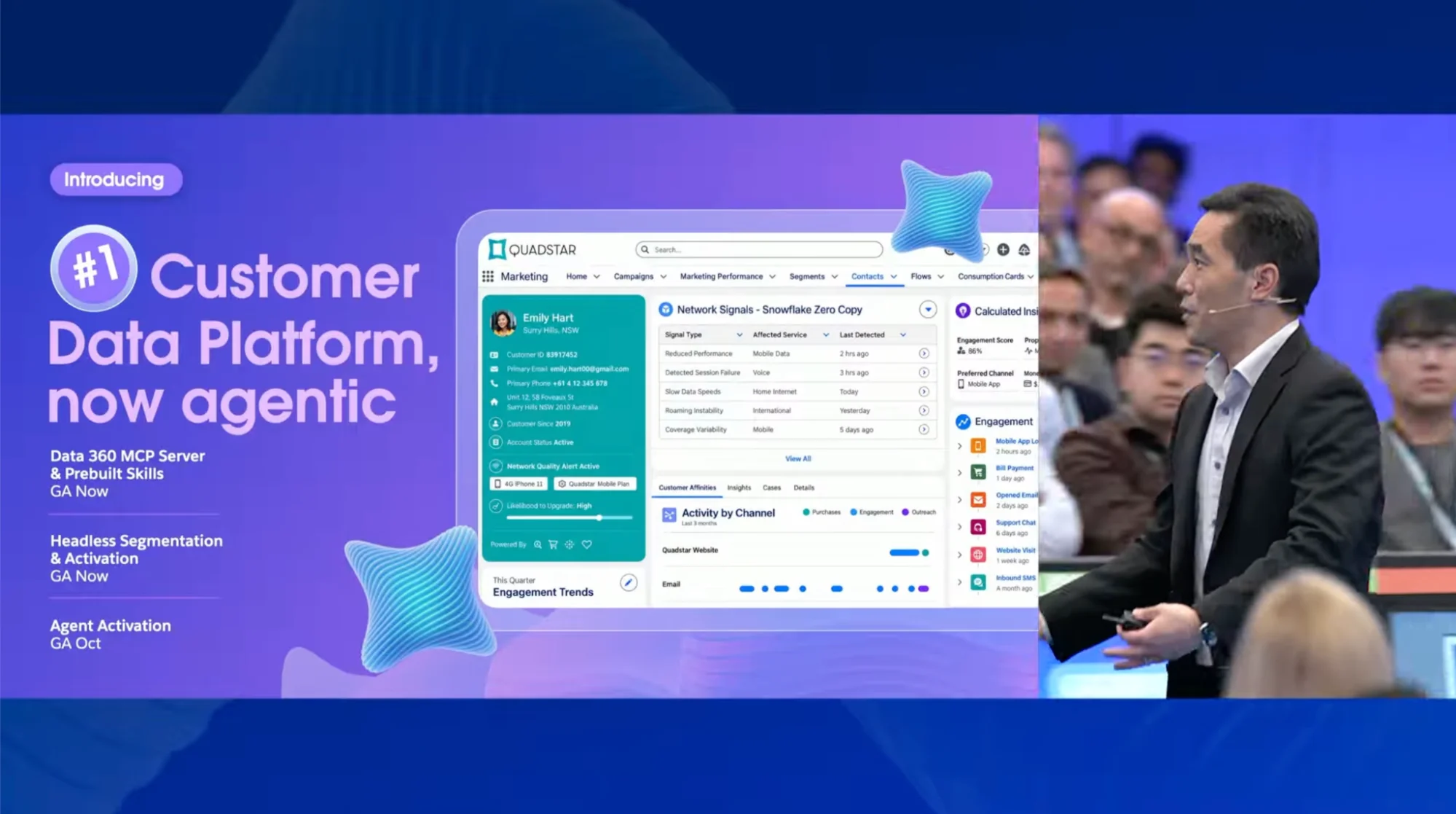
James then introduced April Moon, Senior Technical Product Marketing Manager, Data 360, to assist with the demo. April began working in Claude (James noted that it could’ve been ChatGPT or Slack, or another tool that has MCP support).
April stated that the first step in building an agentic CDP is to check what is currently connected.
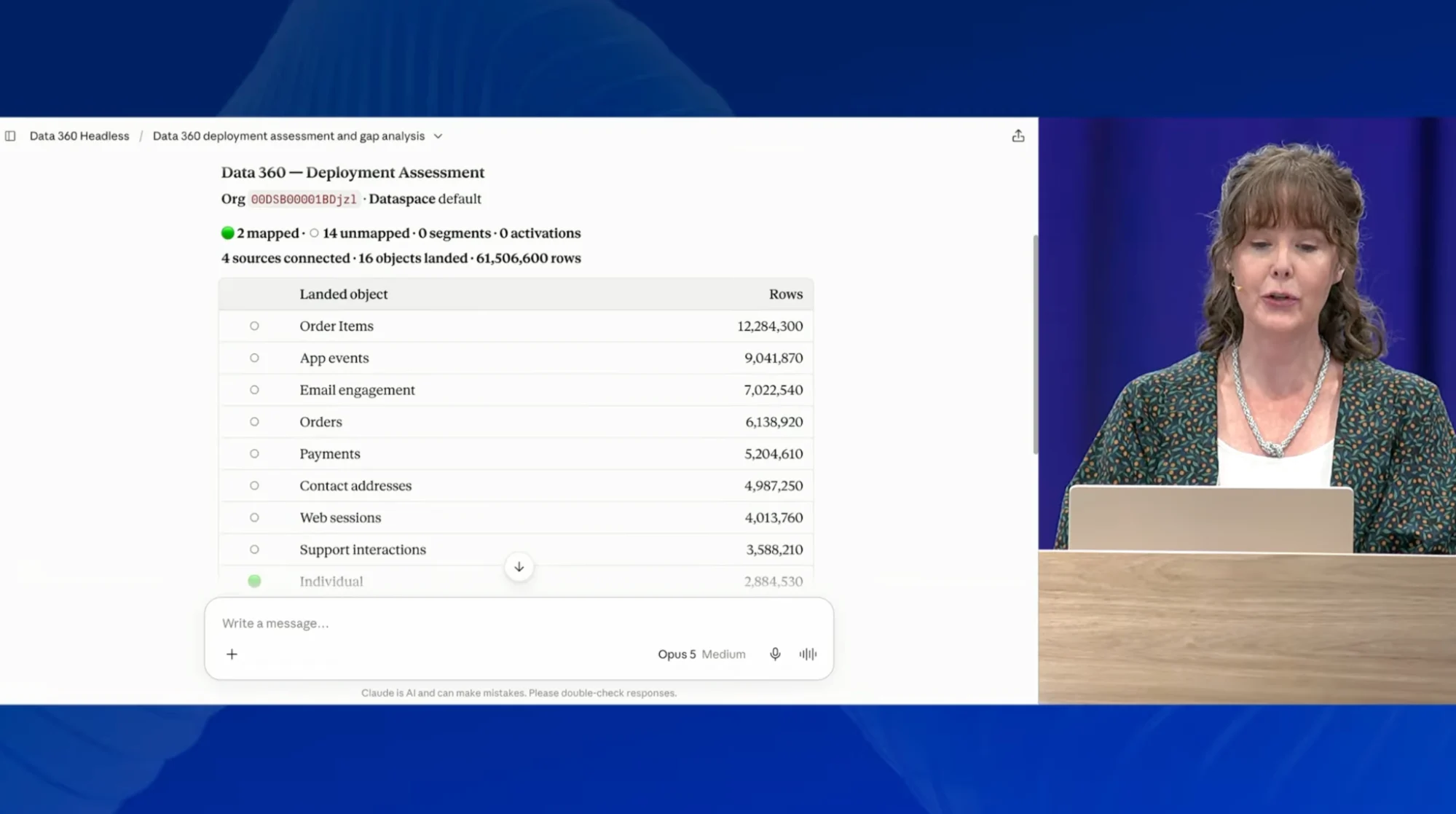
She says that the next step is mapping and data resolution, which she begins with a single, one-liner prompt. Once Claude actioned the prompt, she pointed out that there were almost three million unified profiles ready to go.
James pointed out that this step was often a costly, time-consuming step with other CDPs, but was easy with headless. April flagged that agentic and headless were different terms, and that it was time to demonstrate agentic functionality. She did this by demonstrating the new agentic Segment Builder, which is releasing in the new year.
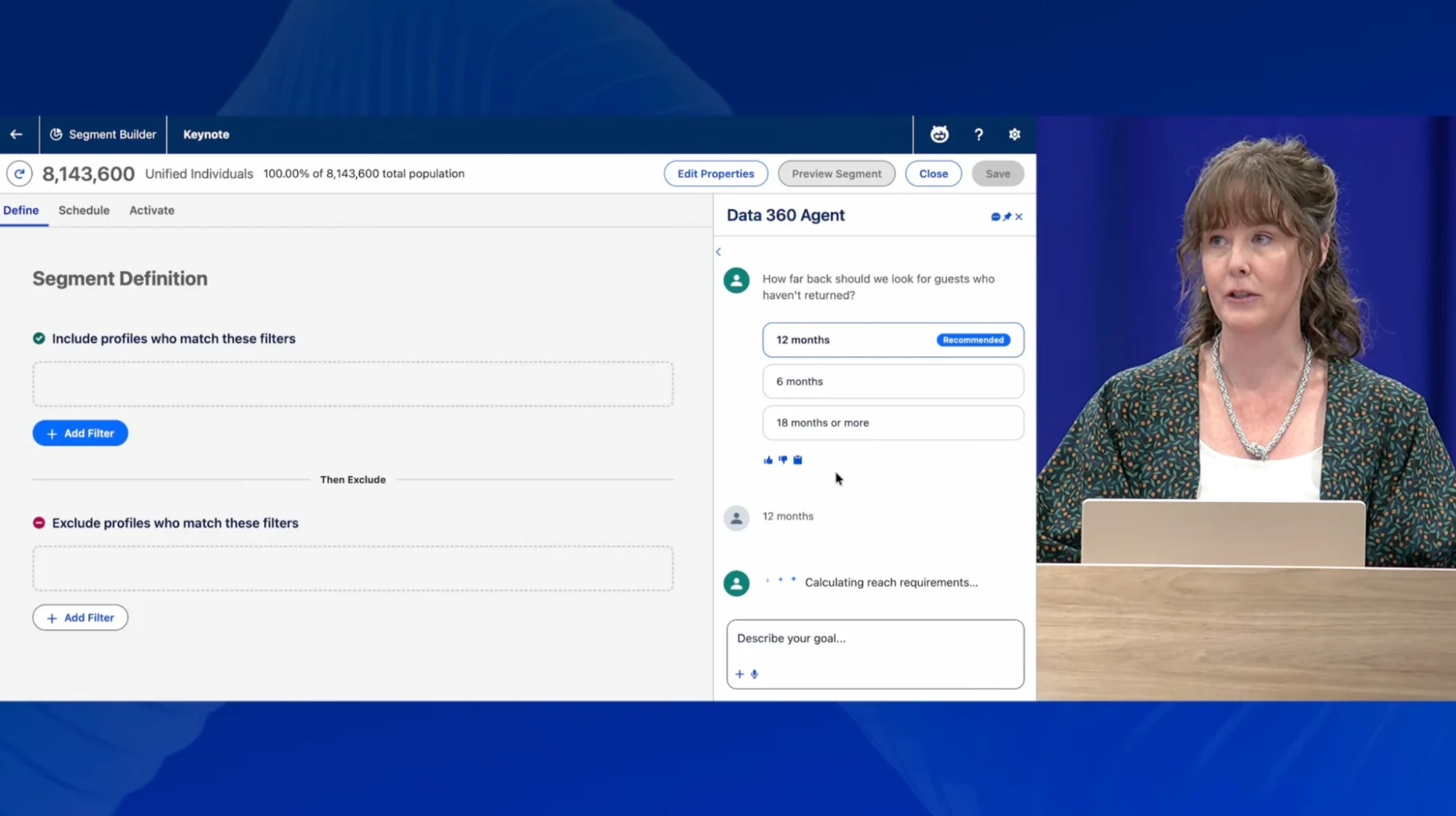
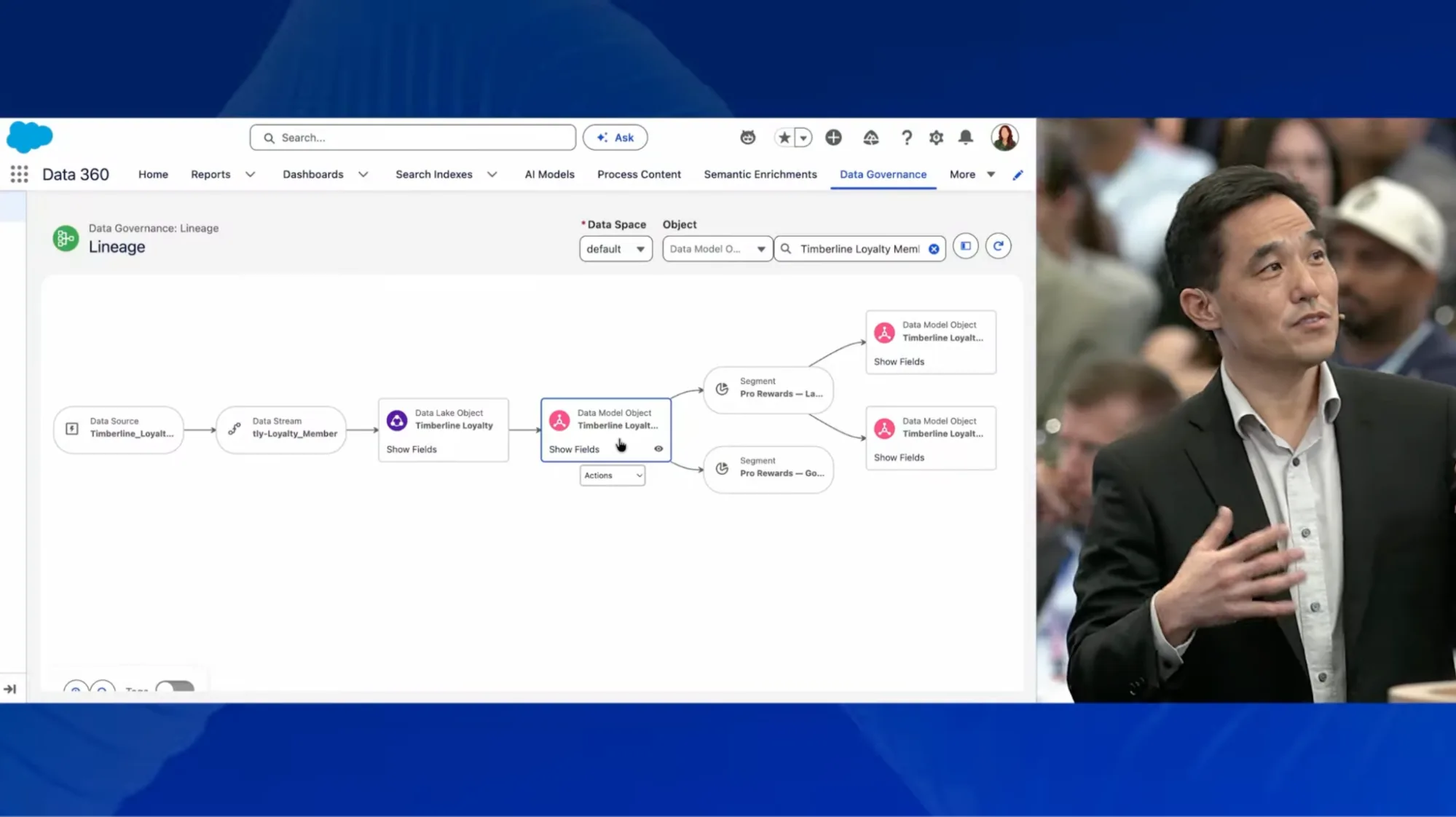
April demonstrated that she could use natural language to get Segment Builder to create new segments and make recommendations. It also allows users to trace data origins and destinations. April used an example of a loyalty field value and showed how this data lineage feature works. She then wrapped up her demo and handed it back to James.
James highlighted industry recognition by Forester, Gartner, G2, and IDC, naming Data 360 as a market leader. This was supported by over 200 innovations delivered in the last quarter, including zero-copy network expansion, unifying to households, adding predictions and enrichments to data, and many more.
“Data 360 is the investment that you can make today that accrues forward as you build out your entire agentic enterprise”, James said. He then invited Muralidhar Krishnaprasad (James affectionately called him “MK”), President and CTO, Engineering at Salesforce, to the stage to introduce the Agent Context Engine.
Agent Context Engine
MK began by highlighting the issue of agent silos that occur when multiple agents maintain separate memories and contexts. He flagged that while human teams collaborate and share, agents often struggle to do so. He went on to highlight five things that agents need to be effective:
- Structured and unstructured data (enterprise data).
- GraphRAG and RAG (efficiently accessing said data).
- Semantics (understanding what the data actually means).
- Memory and Learning (what carries over from one session to the next).
- Governance (what can be accessed and acted upon).
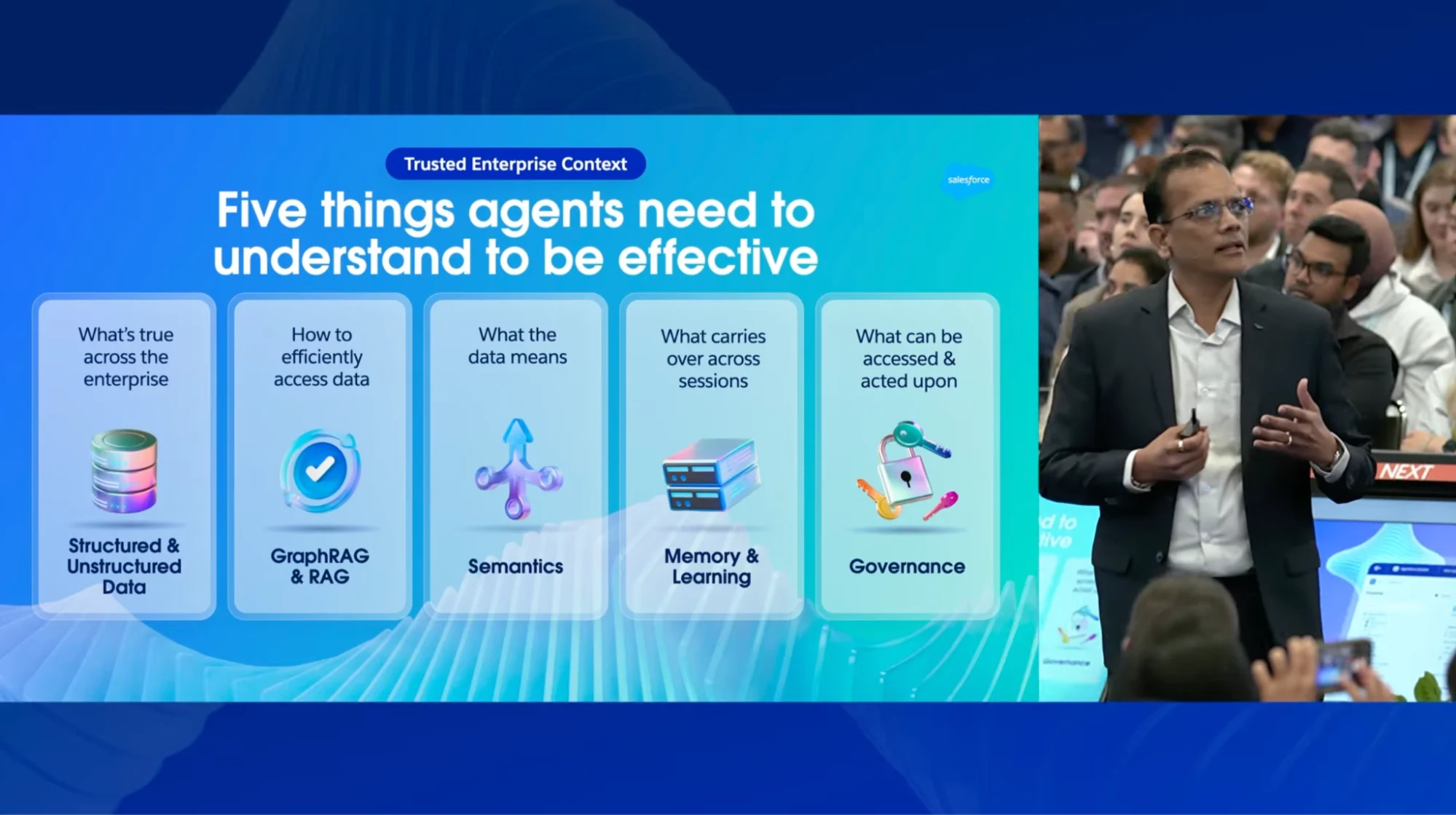
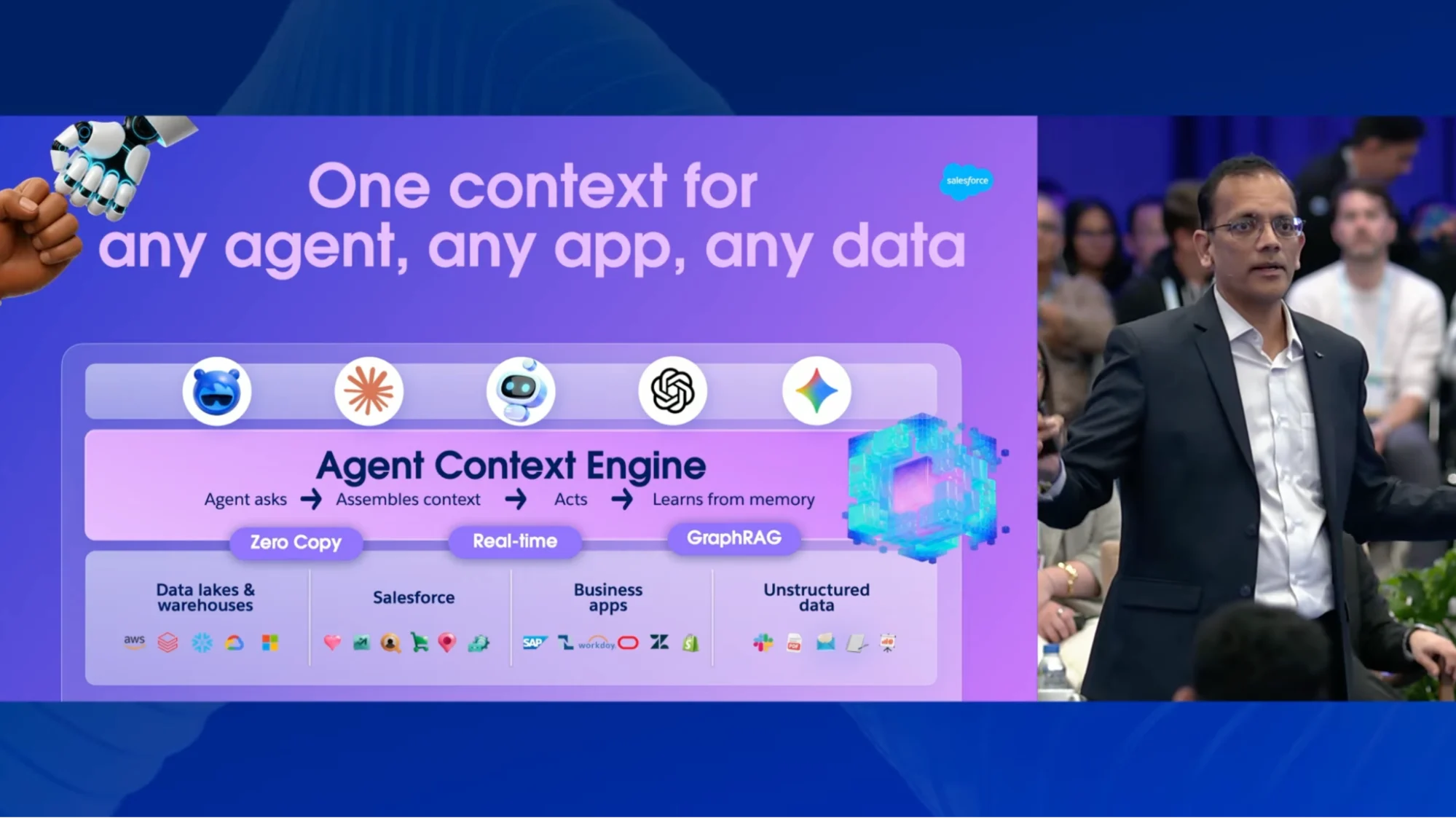
“These five things are what can make an agent a great team as well”, MK said right before introducing the Agent Context Engine (GA December 2026).
MK and April then demonstrated the Agent Context Engine in action, in real time (April was very proud of the fact that the demo was really live, no smoke-and-mirrors).
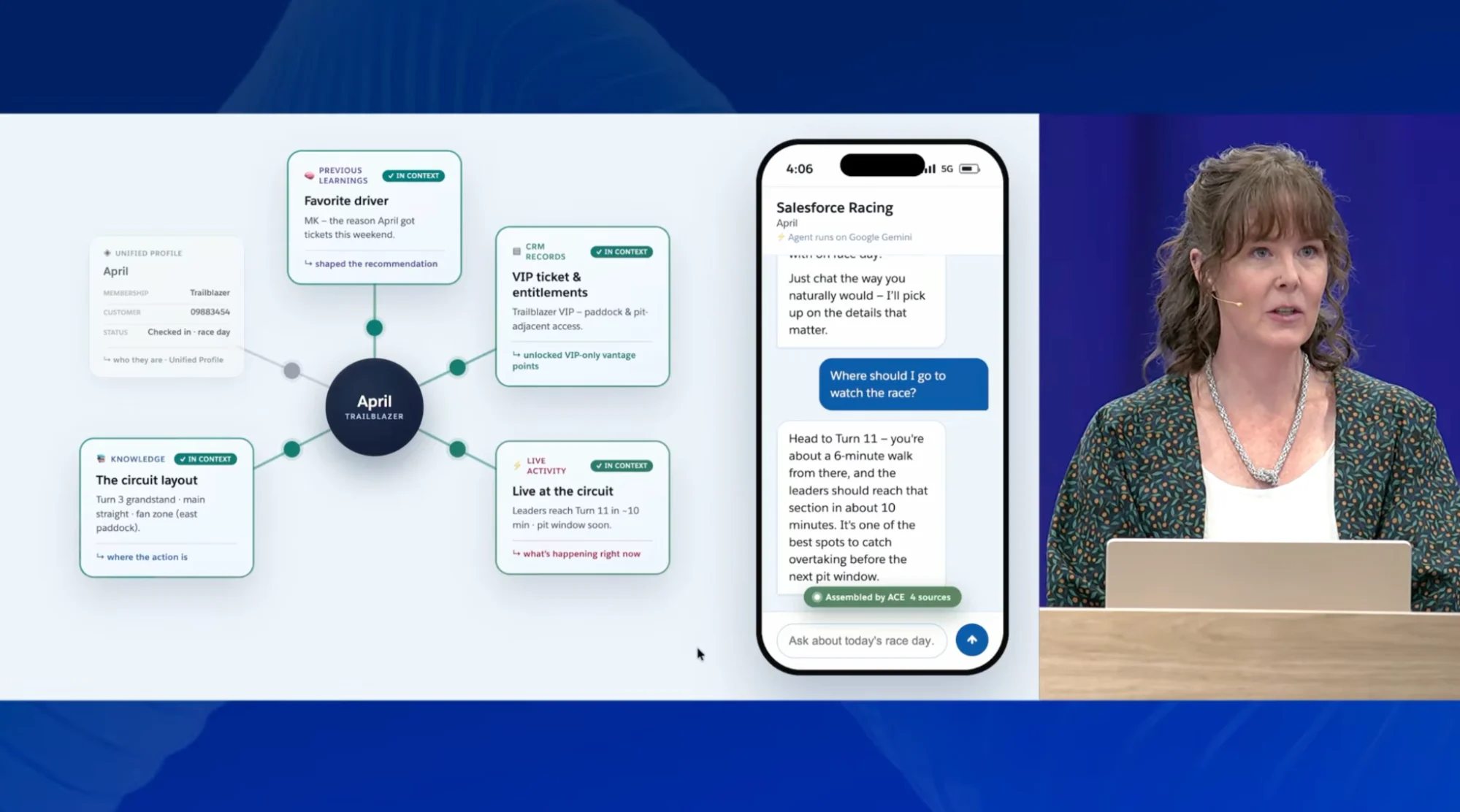
MK and April showed off the dynamic context abilities of the Agent Context Engine, while it retrieved only new data that was relevant to the query. It didn’t query data it already knew, and it remembered data from earlier information so it could use it later.
The demo continues to show that interaction memories are distilled into facts across touchpoints, such as transitioning from the mobile interface to a website agent, and sharing this information with human agents using the Service Console.
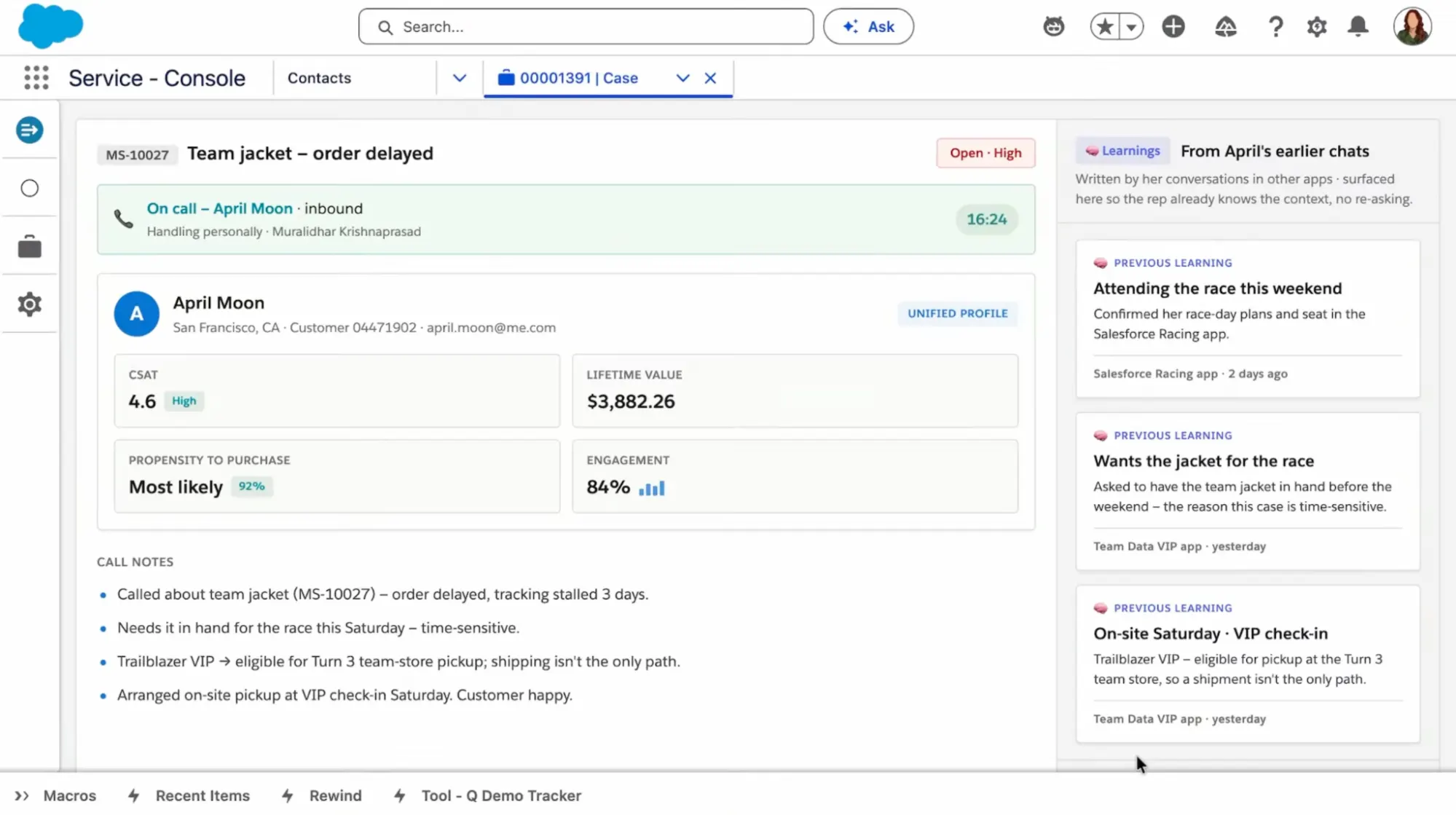
“The same thing that the agent got, the humans also get”, MK said, “it’s not just humans or agents, it’s humans and agents.”
MK recapped the features of the Agent Context Engine, and invited Amanda Bailey and Abhishek Nandi from Lowe’s to the stage to discuss how they’re leveraging Data 360 to build their own agentic enterprise.
Together, they discussed their data strategy. Abhishek explained that Lowe’s previously used Google BigQuery for their data needs, including their Customer 360 and golden tables. From there, the data flows into Data 360.
Amanda then explained how their loyalty program functions as an enterprise growth engine, which turns customer understanding into increased relevance and business value.
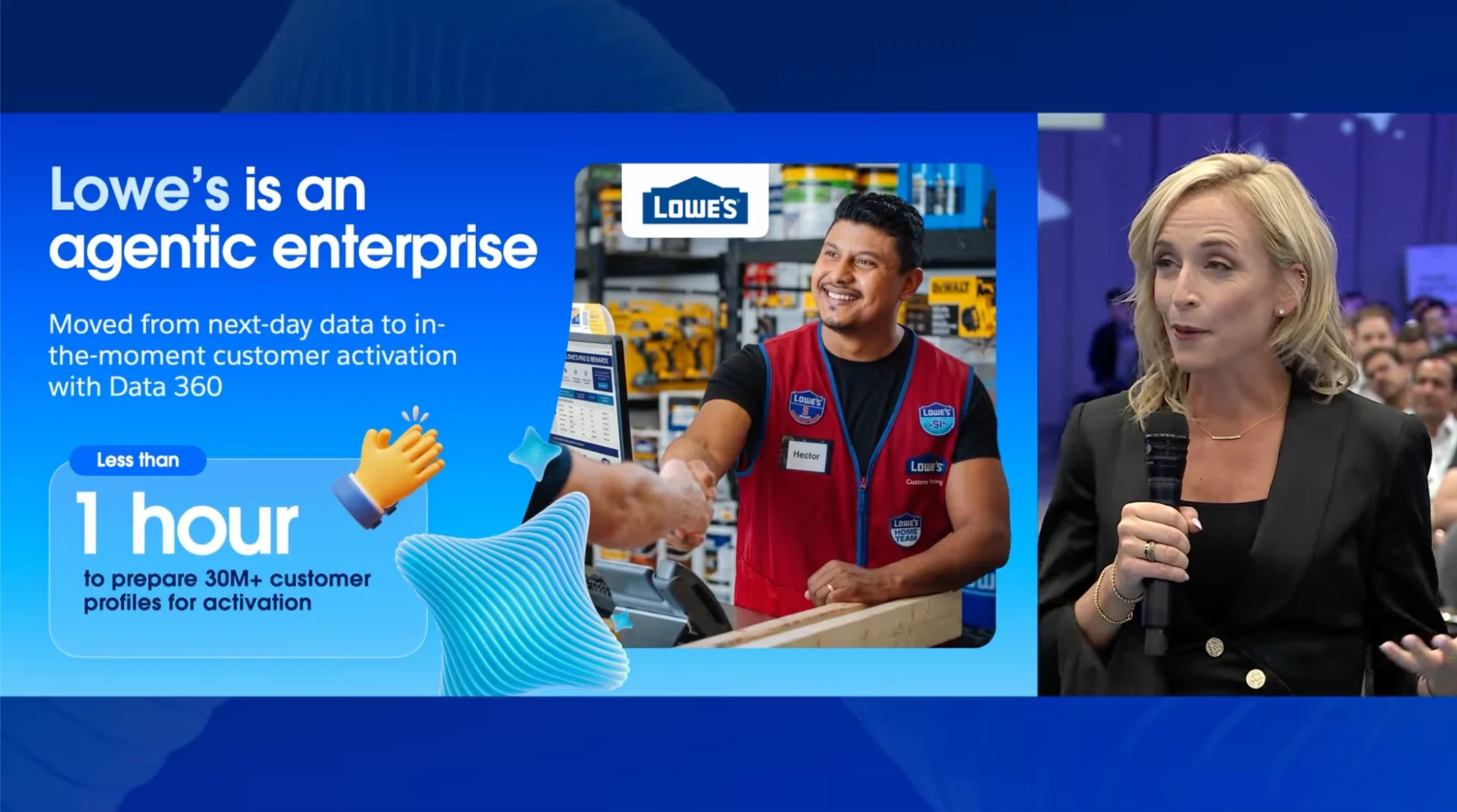
“It really allows us to place intelligence not just in a single channel or moment, it’s taking that and it becomes the foundation of the whole relationship”, Amanda said.
MK asked about the audience agent that Lowe’s had built, and how humans were working with it. Abhishek explained that due to the vast amount of data and insight, it became difficult to know where to go and when. That’s where their agentic tools come in – to make it easier for marketers to access the right information at the right time.
MK then sent the Lowe’s team back off stage, and invited Rekha Srivatsan, CMO, Data 360, Salesforce, to the stage to discuss Agentforce Coworker.
Agentforce Coworker
“What if you had everything you need to do right in one place?” Rekha asked, before introducing Agentforce Coworker as the solution. “This is your autonomous AI teammate that lives right inside Salesforce and gives you everything you need to get your work done.”
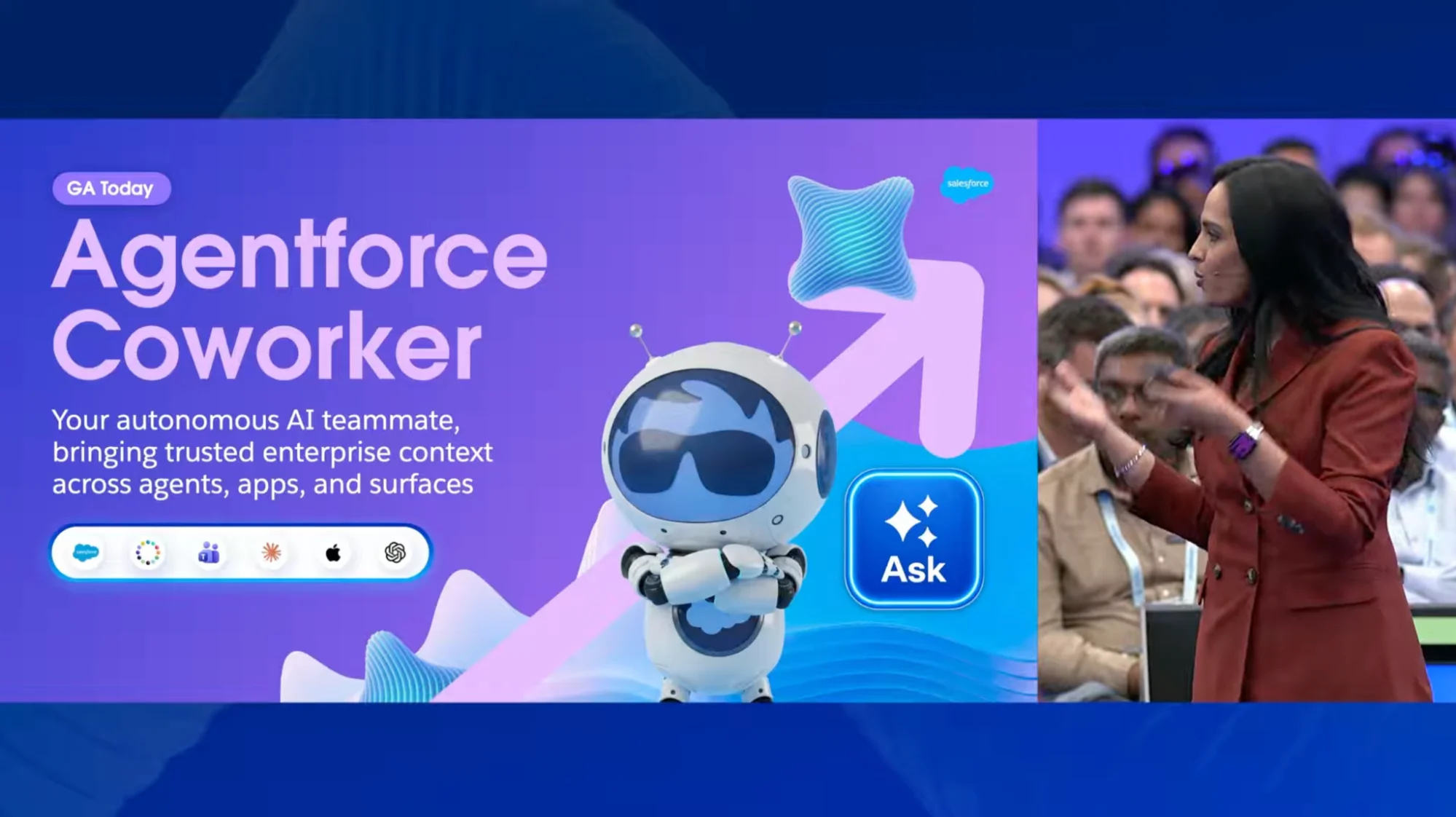
Rekha invited April once again to the stage to demonstrate Agentforce Coworker on mobile. The demo begins showing off Agentforce Coworker’s mobile digest feature that could be used on the fly to review daily priorities, and then showed how the same data also lived inside the Salesforce home screen using the Ask button at the top of the screen.
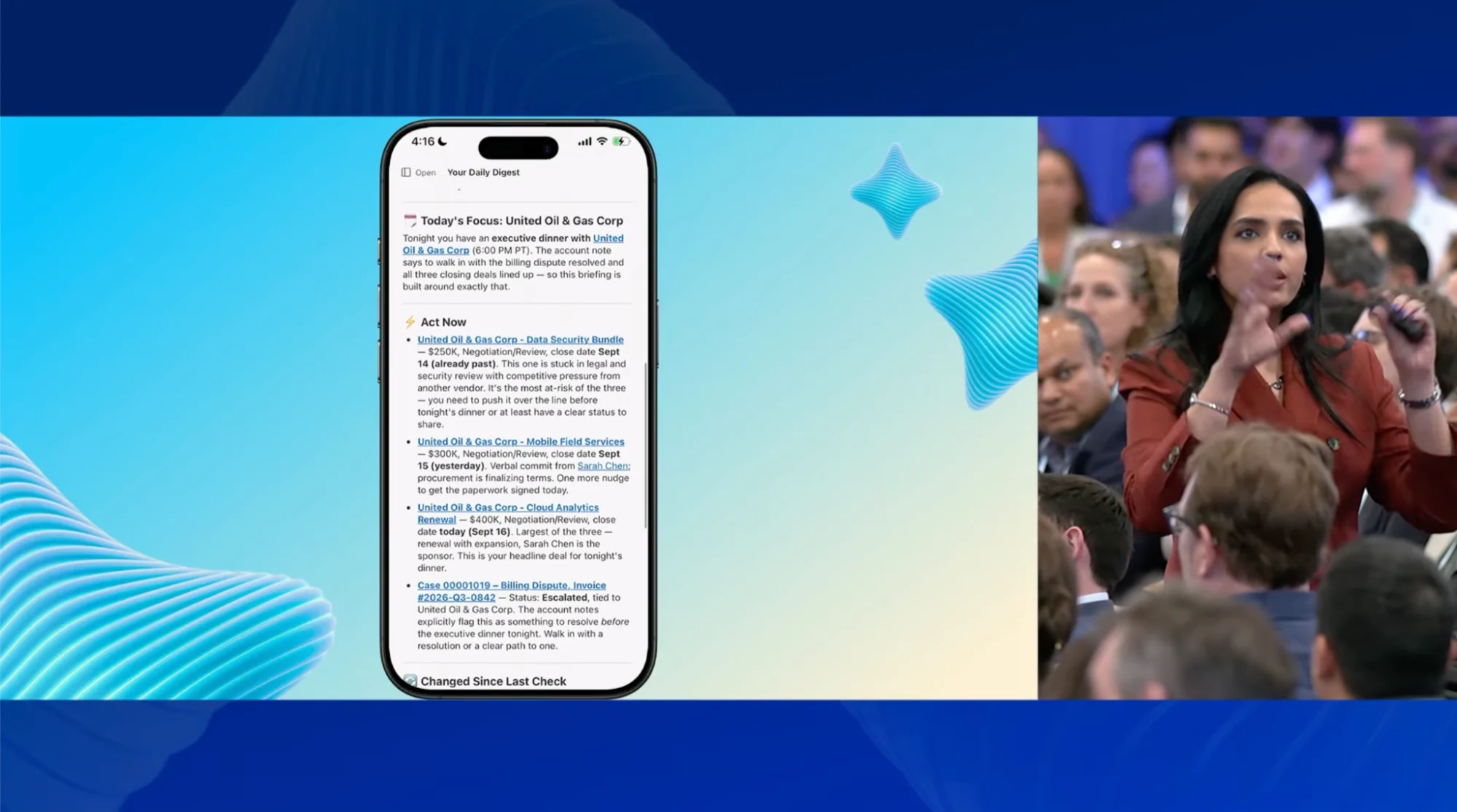
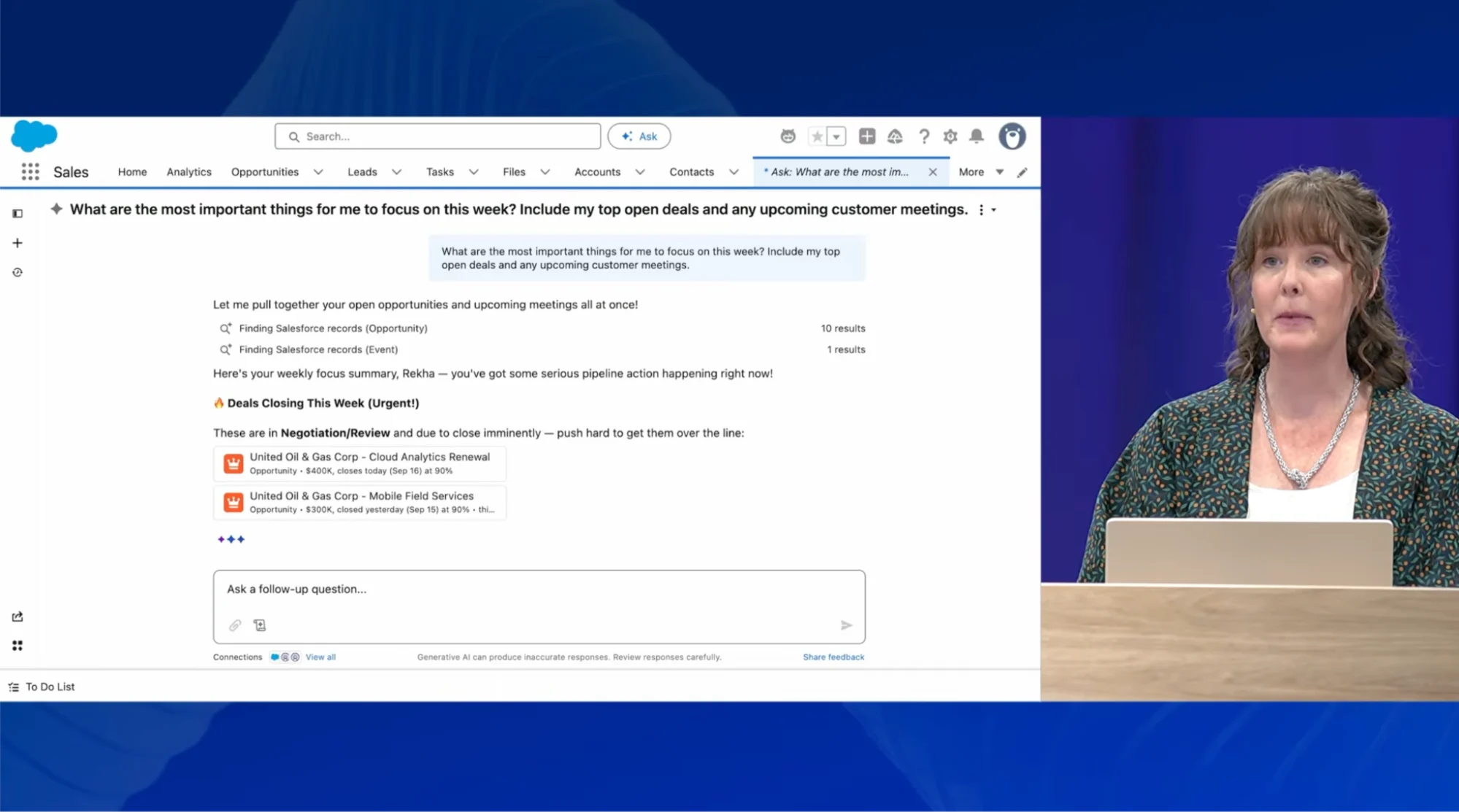
Rekha and April then showed off how Agentforce Coworker can provide a pre-meeting preparation summary before an upcoming meeting. It identified meeting participants and flagged an open dispute case that may need to be addressed.
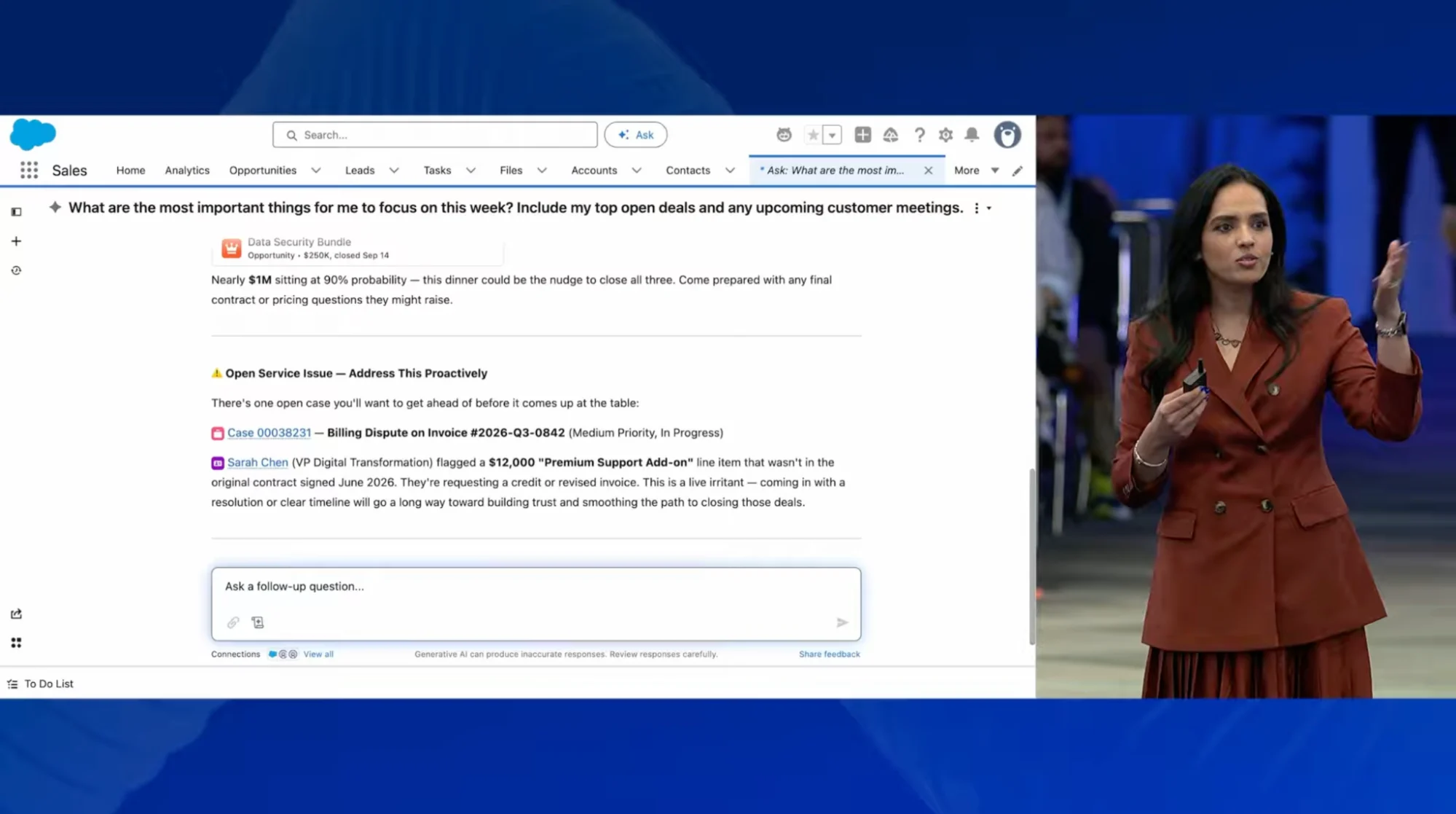
April then asked Agentforce Coworker to draft a preliminary email to the customer regarding the dispute, and update an opportunity with another customer to Committed, all from the same interface (no tab or page switching).
Rekha suggested that they may want to demonstrate this functionality to the United Oil team at the meeting, but said that, “unfortunately, they’re a Teams shop”, suggesting that it would not be possible for them to take advantage of this feature. This is when April switched to a Teams interface and showed that it can be exposed to Teams (and other surfaces) as well.
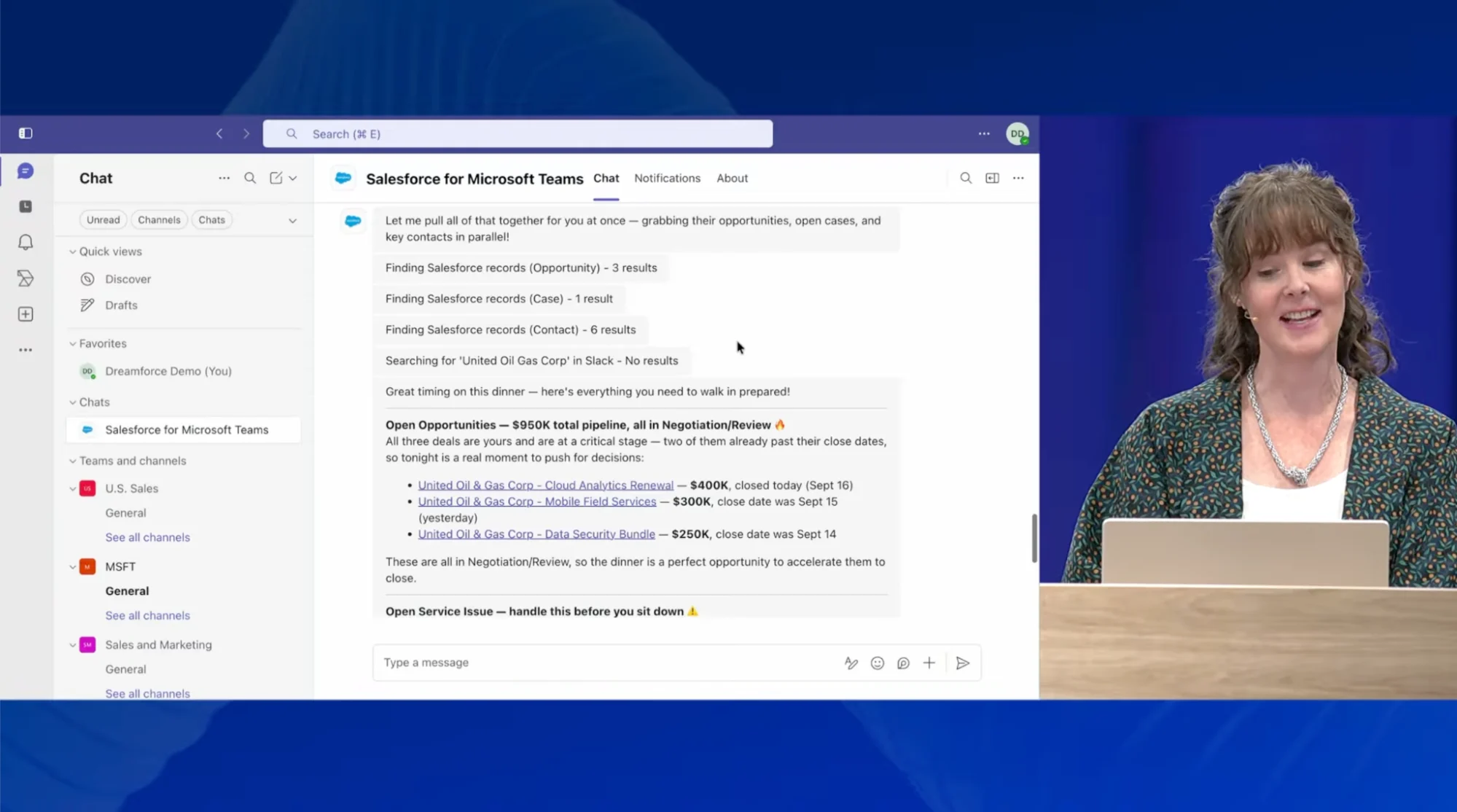
Rekha concluded and invited Stephanie Sadowski, Global Salesforce Business Group Lead, Accenture, to the stage to discuss Accenture’s early adoption of Agentforce Coworker.
Accenture
Stephanie explained that Accenture silently deployed Coworker to 16,000 users overnight and reported that user engagement spiked significantly. She put this down to the way that Agentforce Coworker eliminated the need for users to switch between agents, as it intelligently routes to the appropriate agent depending on the context.
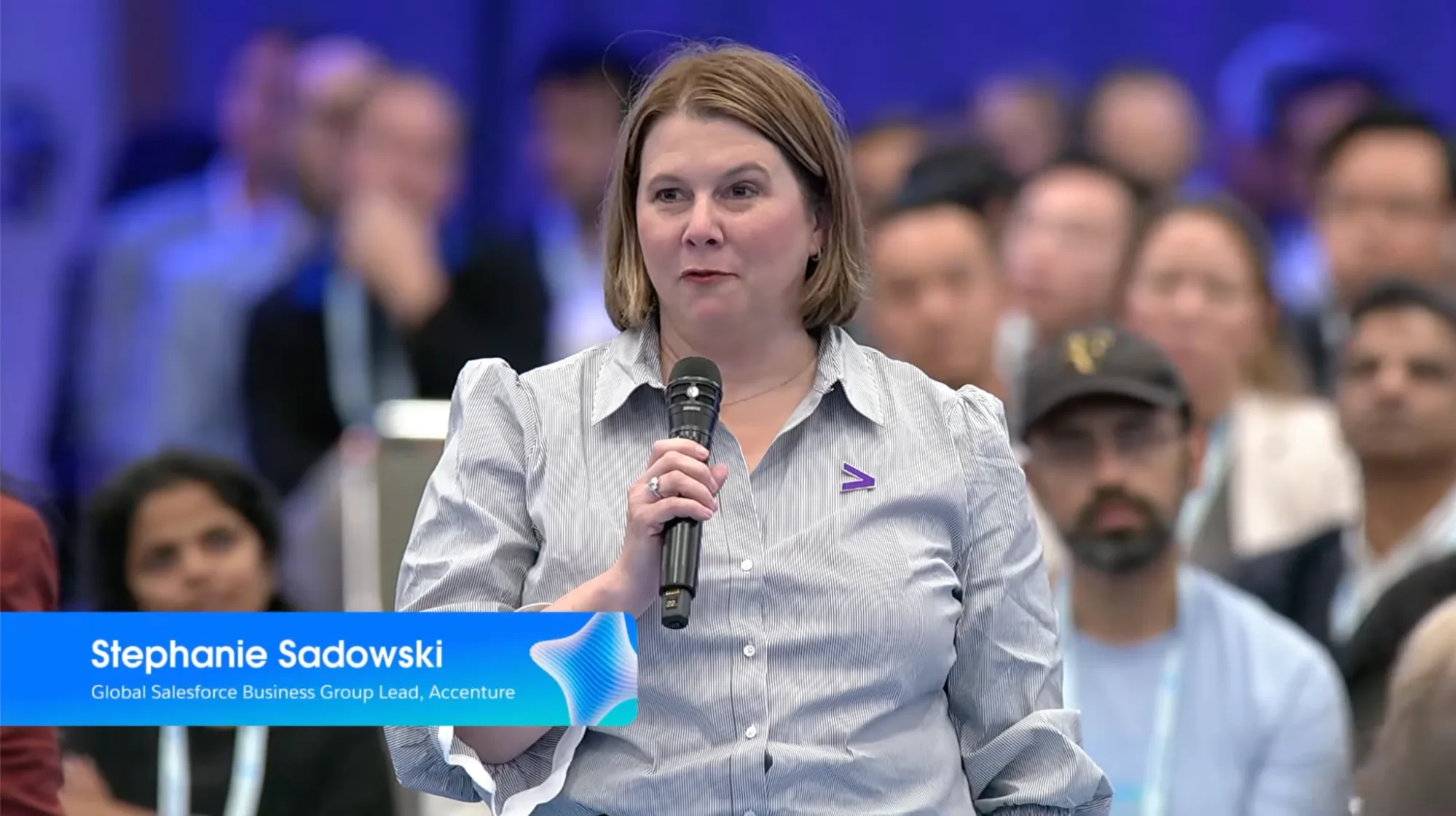
Rekha asked about the Accenture teams’ experience using Agentforce Coworker across Salesforce, Teams, and other platforms. Stephanie explained that Accenture went through the five steps mentioned earlier (getting the data right), and could then roll out Agentforce Coworker to the UIs that made sense for their users.
“Going into a tool that they’re already in, being able to type this one sentence, and have it go out was beautiful,” Stephanie said. She also reiterated that this was done overnight for 16,000 users.
Community Recognition
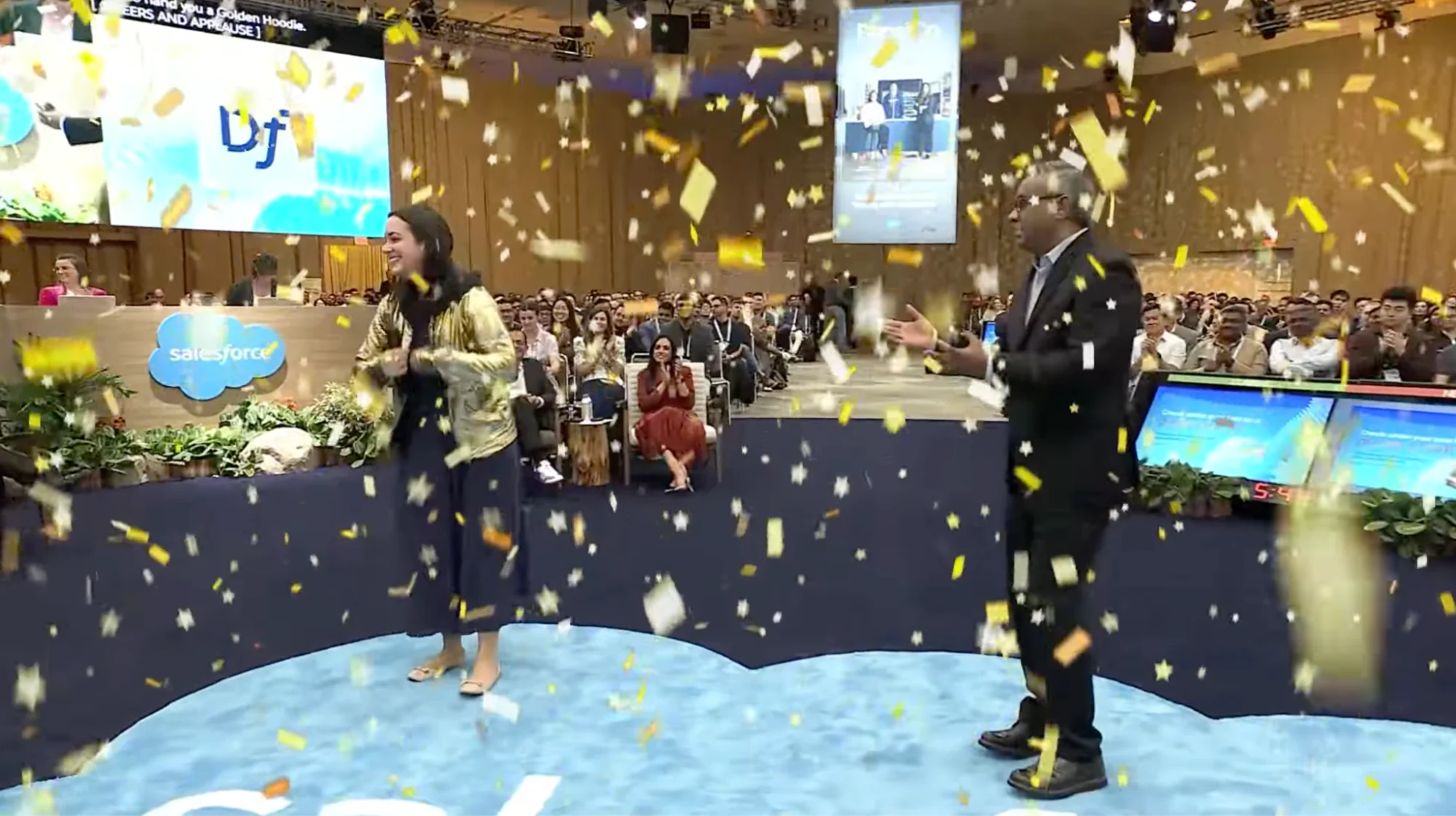
Rahul summarized the keynote, emphasizing the live production code demonstrations and rapid time-to-value. He also touched on the Datablazer community that was announced two years ago and had grown tremendously since its launch, with tens of thousands of members. He then invited Angelica Buffa, a Datablazer with 15 years of experience, and asked her about her experience over that time.
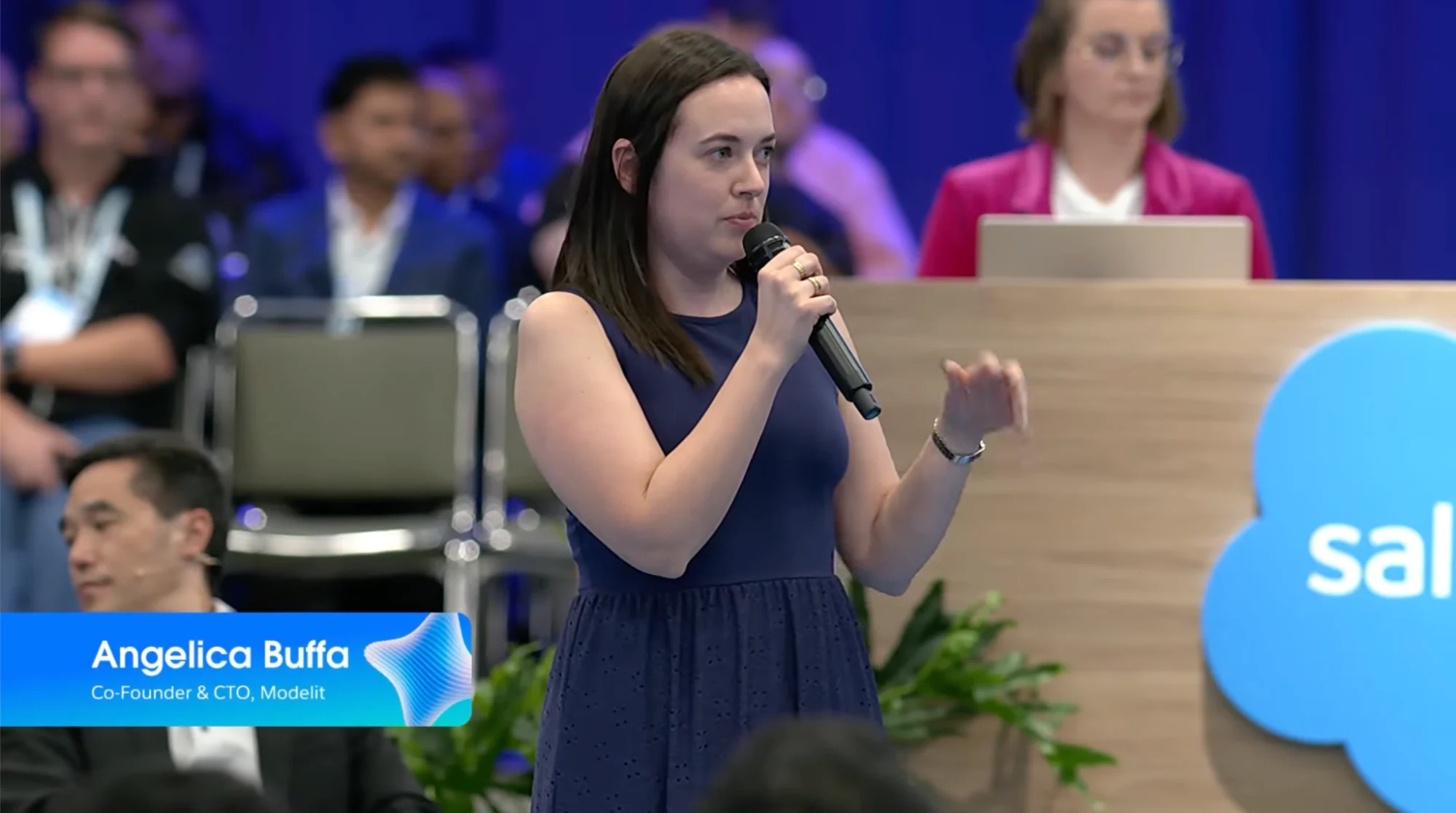
Angelica shared her perspective on the evolution of data from a technical pipeline artifact to a foundation for trusted context and AI integration. She emphasized the importance of agents in the modern era.
“Our teams can stop thinking about the technical things and answer more interesting questions, like ‘What are we going to be doing next?’”, she said.
Rahul thanked Angelica for her inspiration to the community, and dubbed her the latest Golden Hoodie recipient.
Summary
Rahul wrapped up by encouraging the audience to explore more at the rest of the Data 360 sessions at Dreamforce. He joked that they were there to address efficiency, and the session itself had finished up four minutes early.
Salesforce has firmly planted Data 360 at the foundation of its AI strategy. It ensures that data can be connected, trusted, and activated to drive agentic experiences that can be delivered to any interface.