
Dreamforce 2025 focused on everything Agentforce and what the future will bring in terms of human and agent collaboration, but core features were not forgotten. Between the main keynote and the dedicated ones, there are quite a few announcements for Salesforce Architects to enjoy and explore further.
Let’s dive into some of the key topics you should be aware of following Salesforce’s annual conference.
The New Salesforce Architecture Program
The architect path remains one of the most coveted Salesforce careers, and while the Well-Architected program, as we knew it, came to an end, Salesforce has just launched the next iteration of the initiative.
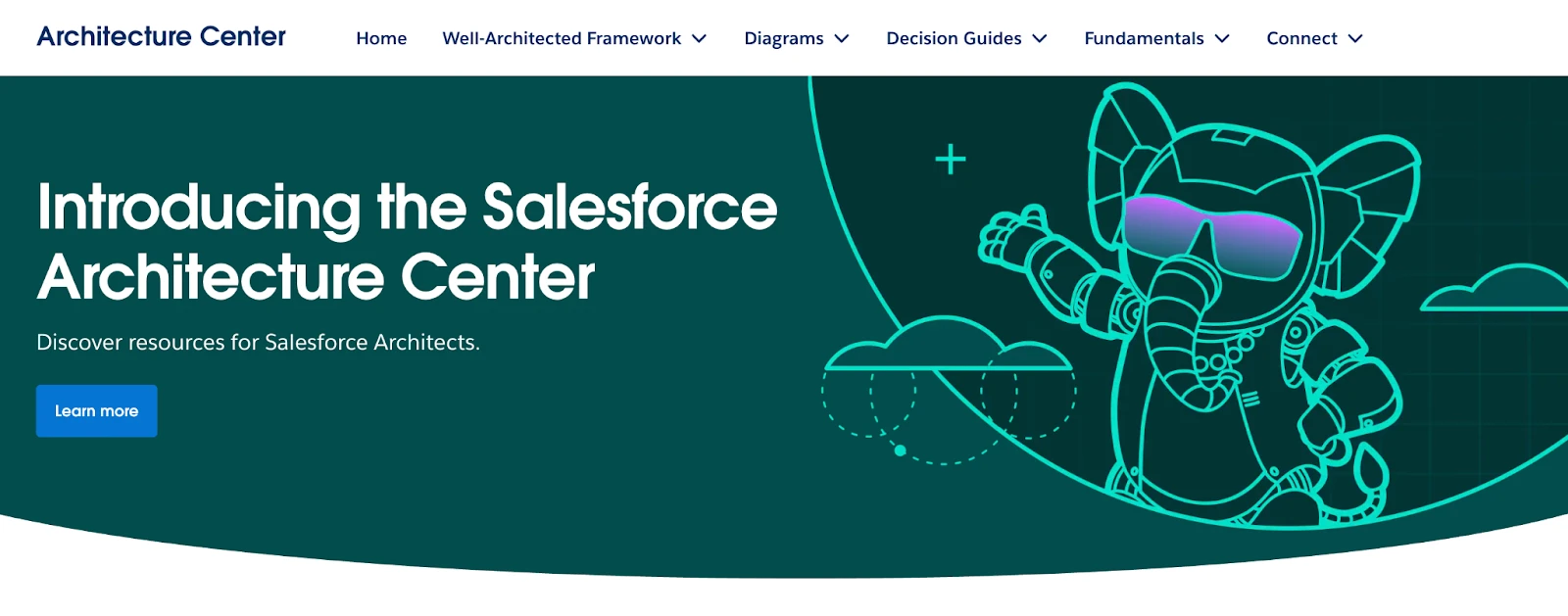
As part of the new architecture program, Salesforce aims to provide new resources, content, and overall guidance to support all Salesforce professionals in creating scalable and trusted solutions for businesses of all sizes and complexity levels. The website remains the same, architect.salesforce.com, which you surely still have bookmarked, but it is being reimagined as the Architecture Center, with updated content to support the needs of all architects.
For Dreamforce 2025 attendees who have been in San Francisco, the Architect Vista brought dedicated breakout sessions specifically tailored for architects to learn more about building compliant, resilient, and overall well-architected solutions.
Feedback remains top of mind for the team driving this new iteration of the program, so make sure to share yours in this form and contribute to shaping its future.
Architect for Agentic Enterprises
Speaking of well-architected, building solutions for Agentic Enterprises was a topic covered in all of the keynotes, alongside the unveiling of Agentforce 360 and improvements to agent interoperability. With humans and agents working alongside each other as part of a team, ensuring reliable, fast, and user-friendly agent implementations is key.
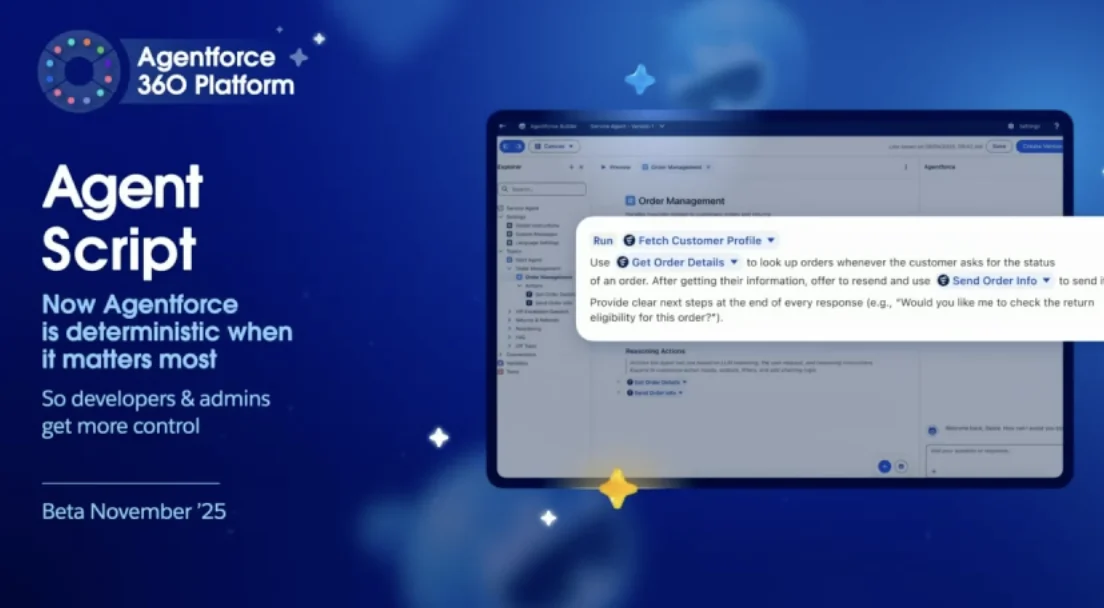
In order to bring predictability into Agentforce Builder, Salesforce unveiled Agent Script, which is due to become available as beta in November 2025, alongside a new builder experience. When it comes to predefined business logic and pre-established process steps, agents need a higher level of determinism while maintaining their flexibility. Agent Script will enable Salesforce professionals to make use of this hybrid reasoning, rather than leveraging only a non-deterministic approach.
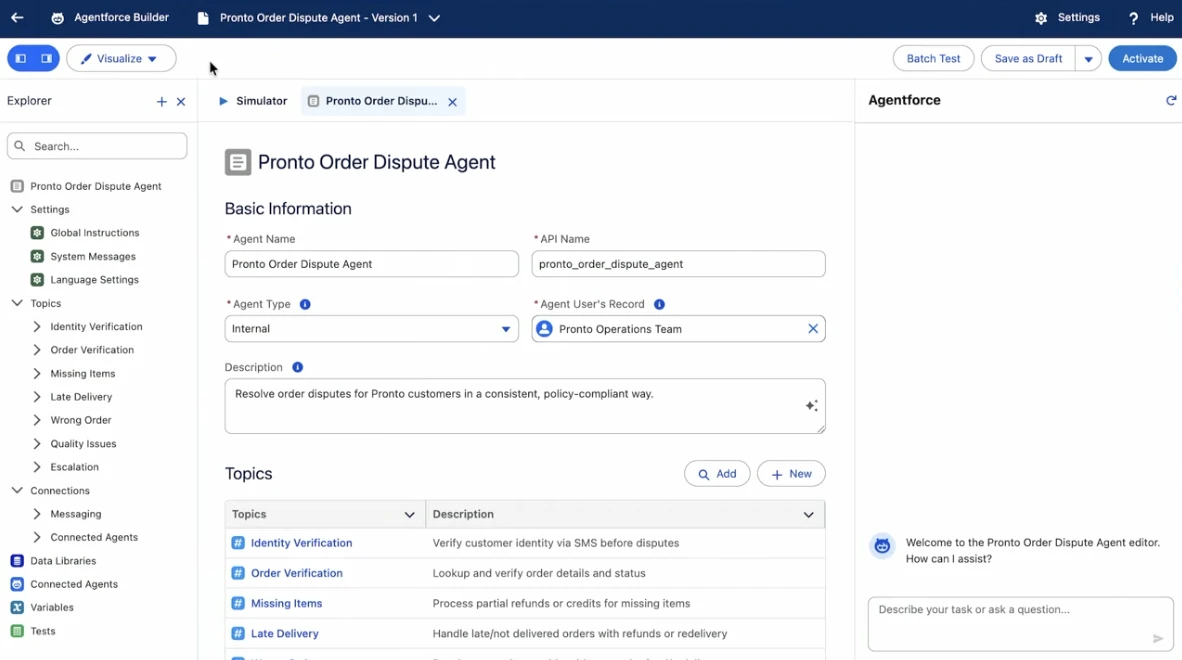
The new look and functionality of Agentforce Builder will ensure that you always have access to topics, settings, and all other items in the explorer side panel. On the right-hand side, a new AI assistant will help you actually build – the agent can still be tested within the builder, but no longer on this right side panel.
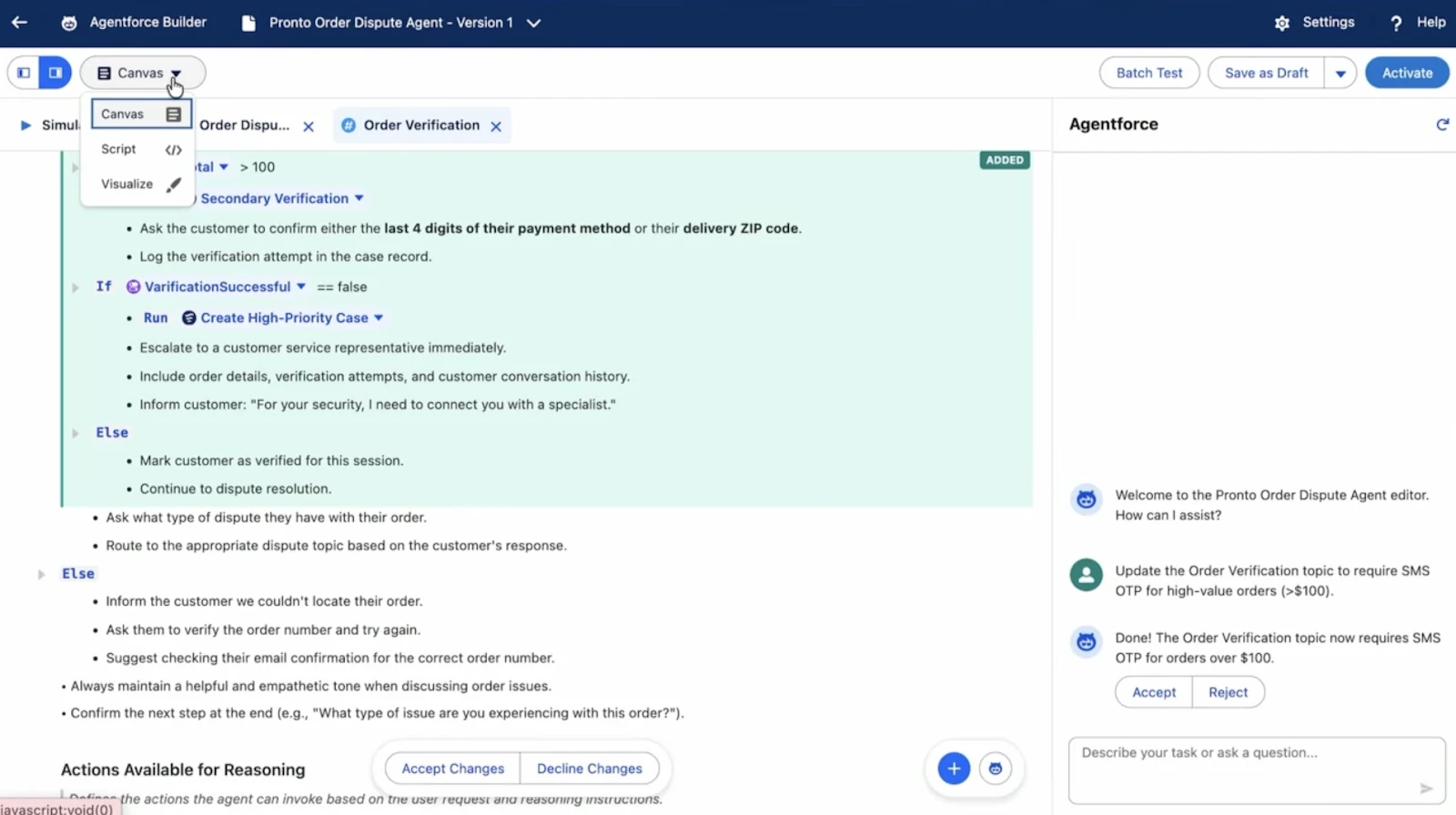
On the main canvas, everything is still natural language first; however, Agent Script makes it possible to gain more control, for example, by chaining specific actions. For developers, the actual script is also available to review and customize in the IDE.
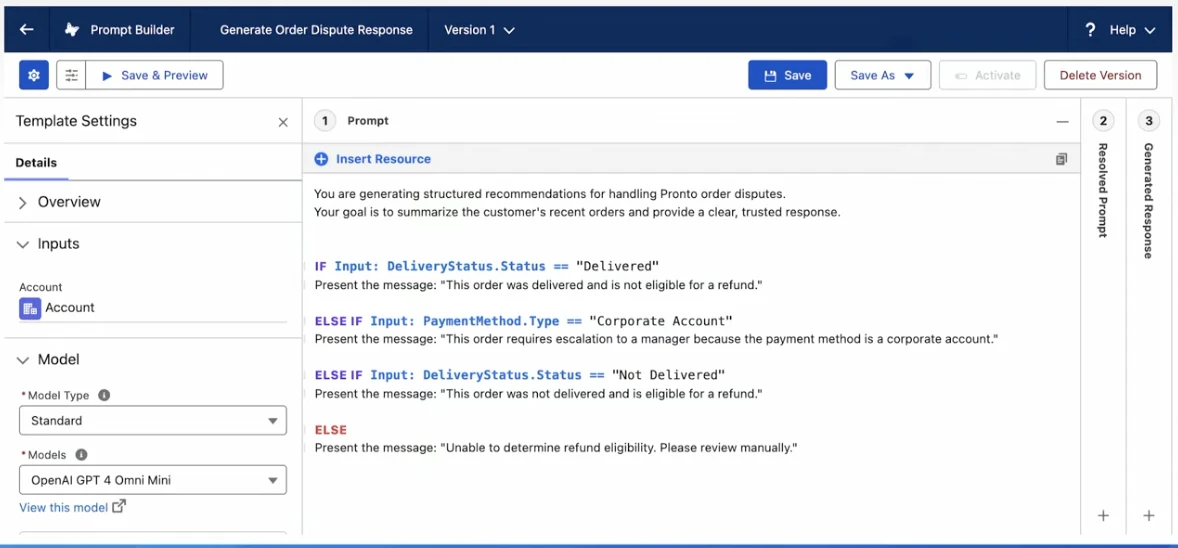
As Salesforce’s proprietary language for agent development, Agent Script can also be used within Prompt Builder, especially when evaluating conditional logic. So no matter the approach to your agent or prompt, you can still make use of this new addition.
Agentforce Vibes
Vibe coding as a software development method is seeing more and more traction among pro-code professionals, but also other functions, especially when building prototypes for their ideas. This approach made the entire process accessible to low-code or no-code professionals as well, but also raised questions about quality, governance, and security over proprietary information.
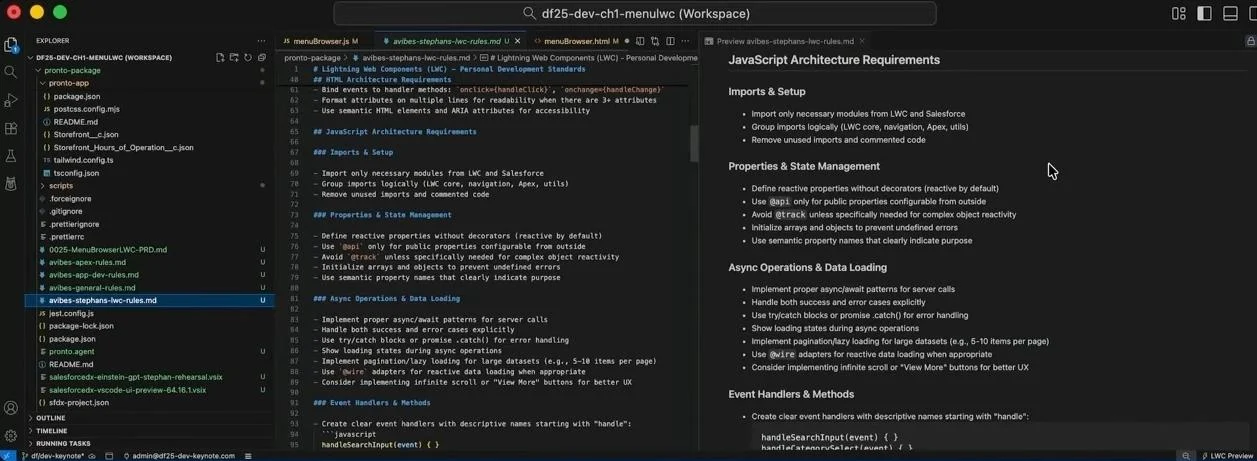
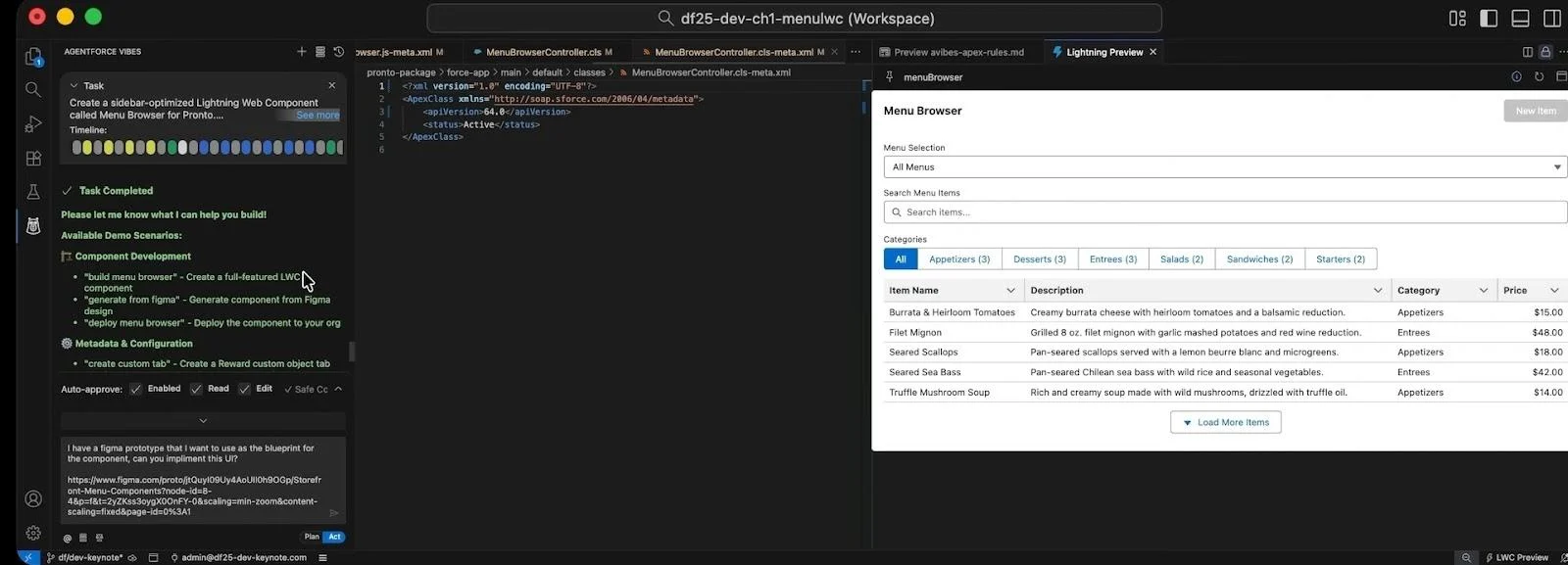
Earlier this month, Salesforce introduced Agentforce Vibes as an enterprise-ready assistant for developers to transform business requirements into reality at lightning speed. This agent understands the Salesforce metadata and context, and can even reuse existing code on top of writing brand new components when needed.
Amongst the main use cases Salesforce highlights as ideal for Agentforce Vibes are generating Lightning Web Components and rapid prototyping. In addition to sharing natural language requirements, you can also share the design directly as a Figma prototype.
Scale Center and Apex Guru for All
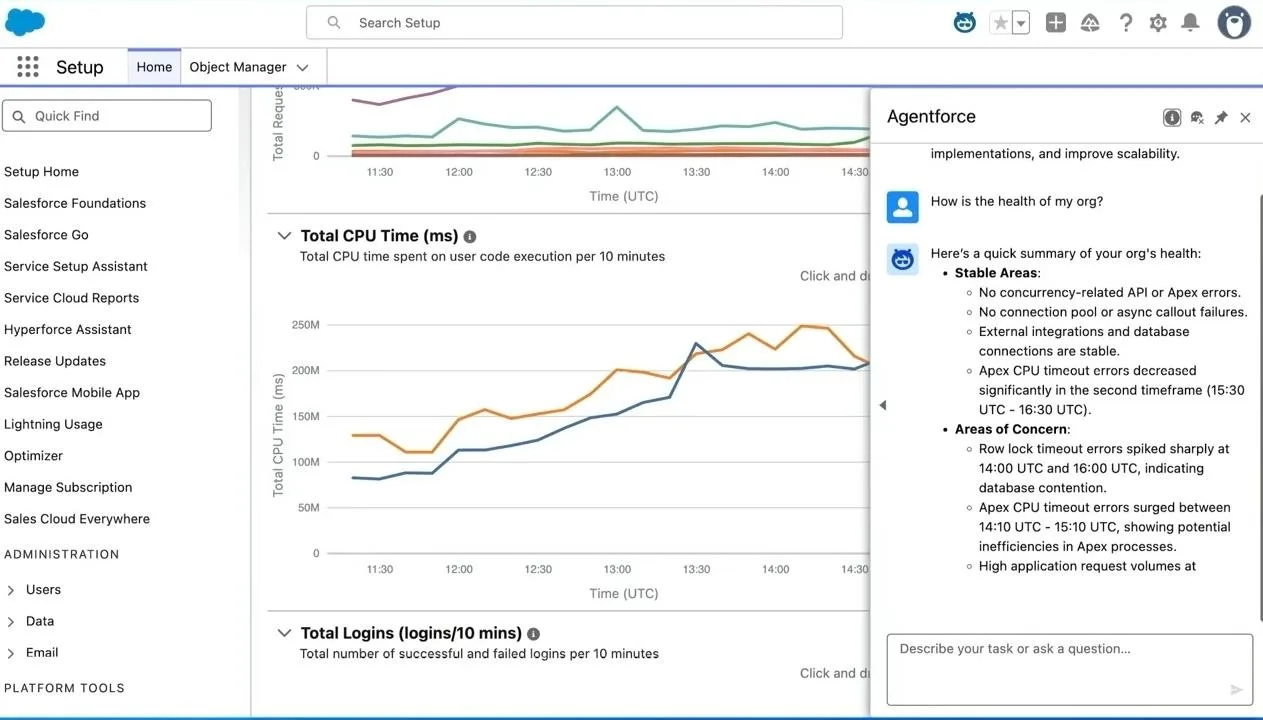
Scale Center is the go-to place when looking into your org’s performance as it provides, at a glance, a birds-eye view of various metrics you can look into and start resolving. This view includes successful and failed logins, concurrent Apex errors, and even row lock errors. Apex Guru is an AI-powered feature of Scale Center, which offers personalized recommendations when it comes to code anti-patterns and hotspots within your implementation.
Announced in both the Developer Keynote and True to the Core, Scale Center is no longer only available for Unlimited Edition customers. Both Scale Center and Apex Guru are available for all Salesforce editions.
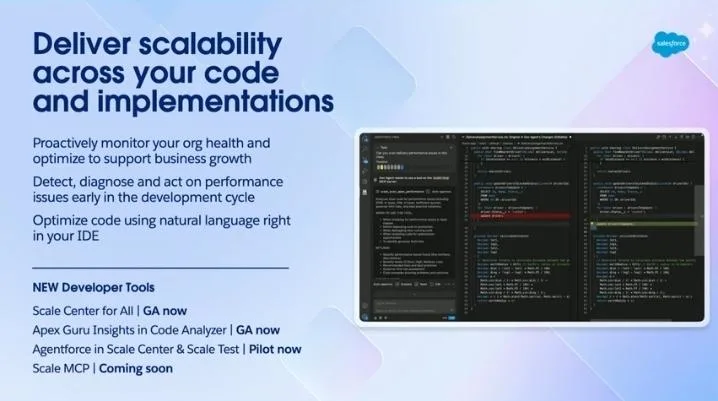
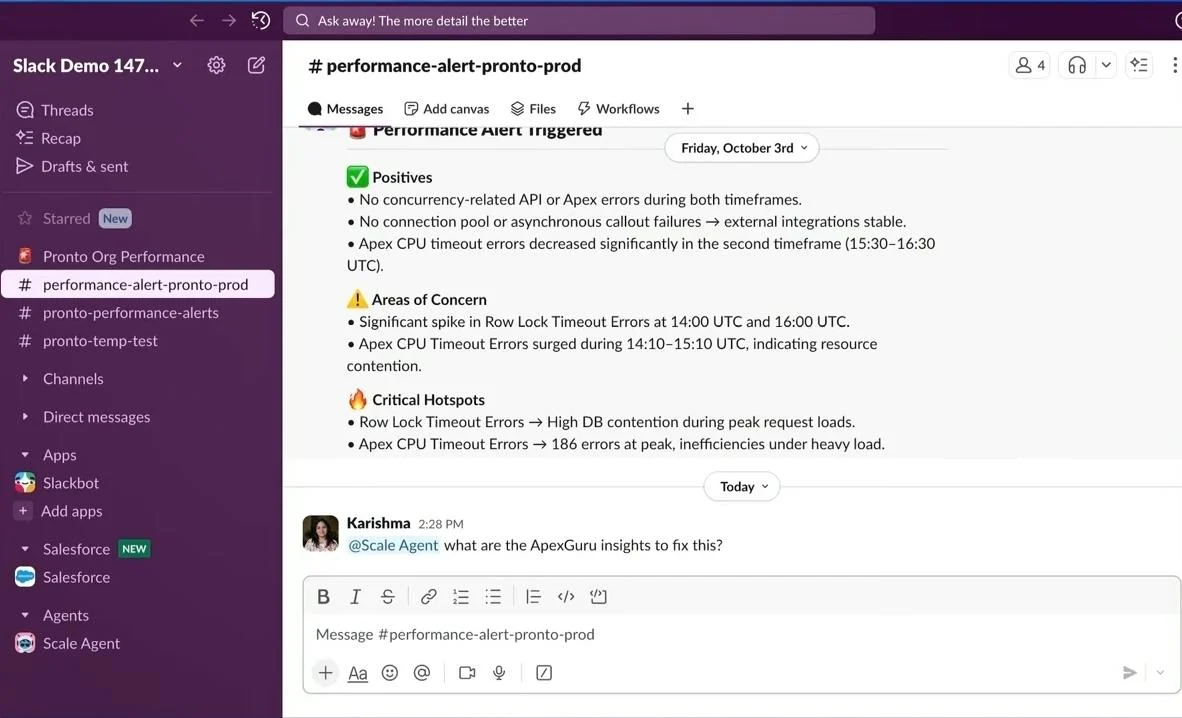
Still in pilot as of today, a demo of Agentforce within Scale Center was showcased at Dreamforce during the Developer Keynote. Once available, you will no longer have to spend additional time reviewing the metrics, but rather have an insightful conversation with an agent to check the latest org health updates – either in Salesforce or in Slack.
SLDS2 Generally Available and Dark Mode Beta
SLDS2, recently becoming generally available as part of the Winter ’26 release, is a significant stepping stone in future-proofing your Salesforce UI from both an overall experience and an accessibility perspective.
With the possibility to tailor the experience, Salesforce Cosmos Theme and SLDS2 are enabled by default for new orgs, and can be enabled manually in existing orgs within the Themes and Branding page in Setup. Make sure to take a look over the Transition to SLDS2 guide prior to making the change.
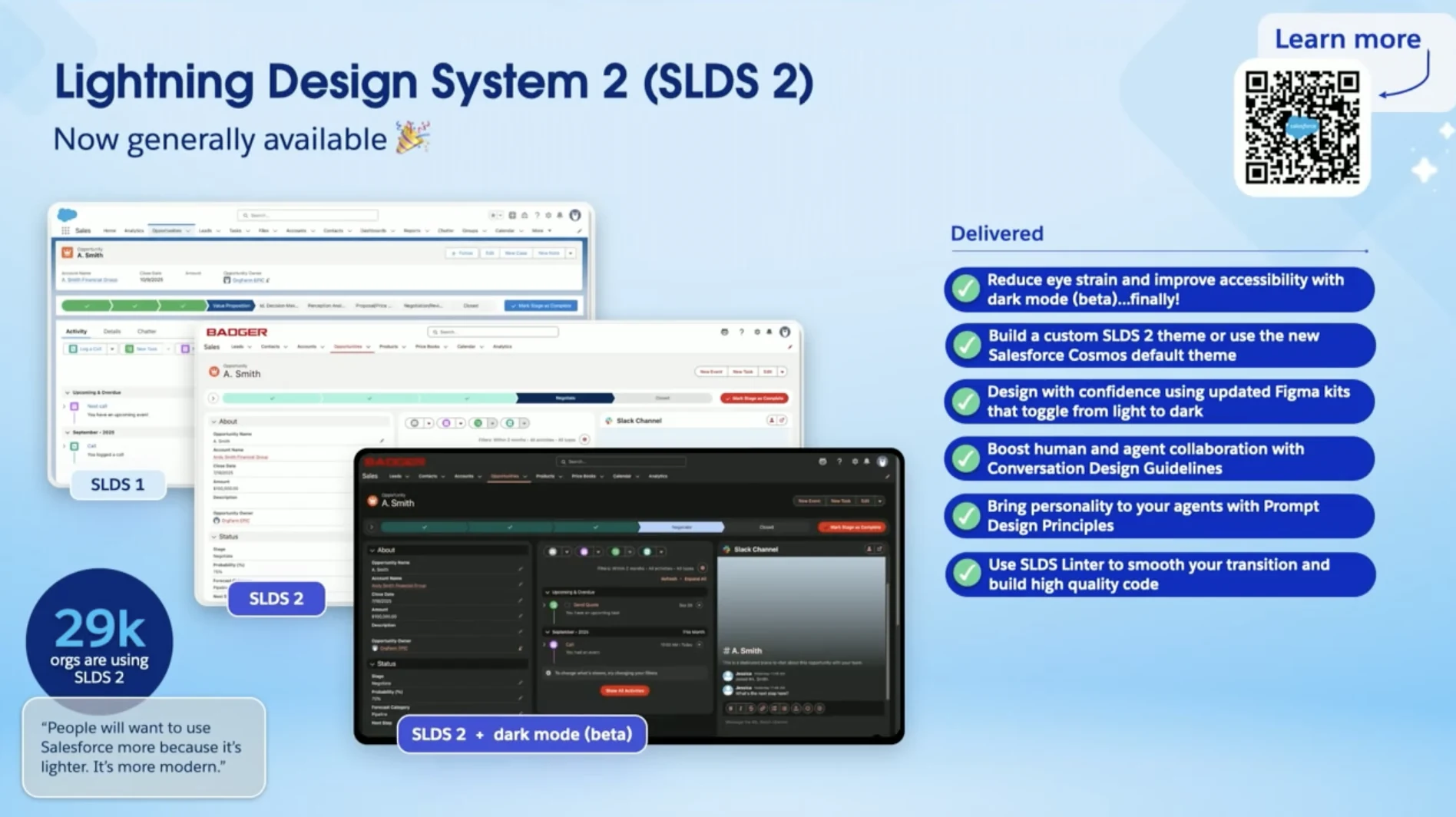
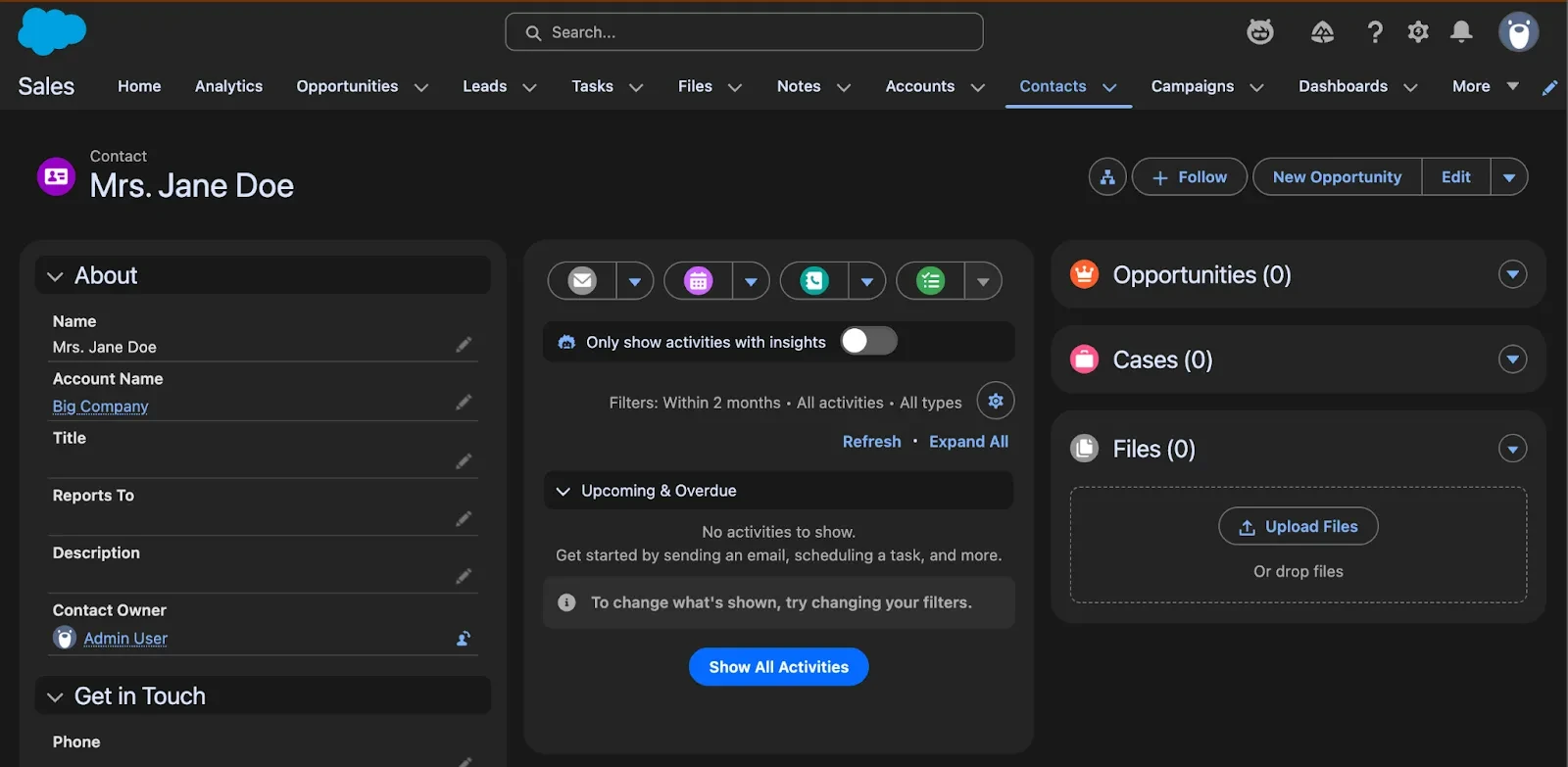
A prevalent question at True to the Core sessions, in the IdeaExchange, and other online platforms was “When are we going to have dark mode?”. The introduction of SLDS2 promised to set the stage for the long-awaited dark mode, and Salesforce delivered.
As of now, dark mode is a beta feature and only available in Starter Suite orgs, but coming soon to the others as well. If you don’t have a starter edition to explore the enhancement in, Salesforce already made a couple of dark-mode-related modules available on Trailhead, where you can find out more and take a special Developer Edition org for a spin.
Final Thoughts
While this year there wasn’t a dedicated architect keynote at Dreamforce, there are still many features that architects will surely enjoy and make sure of in their day-to-day. From all the tools that can help you and your team build a truly Agentic Enterprise, to AI features to enhance productivity, and of course, monitoring and troubleshooting, there’s something for every Salesforce professional to be excited about.
Do you have a favorite announcement? Let us know in the comments below!