

Architects were feeling the love at the Dreamforce ‘26 Architect Keynote. An energized Miriam McCabe, Senior Director, Admin & Architect Evangelism at Salesforce, kicked things off with love for the community, with a special acknowledgement of Daniel Stange, CTO, DIA Digital Consulting. For the main course, she then handed over to three architects from Salesforce to share more about new platform announcements for Architects.
There was a big focus on the community for making a lot of this possible, with a lot of the new advice and guidance coming from the community. It was encouraging to see Salesforce taking the community’s feedback on board and using it to improve the platform as a whole.
Community Highlights
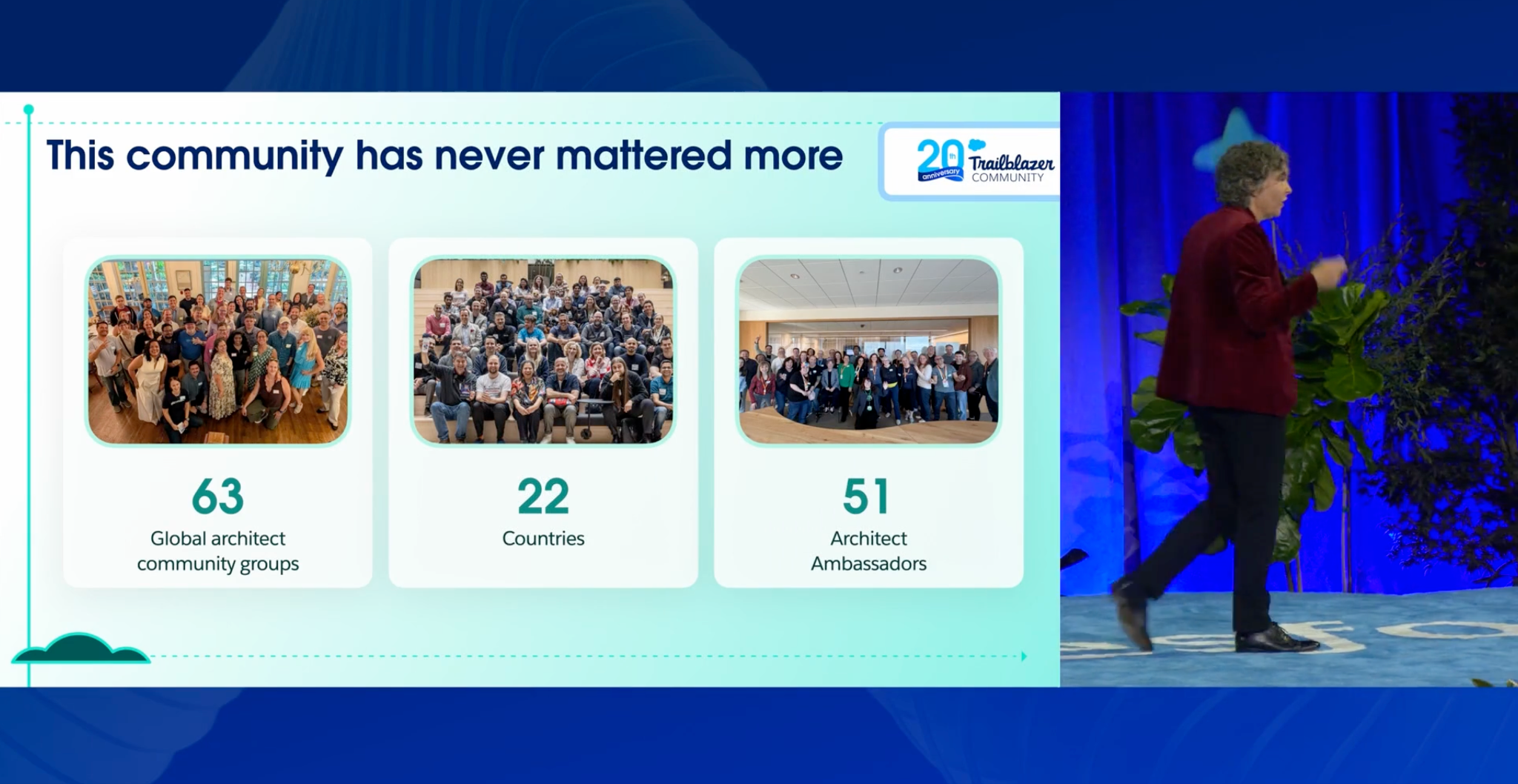
Miriam spent a decent amount of time at the beginning of the keynote talking about the community. The Trailblazer Community as a whole is celebrating its 20th anniversary this year, so this was a big theme. Miriam pointed out that there were now 63 architect community groups active across 22 countries. She also pointed out that there were over 50 Architect Ambassadors as well – a growing community making big contributions to the platform.
She then said that the enterprise landscape is rapidly changing and expanding in the new AI era. There were more factors and variables than ever before to consider, and she said that it’s Salesforce Architects who are overseeing it all and looking at all the moving parts to make sure the whole landscape is working as expected. “Architects were made for this moment”, she claimed.
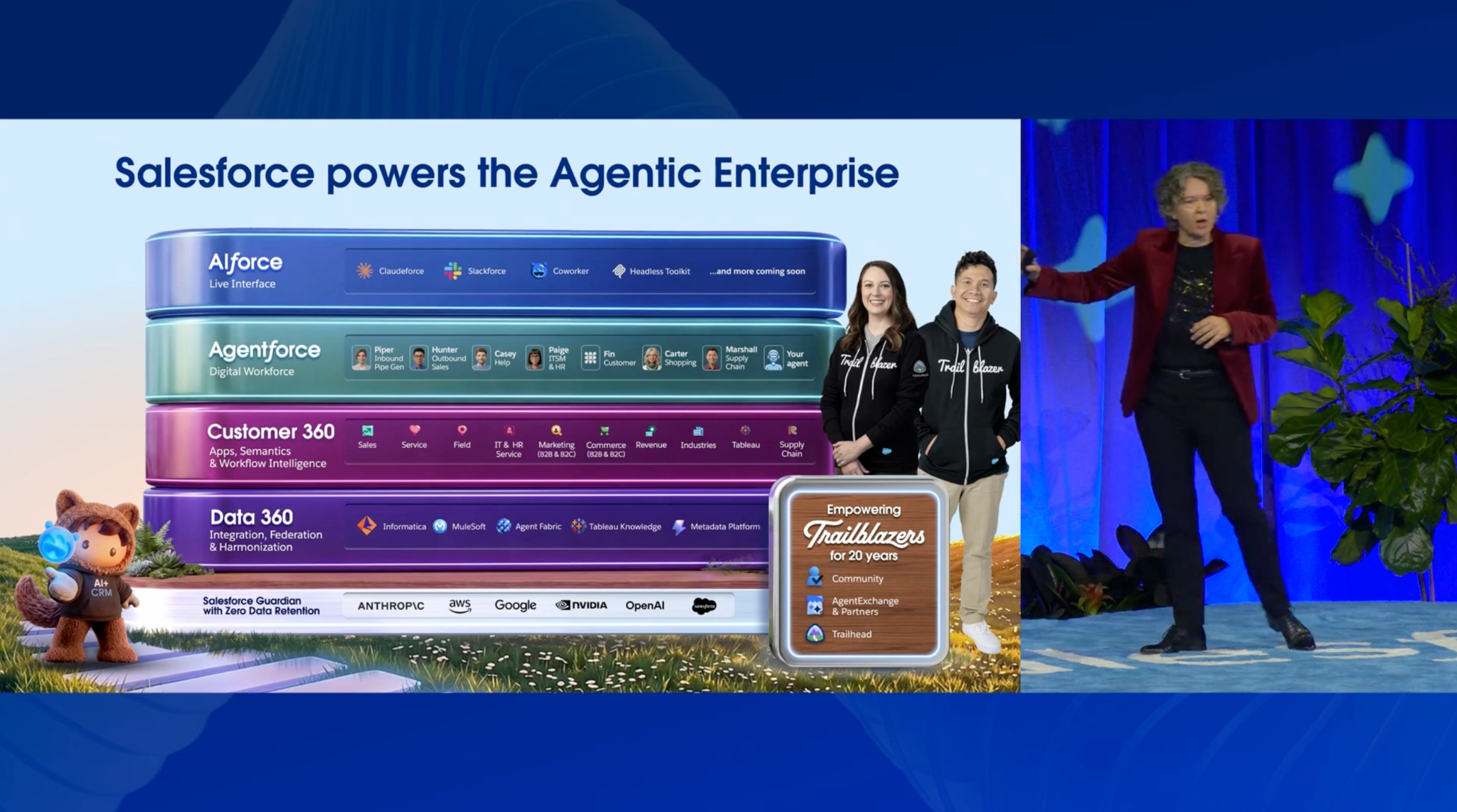
Miriam presented a familiar slide that has been shown at Dreamforce quite a bit this year. It showed all four major layers of the Salesforce platform, underpinned by the new Salesforce Guardian with ZDR. The Well-Architected Framework was built to help architects navigate the complexity of the platform, and it was time for an evolution…
(New) Well-Architected Framework
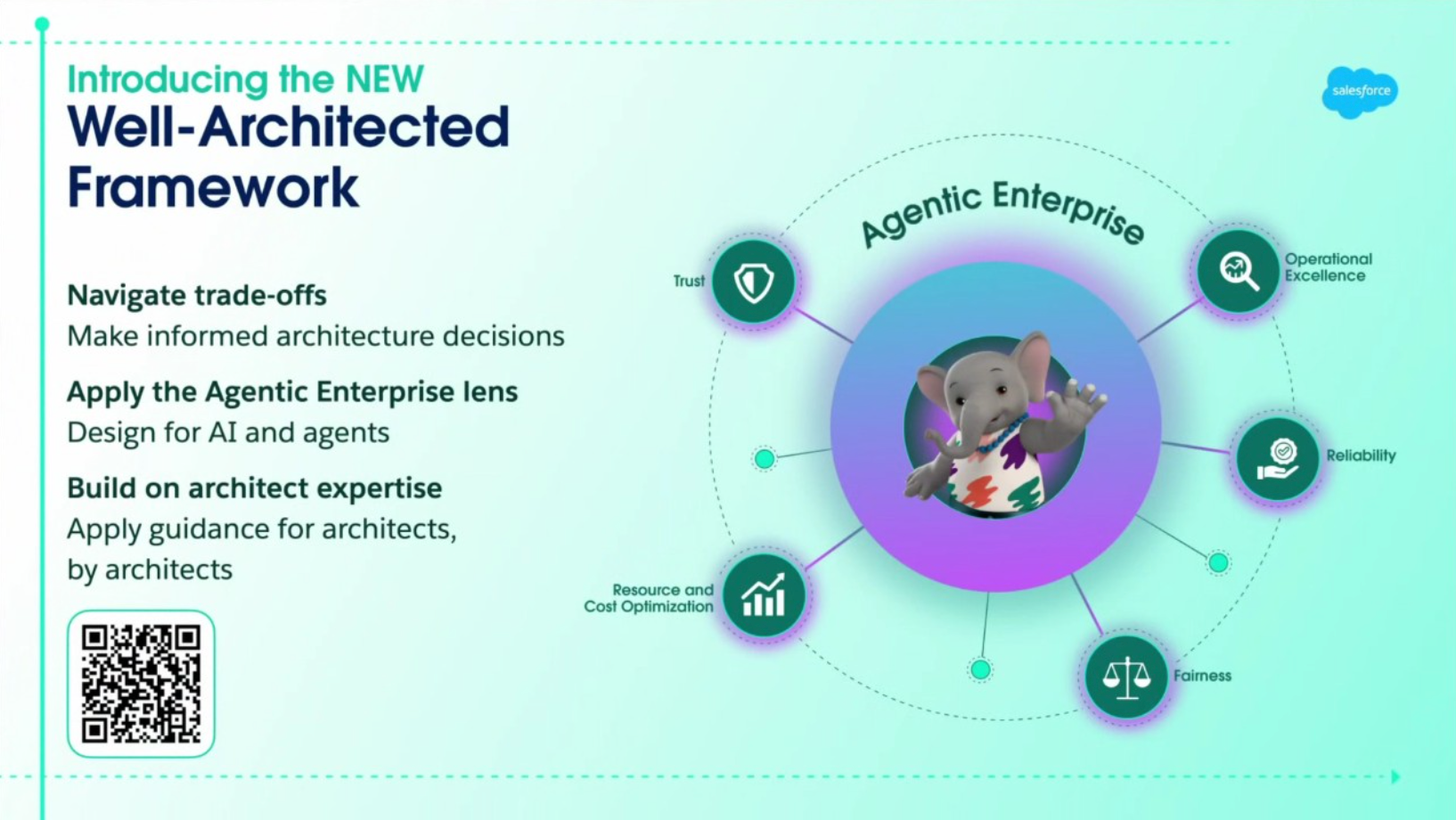
Miriam introduced the new Well-Architected Framework, designed to help architects navigate the ever more complex landscape of the agentic enterprise.
Architect Agent
With so many changes to the Salesforce platform, and many of them driven by the need for agentic development, it’s becoming more difficult for architects to keep up. Additionally, there were so many new changes that sometimes it was difficult to know exactly where to look and what decisions needed to come next. That’s where Miriam’s next announcement came into play: the Architect Agent.
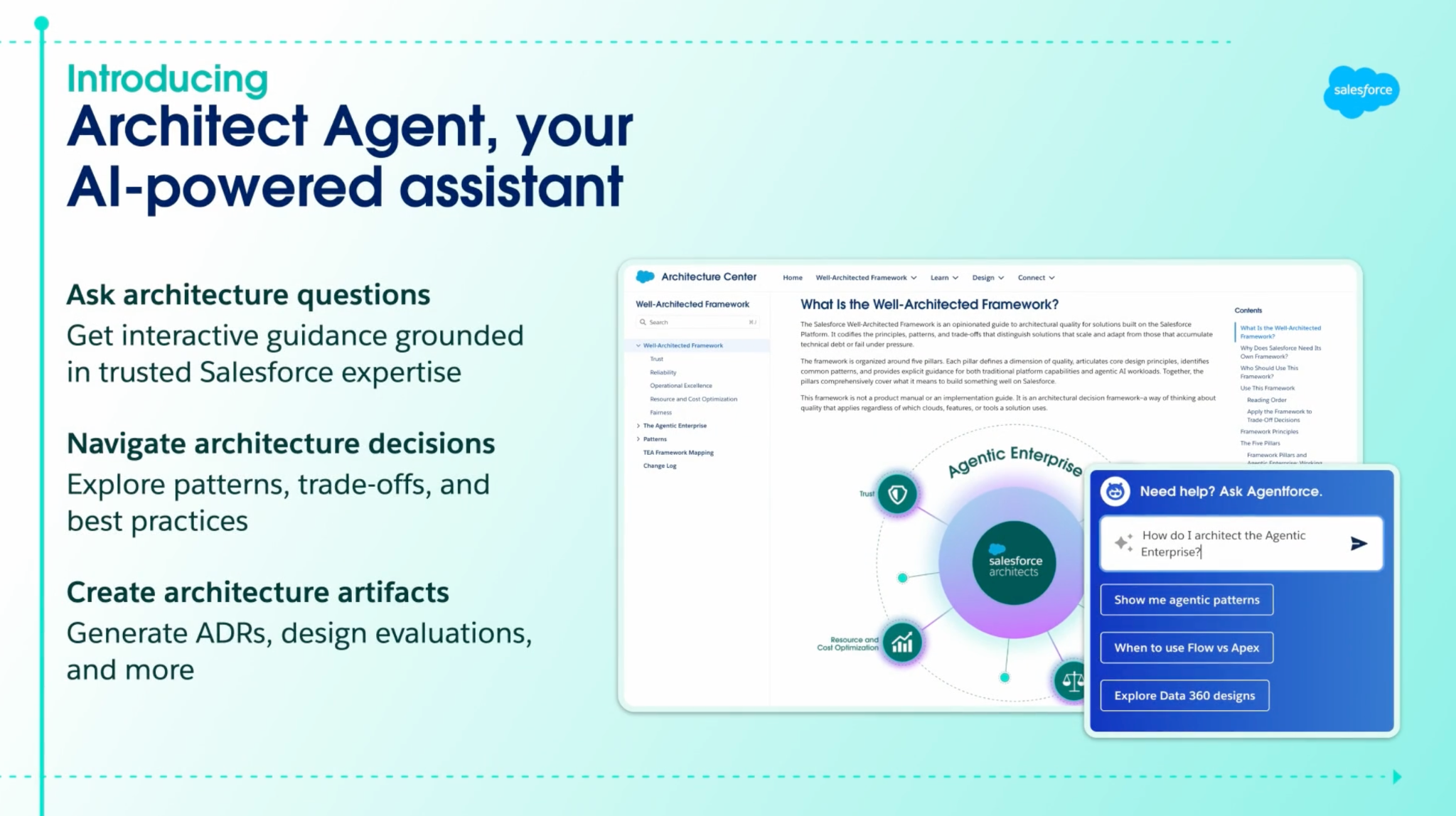
“This is your AI-powered assistant”, she said, “it lives on the Architecture Centre, and it will give you answers to all your architecture questions in an architecturally sound way. It’s grounded in all of the content, including the Well-Architected Framework, on the Architecture Centre.”
Daniel Stange, Golden Hoodie Recipient
Miriam then welcomed Daniel Stange to the stage and pointed out his golden shoes, almost like a nod to what was about to happen.
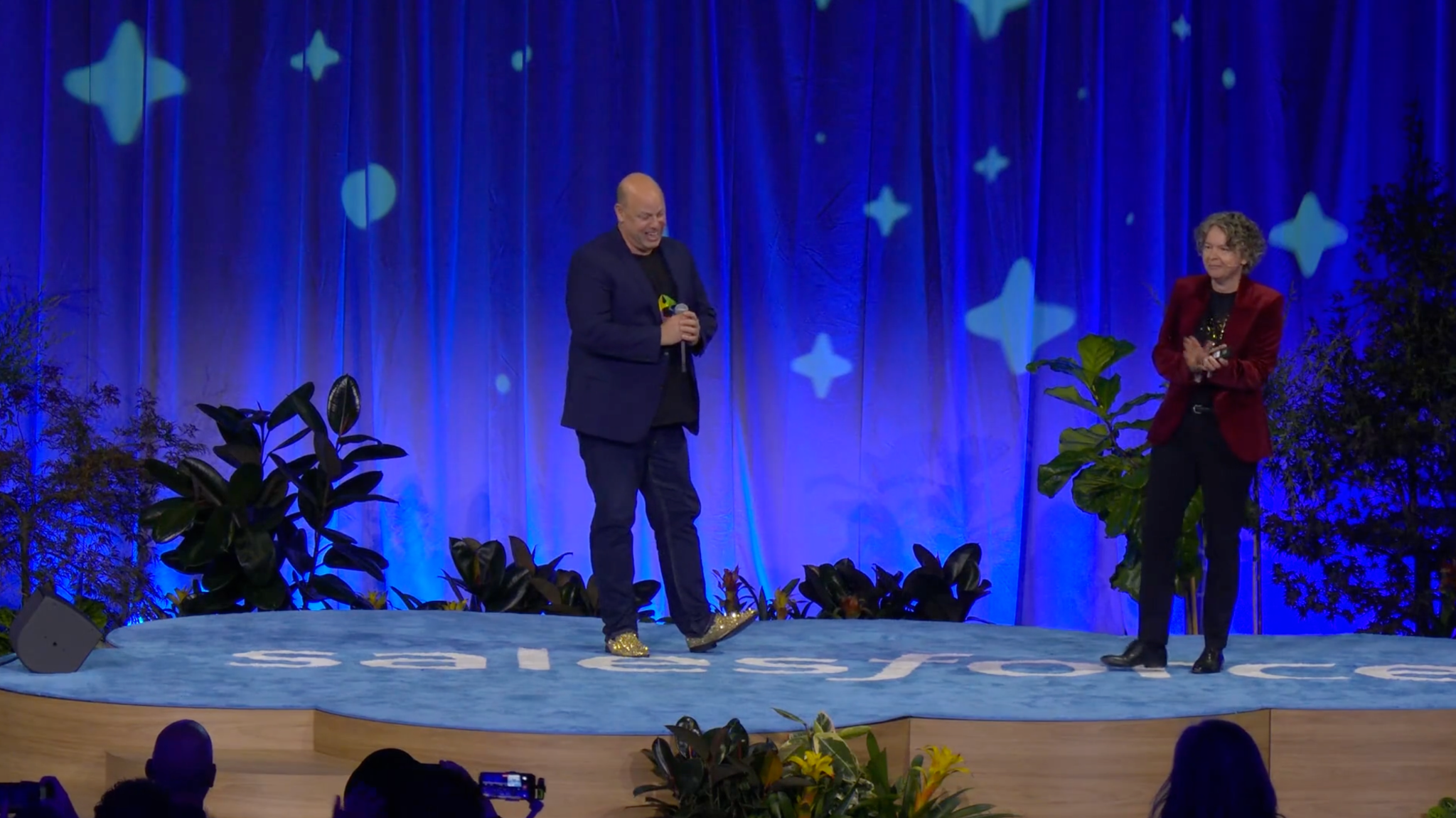
Daniel shared his insights into the main challenges facing architects in the agentic era. He highlighted the downside of Salesforce’s offering an abundance of different products and pricing models. There was increased pressure to condense timelines, while also requiring accurate answers to a wider array of questions. Agentic actors and workflows also added complexity because there was a lot more documentation being created by agents, for agents, and it is a big challenge to stay across it all.
Miriam and Daniel discussed how these factors impacted the changes to the Well-Architected Framework, which Daniel worked extensively on. Daniel suggested that architects need to develop a vision of good, “which can often mean ‘good enough’”, rather than trying to check every box across an entire org.
Miriam then announced that Daniel was about to become the latest recipient of the Golden Hoodie, which would match his golden shoes that she had pointed out earlier. Congratulations, Daniel!

Three Chapters
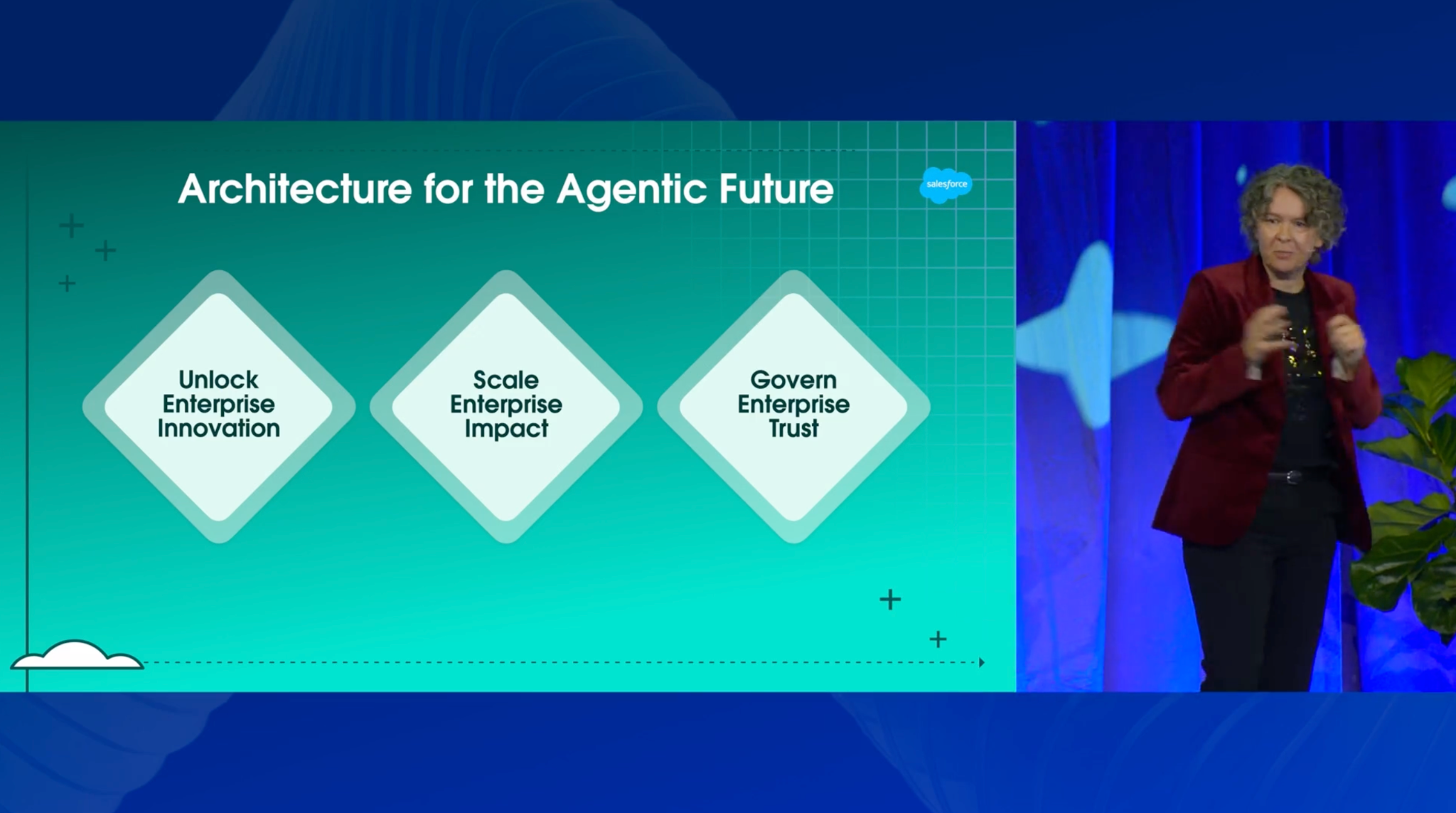
After Daniel exited the stage, Miriam introduced the three chapters of the Architect Keynote: Unlock Enterprise Innovation, Scale Enterprise Impact, and Govern Enterprise Trust.
Unlock Enterprise Innovation
Leo Tran, Distinguished Architect, Software Engineering, Salesforce, took the stage. He flagged that users want to leverage agentic tools to work more efficiently. He quickly called out the challenges of that: ensuring that this is done in a secure way. He stated that AIforce was going to play a key role in achieving this.
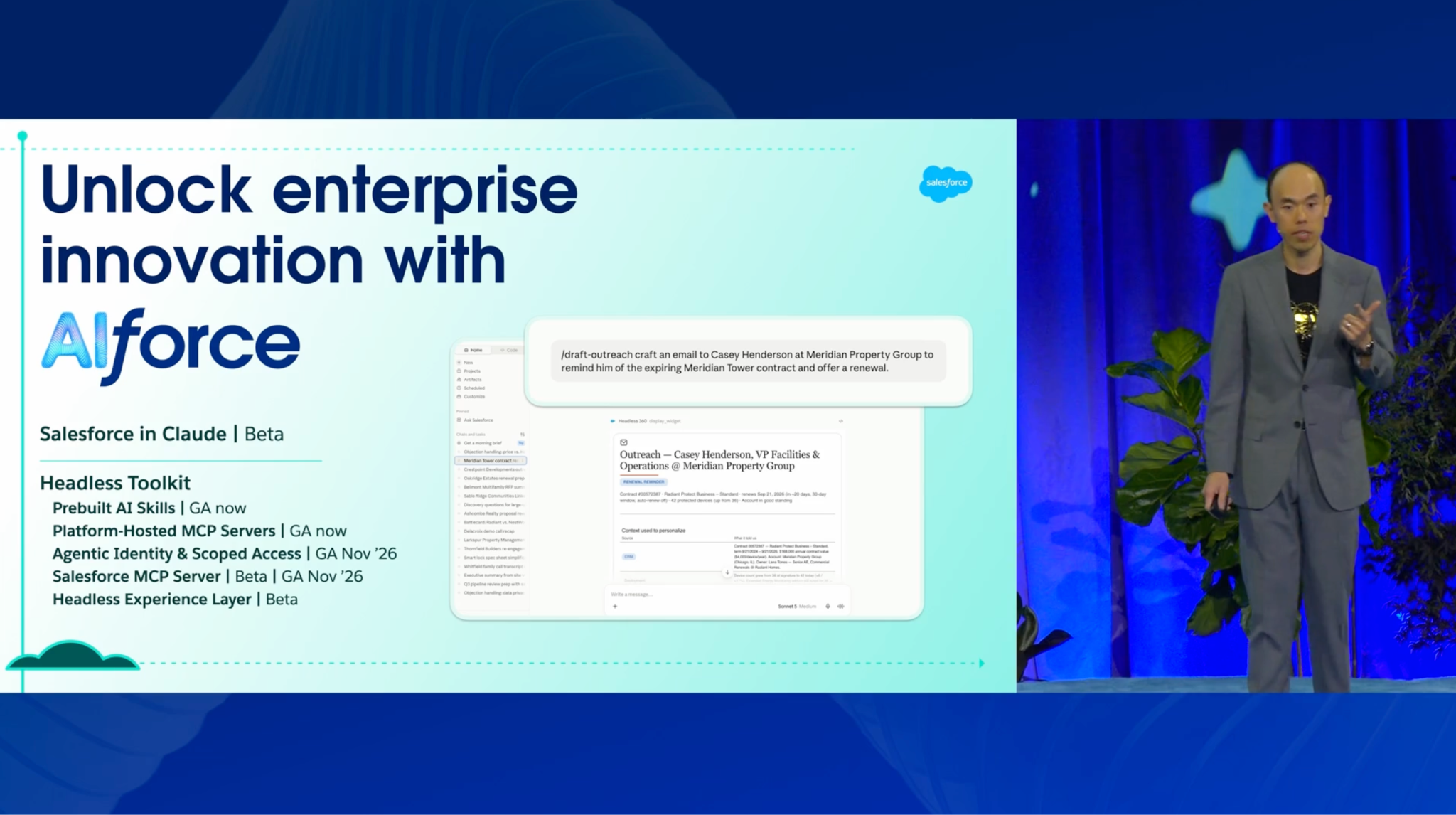
AIforce empowers users to build on the Salesforce platform while still keeping within the existing bounds of the platform. Headless tools grant MCP access to the tools required to build, while keeping security and compliance intact.
Leo introduced Radiant Homes, the demo customer story for the Architect Keynote. They’re a smart home consulting group that wants to start leveraging agentic tools to scale their business development.
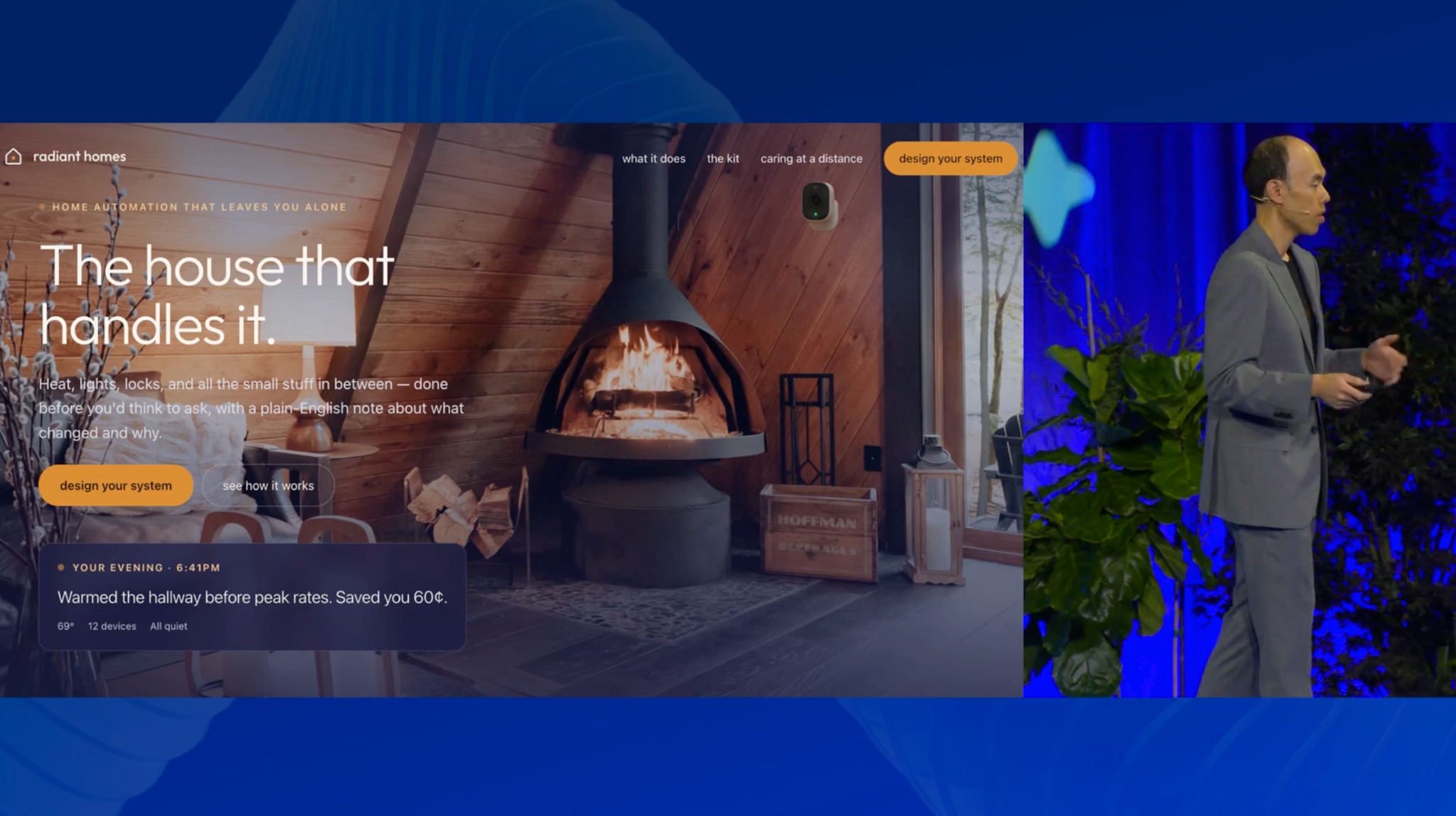
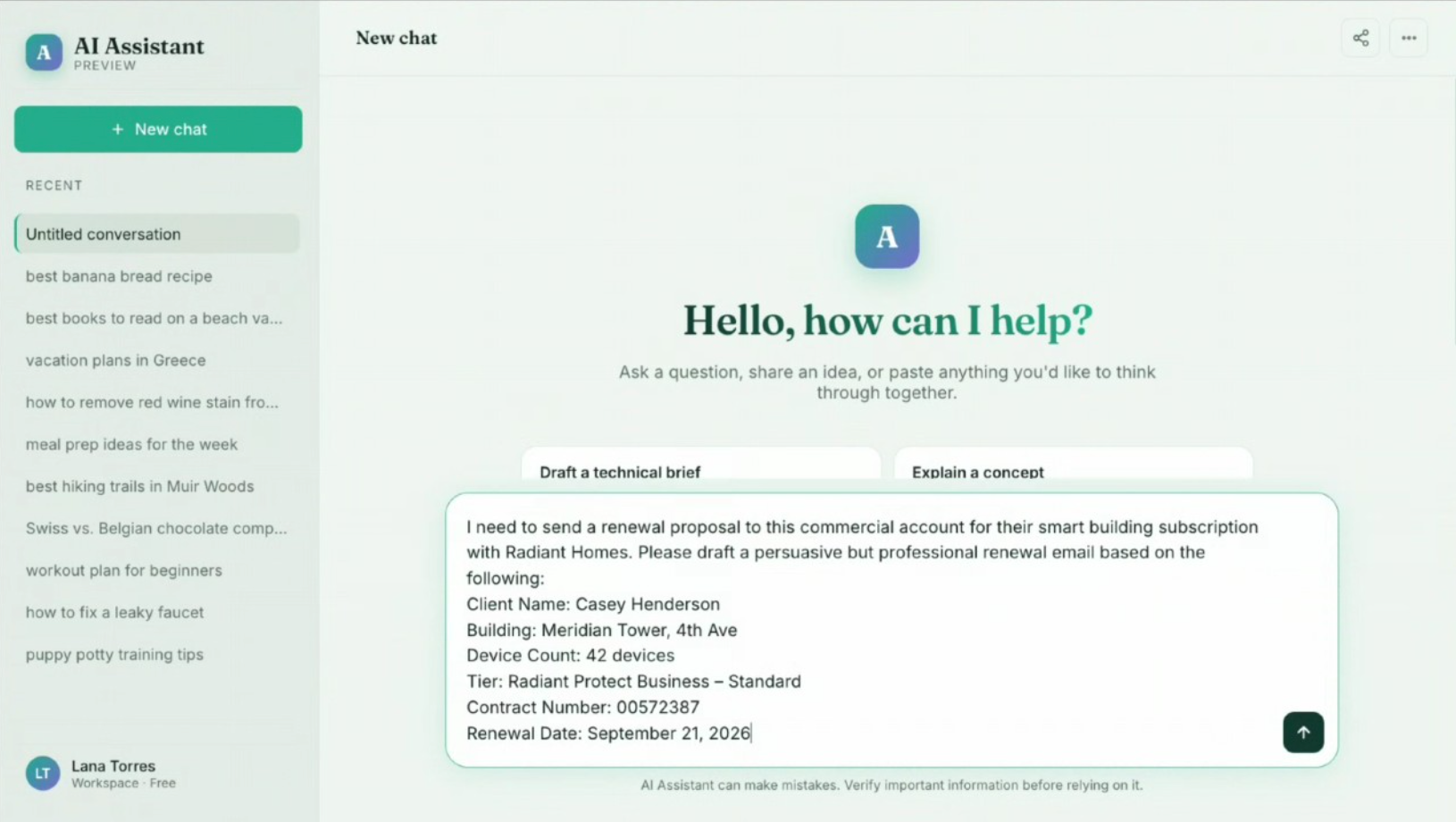
Leo demonstrated the tooling that Radiant Homes was using today – a generic AI tool that was being used to assist in workflows, but wasn’t optimal. It introduced three key challenges:
- Sensitive customer data in an ungoverned environment.
- Manual copying and pasting of data.
- Lack of context due to being a disconnected tool.
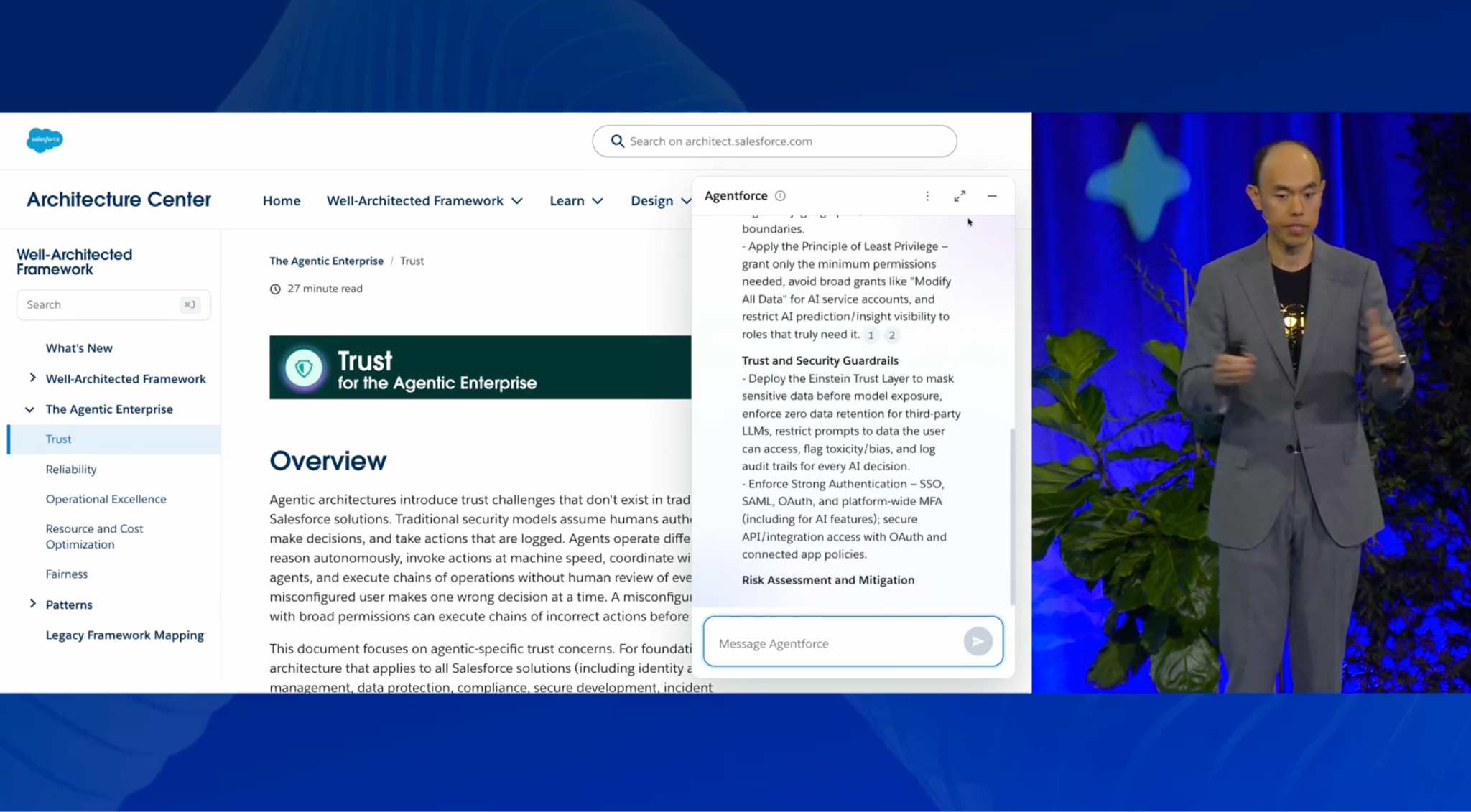
Leo then demonstrated how architects can leverage the new Architecture Centre to make decisions, but flagged that there’s a lot of information to digest. He showed off the Architect Agent, which lives in the Architecture Centre, and how it can be used to make decisions based on the vast information available inside the documentation.
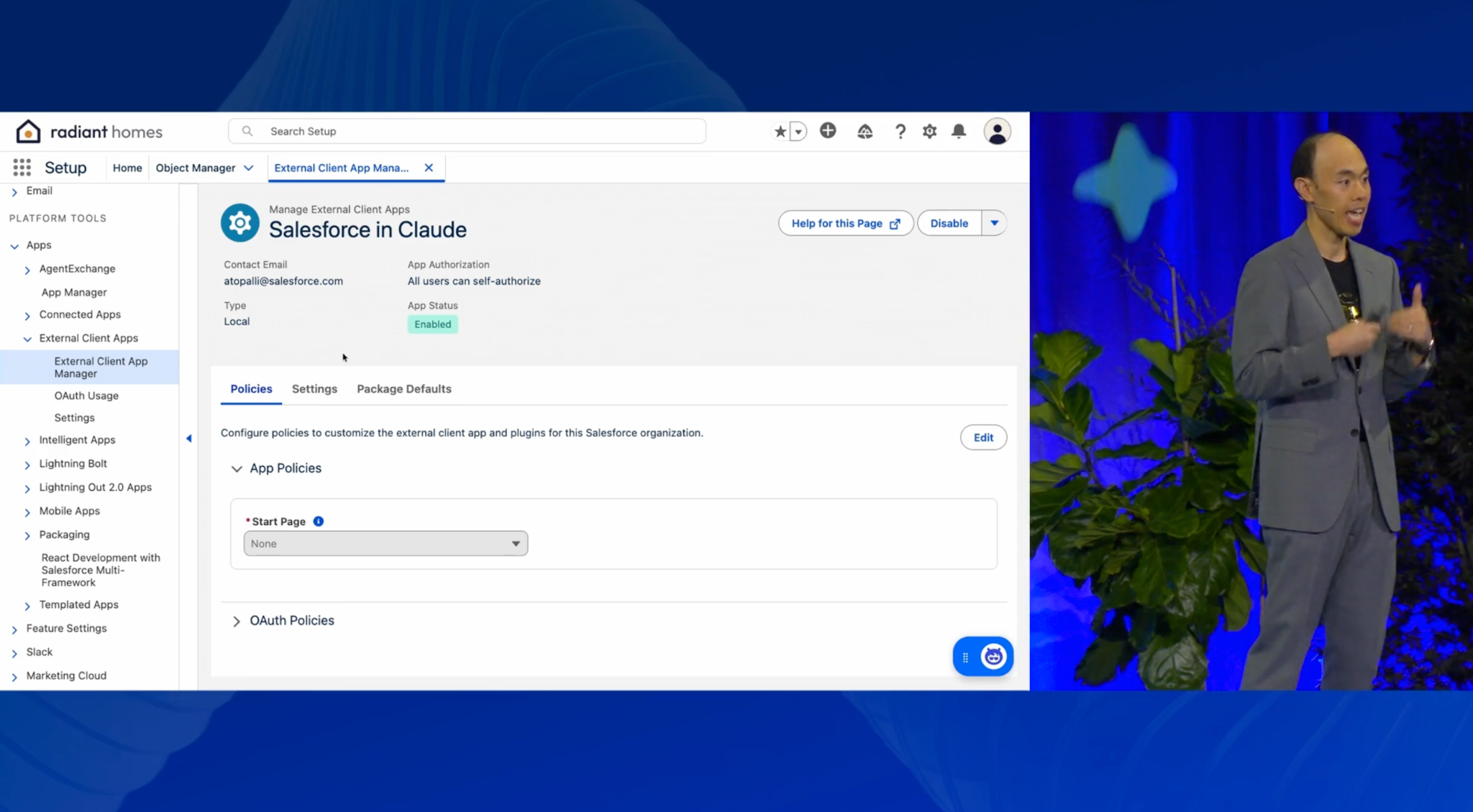
Now that he’s built the blueprint, Leo pointed out that it was time to ensure the agentic tooling that they were going to use was secure and had the right access. This is where External Client Apps were used to define the identity. He claimed that Salesforce has enhanced this flow to be easier to enrol agents.
The next challenge was connectivity. While Salesforce does allow for custom MCP servers, he suggested there was an easier way to do things. This is where he showed off the new Headless 360 MCP Server (aka H360, currently in open beta and GA in November).
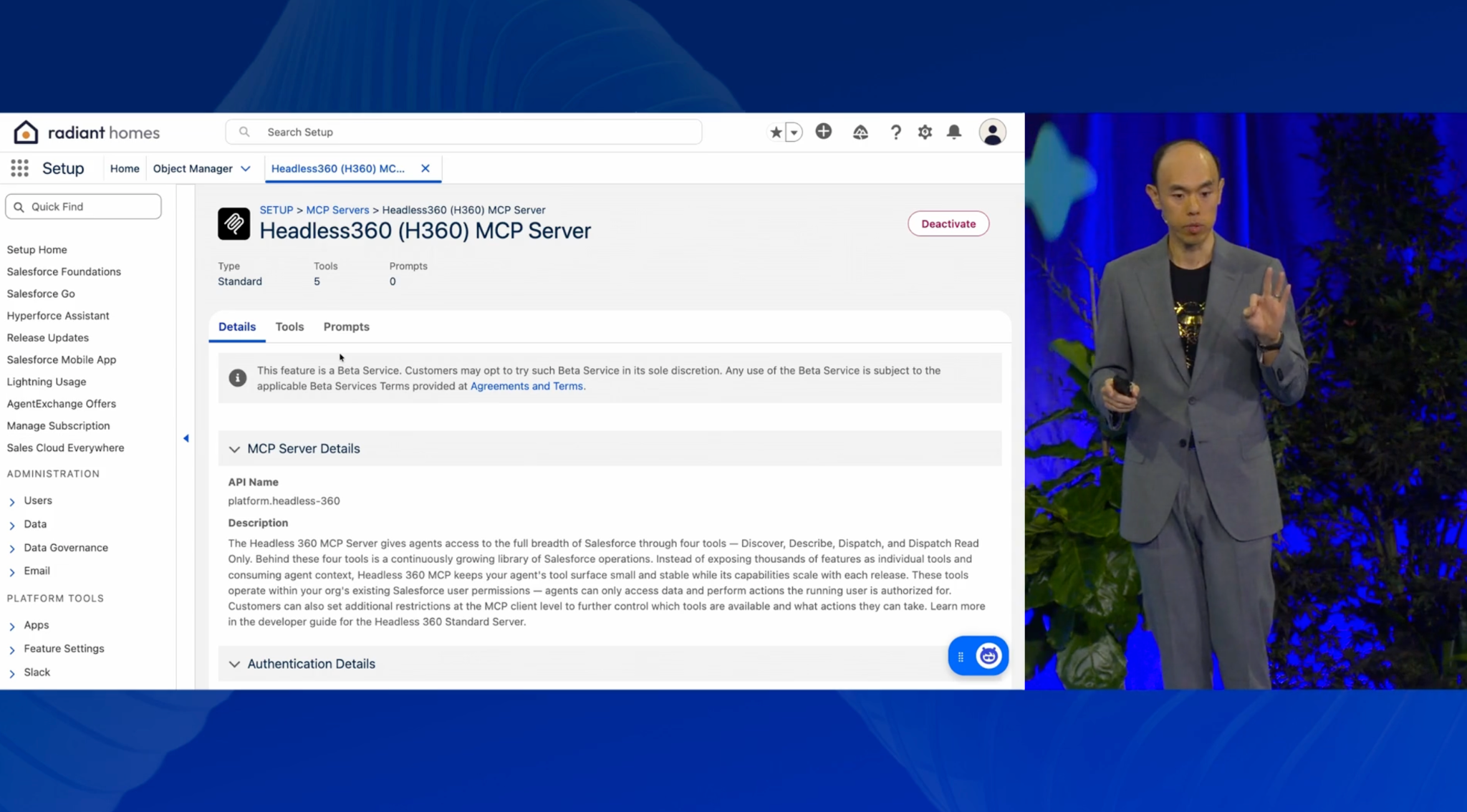
Built into H360 were three key tools: Discover (helps agents go from intent to select the right skills and actions), Describe (helps the agent understand the request and response parameters), and Dispatch (helps the agent actually take action).
Next up was the challenge of access controls. Typically, agents will inherit the same access that users have. Scoped Access Definitions can be used to enable down-scoping policies to restrict what a registered agentic identity (like Claude) can actually do.
“You can give an agent just the access it needs”, Leo said.
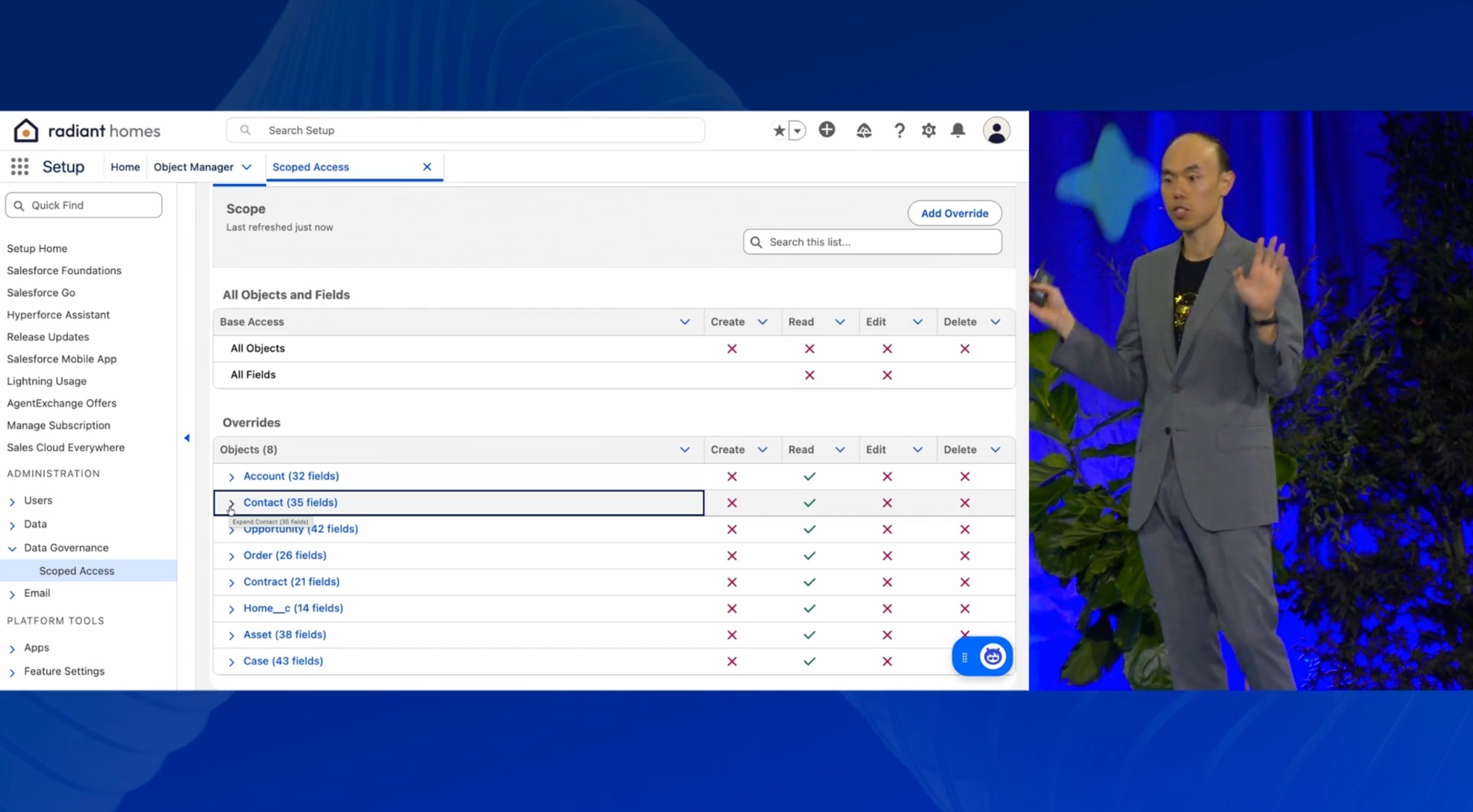
Tying it all together, Leo showed what the new experience would look like: an agentic enterprise tool (Claude) with access to the right data through scoped access definitions, and able to take action in a secure environment with zero data retention.
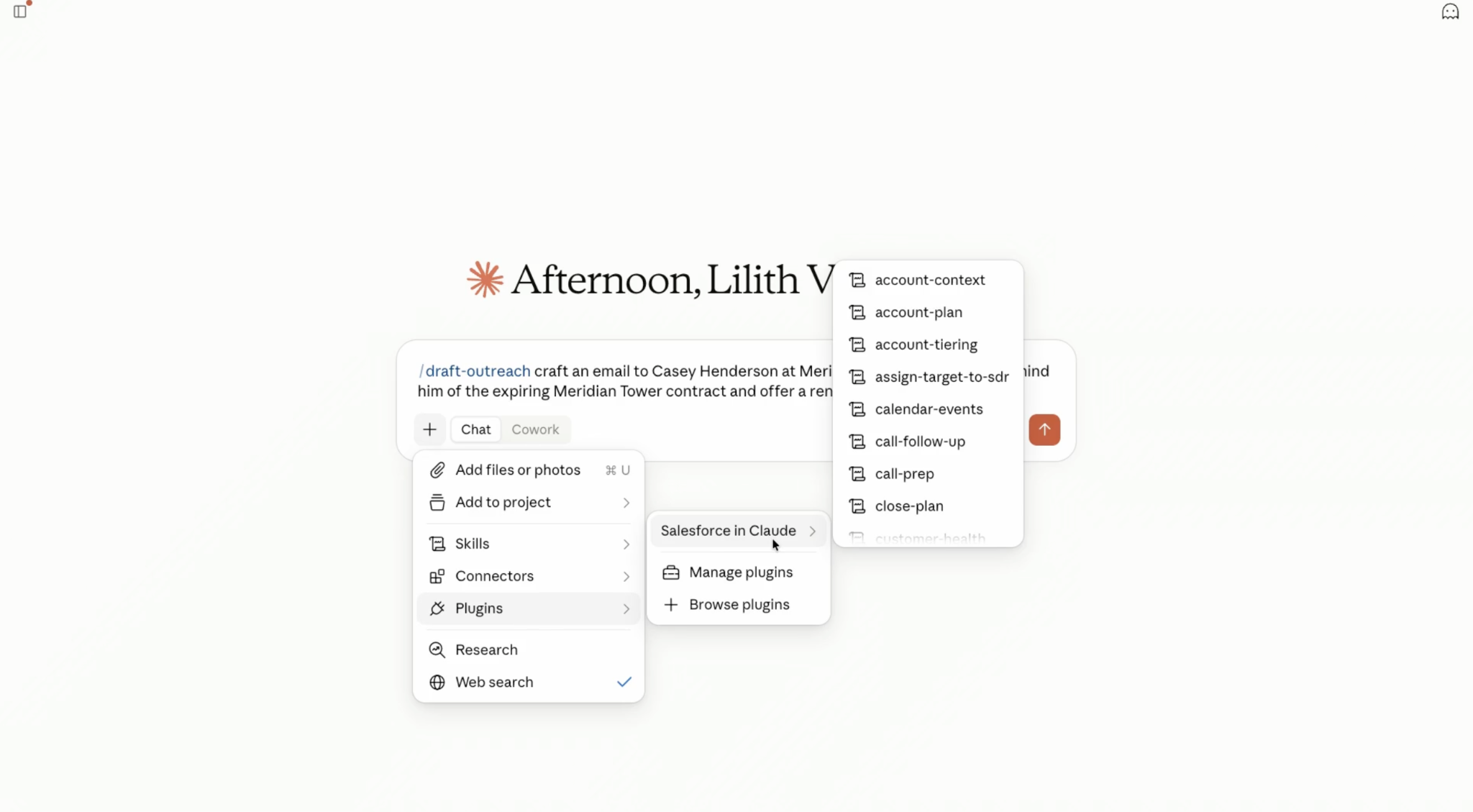
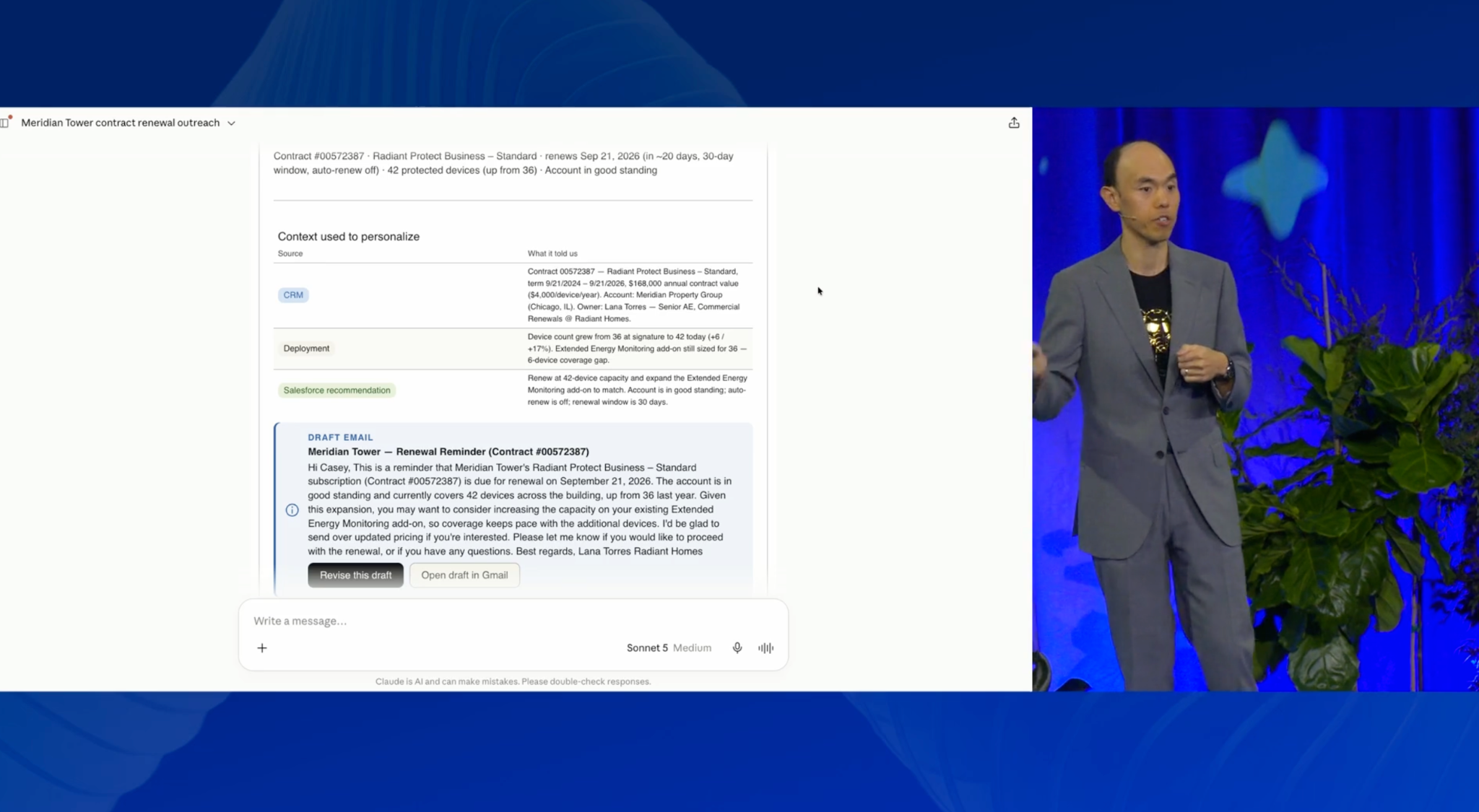
He also explained that Claude displays widgets to help humans understand large amounts of data and information at once, rather than reading walls of text.
After a quick recap, Leo invited Shelly Sousa, Lead Technical Architect, Salesforce, to the stage to discuss how architects can scale their impact.
Scale Enterprise Impact
Shelly introduced Radiant Homes’ goal to automatically generate renewal proposals by combining contract data from Ironclad, as well as smart device data from Snowflake.
She showed how architects can use the Architect Agent on the Architecture Centre to outline zero-copy federation, MuleSoft API governance, and least privilege access. Architect Agent pulled together all the key decisions that an architect needs to think through, showing how it can be used to build a plan.
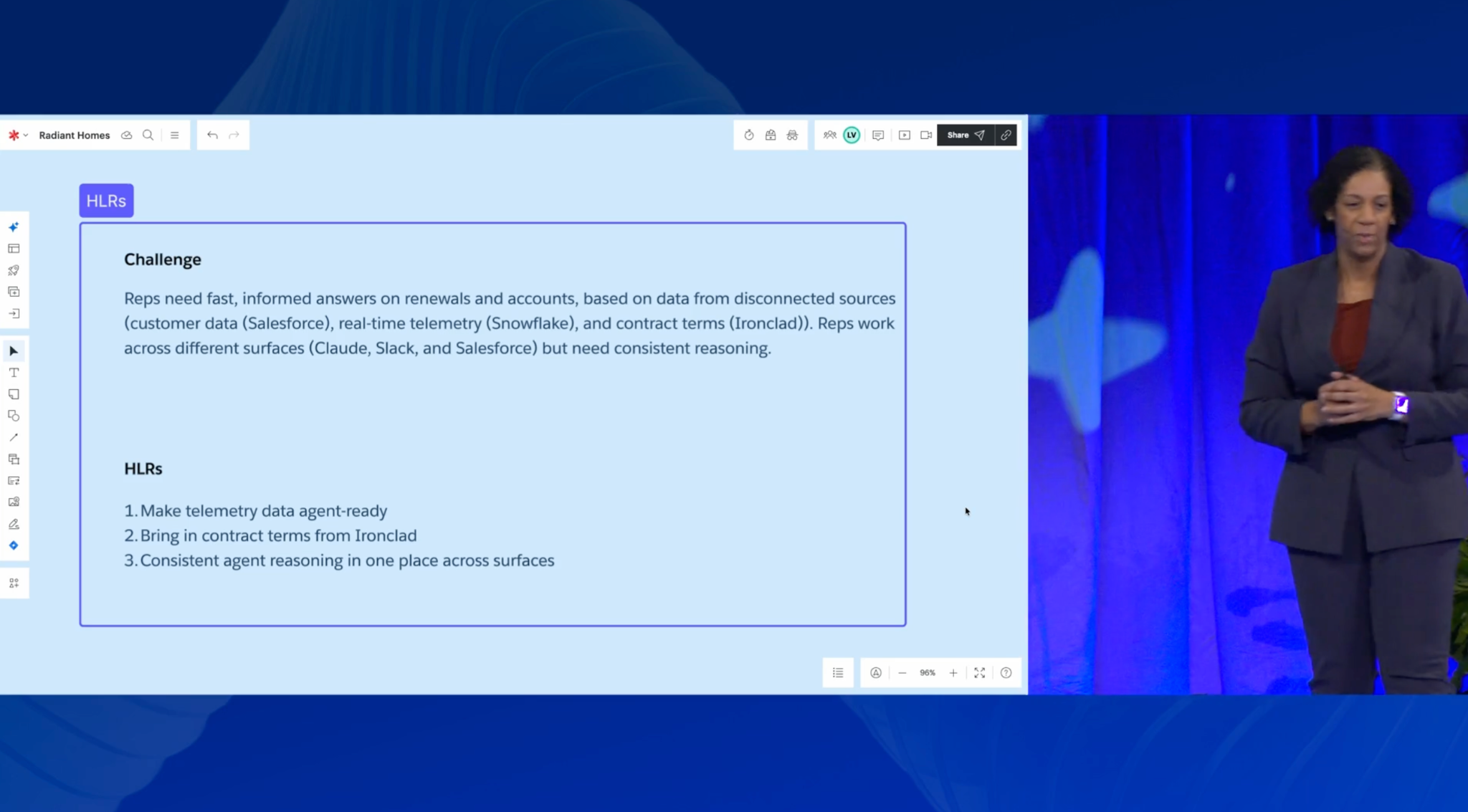
Shelly began to work through the various challenges that architects may face, and mapped out how to solve them. This was a recurring theme throughout her presentation.
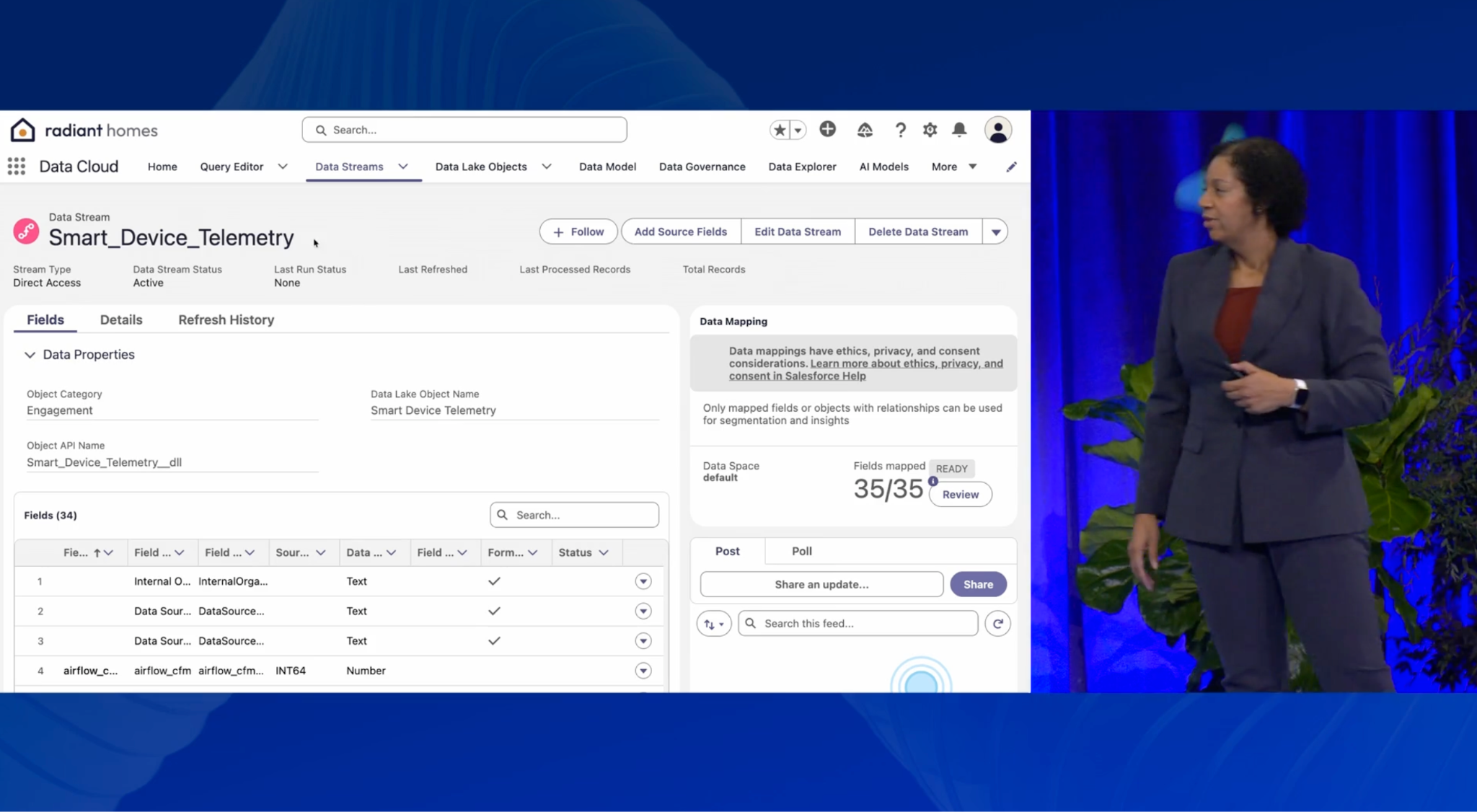
She then demonstrated how to use Data 360 zero-copy federation to connect that smart device telemetry data from Snowflake to Salesforce, without requiring data to be copied or migrated.
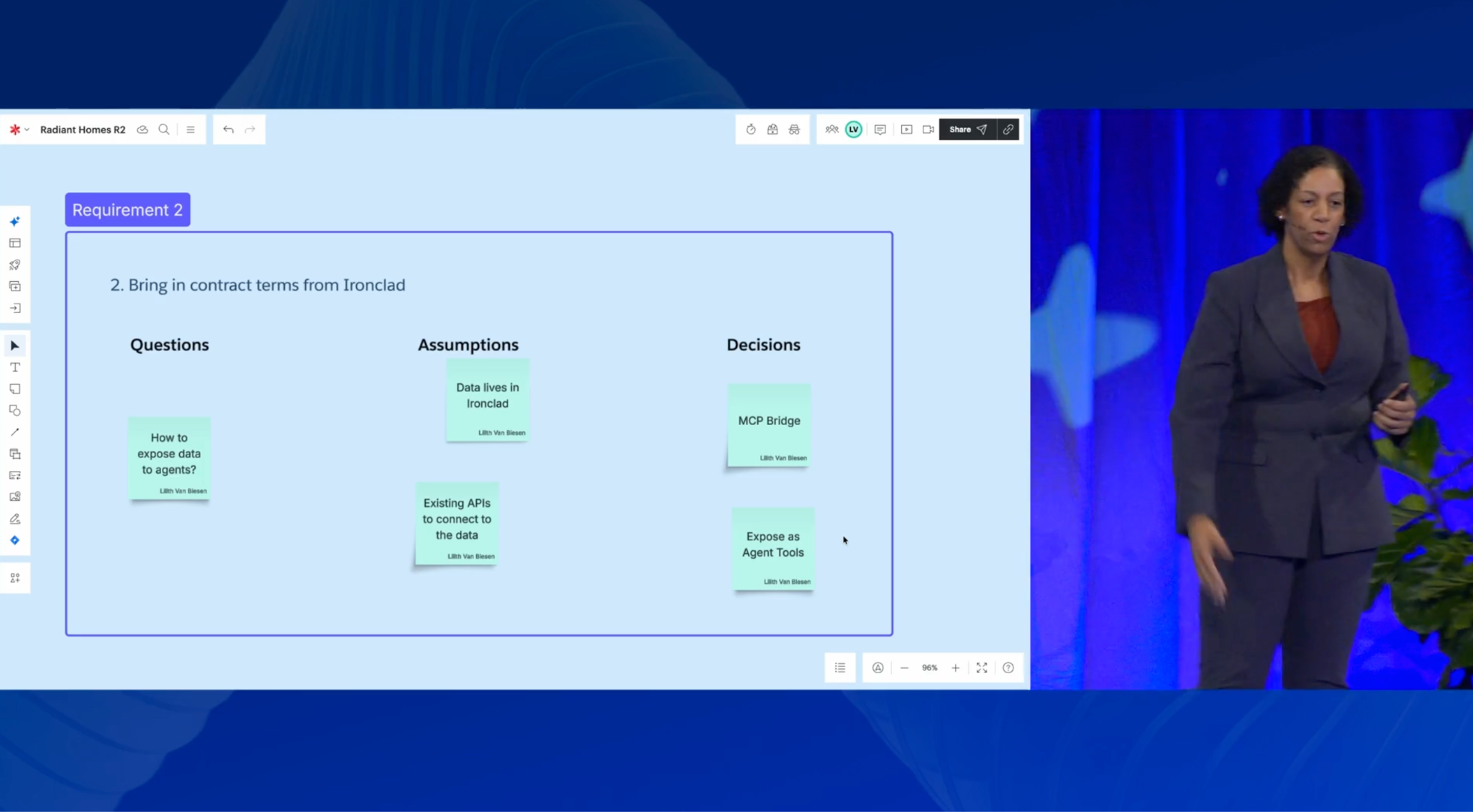
The next requirement was to pull in contract data from Ironclad. Similarly, she worked through this challenge and solution in a visual board, then made the decision to connect to Ironclad through Agent Fabric’s MCP Bridge.
Over in MuleSoft, Shelly showed how the tools that were configured would empower the system to pull the relevant data contract data as required.
Finally, she wanted to ensure that the experience and reasoning were going to be consistent across surfaces. Her solution was to create an Agentforce Agent behind the scenes, and leverage Agent Script to keep things consistent by applying deterministic logic. Shelly reminded the audience at this point that the demo was live, as Claude began working on pulling information from both systems and created the contract renewal opportunity.
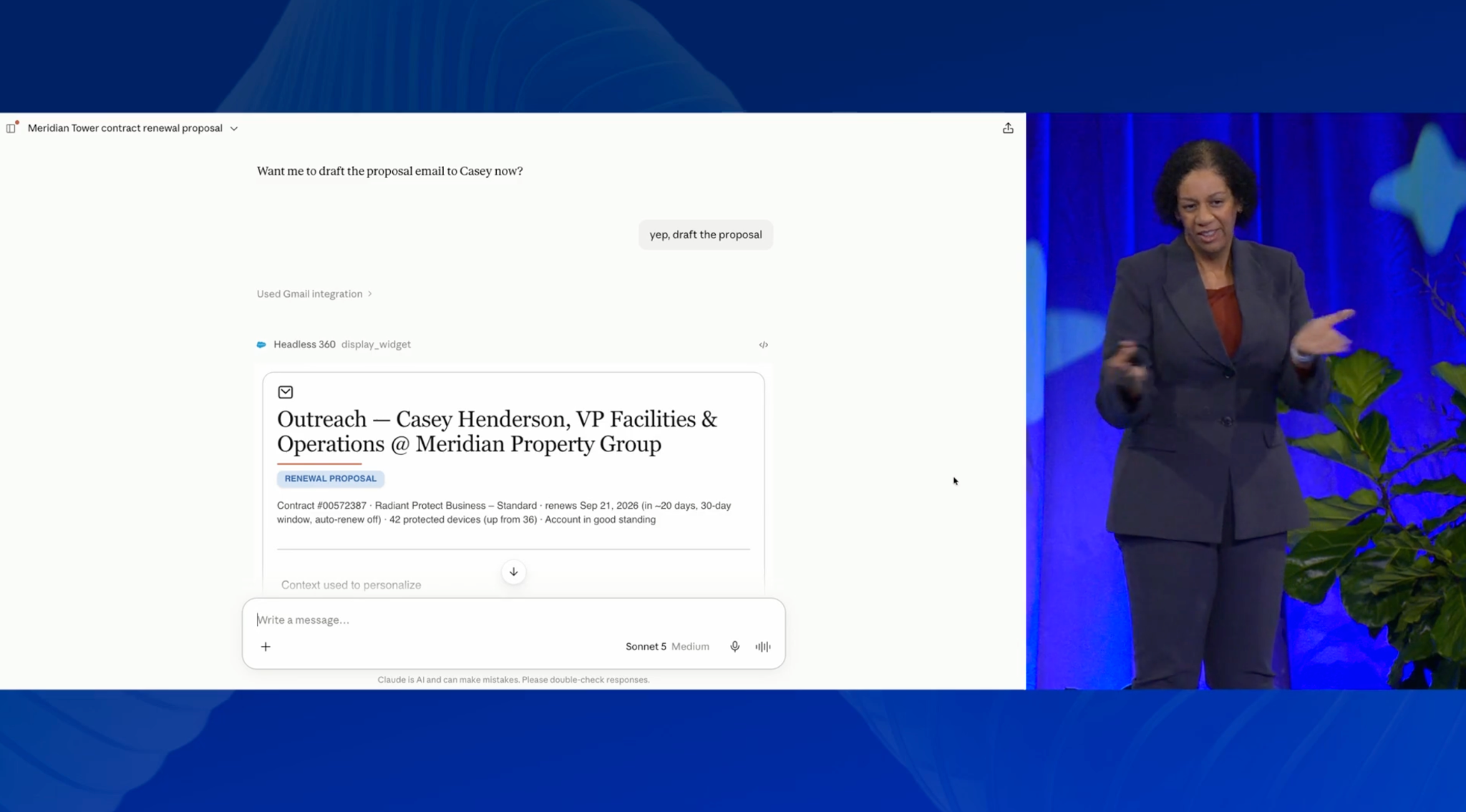
Shelly summarized that Radiant Homes didn’t need to throw away their existing systems investment, but instead make it “agentic compatible” using the aforementioned tools. She then concluded and invited Tim Breeden, Software Engineering Architect, Salesforce, to the stage to discuss governance and trust.
Govern Enterprise Trust
An excited Tim took a moment to appreciate the audience and highlight once again that the new Well-Architected Framework was a community effort, through “unfiltered, unyielding feedback”.
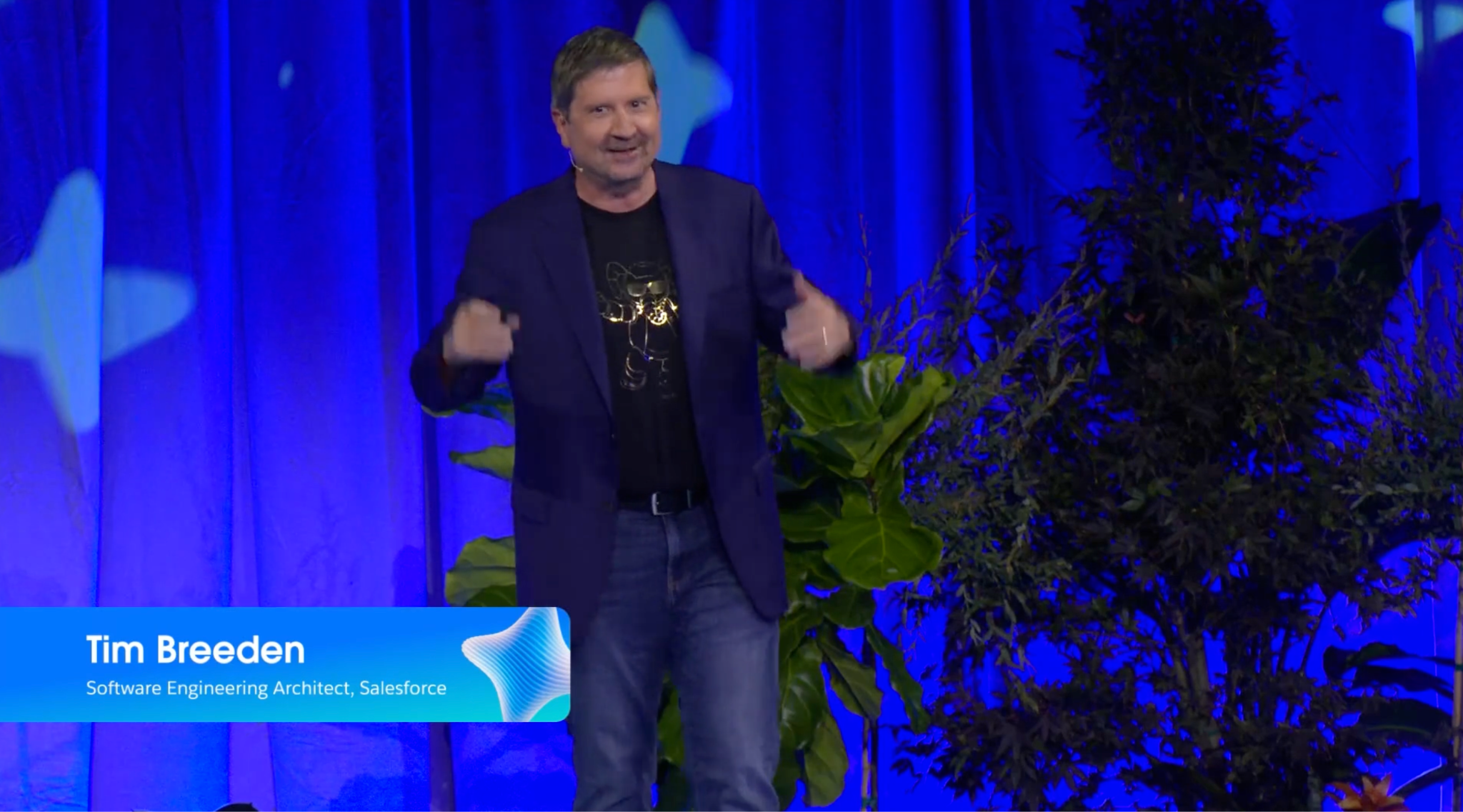
Tim consulted the Architect Agent once more to assess their Center of Excellence readiness, which identified the need to enforce least privilege access and establish an accelerated communication cadence. The first step in this governance journey for Radiant Homes after discovering these gaps was to head over to their CoE Slack channel.
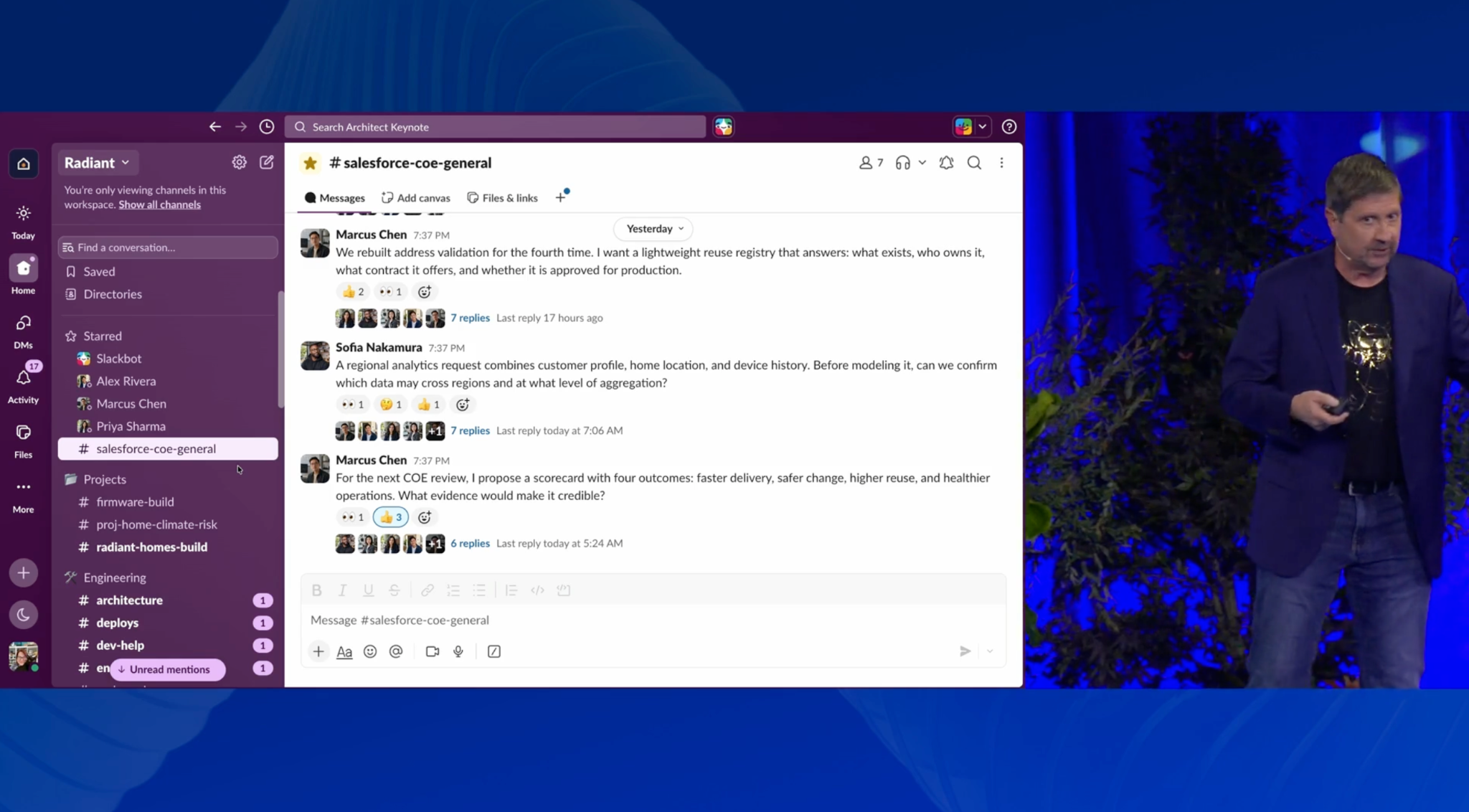
He explained that centralizing communication in a Slack channel allowed teams to unite together and work on any issues that arise in real time, running 24/7. One such issue was identified using Agentforce Observability.
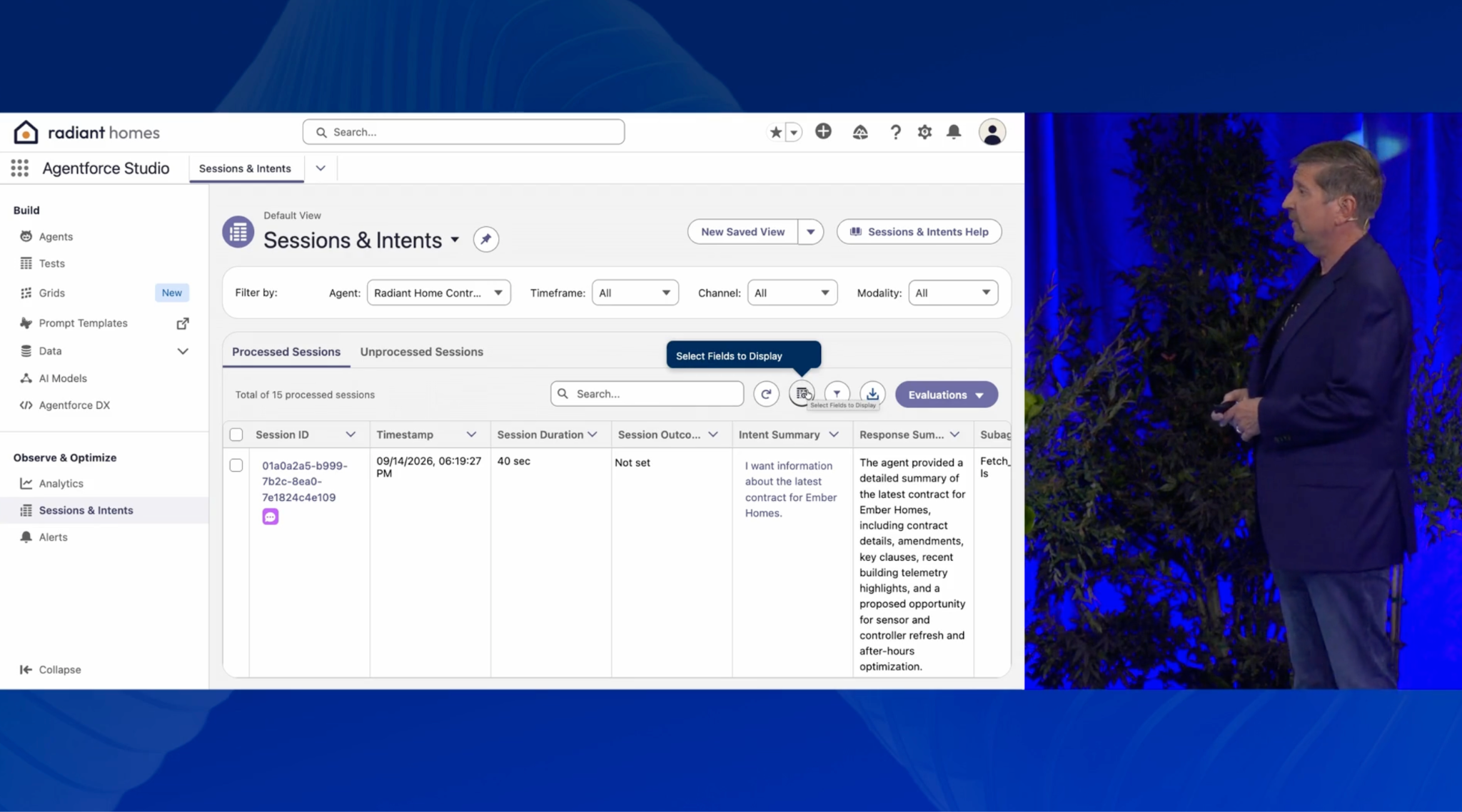
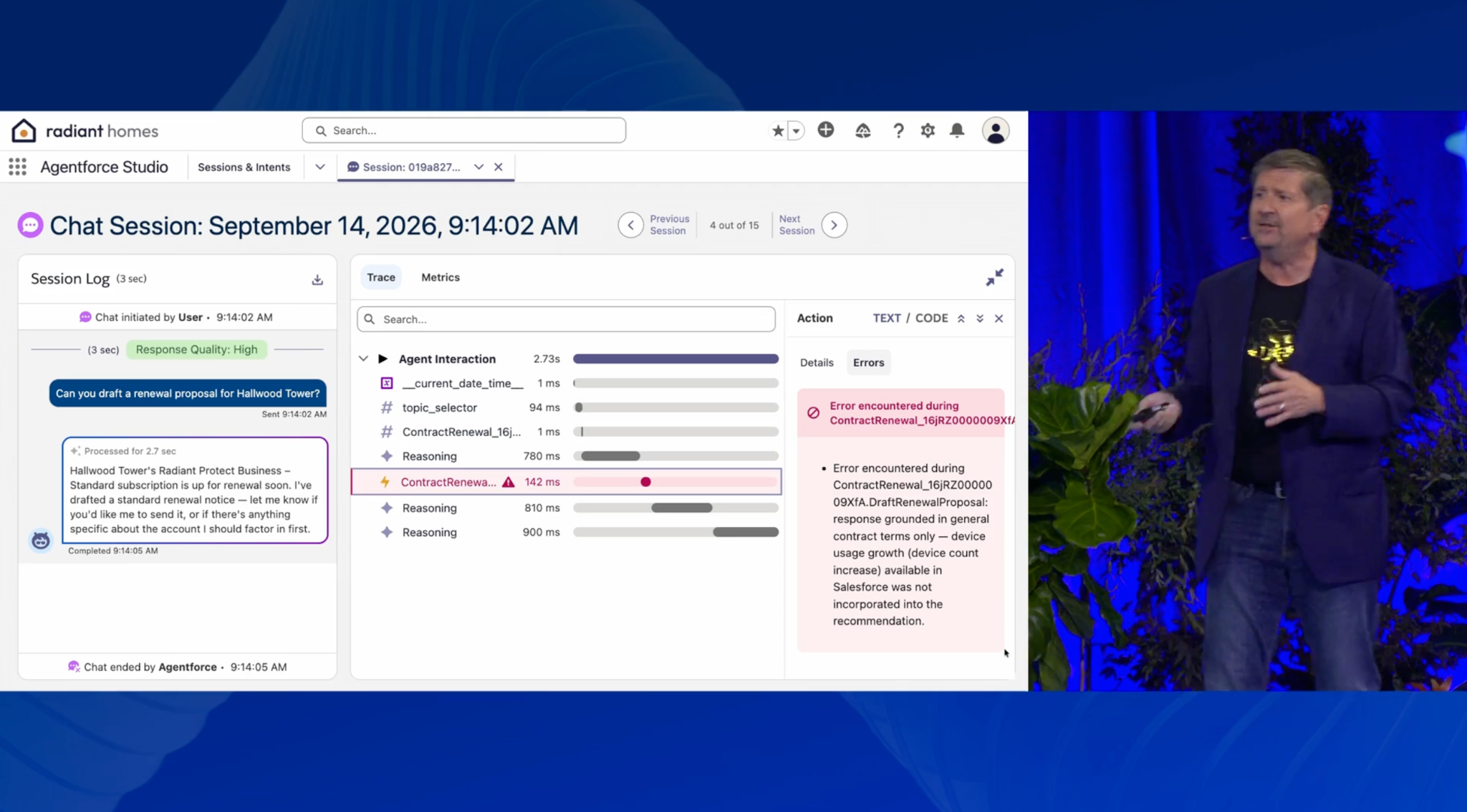
After clicking through to the error, he pointed out that the issue was due to a partially grounded response, which Agentforce diagnosed on its own. This was due to the device usage data not yet being available to the agent.
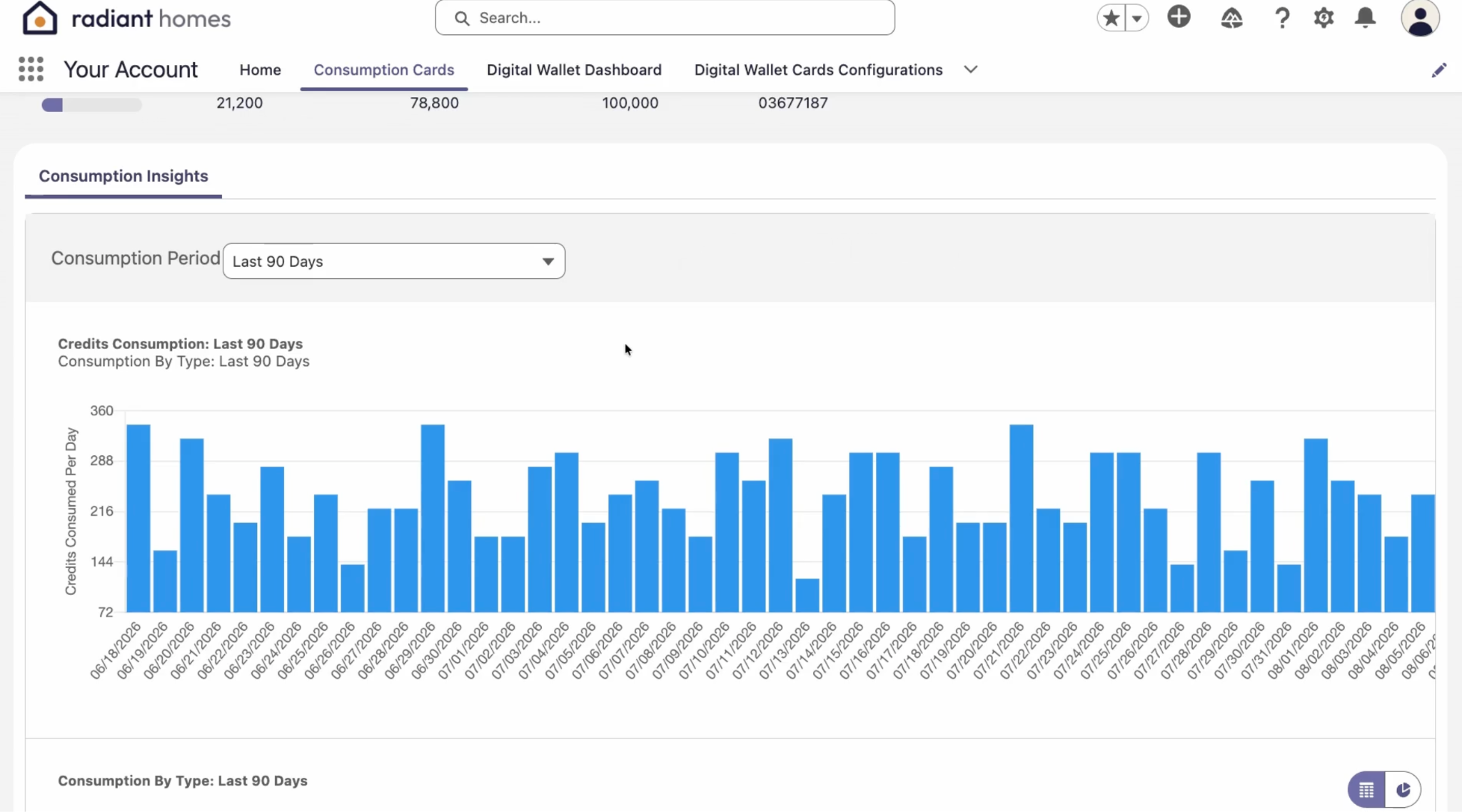
Tim then highlighted that cost was a big concern, especially because this was the first Agentforce agent in this scenario. It would become a “de facto baseline” for all future agents. He then opened the Digital Wallet to evaluate token consumption and determined that it was looking healthy.
The final missing piece of the puzzle was possibly the most important: ensuring that the agent was actually providing valuable outcomes. To do this, Tim employed Lilith Van Biesen, Principal Architect Evangelist, Salesforce, to ask Slackbot to see if there was an increased renewal rate in agent-guided scenarios than those without agent involvement.
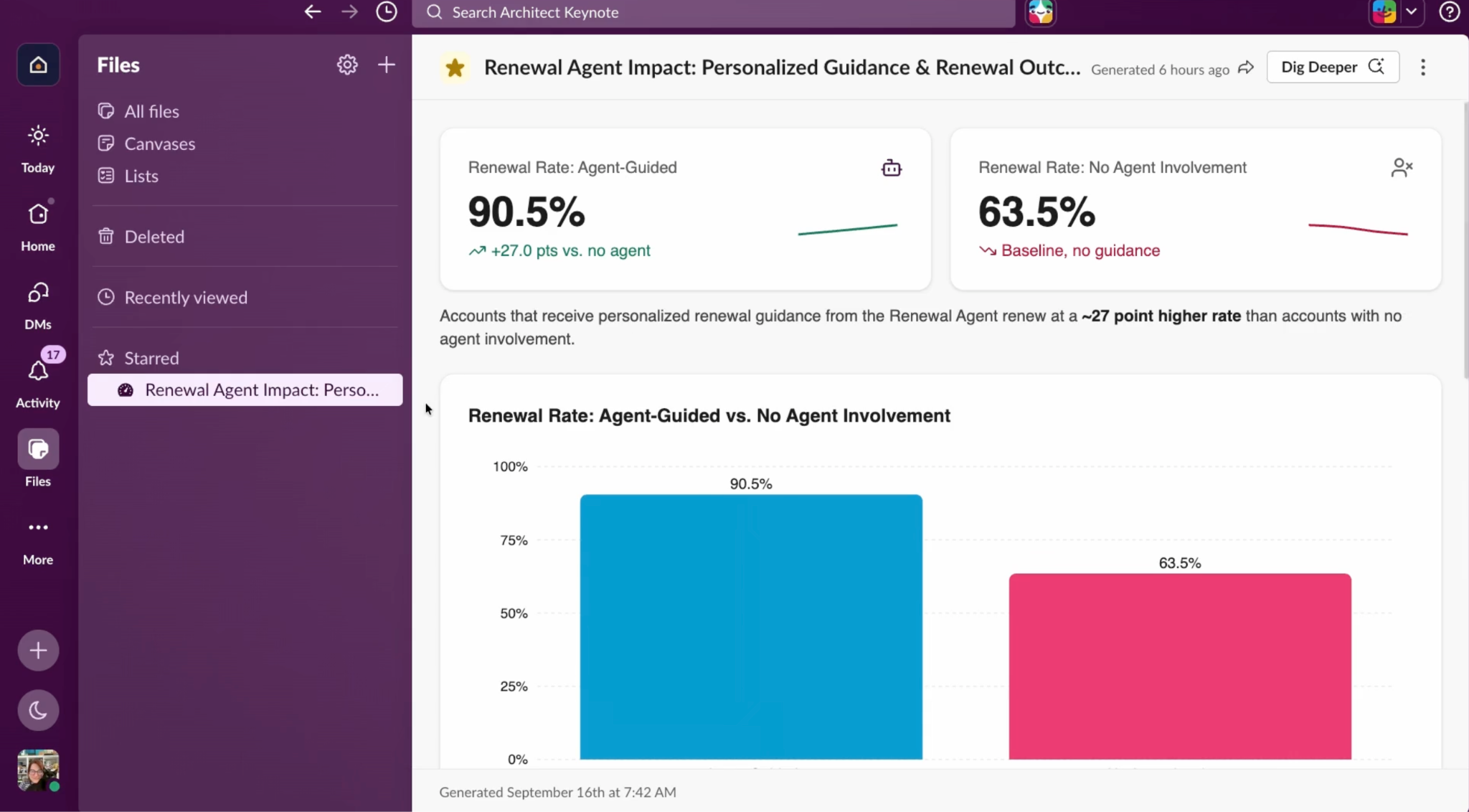
Reviewing the data that Slackbot provided, Lilith uncovered the fact that there was indeed a 90% renewal rate for agent-managed accounts compared to just over 60% for those without agent involvement. There was also a 4x increase in the number of added products and services (i.e., upsells) for agent-managed accounts. She concluded that it was not only increasing renewal rates, but also driving more sales. She then shared the Slackbot report with her team in Slack with just a few clicks.
Summary
Miriam was then invited back to the stage to summarize and wrap up. She noted that Leo had demonstrated how to unlock enterprise innovation, Shelly had shown how to scale enterprise impact, and Tim and Lilith had demonstrated how to govern enterprise trust, all while leveraging agentic tooling.
“All of this was made possible by architects”, she said. “Architects taking decisions, architects thinking about trade-offs, and architects applying and interpreting the knowledge and answers that the Well-Architected Framework provides.”
As complex as the landscape may be, Salesforce is empowering architects with the tools they need to stay ahead of the curve and leverage the power of AI in the process. AIforce stood tall, as did Agentforce Observability.
“Architects unlock scale, and govern the agentic enterprise, and the agentic future”, Miriam concluded, “and that future is now.”