
The Dreamforce 2026 Developer Keynote was practical, instructive, and focused on key features and tools for developers to find their way in the age of agentic coding and projects for Salesforce Developers.
In the usual three-act structure of a Salesforce keynote, we were treated to a parade of new and beta features. The themes that were in your face in the main keynote were more subtle, and the presentation was instructive, informative, and gave a sense for what’s there and what’s coming soon for developers.
Coming to You on Tape Delay
Despite the 9 AM session time in person, for those keen to get the first glimpse of developer features but unable to travel to Dreamforce this year, they had to wait a full seven hours after the actual live keynote session at 4 PM San Francisco time. This was the very last session of the “live” stream. This meant Europe experienced it at midnight, 1, or 2 AM, and India, with a huge developer audience, at 4:30 AM in the morning.
I get it. Someone needs to go in that last slot. And I’m sure many will just catch it on-demand in the morning. But with such a large developer audience in Eastern European and African nearshore countries as well as offshore developers in India, this strikes me as the live stream producers not really empathizing with their audience.
Fortunately, the on-demand session came online two hours before the “live stream” was played. But with this time coinciding with the dying hours of the in-person Dreamforce experience, developers had to wait nearly the entire three days of the conference before getting anything consequential that applied to their jobs.
But enough grousing. Let’s get to what you really want to hear. And here, there’s good news, as I found the keynote to be informative and very practical at times.
Feature Highlights from the Keynote
Salesforce Plugin for Claude Code
Salesforce has had the ability to integrate and work with Claude Code for some time. My sense of the zeitgeist for at least the last nine months is that Claude Code has been the coding agent of choice among Salesforce Developers. We’ll see if I’m right when our 2026 Developer Survey comes out. But until now, you had to roll your own skills, integration, and context for working with Salesforce.
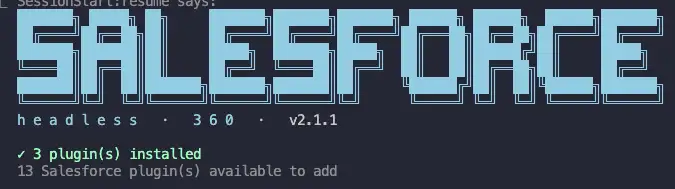
The new Claude Code Plugin wraps up a host of pre-built features to install once and have all the Salesforce context you need for your Salesforce project.
This particular section was also a great practical lesson in some good practices for working with coding agents. If you’ve not watched the on-demand stream, I recommend watching Mo Shrivastava’s section, which showed the process of creating a spec (from a spec skill), using that to ground your prompt, and then validating and refining the work from the agent, including using an adversarial agent which inspects the PR.
My use of Claude Code with Salesforce left me feeling like there was a lot to do to fine-tune the coding agent to work well in my project. I’m curious to see if the new plugin makes that easier.
Lifecycle Center
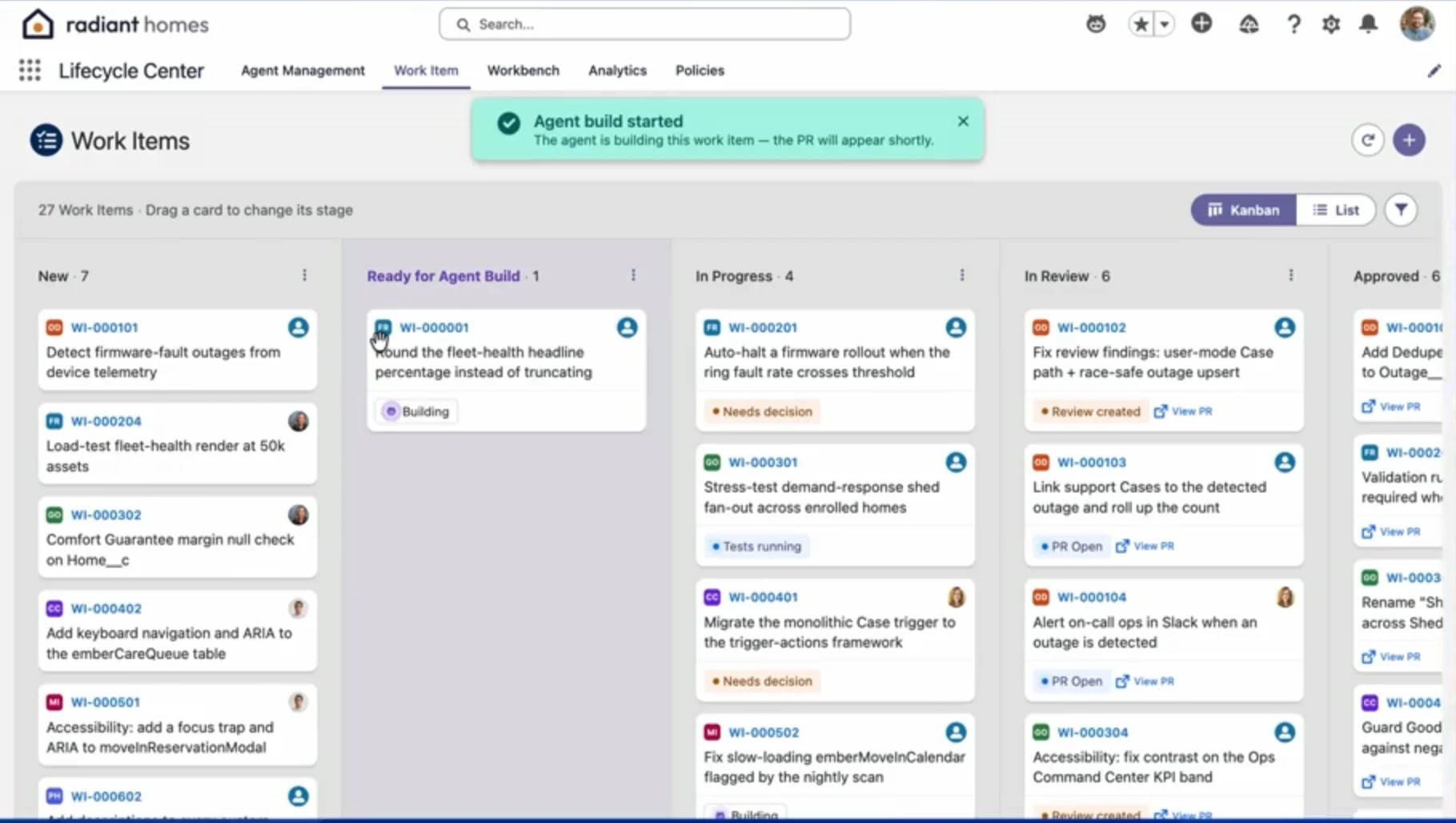
Lifecycle Center is a new multi-agent management and coordination tool. The demo just scratched the surface, but for software project-focused agents, keeping track can be tricky.
Lifecycle Center allows you to track tickets and work items as they’re dealt with by different agents at different times in the software delivery lifecycle. All toward the hoped-for outcome of “we guide AI, but we own the outcome”, as stated by Christophe Coenraets, the host of the keynote.
Vibes for Free
For a few months, Agentforce Vibes went on a paid-only plan. This was tricky for developer edition orgs, owing to there being no payment system.
But a few days before Dreamforce, it was announced that the free tier would be brought back. Although it’s a bit more restrictive than the previous free version, it’s not bad. For DE orgs, you get 50 requests, or one million tokens, whichever you use up first. It then resets daily.
Headless Experience Layer (HXL)
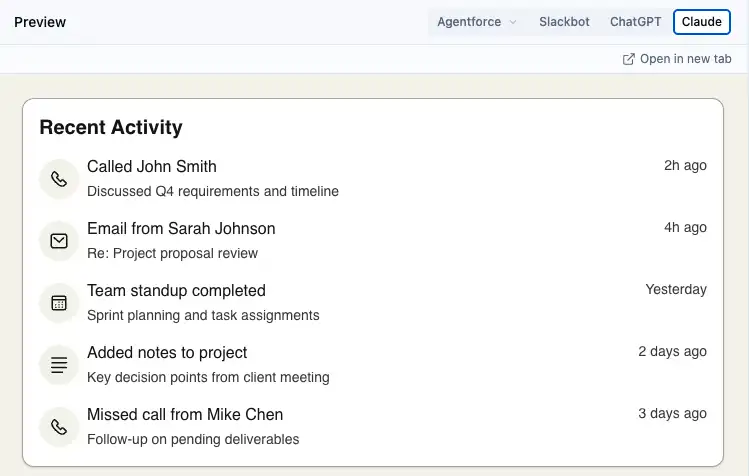
The major theme of Dreamforce has been to run Salesforce “wherever you do your work”. The idea being that the UI you experience will be in whichever tool of choice you are using to access Salesforce’s agentic capabilities. And if that’s Slack, it will look like Slack. If it’s Claude Cowork, it’ll look like Claude.
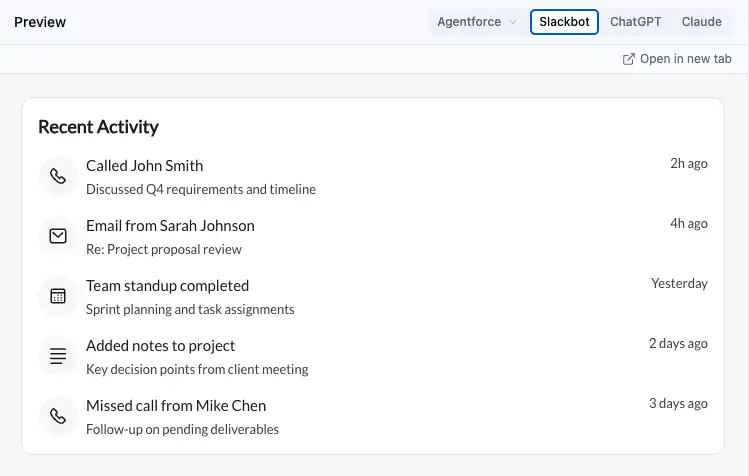
Headless experience layer (HXL) is how this gets done. It’s a lot like Slack’s old block kit builder: a JSON format to describe the semantic structure of a UI. However, wherever it shows up, it adopts the look and feel of that experience, or (using the more commonly used term these days) that surface. Here’s how that JSON looks in the form of a button:
{
 "attributes": {
   "label": "Submit",
   "variant": "primary",
   "actions": {
     "click": [
       {
         "definition": "action/sendMessage",
         "attributes": {
           "content": "Submitted!"
         }
       }
     ]
   }
 },
 "definition": "tile/button"
}
So you can build, say, an activity feed UI. Send that to Slack, it looks like Slack. Send it to Claude, it looks like Claude. The examples below are from the new HXL playground if you want to have a play with it yourself. HXL is an implementation of the MCP App standard, which has not even been around a year and is currently in beta.
Multi-Framework Apps
If you’ve not heard that you can now write ReactJS apps on Salesforce, you’ve missed some pretty good news. Part of the demo focused on the expanded footprint of multi-framework apps. One part of the demo brought up Angular code, which is coming to your org in Winter ‘27.
And a specific other section was a single Angular component on the Salesforce UI, demonstrating the new “micro-frontend” capability – a multi-framework component that isn’t hosted in an entirely new Salesforce URL-addressable app (you know…the way LWC works).
If you want to get a feel for these firsthand and see what it’s like for them to be built already, Salesforce has provided a Multi Framework Recipes sample app, which you can clone from GitHub.
Items from the Roadmap
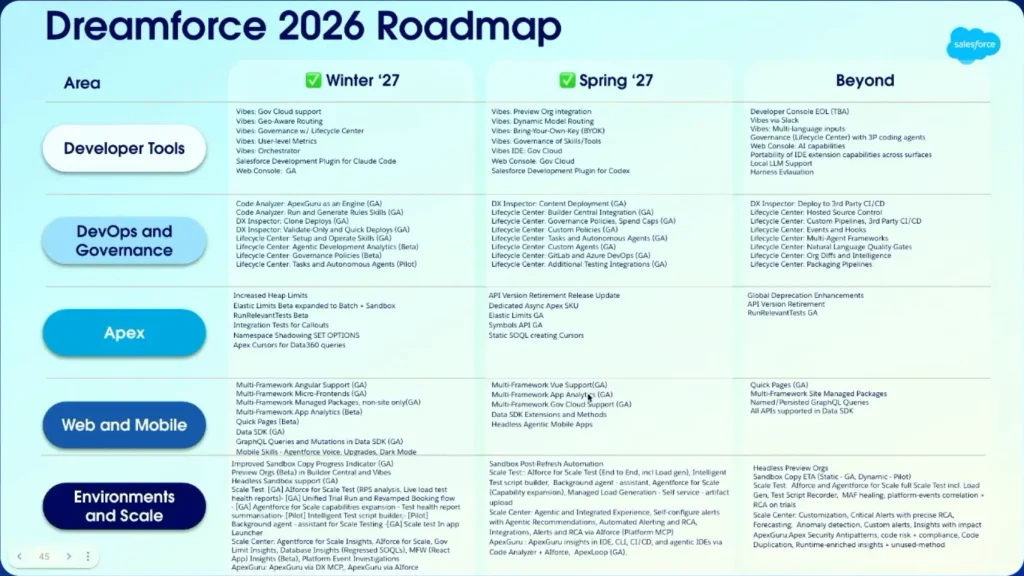
While not specifically part of the keynote, some digging around helped me to find a few tidbits from developer team roadmaps.
More AI Developer Tools
Winter ‘27 will see the release of the MCP Plugin for Claude Code. Salesforce is projecting Spring ‘27 for the OpenAI Codex plugin. Also in Spring ‘27, we’ll hope to see governance for tools and skills in Agentforce Vibes.
Beyond the Spring timeframe, we can also expect Agentforce Vibes to be accessible in Slack and support multiple languages (presumably spoken, not programming languages, n’est-ce pas?). And even more exciting is that agent choice looks like it will get broader with third-party agents and local LLMs both in the mix.
Apex
Apex has added some very cool features, and continues to do so as the runRelevantTests feature makes it to beta. Heap size increases are always welcome, and the elastic limits beta feature now adds sandbox support. The Cursor object also gets Data 360 queries, which could be very powerful, but very expensive if you get out of hand, so tread lightly there.
UI
Beyond the features shared in the demo for Winter 27, Vue support looks to be on the horizon. There is also a good deal of work being done on the Data SDK, the multi-framework SDK for accessing Salesforce data and abstracting away important security features like CSRF.
From Burger King to Golden Hoodie
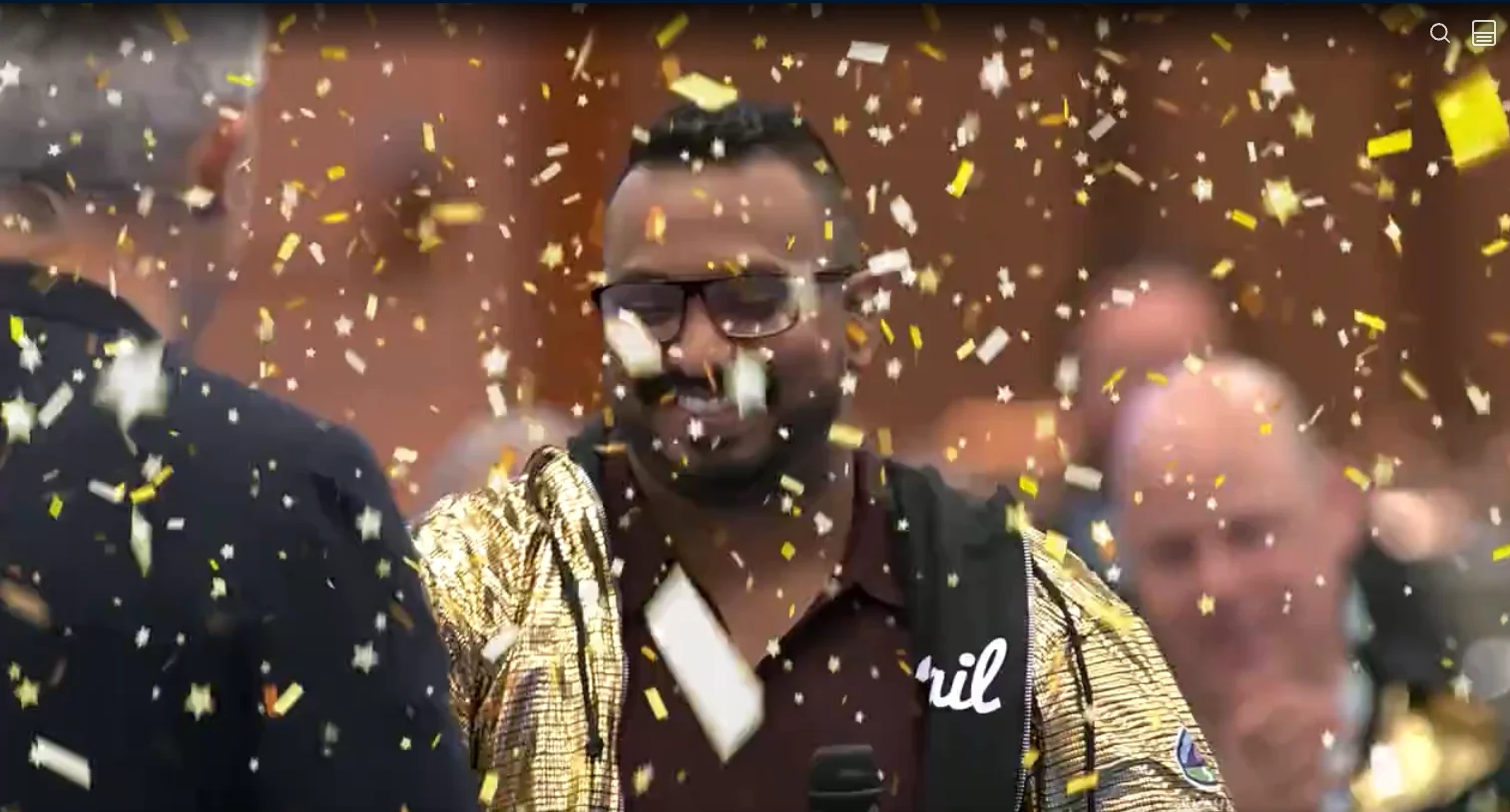
The Golden Hoodie honoree for the Dreamforce 2026 Developer Keynote was Co-Founder and CTO of Blazora LLC, Chathura Ranasinghe. As a 10-year veteran of the Salesforce ecosystem, he reflected on the changes over his years working with Salesforce.
While working at Burger King and looking for new opportunities, a newspaper article tipped him off to the possibilities of a career with Salesforce. After learning Salesforce and joining the Salesforce community, he transformed his career, met his wife at a community group, and never looked back. Congratulations and well deserved, Chathura.
Final Thoughts
In a way, I feel like Salesforce has finally found its direction after wandering in the post-GenAI wilderness. UI is wherever you want it to be, platforms still matter, and agents are now an integral part of them. This means they need every bit as much governance, security, and observability while they enact a balance of predictability and creativity.
While this keynote didn’t lean explicitly into the Trusted Enterprise AI Harness (too soon, really) or AIforce branding, it was all there on display. Our surveys at SF Ben regularly reflect an ecosystem watching the complexity of Salesforce increase.
But for the first time in a couple of years, I feel like it’s not in vain, and I can see where it’s going. I’m optimistic for Salesforce, despite the challenge that everyone else in enterprise SaaS is going there, too.