

For years, the conversation around the Certified Technical Architect credential revolved more around making the ultimate decision to take it or not. Questions like “Is it worth it?” or “Should you bother?” are pretty significant ones, and I wrote about that decision myself last year, listing the reasons architects were steering clear of it.
This year’s SF Ben Architect Survey tells a different story, though, and in my opinion it’s also a weirder one that seems to contradict itself. Architects aren’t avoiding the CTA anymore!
In fact, the majority of this year’s respondents are either already there, well into the journey, or planning to pursue it. And yet, in that same dataset, a big chunk of architects will tell you they’re not convinced it’s worth the money or the time.
So which is it, really? Are architects actually sold on the CTA, or are they skeptical of it? Turns out, two things can be true at the same time.
The Headline Number
The “direct” or straightforward stat, if you will, is that 73% of the survey respondents are either CTAs already (4.7%), well into the journey (14.5%), planning to pursue it soon (33.9%), or not yet planning (20.6%).
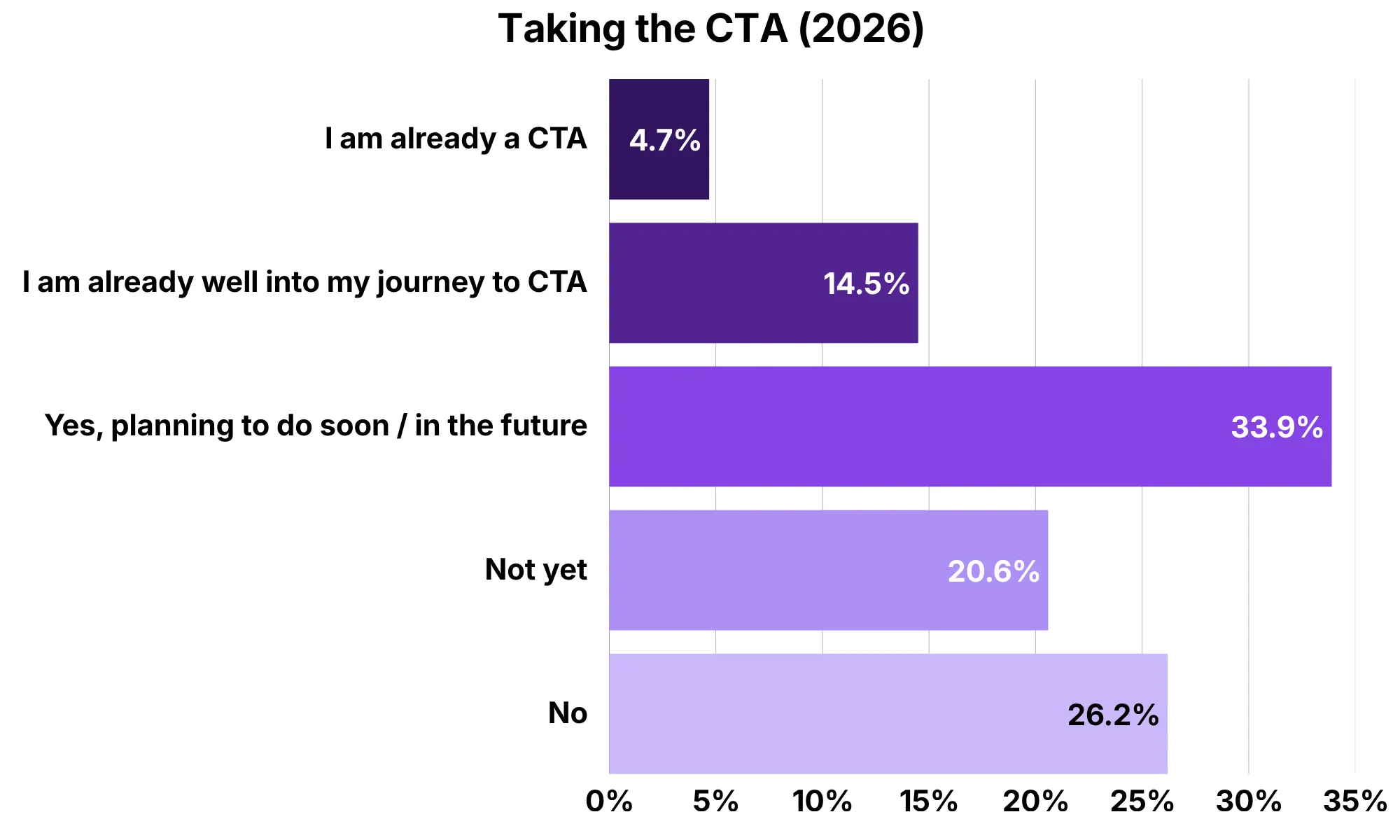
This number, while it is a majority, is not actually a clean sign that architects are “all-in on the CTA” now. If we pull it apart, more than half of that figure is merely “planning to pursue it soon or in the future” or “not yet”. It’s not actual action, but rather, aspiration.
A closer look at the 20.6% who said “not yet” gives us a concrete number for a separate category from the 26.2% who said flat-out “no”. No is a decision, and not yet is a maybe. So if we remove “not yet” out of the aspirational grouping and just look at people who’ve actually made a commitment by holding the cert or decidedly planning to start, the picture looks less like everyone chasing the CTA and more about how almost nobody’s willing to actually close the door on it.
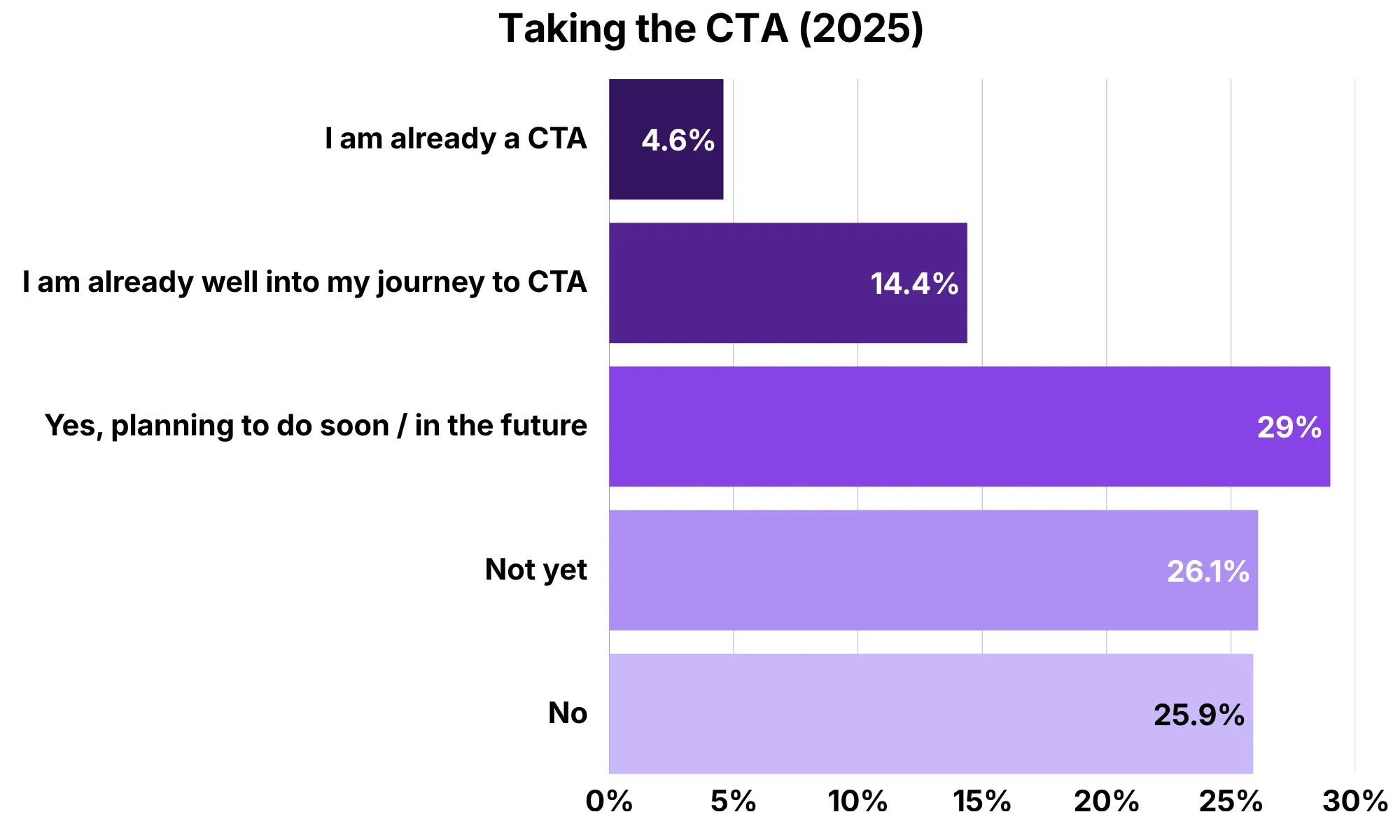
When lined up against last year’s survey, the “No” camp has barely even moved. Subtracting that group from both years, the pool of architects who haven’t rejected the CTA is nearly identical too… so the overall willingness to consider a CTA hasn’t actually grown compared to last year.
What actually changed, then?
Well, it’s the mix inside that pool. The most significant one is how those who answered “Not yet” dropped from 26.1% to 20.6%. It seems the difference has transferred to “Planning to pursue it soon”, climbing from 29% to 33.9%.
In other words, a portion of that undecided bunch finally committed. The same architects who were on the fence last year may also be the ones who’ve finally picked a lane this year.
The Skepticism
When you ask the architects who aren’t pursuing the CTA why not, the top answer leans heavily on doubt.
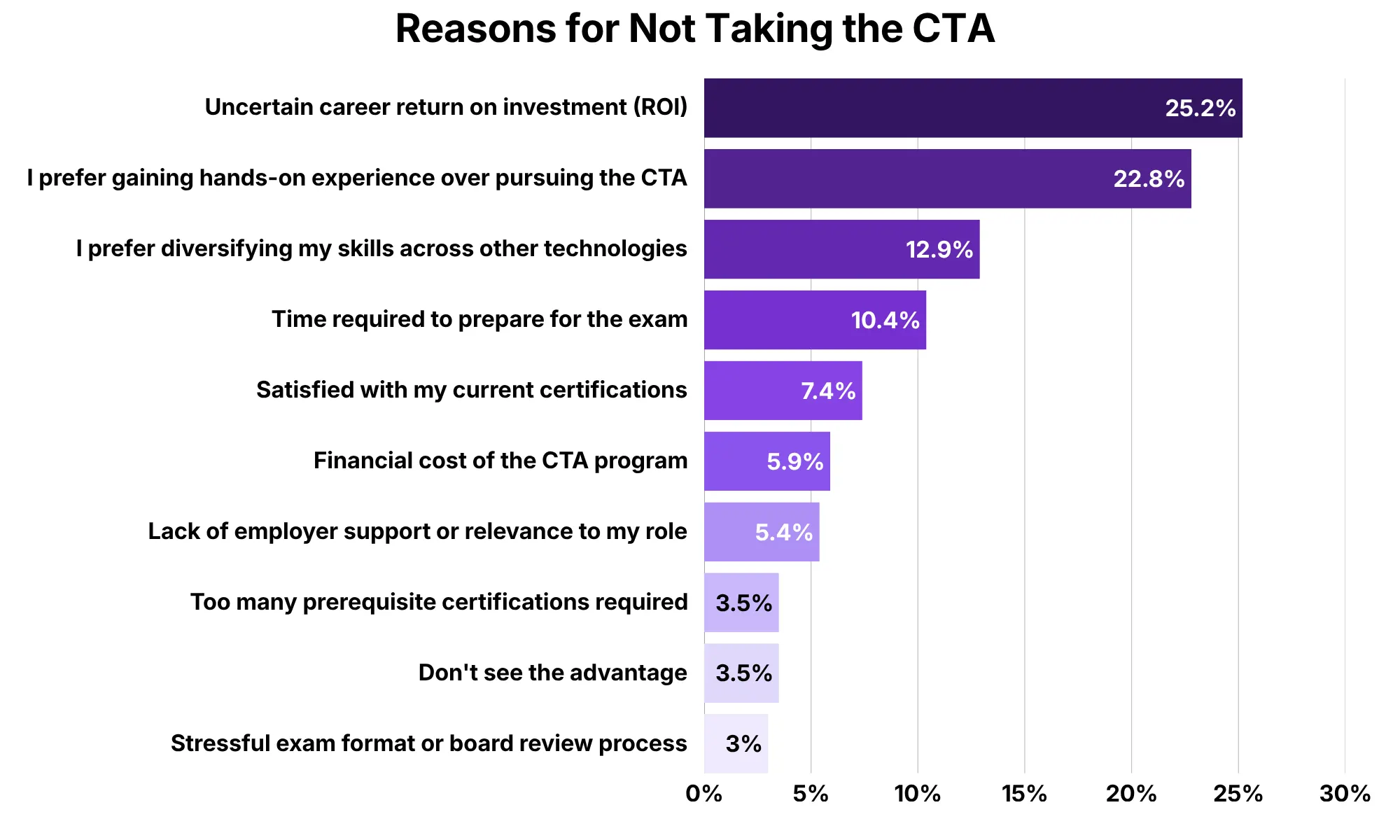
Combining the top two answers to this question comprises nearly half of the “not yet or no” group, essentially saying that they don’t think pursuing the CTA pays off the way people say it does.
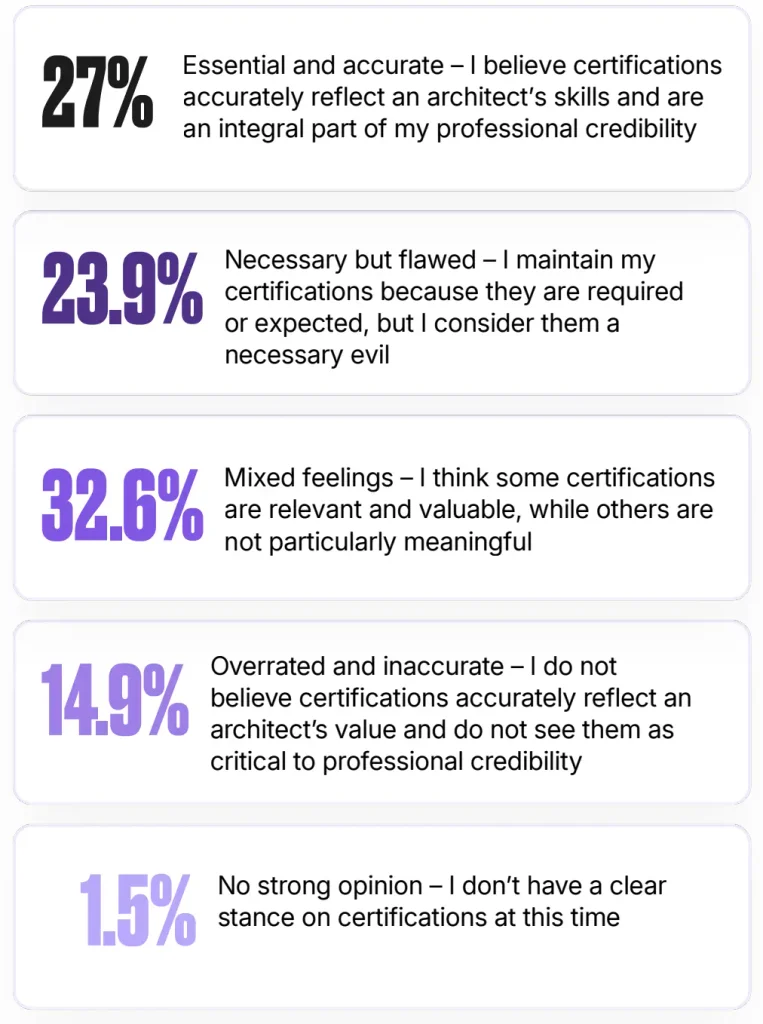
This may be rooted in a broader skepticism toward Salesforce certifications as a whole, which shows up elsewhere in the architect survey. Only 27% of architects call certifications “essential and accurate” reflections of their skill. Another chunk, 14.9%, go further and call them overrated and do not accurately reflect professional credibility.
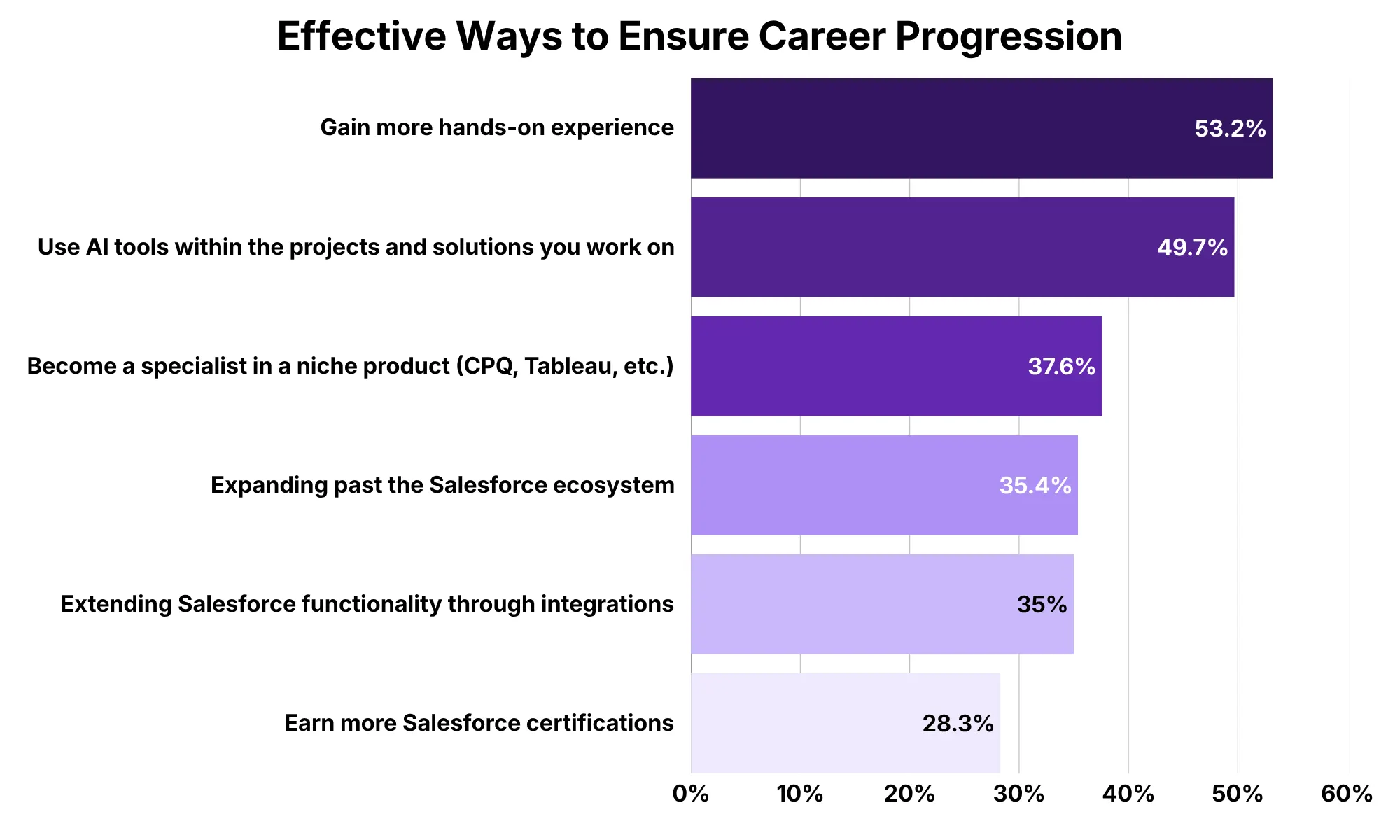
And when architects were asked what actually moves the needle on their careers, hands-on experience beat certifications by a wide margin: with 53.2% naming it as the most effective way to advance, compared to only 28.3% who pointed to earning more certifications (the bottom of the list, by the way).
The biggest takeaway from both these stats is that most architects don’t think credentials are what’s carrying their careers. Experience is.
Why Chase Something You Don’t Fully Trust?
This is the first question that came to mind as I was analyzing the stats. While the headline number hasn’t changed significantly, looking at the breakdown makes it seem that those who were undecided have now chosen the path to pursue the CTA.
However, skepticism towards certs in general remains high, with the emphasis that hands-on experience is the best way to advance your architect career nowadays. These contradict each other, but in my opinion it’s also what happens when a credential becomes more of a status marker instead of (or in addition to) a skills marker.
The CTA is a very rare cert, given how costly it can be to pursue in terms of time and money. Less than 5% of the survey respondents currently hold it! The CTA is the one credential in the entire Salesforce ecosystem that almost nobody has, the pinnacle or ultimate goal, if you will, which is exactly what makes it valuable as a signal. That alone is significant enough to separate it from whatever skills it teaches you on the way there.
Certifications give you two kinds of ROI. One is the people-facing: the credibility of being able to say you have it, the way it gets you taken seriously before anyone’s seen an ounce of your actual work. The other is the skills-building kind: preparing for a cert can help better the skills you’re training for to earn it in the first place.
The former has so many advantages, including people taking you more seriously and opening doors and opportunities, aside from also being the most straightforward thing a hiring manager or a client references when deciding who to hire or lead the room. As for the latter, architects can be unconvinced that the CTA process itself builds meaningful skill, but still not want to be the person who opted out of the one credential everyone recognizes.
To be fair, not everyone would agree with that skills-building doubt. CTA and Principal Technical Architect Svet Voloshin made a case close to the opposite: that the board itself forces takers to defend decisions under pressure across data, security, integration, and governance, and is ultimately what builds the judgment that makes you a true CTA. It’s what formalizes and sharpens the skills it took to earn the cert. You can read more about that take here.
There’s also another pressure underneath all of this. 73.8% of architects in this survey named something putting their careers at risk right now, whether that’s the platform losing dominance, the pace of change, or the sheer number of Salesforce professionals flooding the market. This seems to be a year where the ground feels less stable, and being one who holds the rarest and most recognized credential in your field can be a pretty reasonable edge, even if you’re not fully sold on what it actually proves.
Final Thoughts
The whole story isn’t specific, and there’s no single ultimate takeaway from all this. One thing’s for sure, and it’s that the doubts haven’t gone anywhere.
The people planning to pursue the CTA this year still, in large numbers, aren’t sure of the ROI and still believe hands-on experience teaches them more. Those objections merely got outweighed by the people-facing payoff and by the career-risk pressure brought about by the rise of AI. It all boils down to a confidence problem about the market getting heavier than the doubt.
So if you’re deciding whether or not to start your CTA journey, it’s not just a quick and easy answer to the question “is the CTA worth it?”. It depends entirely on what you’re buying it for. Perhaps the better question to ask yourself is whether you’re doing this because you think it’ll make you a better architect, or because you want the door it opens and the reassurance it gives you in a market that currently has you nervous. Both are valid, but they call for different expectations.
Is taking the CTA your ultimate career goal? Let us know in the comments!