






Apple’s iPad has become increasingly laptop-like over the years, with it having a Type C port (that you can connect to virtually anything nowadays, as long as you have the appropriate converter/adaptor), powerful hardware, an incredible touch screen display, and software that is more and more similar to a laptop’s over the years.
iPadOS 26 brings significant upgrades – with Windowed Apps mode leading the way. It seems the iPad is transforming into a far more desktop-like experience for multitasking and productivity, and we’ll tackle how you can maximize that in this article.
My Hardware (and Software) of Choice
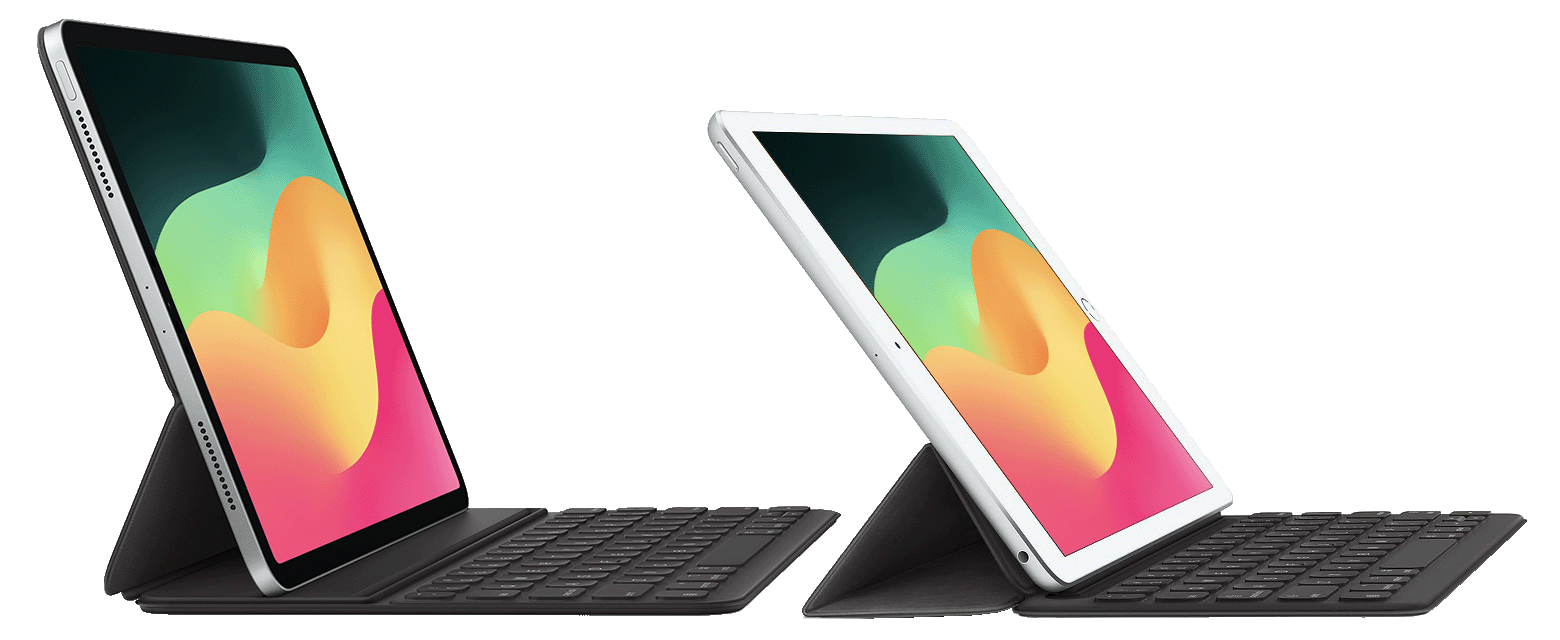
I have a 2022 iPad Air 5th gen running the Apple M1 chip, which is the same chip that runs on the MacBook Air and Pro from 2020-2021. I use my iPad on the go with an old Apple Smart Keyboard Folio.
This device does not have a trackpad (we’ll revisit that later). I’ve had this device for more than two years now, and I can still comfortably say I work on this without any urge to upgrade to an iPad Pro or the latest Air.
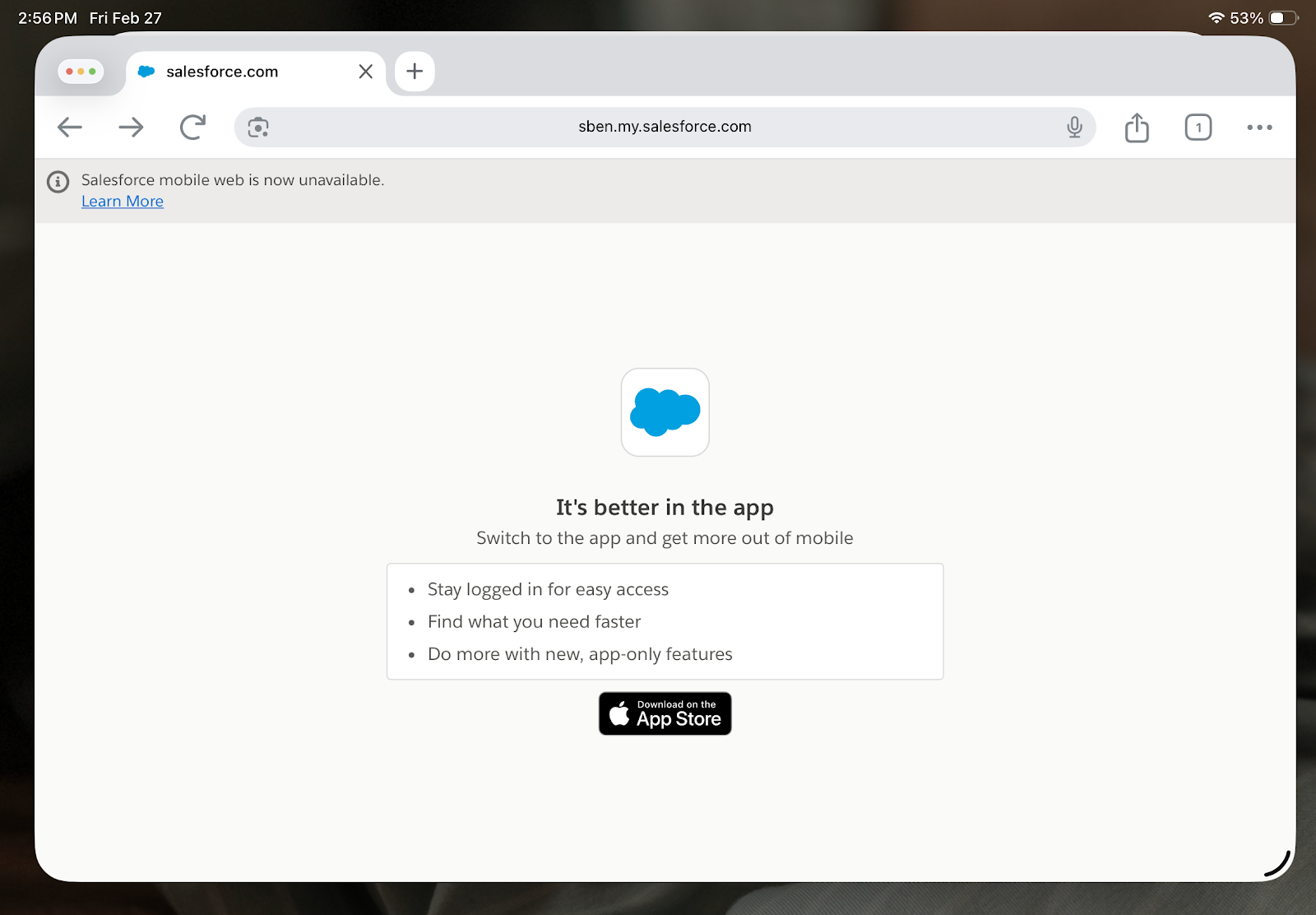
Salesforce has long been usable on iPad through the Salesforce mobile app and browser apps. Chrome has always been my browser of choice – both on PC and Mac – but not for iPad. This is due to it repeatedly asking me to install the Salesforce app despite being in desktop mode.
In general, working on tablets meant working within a more mobile-style experience, with limited multitasking and a UI that feels closer to a phone than a laptop. But with iPadOS 26, that experience changes significantly.
The Salesforce App vs. Browser Mode
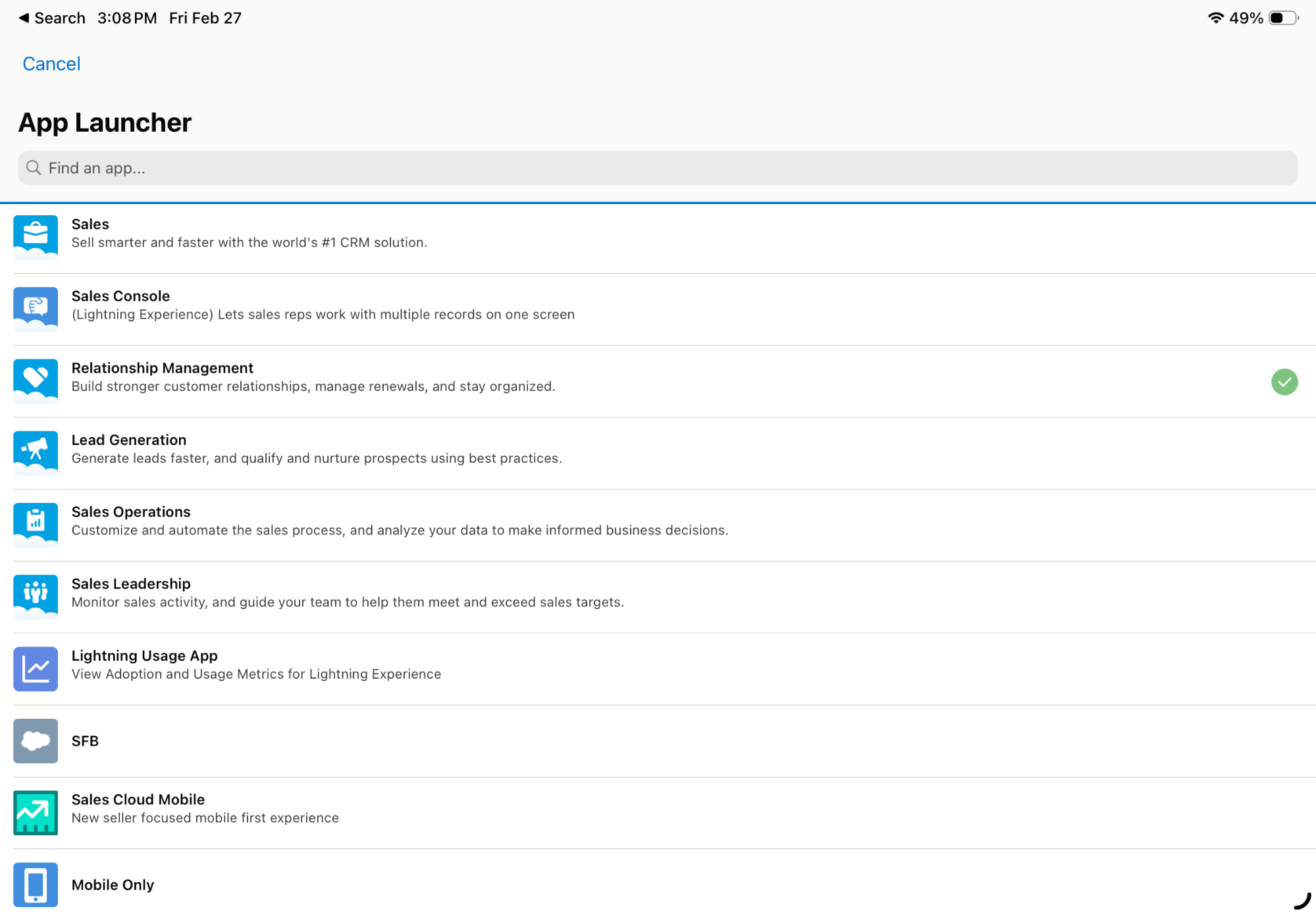
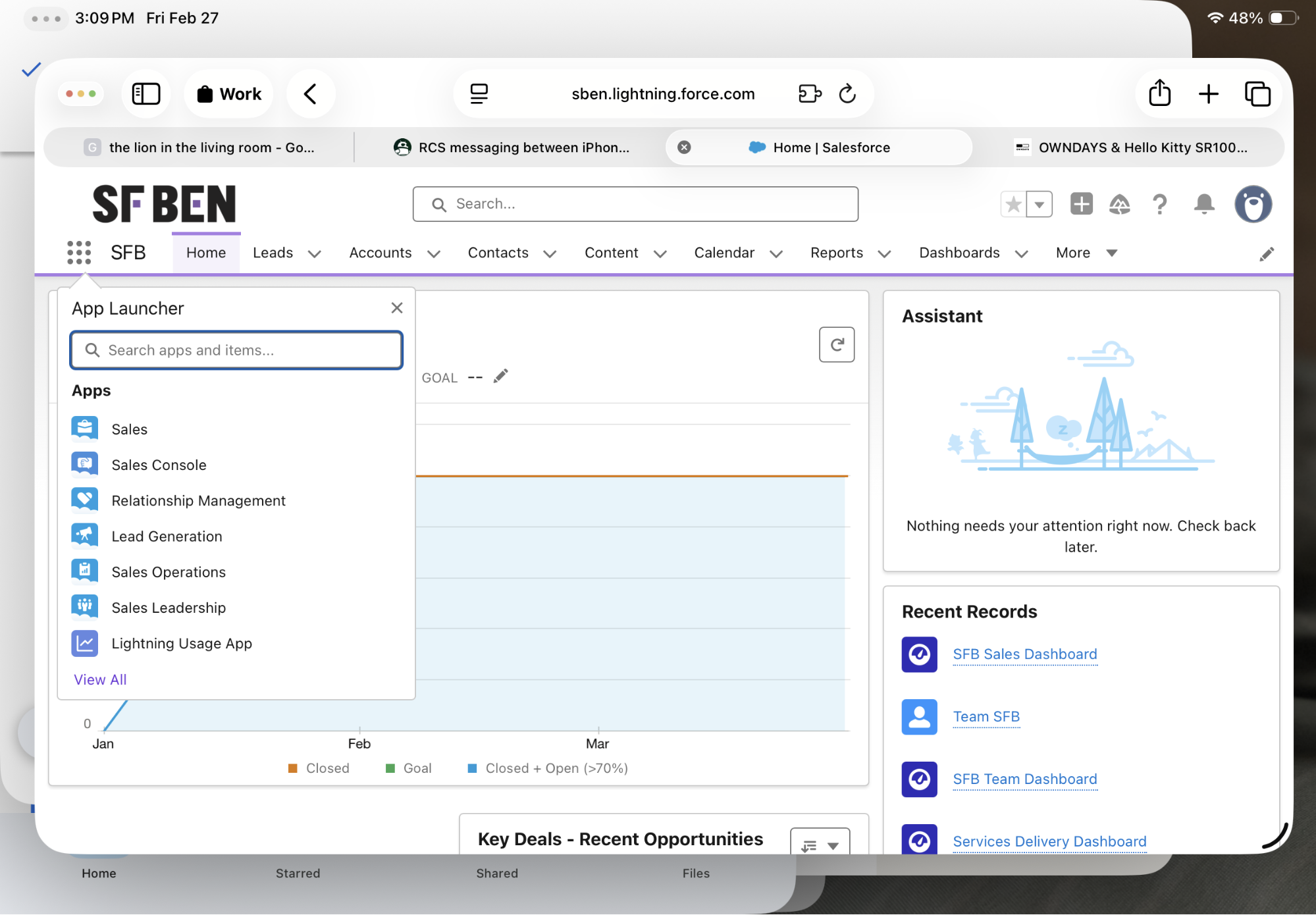
There is a big difference between using the Salesforce mobile app and accessing Salesforce from a browser. Both images below display the App Launcher, but you can clearly see which one mirrors the full desktop experience.
The browser version looks exactly as it would on a laptop or computer, making it the better option if you’re already comfortable navigating Salesforce in its standard desktop layout.
If Safari on iPad still keeps asking you to install the Salesforce app, go to Settings → Apps → Safari and make sure Request Desktop Website is enabled. I like to keep this on for all websites since I prefer to use my iPad as a small laptop (always in landscape).
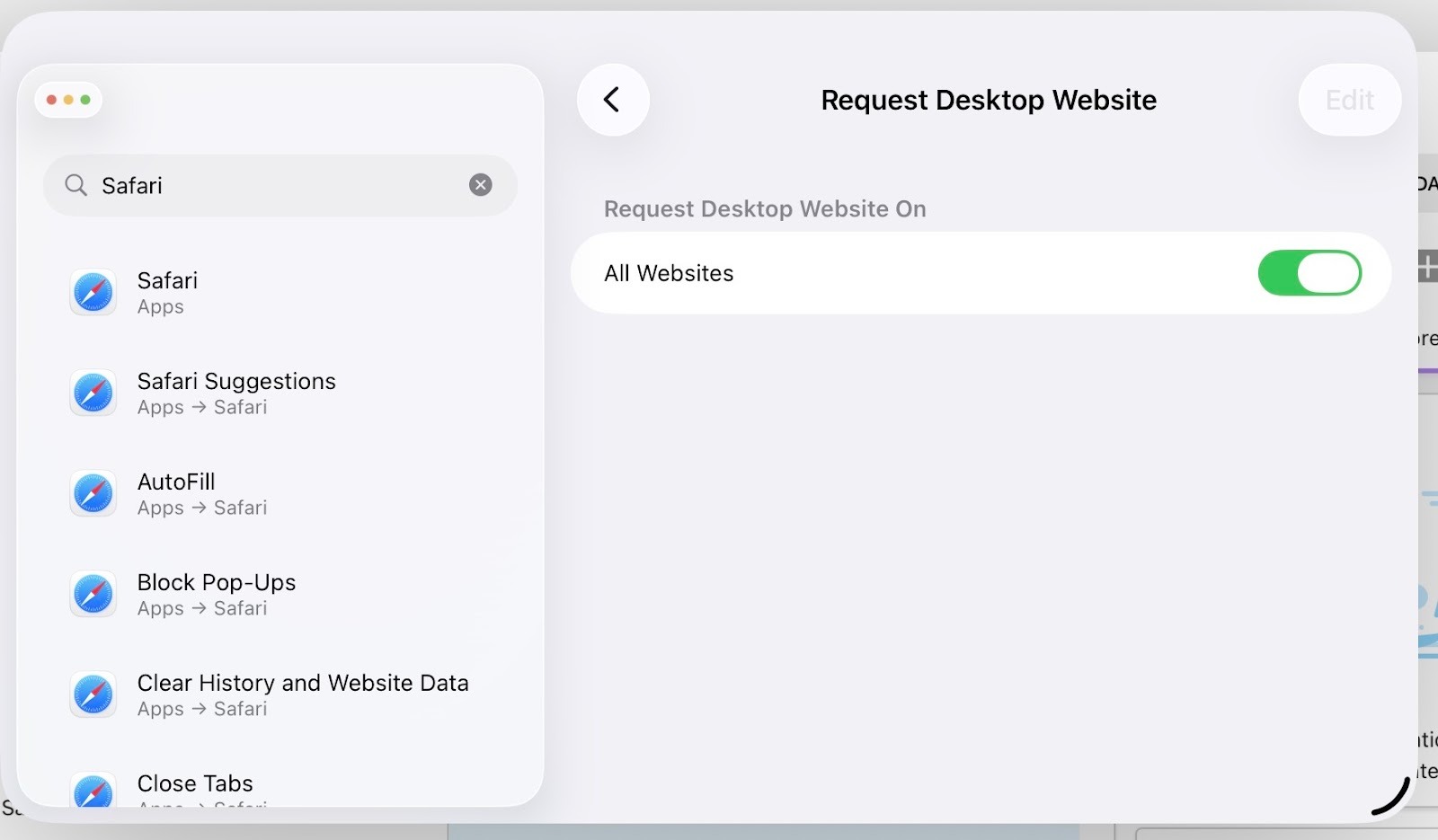
I can only speak for Safari and Chrome for iPad because they’re the only two browsers I’ve personally tried to use Salesforce on, and I’ve had no luck with Chrome. Do let me know in the comments if there’s a way to get it to work similarly in Chrome as it does on Safari desktop mode!
Working With Flow Builder on the iPad
I went into this fully expecting Flow Builder to work on iPad Safari the same way it does on my Mac or Windows PC.
I opened Flow Builder and immediately ran into a wall. I couldn’t open any components. I couldn’t view the configuration panels. The elements on the canvas weren’t even clickable. I tapped repeatedly on my screen, convinced it might just be a loading issue, but nothing happened. This was particularly frustrating because I genuinely needed to edit an existing flow and was out with only my iPad on hand.
After some searching, I came across Salesforce documentation stating that Setup isn’t supported on tablets, including anything accessed from the Setup menu, like Lightning App Builder and Flow Builder. “Well, that explains it”, I thought. But the thing is: Setup itself was loading fine for me. I could navigate around without issue. I wasn’t quite ready to accept defeat.
If you remember, I mentioned I was using a keyboard folio, the one without a trackpad. I was working the way I normally do on an iPad: tapping the screen and using the keyboard only for typing. Not ideal, but I was pretty comfortable with it. Then, it hit me:
What if Flow Builder wasn’t registering my taps as actual “click” events? What if it required a proper pointer input like a trackpad or a mouse?
You bet I wasn’t about to buy a new keyboard with a built-in trackpad just to test that theory, but I did have an old Bluetooth mouse lying around. I connected it to my iPad, and suddenly, everything worked.
The Flow canvas responded immediately. I could click components now, and their configuration panels opened. Editing behaved exactly as it does on desktop, as long as I used the mouse instead of tapping the screen. It turned out my hunch was right – the canvas wasn’t recognizing touch input in the same way it recognizes a click.
Now, I don’t have a technical explanation for why this happens, and I can’t guarantee it will work on every iPad setup. But if you’ve run into the same issue, I just wanted to share my experience, as connecting a Bluetooth mouse or using a trackpad might be the fix.
Yes, it slightly reduces the “just an iPad” portability factor because you’ll need to carry a mouse (and maybe even a mousepad). But for me, that’s a small tradeoff if it means I can comfortably build and edit Salesforce functionality on a device that’s noticeably smaller and lighter than my laptop or PC.
Windowed Apps
Call me biased, but this is probably my favorite part of the latest update. It took me a bit of time getting used to it at first, but once I was comfortable with the Windowed Apps mode, I don’t think I’ll ever switch back (please don’t remove this feature as you did with Split View and Slide Over, Apple).
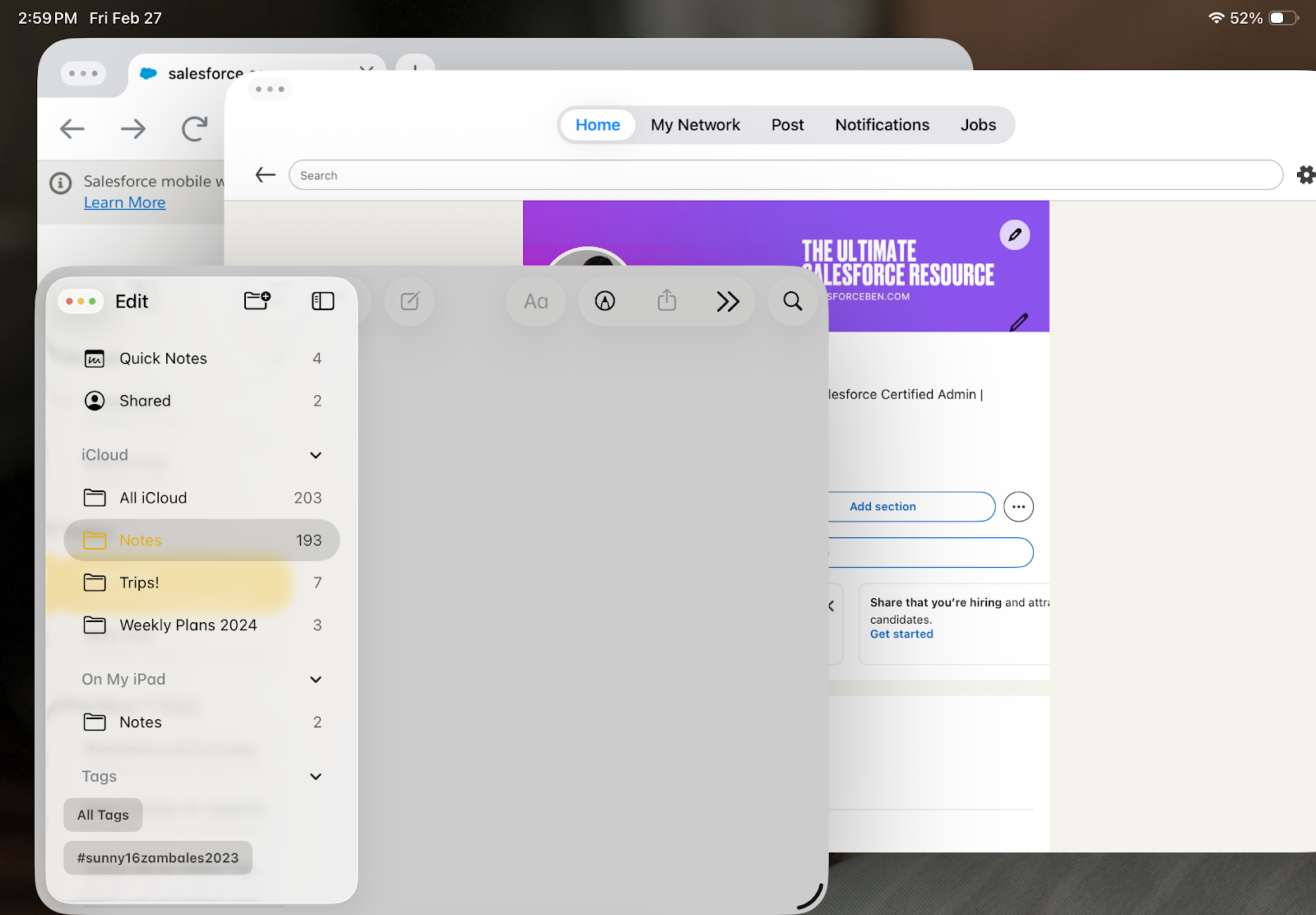
While I’ve grown accustomed to using the Split View before this update, using windows is a welcome change because it’s a lot more similar to how I work on a PC. There is no need for much mental switching. It comes complete with the three icons on the upper left, offering close, minimize, and maximize, getting you as close to a laptop experience as possible.
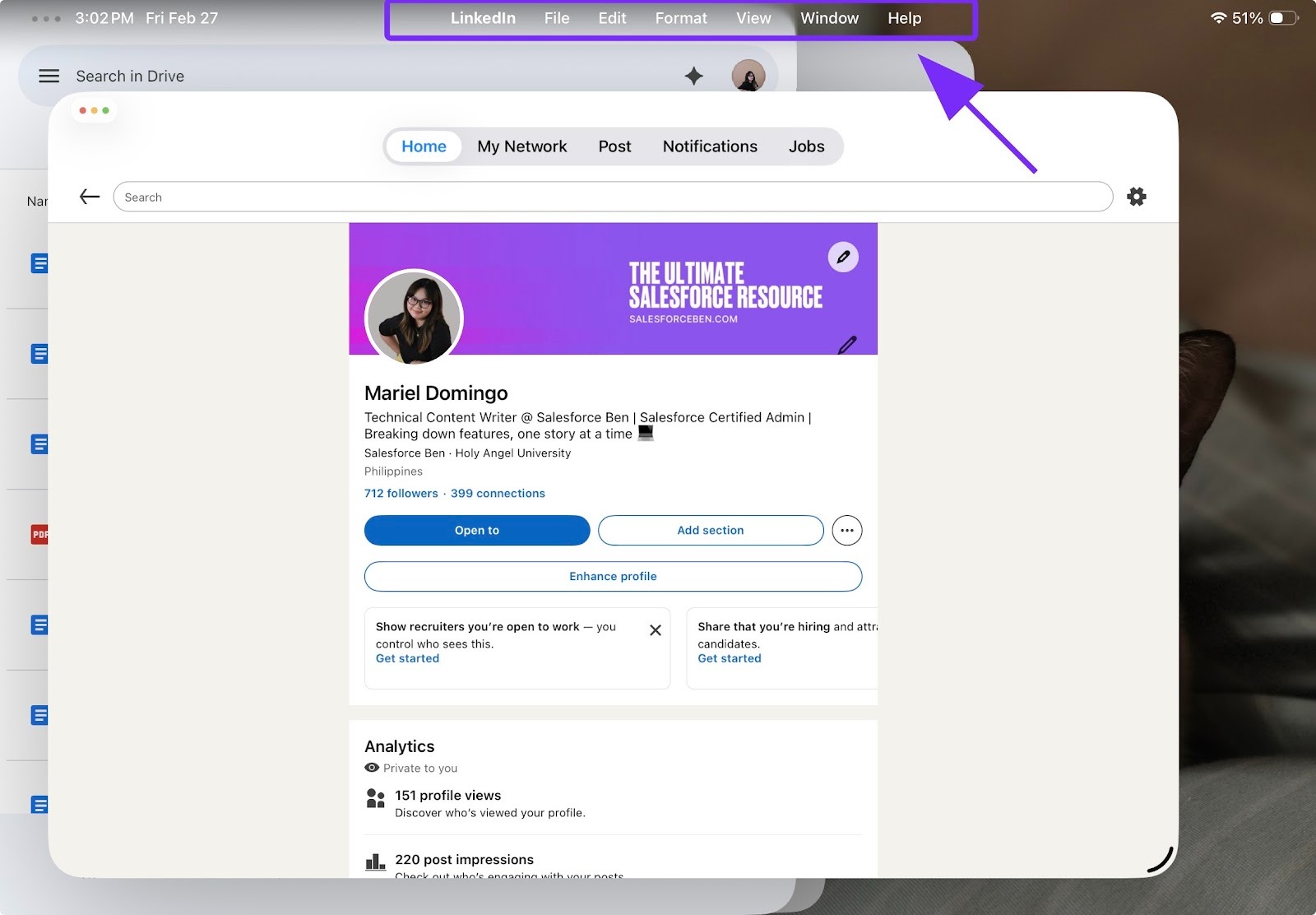
As if the addition of windows weren’t enough, this mode also includes the familiar Menu Bar from macOS. Similar to its desktop counterpart, it’s the strip at the top that houses app-specific features and commands.
All you need to do to reveal it is tap the window of the app with the menu bar you want to access, then swipe down from the middle of the top edge of the iPad screen.
Staying Focused on a Mobile Device
While I consider the iPad a laptop/phone hybrid, its “mobile device” side is hard to ignore, especially if you’ve enabled notifications for nearly every app installed. It’s not quite like a MacBook, where most of the apps you’ve installed are most probably for work or productivity-focused. The iPad is still a tablet after all, and there’s nothing wrong with having social media apps, games, and other distractions sitting right there on your home screen.
This is where Apple’s Focus modes come in to help.
If you own an iPhone, you’ve probably already used them. They’ve been around since 2021, but they’re useful when trying to treat your iPad like a serious work device. When I switch my iPad to Work Focus, it genuinely helps me stay in the zone.
You can set fixed work hours so your device automatically enters Work mode at specific times each day. From there, you choose which apps remain visible on your Home Screen and which ones disappear during work hours. Notifications can also be restricted to specific apps or contacts, meaning only Slack, email, or browser alerts come through while everything else stays quiet.
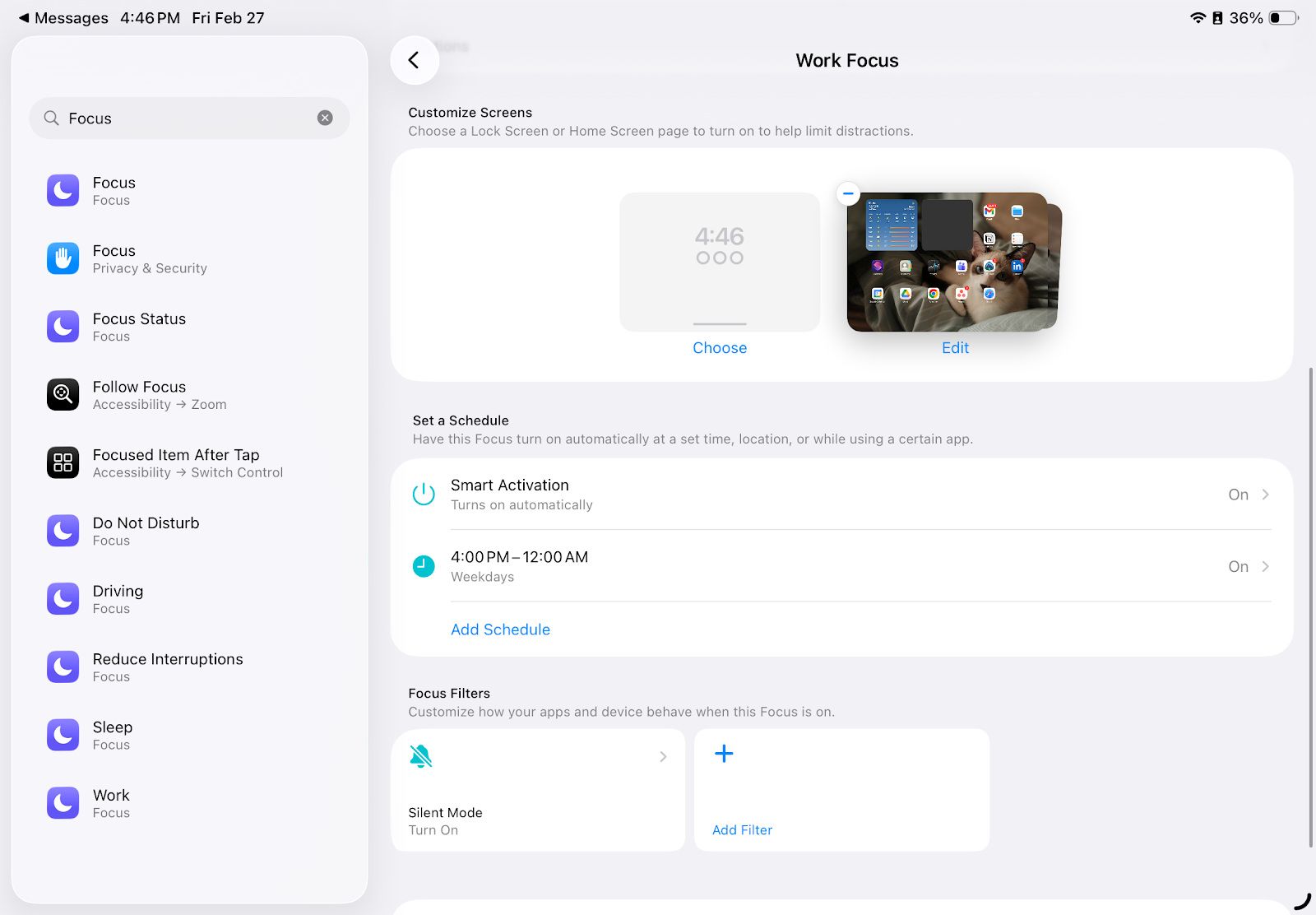
If your iPad, iPhone, MacBook, and Apple Watch are all synced, the Focus mode carries across devices (just make sure you’re on pretty recent versions of iOS/iPadOS and macOS). Personally, I remove games and social media apps entirely during Work Focus. Random distractions no longer pull me away when I’m in the zone! It’s a small adjustment, but it makes the iPad feel much more like a deliberate work tool rather than a casual browsing device.
So if you’re planning to rely on an iPad for Salesforce work on the go, Focus modes are well worth setting up.
Summary
As with Salesforce, it’s wise not to make purchasing decisions based solely on upcoming or unreleased features (both Apple and Salesforce have a habit of refining things right up until launch). That said, iPadOS 26 feels like a meaningful step forward. It’s not perfect. As I discovered with Flow Builder, relying purely on touch can subtly pull you away from the desktop-style experience iPadOS is aiming for. A mouse or trackpad makes a noticeable difference, especially for tools that expect precise pointer interactions.
The iPad is no longer just the oversized iPod Touch that it was in 2010. The lines between iPad and Mac continue to blur, with Windowed Apps mode and a far more desktop-like Safari experience. Running Salesforce on an iPad is more viable than ever.
Is the iPad ready to replace a MacBook for every Salesforce Admin? Maybe not entirely, but it’s closer than it’s ever been, and for us iPad users, the privilege and flexibility to be able to work on the go is not one that should be taken for granted.





Comments: